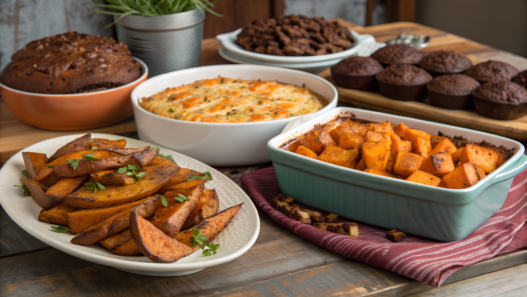
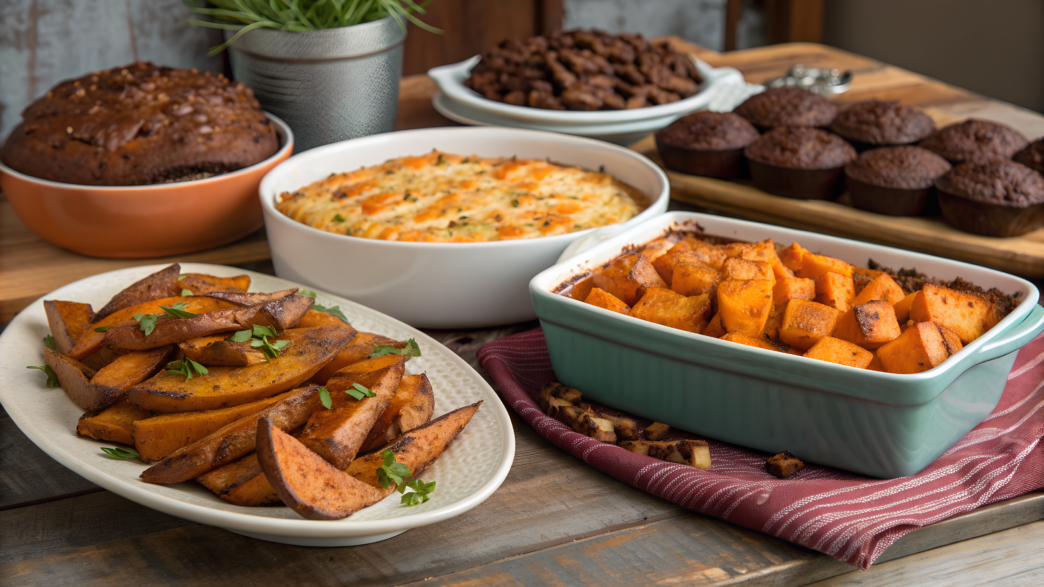
Sweet potatoes have turned into a real lifesaver over the past few years: soups, casseroles, desserts, breakfasts, quick dinners.
Sweet potatoes are rich in beta-carotene, fiber, and natural sugars. Their antioxidant activity stays intact or even increases after cooking.
But the main thing — they’re incredibly tasty and versatile.
Here are 10 Sweet Potato Recipes You’ll Fall in Love With This Year: different in cooking time, texture, and emotional “aftertaste.”
And one more thing: each recipe is a small piece of our real life. Somewhere it reminded me of Idaho, and somewhere — our first attempts to grow sweet potatoes in a cold spot.
So read, cook, try!
1. Roasted Sweet Potato Wedges with Garlic Butter
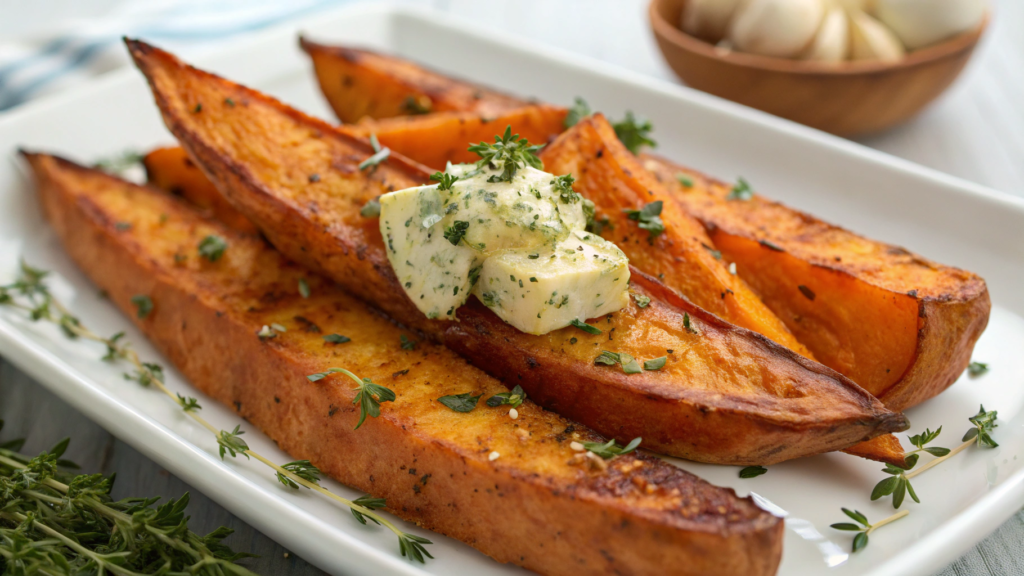
This is one of those dishes you can put together almost on autopilot, because sweet potatoes are not picky at all. Roasted Sweet Potato Wedges with Garlic Butter — crispy edges, soft center, garlic aroma, and a bit of fresh thyme. Simple and very good!
Studies show that sweet potatoes remain just as nutritious after roasting: their valuable compounds stay well-preserved, and some even become easier to absorb.
Ingredients:
- 2 large sweet potatoes (about 1.5–2 lb / 700–900 g)
- 3 tbsp melted butter (or ghee — also great)
- 2 garlic cloves, finely chopped
- 1 tsp salt
- ½ tsp black pepper
- 1 tsp paprika (smoked works too!)
- 1–2 sprigs fresh thyme
- Optional: a pinch of chili or red pepper flakes
How to cook (and why this way):
- Prepare the sweet potatoes. Wash, dry, and slice into wedges ¾–1 inch thick (2–2.5 cm). This size gives the ideal balance: soft inside and crispy outside.
We figured this out after many tries — wedges that are too thin dry out, and wedges that are too thick don’t roast properly. - Mix the garlic butter. In a bowl, combine melted butter, chopped garlic, paprika, salt, pepper, and thyme leaves.
If you add smoked paprika, you get a light campfire aroma. - Coat the wedges in the butter. Mix the sweet potatoes with the garlic mixture so each piece is fully coated.
We often do it by hand — feels much nicer than using a spoon. - Arrange on a baking sheet. Place the wedges skin-side down, leaving space between them.
This matters: if they sit in a tight pile, they’ll steam instead of roast. - Bake. Put in a 425°F (220°C) oven for 25–30 minutes. Flip halfway through — that gives an even crust.
- Serve. You can add a couple of fresh thyme leaves or another drizzle of the aromatic butter left in the bowl.
Sweet potatoes contain natural sugars that turn into a thin caramelized crust in the oven.
Garlic butter makes the flavor deeper, and thyme brings a brighter aroma.
Best pairings
These wedges go beautifully with a lemon yogurt sauce that brightens and lightens the dish.
If you want something more filling — serve them with roasted chicken or even seared fish, especially if there’s a bit of citrus or herbs involved.
And most often we eat them just like that, straight from the sheet pan, while they still smell like garlic and the edges are crispy.
2. Air Fryer Sweet Potato Fries with Chipotle Dip
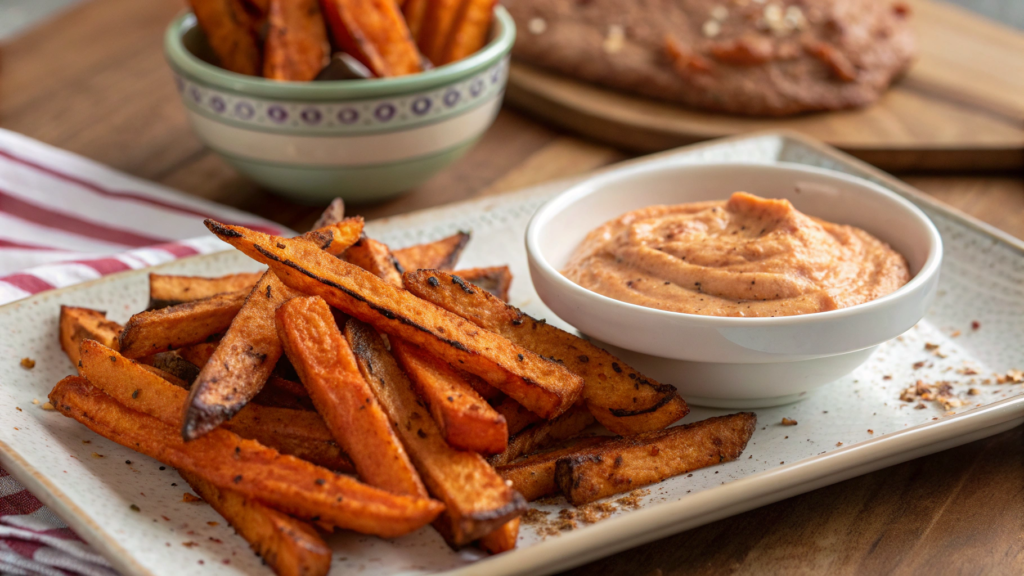
These Air Fryer Sweet Potato Fries come out crispy on the edges, soft inside, and with the smoky chipotle dip it becomes a small pleasure you can make in 15 minutes.
On our farm this is a common snack after we come back tired from the field. And Lindy, by the way, is convinced that sweet potatoes are the best root vegetable in the world, and I don’t even argue.
Ingredients:
For the fries:
- 2 medium sweet potatoes (about 1.5 lb / 700 g)
- 1.5 tbsp olive oil
- 1 tsp salt
- ½ tsp black pepper
- 1 tsp paprika (regular or smoked)
- ½ tsp garlic powder
For the dip:
- ½ cup (120 ml) Greek yogurt
- 1 tbsp adobo sauce from a can of chipotle
- 1 tsp lime juice
- A pinch of salt
- Optional: a small piece of chipotle pepper from the same can for more heat
How to cook (and why this way):
- Cut the sweet potatoes evenly. Slice them into sticks about ½ inch thick (1.2 cm).
Yes, exactly the same thickness — that’s the key to even cooking.
We tried “whatever happens” many times — and every time the result was the same: half soft, half overcooked. - Soak the sliced sweet potatoes. Cover them with cold water for 15–20 minutes.
This removes excess starch and makes the fries crispy instead of limp.
I skipped this step a couple of times — and regretted it every time. - Dry thoroughly. With your hands, paper towels, whatever — but make them dry.
In an air fryer, extra moisture means steaming instead of crisping.
We once rushed and threw them in wet — ended up with soft sticks without a crust. Don’t repeat our mistake. - Season properly. Place the potatoes in a bowl, add olive oil, paprika, garlic powder, salt, and pepper.
Mix well so every piece gets at least a thin layer of oil — that thin coating helps them crisp instead of dry out. - Cook in batches. Place the fries in the air fryer basket in a single layer. If you dump everything in at once, they’ll steam and turn soft. The optimal temperature is 380°F (190°C).
Cook for 12–15 minutes, shaking the basket every 5 minutes.
Shaking is the main secret to an even crust. - Make the chipotle dip. In a small bowl, mix yogurt, adobo sauce, lime juice, and a pinch of salt.
If you want a stronger flavor — add a piece of chipotle pepper (it’s spicy, but the aroma is incredible).
That’s it. The sauce is ready. - Serve immediately. Air fryer sweet potato fries love warmth — after 10 minutes they soften and lose their crisp.
We often serve them right in the air fryer basket to avoid losing heat.
Sweet potatoes are richer than regular potatoes in antioxidants. The air fryer keeps them soft inside and crisp outside without extra oil.
By the way, chipotle adds the kind of smoky depth that makes everything brighter and more “pulled together,” especially with yogurt.
The fries make a great side for tacos, roasted salmon, or even scrambled eggs for dinner (yes, we do that sometimes).
But most often they disappear so fast they don’t have time to go with anything.
3. Loaded Sweet Potato Bowl with Avocado Dressing
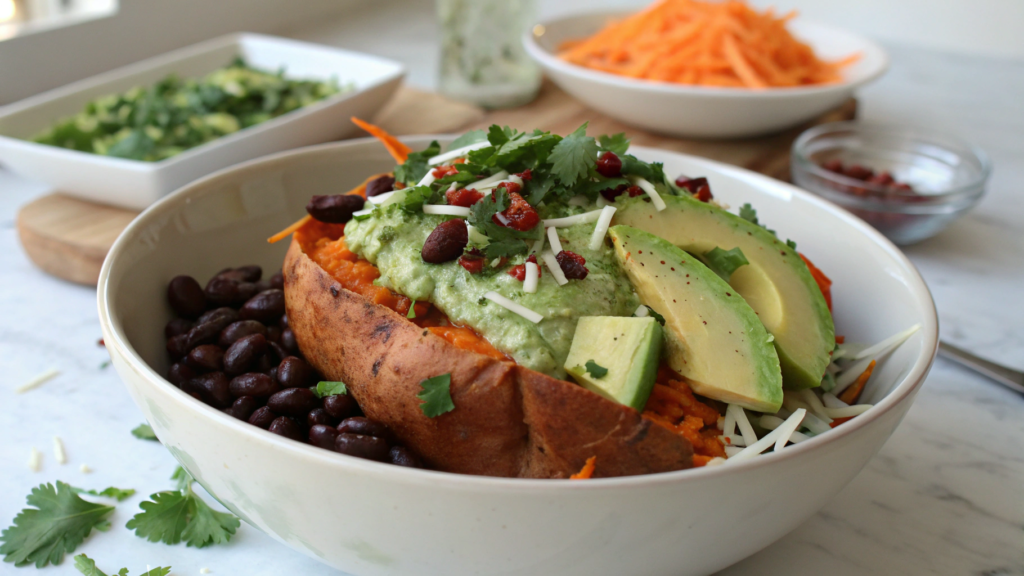
Loaded Sweet Potato Bowl appeared in our home pretty randomly: one day I was trying to “use up” leftover roasted sweet potatoes, some beans, and an avocado that was dangerously close to “now or the trash.”
We mixed everything in one bowl, added whatever we had on hand — and it turned out… well, really good. It became almost a regular recipe for those days when there’s no time at all.
Ingredients:
For the bowl base:
- 2 medium sweet potatoes (about 1.5 lb / 700 g)
- 1 tbsp olive oil
- 1 tsp salt
- ½ tsp black pepper
- 1 tsp smoked paprika
- 1 can black beans (15 oz / 425 g), rinsed
- 1 cup corn (frozen or fresh)
- ½ small red onion, finely chopped
- 1 small sweet pepper, diced
- Optional: some herbs (cilantro, green onion), a piece of lime
For the avocado dressing:
- 1 large ripe avocado
- 2 tbsp Greek yogurt
- 1 tbsp olive oil
- 1–2 tbsp lime juice
- 1 small garlic clove
- 2–3 tbsp water (to adjust consistency)
- A pinch of salt
How to cook (and why this way):
- Prepare the sweet potatoes. Cut them into cubes about 1 inch (2.5 cm).
This size is the golden middle: they roast quickly but stay juicy.
If the cubes are smaller — they dry out; bigger — they take longer and the texture turns looser. - Roast until beautifully caramelized. Mix the sweet potatoes with olive oil, salt, pepper, and smoked paprika.
Spread the cubes on a baking sheet in “one layer” so they brown instead of steam.
Roast at 425°F (220°C) for about 25 minutes, stirring halfway.
Sometimes we leave them a bit longer — until the edges turn slightly amber. - Prepare the other components. While the sweet potatoes roast, rinse the beans, chop the onion and sweet pepper, thaw the corn.
If you have time — warm the corn slightly in a skillet; it becomes sweeter and more fragrant. - Make the avocado dressing. In a blender, blend the avocado, yogurt, olive oil, lime juice, garlic, and a pinch of salt.
Add water gradually until you get a sour-cream-like consistency. - Assemble everything in one bowl. First — warm sweet potatoes (they should be the base and give heat to the whole dish).
Then — beans, corn, sweet pepper, onion.
Top with herbs and a generous spoon of avocado dressing.
Sometimes we also add a bit of jalapeño — depends on the mood. - Mix right in the bowl. There’s no “right” method. Just gently combine everything with a spoon until the veggies are coated in the green sauce.
The sweet potatoes will soften slightly and become creamy — that’s exactly what you want.
Why this dish works so well
Sweet potatoes are sweet and rich. Beans are filling and high in protein. Corn adds texture and sweetness. Avocado makes everything connected and soft.
And lime deserves a special mention: it lifts the entire dish immediately.
There are studies, including publications in Journal of Food Research, noting that acidity really enhances the perception of sweetness. In practice it works — lime or lemon makes the dish brighter.
Most often we make this bowl late in the evening after working in the garden. Right at that moment such a bowl is the perfect way to restore energy.
Add a bit of herbs on top. Squeeze some lime. And leave a little avocado dressing on the side — because there’s never enough of it.
4. Brown Sugar Baked Sweet Potato Casserole

Brown Sugar Baked Sweet Potato Casserole is not a diet dish. This is a warm, homey, soft dish that in our family is considered an event-food. Not only because it is delicious — but because it brings everyone to the table.
Sweet potatoes are rich in beta-carotene, and baking makes them even more accessible for the body (confirmed by a Journal of Nutrition & Food Sciences study).
Ingredients:
Base:
- 3 large sweet potatoes (about 3 lb / 1.3 kg)
- 4 tbsp melted butter
- ¼ cup brown sugar (55 g)
- ½ tsp salt
- 1 tsp cinnamon
- ½ cup milk (120 ml)
- 1 large egg
Topping:
- ½ cup brown sugar (110 g)
- ⅓ cup all-purpose flour (40 g)
- 4 tbsp cold butter
- ¾ cup pecans, roughly chopped (or walnuts)
- Optional: a pinch of nutmeg
If you need good casserole dishes (we use the Pyrex Deep Baking Dish Set, and it still looks new in year four).
How to cook (and why this way):
- Bake the sweet potatoes until soft. Pierce the potatoes with a fork, wrap in foil, and bake for 45–60 minutes at 400°F (200°C).
The sweet potatoes should be soft enough that a knife slides in without resistance.
When baked whole, they turn caramelized — nothing like boiling. - Remove the skin and mash. Carefully peel the sweet potatoes (they’ll be hot; I usually hold them with a fork and remove the skin by hand).
Mash until smooth.If a few small chunks remain — that’s great too, gives the dish a more homemade feel. - Add butter, sugar, and cinnamon. Mix everything until the sugar fully dissolves.
The smell at this moment… unbelievable. - Stir in the milk and egg. Milk makes the texture more tender, and the egg helps the casserole hold its shape.
If you add the egg too early, while the sweet potatoes are hot — it will turn into little cooked bits, so let the mash cool slightly. - Prepare the topping. Mix brown sugar, flour, and cold butter.
Rub with your fingers until you get coarse crumbs, then add the nuts.
This last step is essential. The nuts become crunchy and slightly caramelized. - Assemble the casserole. Spread the sweet potato mash into the dish, then sprinkle the nut topping evenly over the top.
Don’t press it down — it should sit loosely. - Bake. 350°F (175°C) for 30–35 minutes.
The topping should turn golden, and the edges should be slightly bubbling.
Why this dish works
Sweet potatoes are naturally sweet, rich, and full of beta-carotene. Brown sugar, butter, and nuts create a thin caramelized crust.
A flavor that seems complex actually comes together from a handful of accessible ingredients.
Studies in Food Chemistry note that during heating, some antioxidants in sweet potatoes remain stable, and some become even more available to the body.
We sometimes serve it as a side with grilled chicken. Sometimes — as a standalone dish, especially if you add a little vanilla Greek yogurt on top (surprisingly, this works incredibly well).
And sometimes we eat it cold for breakfast the next day.
Maybe it sounds strange. But try it. Some dishes open up even better on day two.
A small trick. If you want a deeper flavor, add a bit of orange zest to the mash.
Just a little — literally a pinch. It doesn’t make the dish “citrusy,” but gives it that very interesting undertone.
5. Chocolate Sweet Potato Brownies That Stay Fudgy

These brownies are rich, dense, moist (“fudgy” — you know what I mean) and have a deep chocolate flavor. At the same time, sweet potatoes make the texture creamy, as if you added an extra bar of chocolate.
There are studies (Journal of Food Processing & Preservation) noting that sweet potatoes help retain moisture in baked goods and make the texture softer and more tender — especially in chocolate desserts.
Ingredients:
- 1 cup sweet potato puree (from about 1 medium sweet potato, 250 g)
- ½ cup flour (60 g) — all-purpose or whole wheat
- ½ cup cocoa powder (50 g)
- ¾ cup brown sugar (150 g)
- 2 large eggs
- ½ cup melted butter (115 g)
- 1 tsp vanilla extract
- ½ tsp salt
- ½ tsp baking soda
- Optional: ½ cup chocolate chips
If you need quality chocolate chips that melt exactly the way they should, try Ghirardelli Premium Baking Chips.
How to cook (and why this way):
- Make the sweet potato puree. You can bake or boil the sweet potato.
But honestly? Baked sweet potato makes the puree much more flavorful.
Just pierce it with a fork, bake for 45–60 minutes at 400°F (200°C), remove the skin — and mash.
The puree should be smooth, like baby food. - Mix the wet ingredients. In a bowl, combine the sweet potato, melted butter, eggs, and vanilla.
The butter should be warm but not hot — otherwise the eggs will scramble.
You’ll get a thick, creamy mixture — and yes, it already smells like chocolate at this stage (which surprises me every time). - Mix the dry ingredients separately. Flour, cocoa powder, brown sugar, salt, and baking soda.
Stir with a fork — cocoa loves to clump, so spend a moment spreading it evenly. - Combine the dry with the wet. Add in portions and mix gently. No need for perfect smoothness — brownies love minimal handling.
If you want chocolate chips — now’s the time. - Transfer to the baking dish. Spread evenly. The batter will be thick, even dense — that’s exactly right.
If it reminds you of thick chocolate paste — perfect. - Bake. 350°F (175°C) for 22–27 minutes.And here’s the key — don’t overbake.
The center should stay slightly moist. If you shake the dish lightly — a bit of “jiggle” in the middle is ideal. - Let cool completely. This is probably the hardest step. Warm brownies may seem too soft — they firm up as they cool.
Sometimes we put the dish in the fridge for 10 minutes — the texture becomes dense, like truffles.
Why sweet potatoes work in brownies
This is an interesting moment that makes the recipe almost “food science”:
- Sweet potatoes retain moisture → the brownies stay fudgy.
- Sweet potatoes contain natural sugars → the flavor becomes rich.
- Sweet potato fibers replace some of the flour → the texture stays tender, not dry.
There’s work in the Journal of Food Processing & Preservation studying the effect of sweet potatoes on baked goods — and yes, everything matches real practice.
We sometimes serve them with a spoonful of cold Greek yogurt (not cream, yogurt — gives a great contrast), with berries, or simply as square pieces dusted with cocoa.
A little hack from us. If you want an even deeper flavor — add ½ tsp espresso powder to the dry ingredients. It doesn’t make the brownies “coffee-like” — it just intensifies the chocolate.
It’s the same technique pastry chefs use when they want more depth without increasing the amount of cocoa.
6. Classic Sweet Potato Pie with Cinnamon Whipped Cream
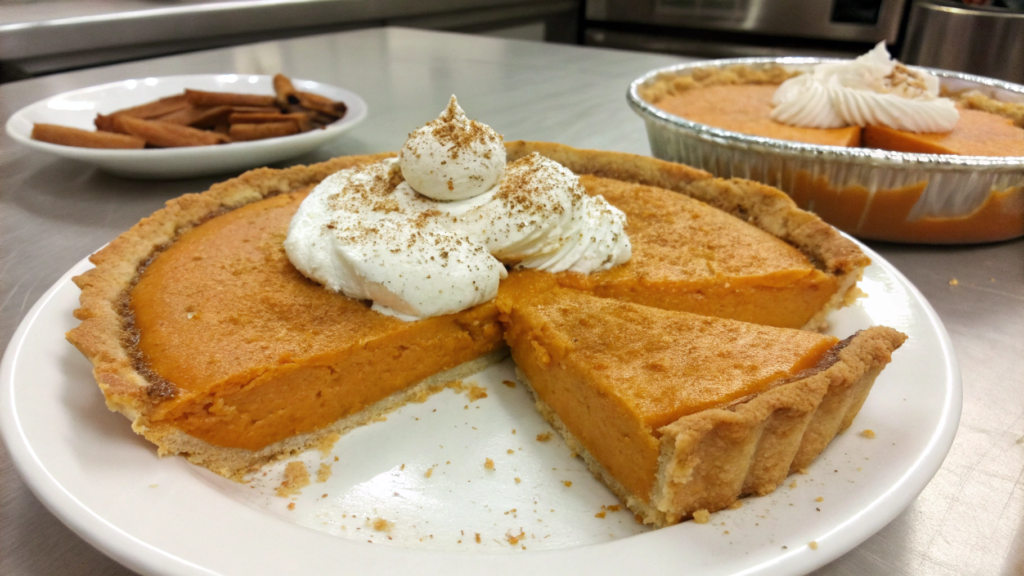
Many people think “sweet potato pie” is a dish only for the Southern states. But after I made it once in Idaho, it became a universal recipe for me.
This pie is soft, silky, with a bright sweet-potato flavor but without being overly sweet.
Sweet potatoes are rich in beta-carotene and fiber, and when baked, their nutrients are very well preserved. Some antioxidants even become easier for the body to absorb (Journal of Food Science & Technology).
Ingredients:
The filling:
- 2 cups sweet potato puree (from about 2–3 medium sweet potatoes)
- ½ cup brown sugar (110 g)
- ½ cup white sugar (100 g)
- ½ cup cream 20–30% (120 ml)
- ½ tsp salt
- 1 tsp vanilla extract
- 2 large eggs
- 1 tsp cinnamon
- ½ tsp nutmeg
- 2 tbsp melted butter
The crust:
- 1 pre-made pie crust (9 inch / 23 cm) — regular or graham
(if you want to make your own — I’ll write a mini-guide later)
For the cinnamon whipped cream:
- 1 cup heavy cream 33–36% (240 ml)
- 1.5 tbsp powdered sugar
- ½ tsp cinnamon
- ¼ tsp vanilla extract
How to cook (and why this way):
- Make the sweet potato puree. Bake the sweet potatoes whole for 45–60 minutes at 400°F (200°C), until completely soft.
Baked sweet potatoes are sweeter, and their flavor is deeper than boiled ones — which matters for the pie.
After baking, remove the skin and mash until smooth. - Mix the liquid ingredients. In a bowl, combine the eggs, melted butter, vanilla, and cream.
You can whisk lightly — no need for perfect smoothness, just combine. - Add the sweet potatoes, sugar, and spices. Add the puree, both sugars, salt, cinnamon, and nutmeg. Mix until uniform.
At this point the mixture should become thick, fragrant, almost “creamy.” - Prepare the crust. If you want the bottom to stay crisp — pre-bake the crust for 8 minutes at 350°F (175°C).
This is the step that saves the pie from a soggy bottom. - Fill the crust. Pour the filling into the crust and smooth out the top.
The texture will be thick, slightly stretchy — exactly as it should be. - Bake the pie. 350°F (175°C) for about 50–60 minutes.
The center should have a slight “jiggle,” but not be liquid — like a well-baked cheesecake.
Cool for at least an hour, otherwise the pie won’t set. - Make the cinnamon whipped cream. Whip the cream with powdered sugar, cinnamon, and vanilla until soft peaks.
The result is lightly sweet, aromatic, and perfectly contrasting with the dense texture of the pie.
Why this pie is so reliable
- Sweet potatoes make the filling creamy and soft → less risk of overbaking.
- Cream adds silkiness → the texture becomes almost dessert-like.
- The crust adds crunch → without it the pie would be “too soft.”
We usually serve it with brown sugar torched on top (an almost-brûlée effect).
Sometimes — with a scoop of vanilla ice cream.
But most often — just with a spoon of cinnamon whipped cream, because it makes everything balanced.
A small hack. If you want a flavor people can’t quite describe, add:
½ tsp orange zest right into the filling — it makes the flavor slightly more “pulled together.”
7. Creamy Sweet Potato Soup with Crispy Chickpeas
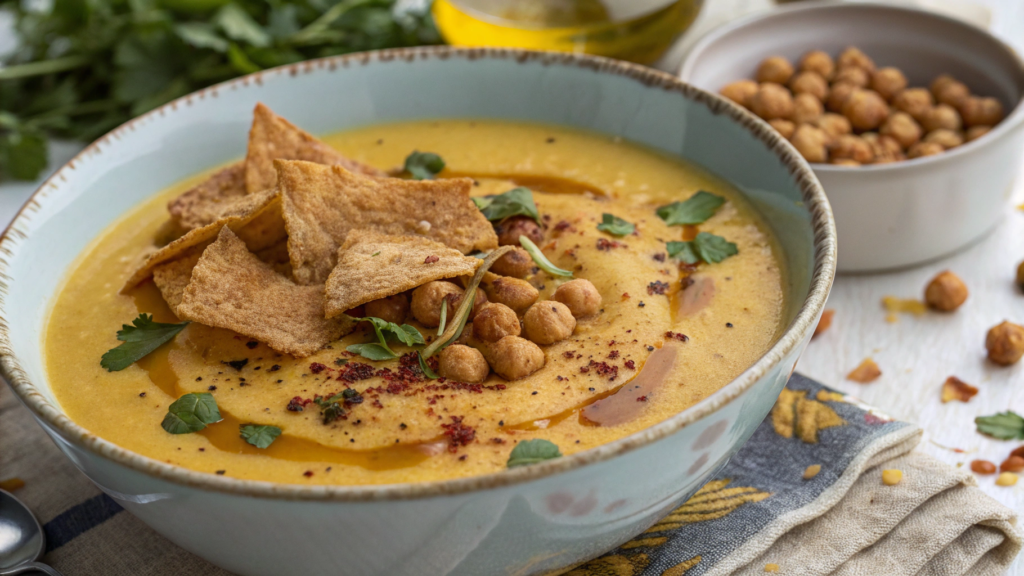
Creamy Sweet Potato Soup is soft, thick, slightly sweet, with bright spices. And on top — crispy chickpea “chips” that turn the soup into a full meal, not just a “spoon snack.”
Ingredients:
For the soup:
- 2 large sweet potatoes (about 2 lb / 900 g)
- 1 large carrot
- 1 medium onion
- 2 garlic cloves
- 1 tbsp olive oil
- 4 cups vegetable broth (1 L)
- ½ cup coconut cream or regular cream (120 ml)
- 1 tsp salt
- ½ tsp turmeric
- ½ tsp curry powder
- A pinch of black pepper
For the crispy chickpeas:
- 1 can chickpeas (15 oz / 425 g), dried
- 1 tbsp olive oil
- ½ tsp smoked paprika
- ½ tsp garlic powder
- A pinch of salt
If you need a good immersion blender — we’ve been using the same Mueller Austria Ultra-Stick Immersion Blender for years.
How to cook (and why this way):
- Prepare the vegetables. Chop the sweet potatoes, carrot, onion, and garlic into cubes. No need to be precise — everything will be blended later.
But the smaller the cubes, the faster everything cooks. We learned this after dozens of soups when time actually mattered. - Sauté the onion and garlic. In a large pot, heat the olive oil, add the onion, and after a minute — the garlic. Cook until soft to get that slightly sweet aroma — it becomes th
- Add the sweet potatoes, carrot, and spices. Stir and warm everything together — spices open up better when they hit hot vegetables.
e base of the flavor.
If the garlic burns, the soup becomes bitter, so keep the heat moderate.
Turmeric and curry give the soup warmth and depth (and yes, turmeric enhances antioxidant power). - Add the broth and simmer. Bring to a boil, reduce heat, and cook for 20–25 minutes.
The sweet potatoes should be soft enough that you can crush a cube with a spoon against the pot. - Make the soup creamy. Remove the pot from the heat and blend everything with an immersion blender. The texture should be silky, without big chunks — but not foamy, so don’t rush.
After blending, add the cream and stir. - Taste and adjust. Sometimes the soup turns out a bit sweeter — then add a pinch of salt or pepper.
And sometimes you want spice — then just add a drop of sriracha, and everything becomes perfect. - Make the crispy chickpeas. Dry the chickpeas (the drier — the crispier). Mix with oil, paprika, garlic powder, and salt.
Bake for 20–25 minutes at 400°F (200°C), shaking occasionally.
When the chickpeas start “crackling,” they’re ready. - Assemble the bowl. Pour the soup into bowls, add a handful of chickpeas on top.
Sometimes we also drizzle a couple of drops of coconut milk — looks nice and tastes good.
Why this soup turns out so rich
- Sweet potatoes give the texture → the soup becomes thick without any flour.
- Carrot adds natural sweetness.
- Turmeric and curry create depth of flavor
- And chickpeas add the crunch cream soups always lack.
And honestly? It barely takes effort. Cook, blend, sprinkle — and dinner is done.
We usually eat this soup after long days in the garden when we have zero energy for “complicated” cooking.
But the best part — the flavor gets even better the next day, as if the spices “settle” in the fridge.
A small secret. If you want a brighter flavor — add one small roasted pear to the soup.
It sounds strange, I know. But it makes the flavor softer and more aromatic — we discovered this by accident in the fall when pears started overripening too fast.
8. Sweet Potato Breakfast Hash with Fried Eggs
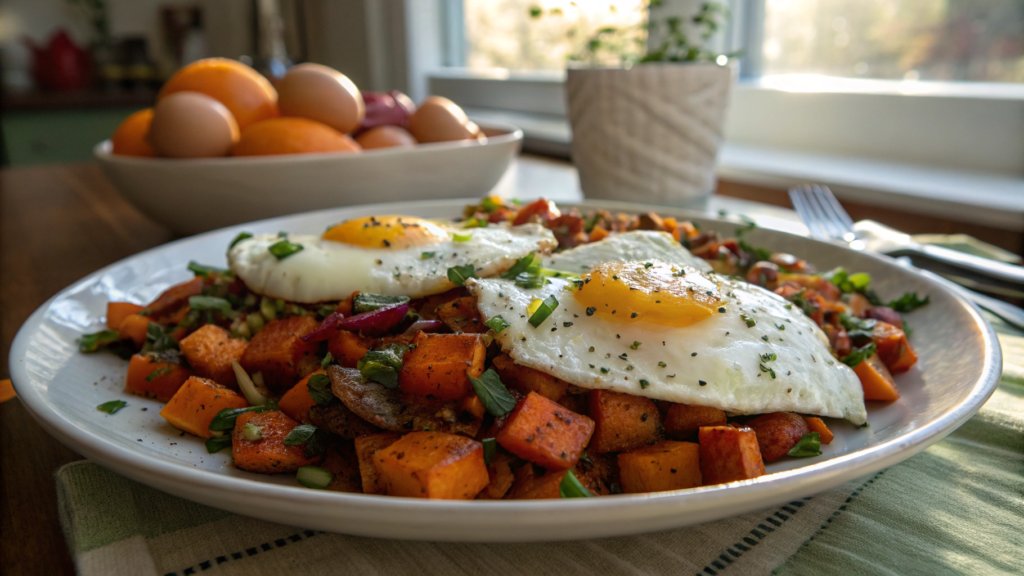
One day I just grabbed some sweet potatoes, chopped everything that was in the vegetable basket, threw it all into a pan — and that’s how our Sweet Potato Breakfast Hash was born.
Now this dish has become our tradition and we make it very often. Lindy still says:
“If the morning starts with hash — the day will definitely be okay.”
And it’s true: warm, filling, bright, with good spices and an egg on top.
And what’s nice — sweet potatoes give slow carbohydrates that support energy longer than regular potatoes (Journal of Applied Nutrition).
Ingredients:
- 2 medium sweet potatoes (about 1.5 lb / 700 g)
- 1 small red onion
- 1 sweet pepper (any color)
- 1 small zucchini (or half a large one)
- 2 tbsp olive oil
- 1 tsp salt
- ½ tsp black pepper
- 1 tsp paprika
- ½ tsp garlic powder
- ½ tsp thyme (dried or fresh)
- 2–4 eggs (depending on servings)
If you don’t have a good skillet — this is the one we use for all hashes, frittatas, and veggies: Lodge Cast Iron Skillet 10.25″.
How to cook (and why this way):
- Cut the sweet potatoes into cubes. About ½–¾ inch (1.2–2 cm).
This size gives the ideal balance: the sweet potatoes brown nicely but don’t turn into mush.
If the cubes are too small — they fall apart. We learned that, don’t repeat it. - Pre-sear the sweet potatoes. Heat the pan with 1 tbsp oil and place the sweet potatoes in one layer.
Cook for 8–10 minutes over medium heat until the edges begin to caramelize.
This is an important step: it gives that “almost crisp” that holds the whole hash together. - Add the other vegetables. Onion, pepper, zucchini — cut everything into medium cubes. Don’t cut too small, otherwise the vegetables will release too much juice and steam.
Add another 1 tbsp oil to the pan, stir, and cook another 7–10 minutes.
The vegetables should become soft but hold their shape. - Season. Salt, pepper, paprika, garlic powder, thyme. Add the spices at the end when the vegetables are almost ready — they open up better.
And yes, if you want deeper flavor — a pinch of smoked paprika works wonders. - Make space for the eggs. Push the hash to the edges of the pan, make 2–4 “wells.”
Crack an egg into each one. Cover with a lid and cook for 3–5 minutes until the whites set and the yolks stay soft.
If you want more control — you can fry the eggs separately.
But we love this “farm-style” method right in the pan. - Let the dish rest for a minute. It’s a small thing, but the hash becomes a bit firmer and the flavors come together.
Why hash works so well
- Sweet potatoes give sweetness and richness.
- Onion and pepper create aroma and juiciness.
- Zucchini adds lightness and texture.
- And an egg on top turns the dish into a full breakfast.
We eat this hash when the day will be long. When it’s winter and we want warm food but not heavy food.
Or when the sweet potatoes are about to “get sad” — and they need to be used right now.
Small upgrades if you want to experiment
- Add a few pieces of jalapeño — it makes the flavor brighter.
- Add a spoon of corn — the sweetness increases.
- Sprinkle green onions or cilantro on top — the freshness is excellent.
9. Smoky Mashed Sweet Potatoes for Quick Weeknights
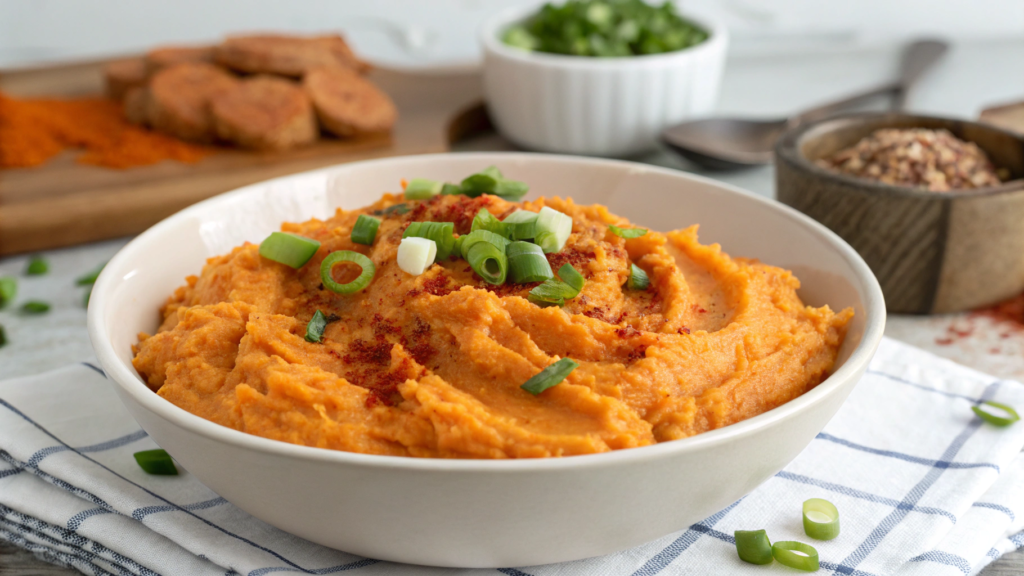
When you don’t want complicated cooking but you’re really hungry, these Smoky Mashed Sweet Potatoes save the day.
This version is slightly sweet, slightly smoky, a little creamy — and completely “evening.”
Studies, including work in Journal of Food Nutrition Research, show that sweet potatoes keep their nutrients well after heat treatment. And they also give a gentler glycemic response than regular potatoes — which makes this dinner not only quick but genuinely smart.
Ingredients:
- 3 medium sweet potatoes (about 2–2.5 lb / 900–1100 g)
- 3 tbsp butter
- ¼ cup milk or cream (60 ml), more if needed
- 1 tsp smoked paprika
- ½ tsp salt
- ¼ tsp black pepper
- Optional: a bit of garlic powder or red pepper flakes
How to cook (and why this way):
- Prepare the sweet potatoes. Peel them and cut into cubes about 1.5 inch (3–4 cm).
This size helps them cook quickly but not fall apart into “soup.”
We tried cutting smaller — the result was watery mash and the flavor disappeared. - Boil until soft. Cover the cubes with water, add a little salt, and cook for 12–15 minutes.
The test is simple: if a fork slides in like into warm butter — they’re done.
It’s important not to overcook — overcooked sweet potatoes absorb too much water. - Dry well. Drain the water and return the sweet potatoes to the hot pot for 20–30 seconds.
This small step removes extra moisture, and the mash turns out dense, aromatic, not “runny.” - Mash. Add the butter and start mashing. You can use a fork or a masher — the only difference is texture.
I like leaving some small pieces — it makes the dish feel more “homemade.” - Add milk and spices. Pour the milk little by little until the mash becomes how you want it: thick, dense, stretchy.
Add paprika at the end — that’s when its smoky aroma opens best.
The flavor should be slightly sweet, slightly smoky, warm but not spicy. - Taste and adjust. Sometimes sweet potatoes are sweeter, sometimes less rich — so adjust with salt and pepper.
If you want deeper flavor — a drop of olive oil on top works surprisingly well.
Why this mash is so successful
- Sweet potatoes and smoked paprika — a rare combo, but it gives the perfect contrast: sweetness and smoke.
- Milk or cream make the texture soft and creamy.
- Butter adds depth.
- And the whole thing cooks in 20–25 minutes — truly quick, even on weeknights.
We serve it as a side with chicken or fish. Sometimes — just with fried mushrooms (especially when they are straight from the garden).
And there were evenings when we ate only mash, bread, and herbs — and it was perfect.
Small add-ins if you want to play with the flavor
- 1 tsp adobo sauce — for light heat.
- A spoon of sour cream or yogurt — makes the flavor softer.
- A pinch of cumin — unexpectedly great.
10. Sweet Potato Pancakes with Maple Yogurt Drizzle
It happened like this: we had a bit of sweet potato puree left after dinner, and at some point I said:“No, I’m not throwing this out. We’ll make something sweet.”
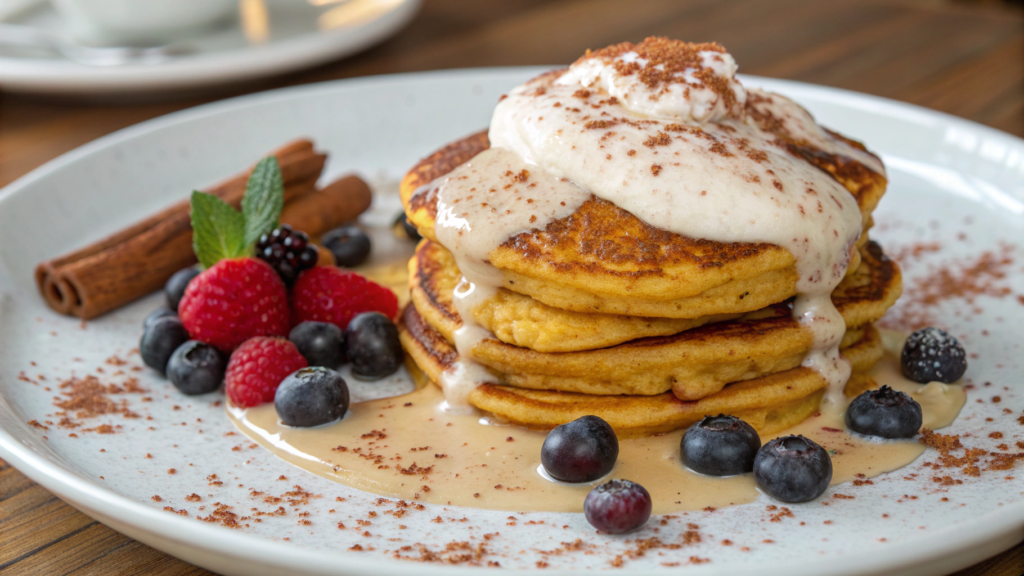
And that’s how these Sweet Potato Pancakes appeared. Warm, tender, slightly sweet, with a light caramel note from the sweet potato — and the perfect texture thanks to the maple-yogurt sauce on top.
They’re not just tasty. They really fill you up.
Sweet potatoes are a source of slow carbohydrates, which keep energy steady longer. Studies on nutrition, including Journal of Nutrition & Metabolic Insights, mention this. And yogurt adds protein, which helps make the breakfast more stable and not “one-hour energy.”
We now make these pancakes almost every week.
Ingredients:
For the pancakes:
- 1 cup sweet potato puree (from baked sweet potato — about 250 g)
- 1 cup flour (125 g)
- 1 cup milk (240 ml)
- 1 large egg
- 2 tbsp melted butter
- 1 tbsp brown sugar
- 1 tsp baking powder
- ½ tsp salt
- ½ tsp cinnamon
- Optional: a pinch of nutmeg
For the sauce:
- ½ cup Greek yogurt
- 2 tbsp maple syrup
- 1 tsp lemon juice
- A little water if needed (for consistency)
How to cook (and why this way):
- Mix the dry ingredients. Flour, baking powder, salt, cinnamon, brown sugar.
Stir with a fork — it helps break small clumps. Cinnamon helps highlight the sweetness of the sweet potato rather than overpower it. - Make the wet mixture. In another bowl, combine the sweet potato puree, milk, egg, and melted butter. The consistency should be smooth and soft, like thick sour cream.
If the sweet potato is very dense — add 1–2 more tablespoons of milk. - Combine both mixtures. Pour the wet into the dry and mix gently. And here’s the key — do not aim for perfect smoothness. Pancakes love a bit of “roughness” in the batter.
If you mix too aggressively — they turn tough. - Heat the pan. Medium heat, a drop of oil or a bit of butter. Cast iron holds heat perfectly — that’s why they cook so evenly.
- Cook the pancakes. One spoon of batter = the perfect small pancake. When bubbles appear on top — time to flip.
The second side usually needs 40–60 seconds. - Make the Maple Yogurt Drizzle. Mix the yogurt, maple syrup, and lemon. Add a bit of water if you want a thinner consistency.
The sauce should be bright, slightly sweet, and refreshing. - Assemble the plate. Stack the pancakes, then spoon a generous amount of yogurt sauce on top. Sometimes we also add chopped walnuts — they give great crunch.
Why this dish works so well
- Sweet potatoes make the texture tender and moist.
- Cinnamon adds warmth.
- Yogurt brings balance.
- And maple syrup finishes everything with gentle sweetness.
And the best part: these pancakes stay soft even after a couple of hours — unlike traditional ones.
We eat them on slow, relaxed Saturday mornings. Sometimes — on a quick weekday evening “as dessert.”
And sometimes — simply because there’s leftover sweet potato puree, and throwing it out feels wrong.
Small upgrades if you want to play with the flavor
- Add a handful of blueberries right into the batter.
- A spoon of crushed nuts — for a more “rustic” texture.
- A drop of vanilla extract — if you want a slightly more dessert-like flavor.
Your favorite recipe
If you’ve made it to this part of the article, it means sweet potatoes also have a solid place in your kitchen.
I’d love to know which recipe caught your attention the most. Maybe the soup with crispy chickpeas? Or the brownies that stay fudgy even on day two?Write what you’ll cook first. At Rooted Revival we love sharing these small kitchen stories.
And if you make your own upgrade — add a spice, change the technique, serve it differently — be sure to share it too. Sometimes those small ideas become someone’s new kitchen tradition.