Banana bread… what could be more familiar? We baked it in Idaho, we baked it in the PNW. But at some point, I realized this bread could be completely different.
In 2025, people look for new flavors — not because the old ones are bad, but because we want discoveries, even tiny, homey ones. That’s how these ten versions of banana bread appeared. Every recipe here was born not from culinary experiments, but from ordinary days on our two acres in the Pacific Northwest.
I’m sure you’ll find the flavor that speaks to you. Because banana bread is always more than just baking. It’s a way to feel at home, wherever you are.
1. Matcha Almond Banana Bread
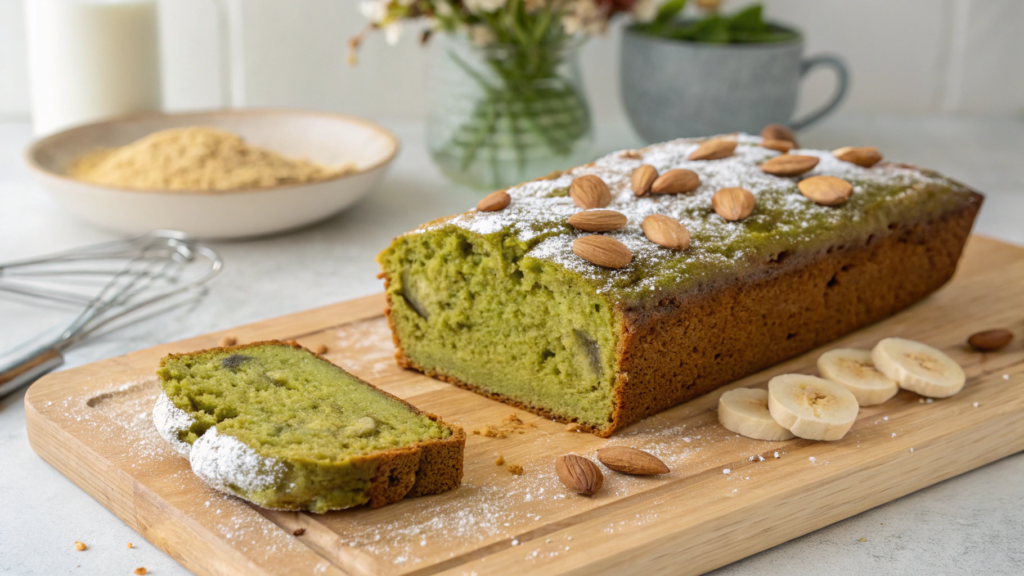
A couple of years ago, when Lindsey and I first tried mixing mashed banana with that bright green matcha powder, the batter turned out even more moist, soft, and fragrant than I expected.
This version is quite unusual: it has the slight bitterness of matcha, the nutty depth of almond, and the familiar banana sweetness. And I know for sure that many of our readers regularly look for unique banana bread recipes 2025 that stand out with at least one unexpected ingredient.
Why it works so well
Matcha is not just a green powder “for aesthetics.” It’s ground leaves of Japanese green tea that contain natural antioxidants.
And almond flour makes the batter more interesting: gives a bit of protein, makes the crumb denser, yet keeps it soft and tender.
This combination is surprisingly balanced. And yes, it doesn’t sound like “healthy” baking, but it truly ends up a bit lighter and richer in beneficial compounds than the classic version.
Ingredients
Dry:
- 1 cup flour (130 g)
- 1/2 cup almond flour (55 g)
- 1–1.5 tbsp matcha powder (7–10 g) — depends on color intensity
- 1 tsp baking powder
- 1/4 tsp baking soda
- Pinch of salt
Wet:
- 2 very ripe bananas, mashed with a fork
- 1/3 cup melted butter (75 g)
- 1/2 cup sugar (100 g) — brown sugar gives deeper flavor
- 1 large egg
- 1 tsp vanilla extract
Extras:
- A handful of almond flakes for the top
- A little sugar for that caramelized crust
How to Make Matcha Almond Banana Bread
(This is not just a list — this is how I actually do it in the kitchen. Sometimes a bit chaotically, but I think that’s forgivable.)
- Preheat the oven to 350°F (175°C). While the oven heats up, I usually put on the kettle. No idea why — it’s just a habit that makes the kitchen feel “fully awake.”
- Mix the dry ingredients. Flour, almond flour, matcha, baking powder, and baking soda. I always sift matcha through a fine sieve — otherwise, there will be clumps, and the bread will have green “dots.”
- Mash the bananas in a separate bowl. Use a fork — bananas should have small chunks, not turn into puree. It makes the crumb juicier. Add sugar, egg, vanilla, and butter.
- Combine the dry and wet mixtures. Gently, without overmixing. If you stir too aggressively, the bread will be dense. I stop as soon as the visible dry streaks disappear.
- Pour the batter into a loaf pan. Sprinkle with almond flakes. Lightly dust the top with sugar — it creates a delicate crust.
- Bake for 45–55 minutes. Check with a wooden skewer: if it comes out with a few moist crumbs, it’s perfect.
- Cooling. Let the bread cool completely. I know… this is the hardest part. But this is when it finishes baking.
A few notes from practice
The best choice is culinary-grade matcha — for me, Matcha Konomi Culinary Grade has been reliable for a couple of years. It has a good bright tint and a clean flavor without extra bitterness.
There’s another small detail people often skip: almond flour. If it sits for more than three or four months, it starts absorbing smells, and you’ll immediately taste it in the baked goods. So before mixing, I always check the aroma — as homemade as that sounds.
And yes, this bread freezes wonderfully. I slice it into thick pieces, wrap each one separately — and at any moment, you can pull out something warm and sweet for morning coffee.
2. Rosemary Olive Oil Banana Bread
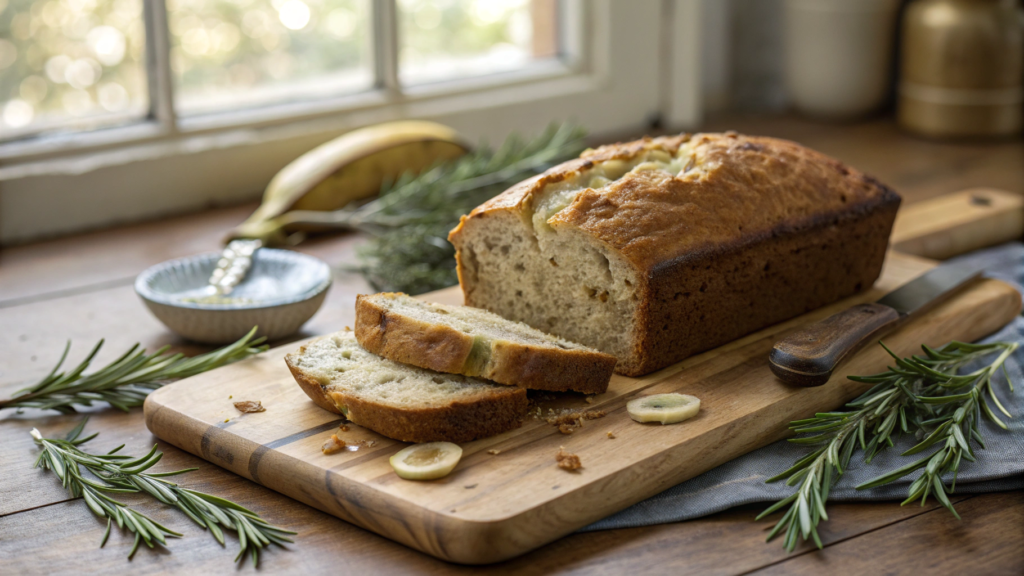
When we had just moved to the PNW (Pacific Northwest) and started learning about local olive oil varieties, we developed almost a ritual — trying a new oil with bread. And somewhere around the third bottle, I told Lindsey: “What if… banana bread, but with olive oil?”.
Rosemary behaves completely differently here than you might expect. It doesn’t hit you in the nose and doesn’t steal attention — instead, it gives a soft, warm note you feel right after the first bite. And here’s what’s nice: bananas, good olive oil, and fresh rosemary pair beautifully together.
If you want banana bread that stands out from the usual recipes and has its own character, this option will suit you without a doubt.
Ingredients
Dry:
- 1 ½ cups flour (190 g)
- 1 tsp baking powder
- 1/2 tsp baking soda
- 1/2 tsp salt
- 1 tbsp finely chopped fresh rosemary
Wet:
- 2 large ripe bananas, mashed (about 1 cup puree)
- 1/2 cup extra virgin olive oil (120 ml)
- 1/2 cup sugar (100 g)
- 2 eggs
- 1 tsp vanilla extract
Extras:
- A little more rosemary for the top
- A thin line of brown sugar for caramelization
(For olive oil, I usually use California Olive Ranch Extra Virgin — it’s mild, without aggressive bitterness, perfect for baking.)
How to Make Rosemary Olive Oil Banana Bread
- Preheat the oven to 350°F (175°C). While it heats up, I usually place the loaf pan on the counter and grease it. It saves time and somehow always relaxes me.
- Mix the dry ingredients. In a bowl, combine flour, baking powder, baking soda, salt, and rosemary. Important: the rosemary must be chopped very finely, almost into crumbs — if you leave long needles, they will interfere with the texture. I once did that — the bread was tasty, but no one forgot the “pine needles” inside.
- Mash the bananas and add the wet ingredients. In another bowl, mash the bananas with a fork — not into puree, but into a soft mash. Add the olive oil, sugar, eggs, and vanilla. It’s better to pour the oil in a thin stream — the mixture becomes more silky, and the sweetness of the bananas opens differently.
- Combine the dry and wet mixtures. Add the dry mixture to the bananas gradually, in two additions. Mix with a spatula, not too actively — stop as soon as the flour streaks disappear. With olive oil, the batter becomes especially pliable, and it’s easy to “overmix” it.
- Transfer the batter to the pan. Smooth the top with a slightly wet spoon — it gives a nice even dome after baking. Sprinkle a pinch of rosemary and a little brown sugar on top — it will melt and form a soft caramel crust.
- Bake for 45–55 minutes. With olive oil, the bread sometimes bakes a bit longer, so starting at minute 45, check with a skewer. It should come out with minimal moist crumbs — that’s the ideal state.
- Let the bread cool completely. If you cut it while hot, it will seem wetter than it should be. Once it cools, the crumb becomes denser, the rosemary aroma opens up more, and the flavor of the olive oil shifts into a subtle nutty note.
A few notes from practice
Be careful with rosemary. A too-generous handful of fresh rosemary easily overpowers both the banana and the soft flavor of the oil. If you love a strong herbal aroma, it’s better to add a little extra on top before baking.
The olive oil matters too. Strong bitterness is not needed here at all. The best option is an oil with medium fruitiness, without sharp aftertaste — something like California Olive Ranch Extra Virgin.
And one more small tip. If the eggs and bananas are at room temperature, the batter comes together much more smoothly. I usually just pull everything from the shelf 30–40 minutes before baking and go do things outside — by the time I’m ready to mix, the ingredients are in the perfect state.
3. Tahini Swirl Banana Bread

For a long time, I didn’t even think about adding tahini to banana bread. For me, tahini was something “savory-hummus-like,” not a sweet story. But it turned out that the creamy sesame flavor pairs beautifully with ripe bananas. It makes the bread deeper, richer, and brings that kind of sweetness you rarely find in ordinary recipes.
Ingredients
Dry:
- 1 ½ cups flour (190 g)
- 1 tsp baking powder
- 1/2 tsp baking soda
- 1/2 tsp salt
Wet:
- 2 large ripe bananas, mashed
- 1/2 cup sugar (100 g)
- 1/3 cup melted butter (75 g)
- 2 eggs
- 1 tsp vanilla extract
For the swirl:
- 1/3 cup tahini (80 ml)
- 2 tbsp honey or maple syrup (30 ml)
- Pinch of salt
It’s best to use smooth, creamy tahini like Baron’s Organic Tahini — it has a clean, creamy flavor without bitterness.
How to Make Tahini Swirl Banana Bread
- Preheat the oven to 350°F (175°C). While it warms up, I usually mix the tahini with honey. When they come together, you get a thick, sticky mixture that already smells so good you want to spread it on toast.
- Mix the dry ingredients. Flour, baking powder, baking soda, salt. Simple, but here’s the nuance: if the flour has been sitting for a few months, mix it with your hands — sometimes old flour develops an off smell, and for banana bread that’s really critical.
- Mash the bananas and add the wet ingredients. I always leave a couple of small chunks — it makes the bread feel more alive, not too uniform. Add sugar, melted butter, eggs, and vanilla. Pour the butter in gradually so the mixture turns smooth and slightly glossy.
- Combine the dry and wet mixtures. No need to aim for perfect smoothness. As soon as the dry streaks disappear — stop. If you mix too actively, the bread will be dense, and we want a tender, stretchy crumb.
- Prepare the swirl. Tahini, honey, and a pinch of salt. That’s it. No tricks — just stir until it becomes a thick paste. If your tahini is too thick, warm it for 10 seconds in the microwave.
- Pour half the batter into the pan. Add several spoonfuls of the tahini mixture on top. Don’t spread it — let there be little “islands.”
- Add the rest of the batter and make another swirl. I use a chopstick or a simple knife and make gentle figure-eight motions. The main thing is not to overdo it — the swirl should stay visible, not disappear into the batter.
- Bake for 45–55 minutes. Thanks to the tahini, the top becomes darker — that’s normal. Check with a skewer not in the center but closer to the edge: the center may stay slightly moist because of the swirl, and that’s okay.
- Let the bread cool completely. I leave it on a rack for at least 1 hour — this allows the tahini to stabilize, and the slices come out clean with beautiful streaks.
A few notes from practice
Good tahini should be soft, creamy, and without a sharp smell. So I always open the jar beforehand and taste it — that’s the only real way to know how it will behave in baking.
The best swirl happens when the mixture is thick, and the batter is moist enough. If the bananas were slightly underripe (it happens), add one more spoon of honey to the tahini — the swirls will be brighter and the flavor softer.
And one more detail. This bread tastes even better the next day. I don’t know what happens chemically, but after resting in the fridge, it becomes denser, and the tahini flavor deepens. Sometimes we even intentionally leave half the loaf “for tomorrow” just to taste that more mature version.
4. Cold Brew Banana Bread
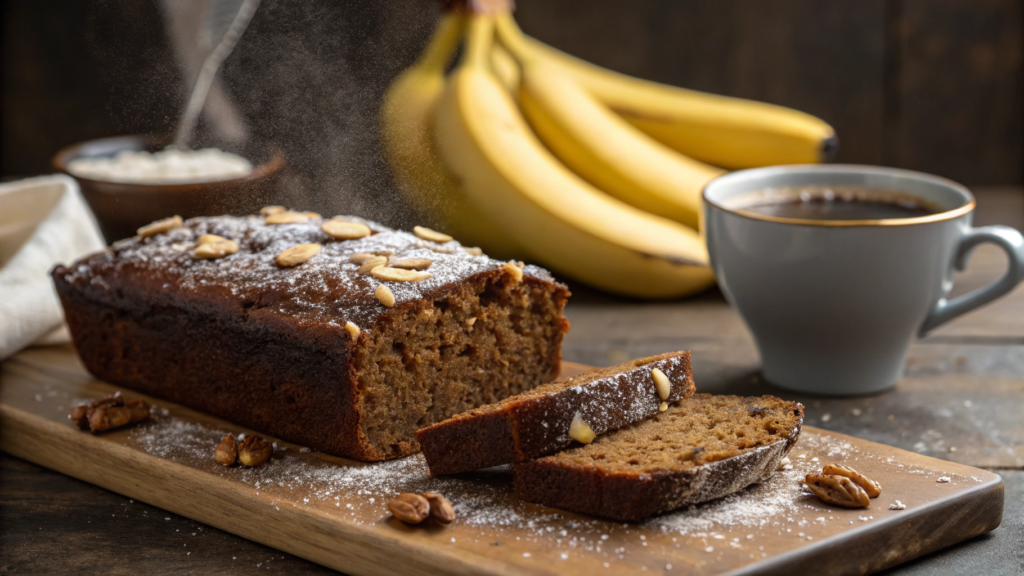
I have a small weakness — cold coffee. Even in winter.
And one day, while mixing batter for banana bread, I accidentally spilled a couple of spoonfuls of cold brew right into the bowl. I tasted it… and honestly, I was surprised by how this soft coffee note made the banana bread deeper, more aromatic, almost caramel-like.
Since then, we’ve had a tradition: when the cold brew turns out especially good, part of it goes into banana bread. And yes, this is one of those versions that, I’m sure, will be gaining popularity in 2025.
Ingredients
Dry:
- 1 ½ cups flour (190 g)
- 1 tsp baking powder
- 1/2 tsp baking soda
- 1/2 tsp salt
- 1 tsp finely ground espresso (or 1 tbsp instant coffee)
Wet:
- 2 very ripe bananas
- 1/2 cup sugar (100 g)
- 1/3 cup melted butter (75 g)
- 2 eggs
- 1 tsp vanilla extract
- 1/3 cup cold brew (80 ml) — real, strong, undiluted
Extras:
- A little cane sugar for the top
- A few crushed coffee beans for aroma
How to Make Cold Brew Banana Bread
- Preheat the oven to 350°F (175°C). While it heats, check your cold brew: it should be rich, almost black, not watery. If it’s too weak, the bread will taste “washed out.”
- Mix the dry ingredients. Flour, baking powder, baking soda, salt, ground coffee. Important: the coffee must be finely ground, otherwise it will “crunch” in your teeth. If you’re using instant, one teaspoon is enough — it will dissolve into the batter.
- Mash the bananas and add the wet ingredients. I usually mash them with a fork, leaving a few chunks — they melt beautifully inside the bread. Add sugar, eggs, vanilla, and melted butter. When the mixture becomes smooth, slowly pour in the cold brew — it makes the texture a bit looser and gives a surprisingly even aroma.
- Combine the dry and wet mixtures. Add the dry ingredients in two additions. Mix gently with a spatula — the batter should stay slightly “airy.” I always tell myself: “Stop a little earlier than feels right.”
- Transfer the batter to the pan. Sprinkle a little cane sugar on top — it creates a thin caramel crust — and a pinch of crushed coffee beans. They give aroma without taking over.
- Bake for 45–55 minutes. Coffee breads sometimes bake a bit longer, so keep an eye on it near the end. If the skewer comes out almost dry — it’s done.
- Complete cooling is essential. Bread with cold brew changes as it cools: the flavor becomes softer, and the coffee notes grow deeper. Sometimes I let it “rest” for a couple of hours — the result is always better.
A few notes from practice
Cold brew strongly affects the flavor, so quality matters. If the coffee is acidic or too harsh, that will show up in the bread. I once used a blend with strong lemon acidity — the bread turned oddly “citrusy,” even though the bananas were perfect.
If you want a more pronounced coffee flavor, add another half teaspoon of espresso powder. But be careful — coffee in baked goods can easily turn bitter at high temperatures.
And one more thing. This bread is incredible with yogurt. I don’t know why, but a cup of Greek yogurt and a slice of cold coffee banana bread is the kind of breakfast that makes the morning much nicer. We often eat the leftovers like that the next day.
5. Peanut Butter Pretzel Banana Bread

Once, Lindsey brought home a huge bag of pretzel sticks — the crunchy, salty kind people usually eat on the road.
The bag sat there… and at some point, I just grabbed a couple of handfuls, crushed them into the banana bread batter — I didn’t even expect how perfectly it would work. Peanut butter adds softness and richness, bananas bring natural sweetness, and the salty pretzel pieces give crunch and balance everything.
Ingredients
Dry:
- 1 ½ cups flour (190 g)
- 1 tsp baking powder
- 1/2 tsp baking soda
- 1/2 tsp salt
Wet:
- 2 ripe bananas
- 1/3 cup melted butter (75 g)
- 1/2 cup sugar (100 g)
- 2 eggs
- 1 tsp vanilla extract
- 1/2 cup creamy peanut butter (120 g), without chunks
Extras:
- 1 cup pretzel sticks, lightly crushed
- A little peanut butter for thin “ribbons” on top
- A handful of extra pretzel pieces
If you want peanut butter that’s soft, smooth, without extra sugar — use Crazy Richards 100% Peanuts Creamy. It behaves perfectly in baking.
How to Make Peanut Butter Pretzel Banana Bread
- Preheat the oven to 350°F (175°C). I always place the loaf pan nearby ahead of time — it helps me settle into the process visually. And yes, for this recipe it’s important to prepare everything in advance because the batter is quite thick.
- Mix the dry ingredients. Flour, baking powder, baking soda, salt — the base. But I immediately add half of the pretzel crumbs here — the crunch distributes more evenly this way. They soften slightly but give a surprisingly pleasant texture inside the bread.
- Mash the bananas and add the wet ingredients. The bananas should be very soft. Add sugar, eggs, butter, and vanilla. When everything becomes smooth, add the peanut butter. It thickens the mixture instantly.
- Combine the wet and dry mixtures. Work with a spatula, folding from top to bottom. The batter is thick but manageable. As soon as white streaks of flour disappear — stop.
- Add the remaining pretzel pieces. This gives crunch on top and a beautiful texture in the slices. I usually press them lightly into the batter — so some go inside and some stay on top.
- Transfer the batter to the pan. On top, you can drizzle thin lines of peanut butter — just a teaspoon’s worth. During baking, they turn into soft, glossy ribbons.
- Bake for 45–55 minutes.
Bread with peanut butter bakes slightly longer than usual — the center may stay moist for a bit. Check closer to the sides of the pan: the skewer should come out almost dry there. - Let it cool completely. Important: if you cut it hot, the peanut butter inside will be liquid. Once cooled, it becomes creamy and the bread slices cleanly.
A few notes from practice
Peanut butter greatly affects the texture. The thicker it is, the denser the bread will be. If you want a softer version, add 1–2 extra tablespoons of banana puree.
Pretzels vary, too. If they’re too salty, the bread will tilt the flavor in the wrong direction. I found the best option is lightly salted pretzel sticks, without glaze or flavorings.
This bread stores best in the fridge. On the second day, it becomes denser, and the pretzel crunch shifts to a softer one, but still stays pleasant. Sometimes it feels like this “second day” is the ideal moment for its flavor.
6. Coconut Lime Banana Bread
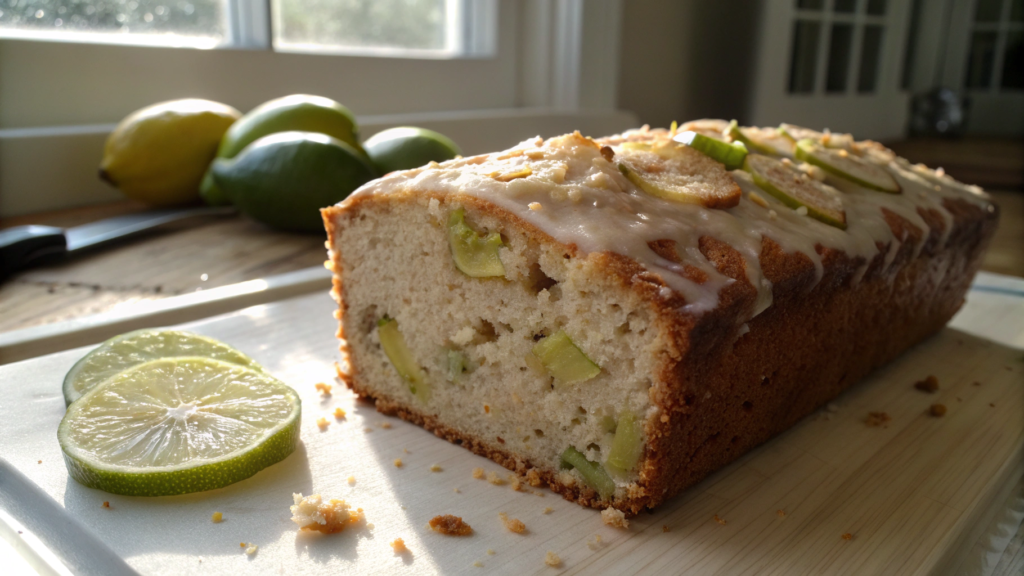
Banana bread with coconut is already very tender on its own, but if you add lime, it becomes something else: fresh, slightly brighter, a bit bolder. It has none of that heavy sweetness — instead, a soft tropical note and a subtle tanginess.
Ingredients
Dry:
- 1 ½ cups flour (190 g)
- 1 tsp baking powder
- 1/2 tsp baking soda
- 1/2 tsp salt
- 3/4 cup shredded coconut (60 g)
Wet:
- 2 ripe bananas
- 1/3 cup melted butter (75 g)
- 1/2 cup sugar (100 g)
- 2 eggs
- 1 tsp vanilla extract
- Zest of 1 lime
- Juice of 1/2 lime
Extras:
- A little shredded coconut for the top
- 1 teaspoon sugar + a bit of zest for the finishing touch
How to Make Coconut Lime Banana Bread
- Preheat the oven to 350°F (175°C). I usually grate the lime zest right at this moment — the kitchen fills with aroma, and it’s easier to “step into” the right mood.
- Mix the dry ingredients. Flour, baking powder, baking soda, salt, shredded coconut. Here’s a little trick: if you rub the coconut slightly between your fingers, it absorbs into the batter more gently, and the bread turns out more tender, without fibrous pieces.
- Mash the bananas and add the wet ingredients. Add butter, eggs, sugar, vanilla, zest, and juice. Notice how lime makes the mixture slightly lighter and more fragrant — sometimes I add one more drop of juice if the lime is especially soft.
- Combine the wet and dry mixtures. Mix with smooth, gentle movements. Coconut absorbs liquid a bit more actively than regular flour, so the batter may seem thick. That’s normal — just don’t beat it with a mixer.
- Transfer the batter to the pan. Sprinkle coconut and a bit of zest on top. This gives a beautiful golden crust and a delicate aroma.
- Bake for 45–55 minutes. Shredded coconut on top may brown faster — if you see it getting too dark, cover the pan with foil for the last 10–15 minutes.
- Let it cool completely. As the bread cools, the lime distributes evenly, and the flavor becomes more “rounded.” Warm, it’s also delicious, but when cooled it reveals its real texture.
A few notes from practice
Shredded coconut varies a lot. Too dry, and it pulls moisture from the batter, making the bread crumbly. If you feel the coconut is on the dry side, just add one tablespoon of milk or coconut milk to the batter.
Lime also plays a big role. An old, firm lime barely gives any flavor. Choose soft, heavy ones — their aroma is much brighter.
And here’s one more detail. If you want a more pronounced coconut flavor, add just a teaspoon of coconut oil along with the butter. It doesn’t change the texture, but it boosts the aroma as if you added a whole extra handful of fresh coconut.
7. Black Sesame Banana Bread

This version isn’t sweet in a straightforward way — it’s richer, deeper. Here, banana is just one part of the whole composition. If you want a recipe that feels like something from a small bakery in Tokyo — get ready, this is it.
Ingredients
Dry:
- 1 ½ cups flour (190 g)
- 1 tsp baking powder
- 1/2 tsp baking soda
- 1/2 tsp salt
- 2 tbsp black sesame seeds + a little extra for the top
- (Optional) 1 tbsp black sesame powder, if you can find it
Wet:
- 2 ripe bananas
- 1/3 cup melted butter (75 g)
- 1/2 cup sugar (100 g)
- 2 eggs
- 1 tsp vanilla extract
- 1/4 cup black sesame paste or black tahini (60 ml)
Extras:
- A bit of cane sugar
- A couple of thin “ribbons” of sesame paste on the surface
How to Make Black Sesame Banana Bread
- Preheat the oven to 350°F (175°C). While the oven heats, I usually crush the black sesame seeds in a small mortar. When the seeds crack and release that soft nutty aroma, the batter always turns out better.
- Mix the dry ingredients. Flour, baking powder, baking soda, salt, and black sesame seeds. If you’re adding sesame powder — add it here. It gives the crumb a slightly gray tint.
- Mash the bananas and add the wet ingredients. The bananas should be soft, speckled — that’s when they’re most fragrant. Add butter, sugar, eggs, and vanilla. When the mixture becomes smooth, add the black sesame paste — you’ll immediately see how the color turns deeper and richer.
- Combine the dry and wet mixtures. Mix gently with a spatula, without sharp movements. Black sesame already thickens the texture, so don’t overmix — otherwise, the bread will turn out dense.
- Transfer the batter to the pan. On top, you can drizzle thin lines of sesame paste — just with a teaspoon. They create a beautiful marble pattern. And yes, a little black sesame on top adds crunch.
- Bake for 45–55 minutes. Bread with paste always bakes slightly longer than usual. Check closer to the edge of the pan — the skewer should come out with minimal moist crumbs.
- Let it cool completely. This bread’s aroma doesn’t reveal itself right away. Once it cools, the flavor becomes deeper, and the sesame paste gives a slight smokiness you won’t notice while it’s hot.
A few notes from practice
Black sesame varies a lot. If the seeds are old, the flavor leans into bitterness — and the whole bread becomes harsh. I always test them before baking: crush a few seeds between your fingers — if the aroma is soft and nutty, they’re good to use.
Sesame paste also influences everything: the thicker it is, the denser the bread. If your paste is on the runny side, add one more tablespoon of flour to the dry mixture — the balance will return.
This bread is incredible the next day with plain yogurt or even cream cheese. The sweetness of banana and the nutty sesame flavor deepen into something that almost tastes like a light dessert from a Japanese-style café bakery.
8. Turmeric Ginger Banana Bread
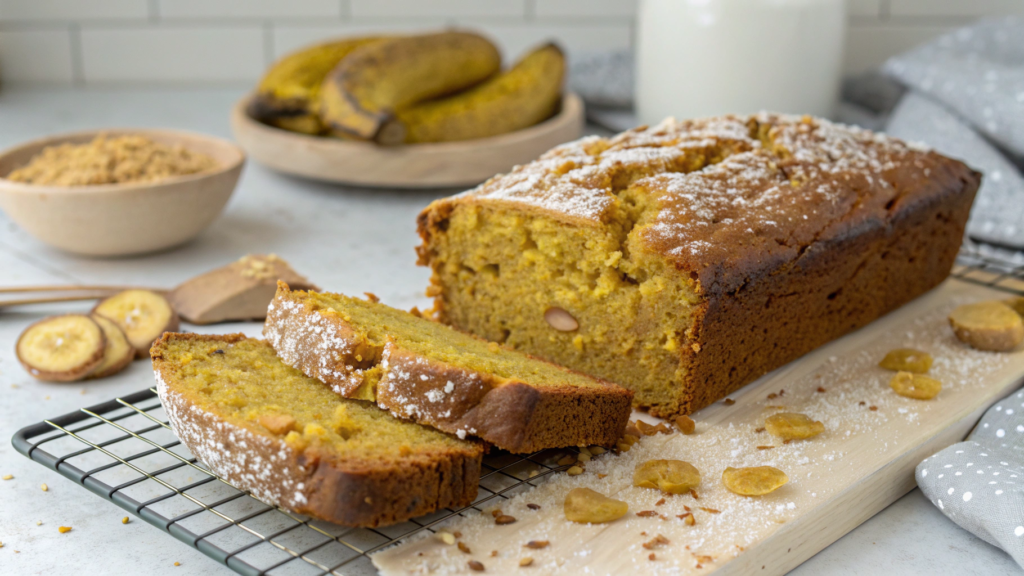
Turmeric gives the bread a soft golden shade (especially beautiful in the slices), and ginger creates that warm “bite” that isn’t spicy but definitely noticeable. And this is one of those recipes you bake “just to try,” and then suddenly can’t live without.
Ingredients
Dry:
- 1 ½ cups flour (190 g)
- 1 tsp baking powder
- 1/2 tsp baking soda
- 1/2 tsp salt
- 1 tsp ground turmeric
- 1–2 tsp ground ginger (or 1 tbsp freshly grated)
Wet:
- 2 large ripe bananas
- 1/3 cup melted butter (75 g)
- 1/2 cup sugar (100 g)
- 2 eggs
- 1 tsp vanilla extract
- 2 tbsp honey (30 ml)
Extras:
- A bit of chopped nuts (walnut or almond)
- A pinch of turmeric + sugar for the golden crust
How to Make Turmeric Ginger Banana Bread
- Preheat the oven to 350°F (175°C). While the oven heats, I usually grate the ginger. And honestly, even at this stage the house already smells like a tiny tea shop. If you’re using fresh ginger, choose the lightest, juiciest one — it’s gentler.
- Mix the dry ingredients. Flour, baking powder, baking soda, salt, turmeric, and ginger. It’s best to sift turmeric — it loves forming little clumps. Ginger can be adjusted: use one teaspoon for a mild flavor; if you want a warming bread, add more.
- Mash the bananas and add the wet ingredients. The bananas should be very ripe — the darker, the better. Add sugar, butter, eggs, vanilla, and honey. After adding honey, the mixture becomes thicker and smells amazing.
- Combine the wet and dry mixtures. Add the dry mixture in two additions. Mix with a spatula, not a mixer — the batter should stay alive, slightly “under-mixed.” Turmeric will distribute evenly during baking.
- Add the nuts (if you’re using them). Nuts give the flavor a more earthy tone, which pairs surprisingly well with turmeric. I usually choose walnuts — they add a soft bitterness that balances the sweetness.
- Transfer the batter to the pan. Lightly sprinkle the top with a mix of turmeric and sugar. This creates a beautiful golden crust.
- Bake for 45–55 minutes. Bread with honey and spices can brown faster than standard banana bread. If the top becomes too dark, cover the pan with foil. Check with a skewer closer to the edge.
- Let it cool for at least 1 hour. This is important: the flavor of turmeric and ginger opens up after cooling. Warm, the bread may seem simpler, but once cooled — it becomes more complex and aromatic.
A few notes from practice
Turmeric varies a lot: some brands give a bright, clean flavor, others taste a bit dusty. If your turmeric smells dull, just add a tiny bit more honey — the sweetness helps pull the aroma forward.
Fresh ginger and ground ginger behave differently. Fresh gives moisture and gentle warmth; ground is dry, steady, more “correct.” Sometimes I mix both — it’s perfect.
If you want a more saturated yellow shade, you can add just a pinch of saffron (if you have it). Not for flavor — for color. We’ve done this a couple of times when we wanted a beautiful bread for guests.
9. Maple Pecan Banana Bread
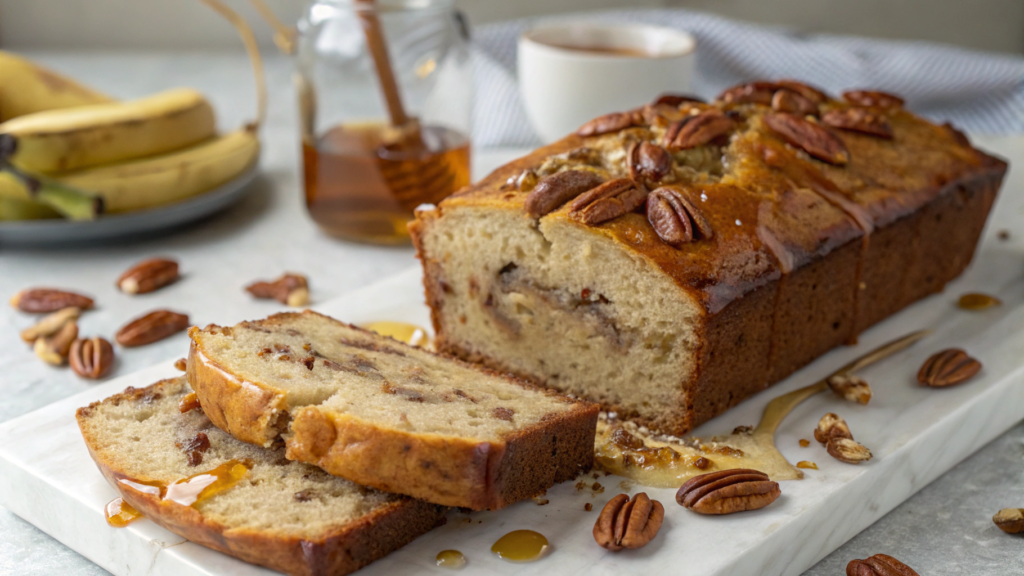
Maple syrup and pecans are a perfect pair. One gives sweetness with depth, the other adds soft nutty bitterness. And bananas tie these two flavors together beautifully.
Ingredients
Dry:
- 1 ½ cups flour (190 g)
- 1 tsp baking powder
- 1/2 tsp baking soda
- 1/2 tsp salt
- 1 tsp cinnamon
- 1/2 cup chopped pecans (60 g)
Wet:
- 2 large very ripe bananas
- 1/3 cup melted butter (75 g)
- 1/3 cup maple syrup (80 ml)
- 1/4 cup sugar (50 g)
- 2 eggs
- 1 tsp vanilla extract
Extras:
- A handful of large pecan pieces for the top
- 1 teaspoon sugar for caramelization
- A drop of maple syrup for the finish
How to Make Maple Pecan Banana Bread
- Preheat the oven to 350°F (175°C). This is one of those recipes where the aroma appears even before the batter goes into the pan. I always prepare the pecans first — lightly toasting them in a skillet. It gives a deeper flavor.
- Mix the dry ingredients. Flour, baking powder, baking soda, salt, cinnamon. Add the pecans. If you want, you can leave some pieces larger — they look beautiful in the slices as whole “shards” of nuts.
- Mash the bananas and add the wet ingredients. Add butter, eggs, sugar, and vanilla. And here’s the moment: when you add the maple syrup, the mixture instantly becomes glossy and more liquid. If the syrup is thick and high-quality, the batter immediately absorbs the aroma.
- Combine the dry and wet mixtures. Mix gently so you don’t lose the airiness. Maple syrup makes the batter thicker and more elastic — that’s normal. The key is not to overmix.
- Transfer the batter to the pan. Place the large pecan pieces on top. I like pressing them lightly with my fingers — this way, the nuts brown evenly instead of burning.
- Bake for 45–55 minutes. This bread darkens faster because of the syrup, so near the end you can cover it with foil. Check with a skewer — it should come out almost dry.
- Let it rest. The warmth from the syrup stays inside longer than usual. About an hour after cooling, the flavor becomes soft and unified, and the pecans stop being sharply crunchy — turning into a warm, mellow nutty accent.
A few notes from practice
If you want the bread sweeter — increase the sugar, not the syrup. Too much syrup makes the batter heavy and wet, so balance is important.
Pecans can be toasted for 3–4 minutes in a dry skillet — it doubles their nutty flavor. And don’t chop them too finely: the larger pieces give that warm pecan accent.
If you want a stronger caramel note, add a teaspoon of brown sugar on top before baking. It melts and creates a light sugar crust.
10. Avocado Dark Chocolate Banana Bread
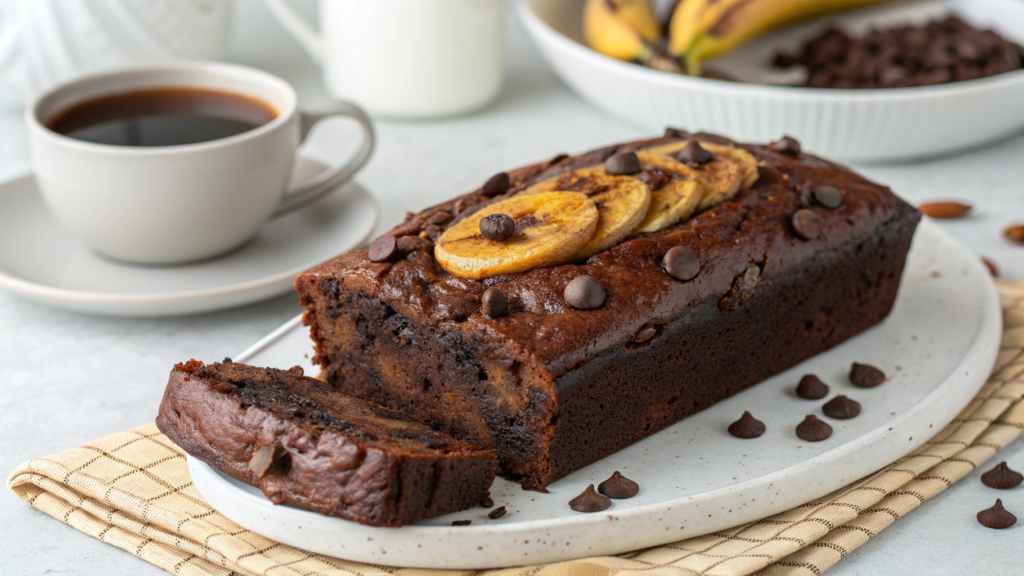
If you want a version of banana bread that feels like a brownie but without the heavy density — this is it. The batter turns a deep dark-caramel color — thick, silky. And we’re still surprised by how perfectly avocado replaces part of the butter, making the banana bread unbelievably soft.
Ingredients
Dry:
- 1 ½ cups flour (190 g)
- 1/3 cup cocoa powder (35 g) — high-quality, unsweetened
- 1 tsp baking powder
- 1/2 tsp baking soda
- 1/2 tsp salt
Wet:
- 2 ripe bananas
- 1 ripe avocado (about 1/2 cup puree)
- 1/3 cup sugar (70 g)
- 1/3 cup melted butter (75 g) — can be replaced halfway
- 2 eggs
- 1 tsp vanilla extract
Extras:
- 1/2 cup dark chocolate chunks (80–100 g), preferably 70%
- A little extra chocolate for the top
How to Make Avocado Dark Chocolate Banana Bread
- Preheat the oven to 350°F (175°C). Chocolate bread smells incredible even during prep, so I always prepare the pan in advance — that way I don’t get distracted later at the most important moment.
- Mix the dry ingredients. Flour, cocoa, baking powder, baking soda, salt. It’s best to sift cocoa — otherwise, you’ll get clumps that are hard to mix in later. And yes, good cocoa makes the flavor much deeper.
- Mash the bananas and prepare the avocado. The avocado must be soft, without dark fibers. Mash it with a fork or blend it — it should look like thick cream. Mix it with the bananas, sugar, butter, eggs, and vanilla. You’ll get a smooth, slightly green mixture, but don’t worry — the color disappears once you add the cocoa.
- Combine the wet and dry mixtures. Add in two rounds, gently. Avocado makes the batter more elastic, so it may feel thick — that’s normal. The key is not to mix it to perfection.
- Add the chocolate chunks. Fold them in, and reserve a bit for the top. The chocolate inside forms little “pools” of melted chocolate after baking.
- Transfer the batter to the pan. Smooth the top with a spoon and sprinkle the remaining chocolate. At this point, the batter already looks like brownie batter, and the cocoa smell becomes intense.
- Bake for 50–60 minutes. Because of the avocado, the bread may take a bit longer. Check with a skewer like this: if it comes out with moist chocolate streaks but almost no raw batter — it’s done. The main thing is not to overbake.
- Let it cool completely. This is one recipe that absolutely needs to rest. Warm, it can seem crumbly, but after an hour the texture becomes velvety, dense, and very even.
A few notes from practice
The avocado must be perfectly soft. If it has fibers or dark spots, that will transfer into the texture of the bread.
If you want an even more chocolate-forward version, add a teaspoon of instant espresso to the dry mix — it makes the cocoa flavor deeper, but the coffee taste won’t really show through.
This bread stores wonderfully in the fridge. The next day it becomes denser, moister, and the chocolate inside sets into small soft plates. Sometimes I think this “second version” is even better.
The final touch to your baking
I know each of us has our own favorite flavor and preferences. Someone reaches for coffee and picks a slice of Cold Brew Banana Bread, someone looks for freshness and immediately bakes Coconut Lime.
Have you tried making any of these ten recipes?
Write in the comments on Rooted Revival — I’ll happily read your versions, help if something isn’t working, and maybe even add a new recipe to this collection.
Always glad to hear your story — because every new loaf is born exactly this way.