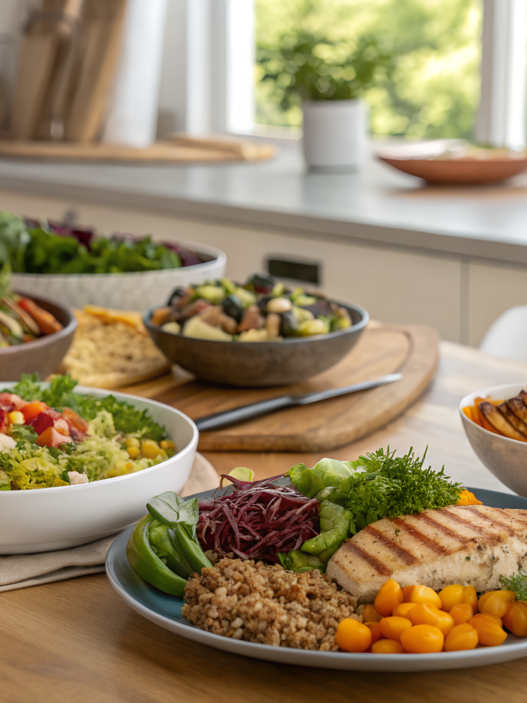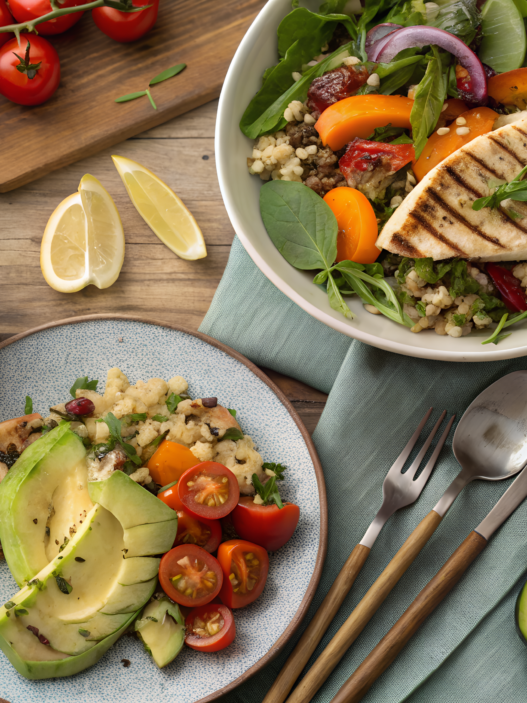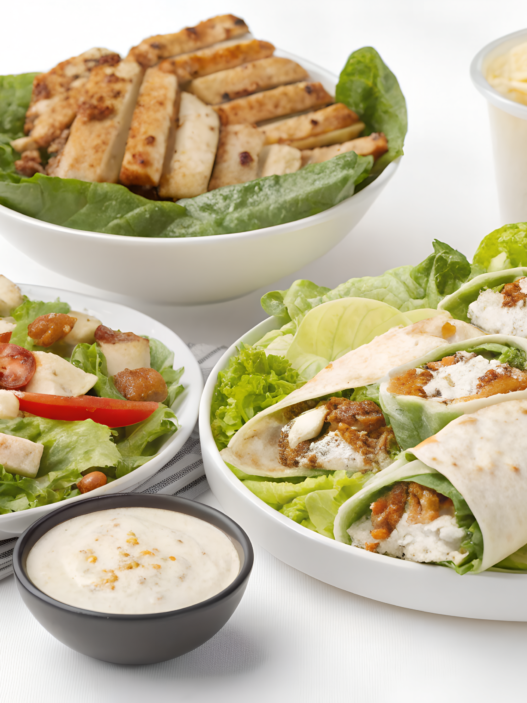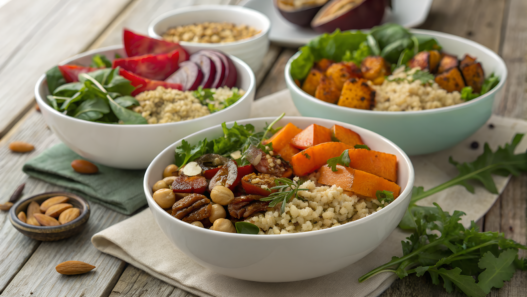
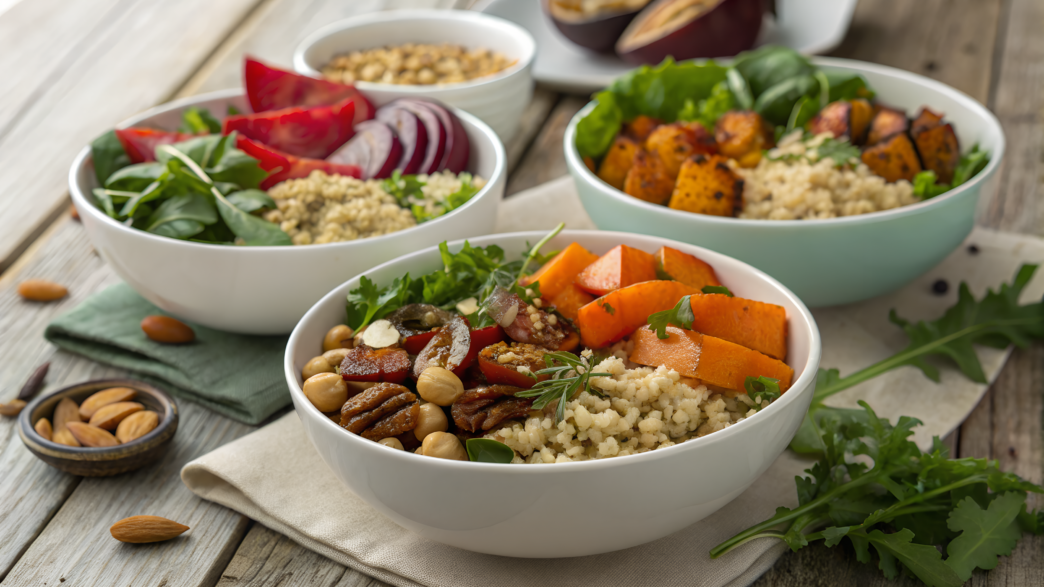
A harvest bowl for us is a simple way to put together a proper meal in one bowl. When you have warm vegetables, some grains, greens, and a sauce that ties everything together, there’s no need to overcomplicate anything.
Over the past few years, these bowls have become something like a working base for us. They’re easy to adjust to the season, to whatever is left in the fridge, to your mood. Today it’s more warmth and smokiness, tomorrow it’s acidity and freshness, the day after that something soft and calm.
In this article, I’ve put together 10 different harvest bowl ideas. Each one solves its own task: some are filling and dense, some lighter, some bright in flavor, and some, on the contrary, calm and reliable. All of them are tested on regular days, not invented just for a picture.
1. Spicy Chipotle Harvest Bowl with Black Beans
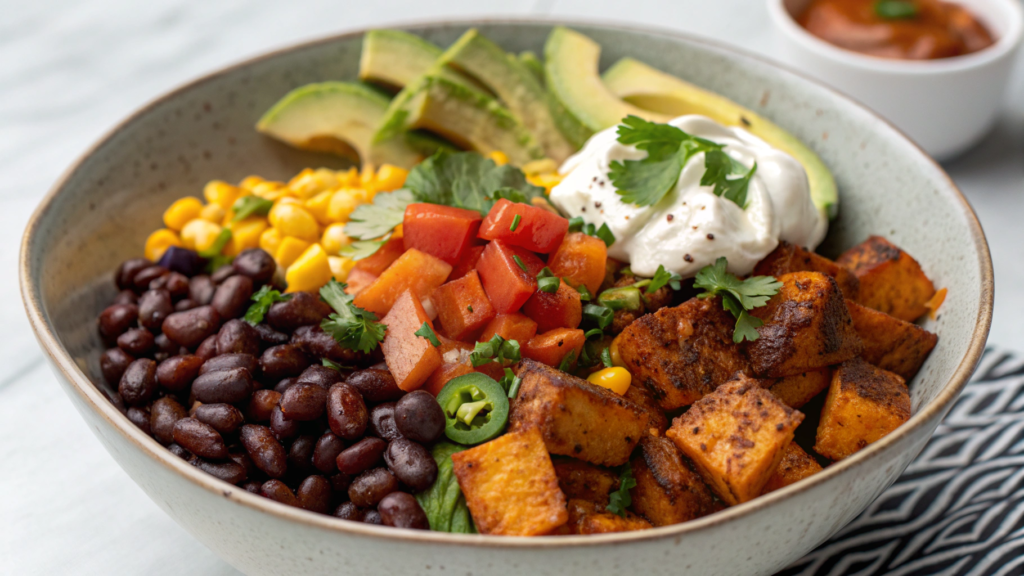
Spicy Chipotle Harvest Bowl with Black Beans is not planned in advance. It comes together from what’s on hand and from understanding how all of it should work together.
What you need
Base
- 1 cup cooked brown rice or farro (≈ 180–200 g)
Protein
- 1 cup black beans, cooked or canned (≈ 240 g), well rinsed
Vegetables
- 1 large sweet pepper, roasted and sliced into strips
- 1 cup corn (≈ 150 g), fresh or frozen
- 1 small red onion, thinly sliced
- 1 ripe avocado, sliced
Greens
- a handful of fresh cilantro or parsley
For the chipotle sauce
- 2 tbsp olive oil
- 1 tbsp chipotle in adobo paste
- 1 tbsp lime juice
- 1 tsp honey or maple syrup
- ½ tsp ground cumin
- salt to taste
How to make it
- Prepare the base. Cook the rice or farro ahead of time and let it cool slightly. It should be warm, not hot — this way the texture holds better and the bowl doesn’t turn into mush.
- Warm up the beans. I always lightly warm the black beans in a pan with a pinch of salt and cumin. It’s a small thing, but the flavor becomes deeper and more rounded.
- Roast the vegetables. Roast the pepper until soft with light char marks. The corn can be roasted along with it or quickly toasted in a dry pan — it needs a light roasted flavor.
- Make the sauce. Whisk all the ingredients together until smooth. The sauce should be thick and smoky, with a balance of heat and sweetness. If you want it softer, add a bit more oil.
- Assemble the bowl in layers. Start with the grains, then the beans, then the vegetables. Add the onion and avocado at the end — this way they stay fresh and don’t sink into the heat.
- Final touch. Drizzle with sauce, add the greens, and… let the bowl sit for a couple of minutes. This really matters. The flavors have time to come together, and the dish feels complete.
Tip. If you’re not eating right away, keep the sauce separate and add it just before serving.
Black beans have long been considered one of the most reliable bases for filling meals. The Harvard T.H. Chan School of Public Health regularly highlights the role of legumes as a source of plant-based protein and soluble fiber, which help you stay full longer and avoid sharp blood sugar spikes.
This is exactly the kind of food after which you can calmly go work in the garden. No heaviness. No sudden energy crashes.
2. Maple Dijon Dressing Harvest Bowl with Chicken
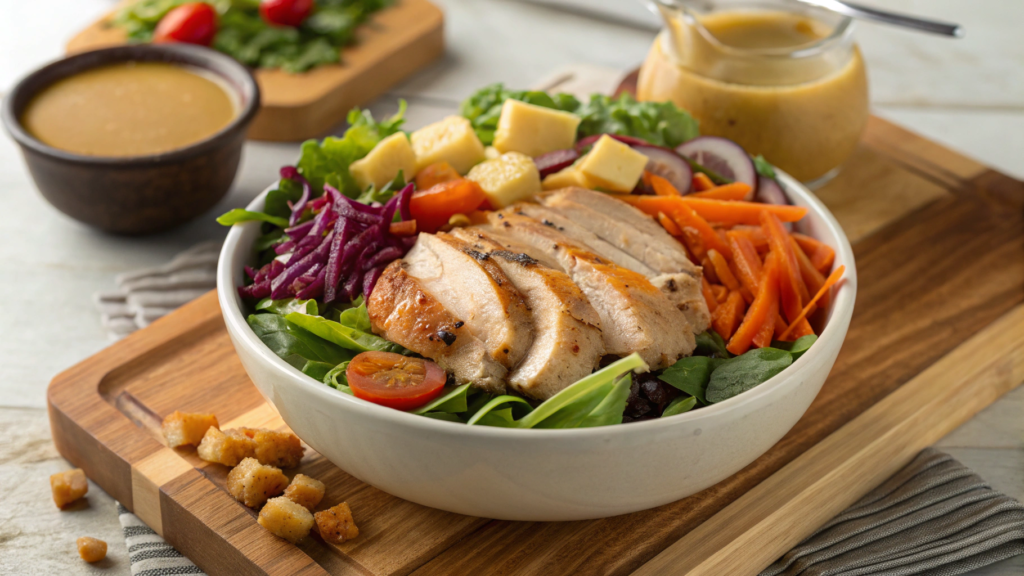
In Maple Dijon Dressing Harvest Bowl with Chicken, the dressing decides everything. Maple syrup gives a soft sweetness, Dijon adds character, and the result is a flavor “like in a good café,” just at home and not complicated at all.
What you need
Base
- 2 cups mixed greens of your choice (≈ 60–80 g): romaine, spinach, salad mix
- ½ cup cooked grains (≈ 90–100 g): quinoa / brown rice / farro (optional)
Chicken
- 1 large chicken breast (about 10–12 oz / 280–340 g)
- 1 tbsp olive oil
- ½ tsp salt
- ½ tsp paprika (regular or smoked)
- ¼ tsp garlic powder
- black pepper to taste
Vegetables and add-ins
- 1 cup sliced cucumber (≈ 120 g)
- 1 cup tomatoes (≈ 150 g), cherry tomatoes halved work best
- ½ small red onion, thinly sliced
- 1 apple, thinly sliced (works really well here)
- ¼ cup nuts: pecans or walnuts (≈ 25–30 g)
- ¼ cup crumbled cheese (optional): feta or goat cheese (≈ 30–40 g)
Maple Dijon dressing
- 2 tbsp olive oil
- 1½ tbsp Dijon mustard
- 1½ tbsp maple syrup
- 1 tbsp apple cider vinegar or lemon juice
- 1 tsp soy sauce (optional, but adds depth)
- 1 small garlic clove, grated (or ¼ tsp garlic powder)
- salt and pepper to taste
If you want a truly “right” flavor without surprises — use real Dijon mustard (it has different heat and acidity), for example, Grey Poupon Dijon Mustard.
How to make it
- Make the dressing first. In a jar with a lid, combine the oil, Dijon, maple syrup, and vinegar. Add the garlic and (if using) soy sauce. Close the lid and shake for 15–20 seconds. Let it sit for a couple of minutes — the flavor comes together, and the mustard softens.
- Prepare the chicken without dryness. Pat the breast dry with a paper towel, lightly coat with olive oil, sprinkle with salt, paprika, garlic, and pepper. Don’t go heavy on spices — the star here is the dressing, not the seasoning.
- Cook it so it stays juicy inside. Heat a pan over medium heat. Cook the breast for 5–6 minutes on one side, flip, and cook another 4–6 minutes (depending on thickness). Then обязательно let it rest for 5 minutes on a board — only then slice it. This really solves the dry chicken problem.
- Prepare the bowl base. Wash the greens and dry them well. If adding quinoa or rice, let them be warm or at room temperature, not hot. That way the leaves don’t instantly wilt.
- Build textures and crunch. Lay out the greens, add cucumber, tomatoes, onion, and apple. Lightly toast the nuts for 2–3 minutes in a dry pan — they become more aromatic, and the bowl immediately feels more “expensive.”
- Final assembly and serving. Slice the chicken thinly across the grain. Drizzle dressing over the greens and vegetables first (just a little), toss, then add the chicken and another small drizzle on top. If using cheese, crumble it at the very end so it doesn’t “sink.”
Tip. If you’re making this for tomorrow: keep the dressing separate, and slice the apple right before eating. That way everything stays fresh and crunchy, not “tired.”
This bowl works because it balances protein, fiber, and fats. In this combination, food usually gives more even satiety: protein (chicken) supports fullness, fiber (vegetables, apple, greens) slows down “empty” hunger, and a bit of fat in the dressing helps flavors open up and makes the dish satisfying. No promises or miracles — just normal nutrition physiology.
3. Sweet Potato and Kale Harvest Bowl with Tahini Sauce
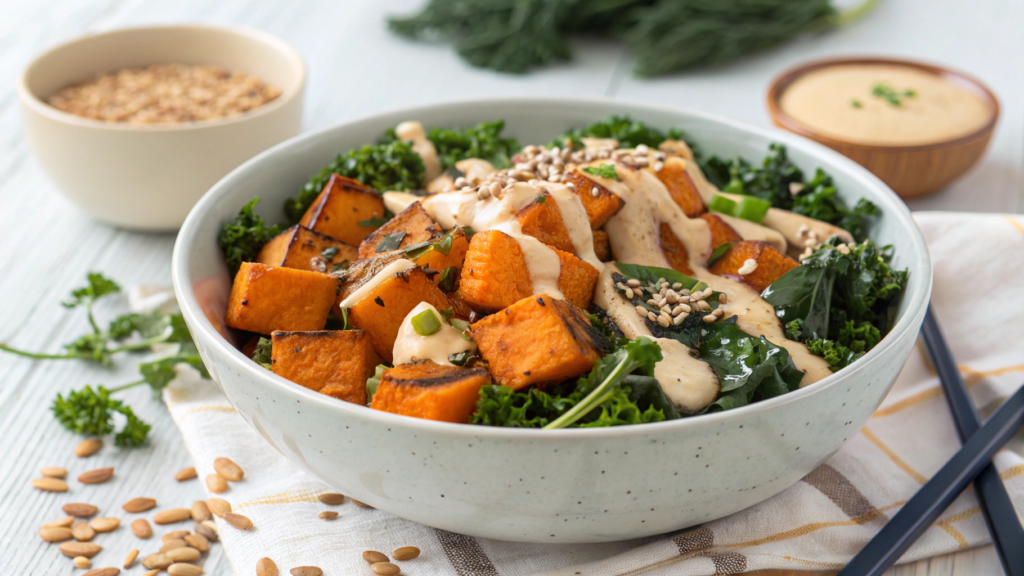
Sweet Potato and Kale Harvest Bowl with Tahini Sauce is that exact bowl we make when it’s cool outside and you want to eat something warm and comforting.
Potato gives the base, kale adds structure and freshness, and the tahini sauce ties everything together. This sauce isn’t just tasty — it’s memorable.
What you need
Base
- 1½ cups roasted sweet potato, cubed (≈ 300–350 g)
- 1 cup cooked quinoa (≈ 170–180 g)
Greens
- 2 cups kale, stems removed (≈ 60–70 g)
Add-ins
- ¼ cup chickpeas, roasted or just well warmed (≈ 60 g)
- 2 tbsp pumpkin seeds or sunflower seeds
- 1 tbsp olive oil
- salt and black pepper to taste
For the tahini sauce
- ¼ cup tahini (≈ 60 ml)
- 2 tbsp lemon juice
- 1 tbsp olive oil
- 1 small garlic clove, finely minced
- 2–4 tbsp warm water (adjust for consistency)
- salt to taste
How to make it
- Roast the sweet potato properly
Cut the sweet potato into cubes about 1 inch (≈ 2.5 cm). Toss with olive oil, salt, and pepper. Roast at 400°F (≈ 200°C) for 25–30 minutes, flipping once. It should be soft inside with light caramelization on the outside. - Prepare the quinoa ahead of time. If you’re cooking quinoa, rinse it well before cooking. This removes bitterness. Keep the cooked quinoa warm or at room temperature. Cold quinoa works worse here.
- “Wake up” the kale
Kale is stubborn greens. Just tearing it and putting it in a bowl isn’t enough. Drizzle the leaves with a drop of olive oil and gently massage with your hands for 30–40 seconds. It will get darker, softer, and much more pleasant to eat. - Make the tahini sauce
Mix tahini, lemon juice, garlic, and salt. Add water gradually — the sauce will thicken at first and then become smooth and creamy. This is normal. Don’t panic, just keep stirring. - Prepare the chickpeas and seeds
Chickpeas can be quickly warmed in a pan with a pinch of salt and paprika. Lightly toast the seeds in a dry pan for 1–2 minutes — the aroma changes immediately. - Assemble the bowl in layers
Start with quinoa, then sweet potato, then kale and chickpeas. Drizzle the tahini sauce generously but without flooding. Add the seeds at the very end — they give the needed texture contrast.
Tip. If the sauce feels too thick once it’s already in the bowl, add literally a teaspoon of warm water and gently mix on top.
Sweet potato is a source of complex carbohydrates and potassium, kale provides fiber and micronutrients, and tahini adds fats and plant-based protein. According to Harvard T.H. Chan School of Public Health, combinations like this usually support a more stable feeling of fullness, without sharp energy crashes.
4. Asian-Inspired Harvest Bowl with Sesame Dressing
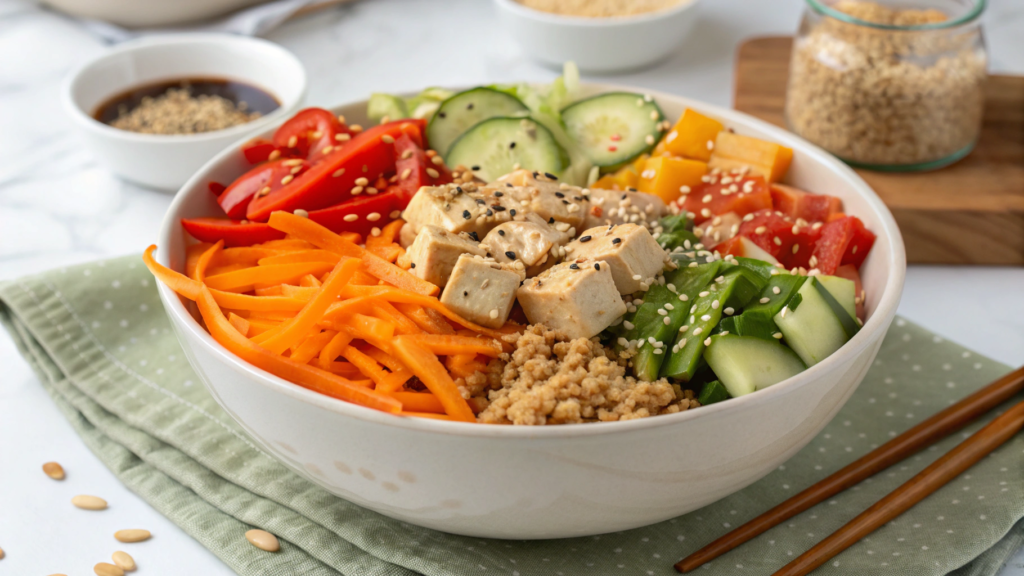
Asian-Inspired Harvest Bowl with Sesame Dressing is not spicy, not sweet, not heavy. Balance. Everything is built on the sauce and the textures.
Sesame, soy sauce, rice vinegar — familiar notes that just work well together.
What you need
Base
- 1 cup cooked jasmine or short-grain rice (≈ 180–200 g)
(can be replaced with quinoa if you want)
Protein
- 7–8 oz firm tofu (≈ 200–220 g)
or - 1 cup shelled edamame (≈ 150 g)
Vegetables
- 1 cup broccoli florets (≈ 150 g)
- 1 medium carrot, thinly julienned
- 1 cup cucumber, sliced (≈ 120 g)
- 2–3 radishes, thinly sliced
Greens and crunch
- 2 tbsp sliced green onion
- 1–2 tsp sesame seeds (white or black)
Sesame dressing
- 2 tbsp tahini or sesame paste
- 1 tbsp soy sauce
- 1 tbsp rice vinegar
- 1 tsp sesame oil
- 1 tsp honey or maple syrup
- 1–3 tbsp warm water (for consistency)
Sesame oil matters here — literally a few drops give that very Asian-inspired flavor. I usually use Kadoya Pure Sesame Oil from Amazon because it’s mild and doesn’t overpower everything else.
How to make it
- Prepare the rice. Cook the rice ahead of time and let it cool slightly. It should be warm or at room temperature. Rice that’s too hot “breaks” fresh vegetables and makes the bowl feel heavy.
- Cook the broccoli. Broccoli can either be quickly steamed (2–3 minutes) or roasted at 400°F (≈ 200°C) with a bit of oil and salt. I roast it more often — the flavor gets deeper but it stays crisp.
- Prepare the protein. If using tofu, cut it into cubes and pan-fry on a dry or lightly oiled skillet until golden. It should be warm but not dried out.
Edamame just needs to be warmed up and lightly salted. - Make the dressing. Mix tahini, soy sauce, rice vinegar, honey, and sesame oil. Add water gradually until the sauce becomes pourable and creamy. It should flow easily off a spoon, not sit in a lump.
- Prep the fresh vegetables. Slice the carrot, cucumber, and radish thinly. Freshness and contrast with the warm components are key here.
- Assemble the bowl. Start with rice, then broccoli and protein. Arrange the fresh vegetables on the side. Drizzle with dressing, sprinkle with sesame seeds and green onion. Mix everything right in the bowl — that way each bite feels different.
Tip. If the bowl tastes a bit flat, add a couple of drops of rice vinegar directly to the bowl. The flavor wakes up instantly.
The combination of complex carbohydrates (rice), plant-based protein (tofu or edamame), and fats from sesame creates even satiety without heaviness. According to Harvard T.H. Chan School of Public Health, these combinations help avoid sharp energy crashes and support a steady feeling of fullness, especially in plant-based meals.
This bowl works well both warm and almost cold. Sometimes we assemble it in the evening and finish it the next day — and it still holds together.
5. Greek Harvest Bowl with Feta and Olives
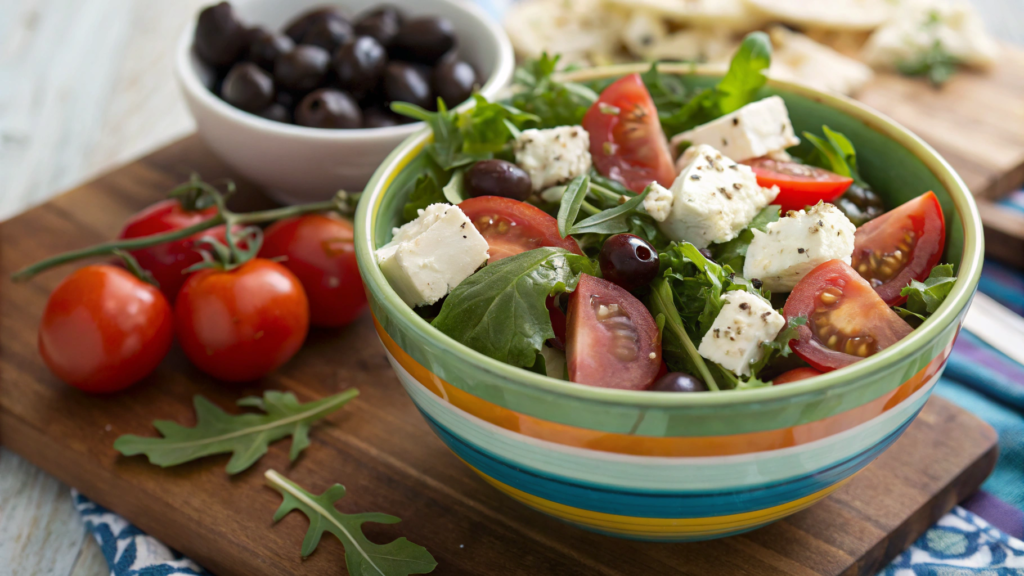
Greek Harvest Bowl with Feta and Olives comes together quickly and uses simple ingredients that don’t require complicated prep.
We usually make these bowls at the end of summer or early fall, when tomatoes are still juicy and greens haven’t lost their flavor. And yes, feta here is not an add-on — it’s a full participant.
What you need
Base
- 1 cup cooked grains: farro or bulgur (≈ 180–200 g)
(can be replaced with quinoa or you can skip grains and use just greens)
Vegetables
- 1 cup cherry tomatoes, halved (≈ 150 g)
- 1 cup cucumber, cut into large pieces (≈ 120–140 g)
- ½ small red onion, thin half-moons
- ½ cup sweet pepper, sliced into strips (≈ 70–80 g)
Cheese and olives
- ⅓ cup feta, roughly crumbled (≈ 50–60 g)
- ¼ cup Kalamata olives, pitted (≈ 40–45 g)
Greens
- a handful of parsley or oregano, roughly chopped
Dressing
- 2½ tbsp extra virgin olive oil
- 1½ tbsp lemon juice or red wine vinegar
- ½ tsp dried oregano
- black pepper to taste
- salt — very carefully, because of the feta and olives
For bowls like this, I always use real sheep’s milk feta — it’s firmer, saltier, and holds its shape better.
How to make it
- Prepare the base. Cook the farro or bulgur until tender but not overcooked. The grains should stay chewy. Let them cool to warm — this helps them absorb the dressing better.
- Cut the vegetables large. No fine knife work needed here. Cut the cucumbers and tomatoes so you actually feel them when eating, not so they disappear. This immediately makes the bowl feel more substantial.
- Soften the onion. Cover the thinly sliced red onion with lemon juice or vinegar for 3–5 minutes. It becomes softer and stops dominating while staying aromatic.
- Mix the dressing. Just mix the olive oil, lemon juice, oregano, and pepper well. No emulsions or complicated techniques. The dressing should stay simple and clean.
- Assemble the bowl base
In a bowl, combine the grains, vegetables, and onion. Drizzle with dressing and gently toss. At this stage, it’s important not to crush the vegetables — just bring everything together. - Add feta and olives at the end. Crumble the feta roughly with your hands, not a knife. Add the olives last. A light toss — and that’s it. The bowl is ready.
Tip. If the bowl feels too acidic, add a few more crumbles of feta on top. It balances acidity really well.
In this dish, olives and feta bring richness, while vegetables and lemon add freshness. According to Harvard T.H. Chan School of Public Health, meals with moderate fat and bright flavors are often perceived as more filling, even with a relatively simple composition.
Extra virgin olive oil here works not just as a fat, but as a flavor carrier — it’s what ties everything into a cohesive dish.
6. Buffalo Cauliflower Harvest Bowl with Ranch
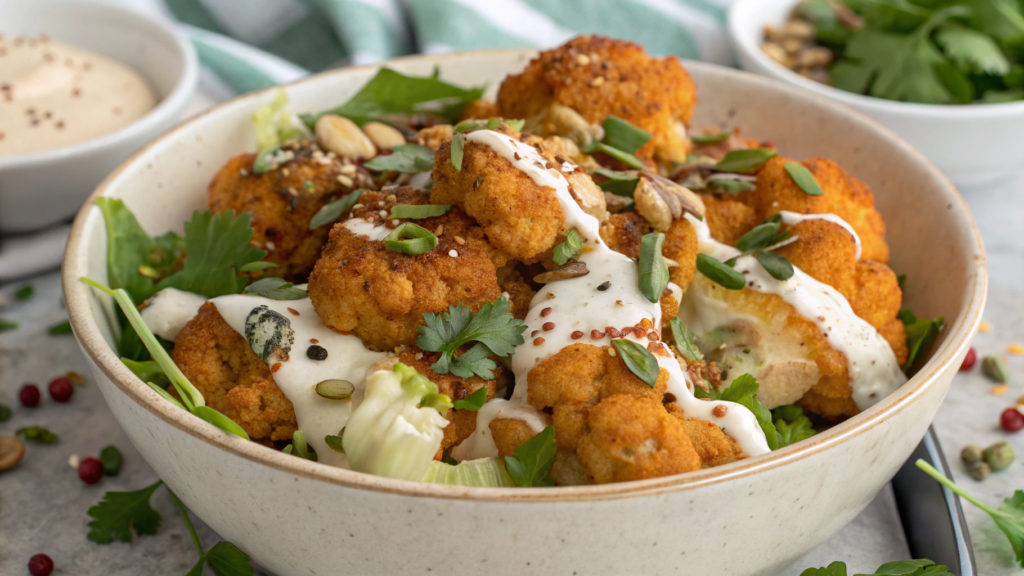
In Buffalo Cauliflower Harvest Bowl with Ranch, heat, creaminess, and crunch are all where they should be.
Cauliflower takes the lead here — and handles it confidently.
What you need
Base
- 1 cup cooked brown rice or farro (≈ 180–200 g)
Buffalo cauliflower
- 1 medium head cauliflower, cut into florets (≈ 500–600 g)
- 2 tbsp olive oil
- ¼ cup Buffalo sauce
- ½ tsp garlic powder
- salt to taste
Vegetables
- 1 cup celery, sliced (≈ 100 g)
- 1 medium carrot, grated or julienned
- a handful of green onions
Ranch sauce
- ½ cup Greek yogurt (≈ 120 ml)
- 1½ tbsp olive oil
- 1 tbsp lemon juice
- 1 tsp dried dill
- ½ tsp dried garlic
- salt and black pepper to taste
How to make it
- Prep the cauliflower. Break the cauliflower into large florets. Pieces that are too small dry out too fast. Toss with olive oil, salt, and garlic powder.
- Roast for texture. Roast at 425°F (≈ 220°C) for 25–30 minutes, flipping once. The cauliflower should be soft inside and browned on the outside. Without this step, the bowl loses half its flavor.
- Add the Buffalo sauceю. Take out the tray, quickly toss the cauliflower with the Buffalo sauce, and return it to the oven for another 8–10 minutes. The sauce should cling, not drip.
- Make the ranch. Mix yogurt, oil, lemon juice, dill, garlic, salt, and pepper. The sauce should be thick but pourable. If needed, add a teaspoon of water.
- Prep the fresh elements. Slice the celery and carrot ahead of time and keep them cold. They create contrast and tone down the heat.
- Assemble the bowl. Add the grains, top with hot cauliflower. Add celery and carrot. Drizzle generously with ranch, but don’t drown it. Finish with green onions.
Tip. If you want it milder, mix a couple of tablespoons of ranch directly into the Buffalo cauliflower before serving. The heat becomes deeper, not sharper.
Roasted cauliflower adds volume and texture without heaviness, while the yogurt-based sauce brings fats and protein. According to Harvard T.H. Chan School of Public Health, combining fiber with a moderate amount of fat helps maintain fullness longer and makes a dish feel more satisfying.
The heat here isn’t for effect — it amplifies flavor and makes simple ingredients more expressive. This bowl is eaten slowly. Even by those who are usually skeptical about cauliflower.
7. BBQ Chicken Harvest Bowl with Smoky Sauce
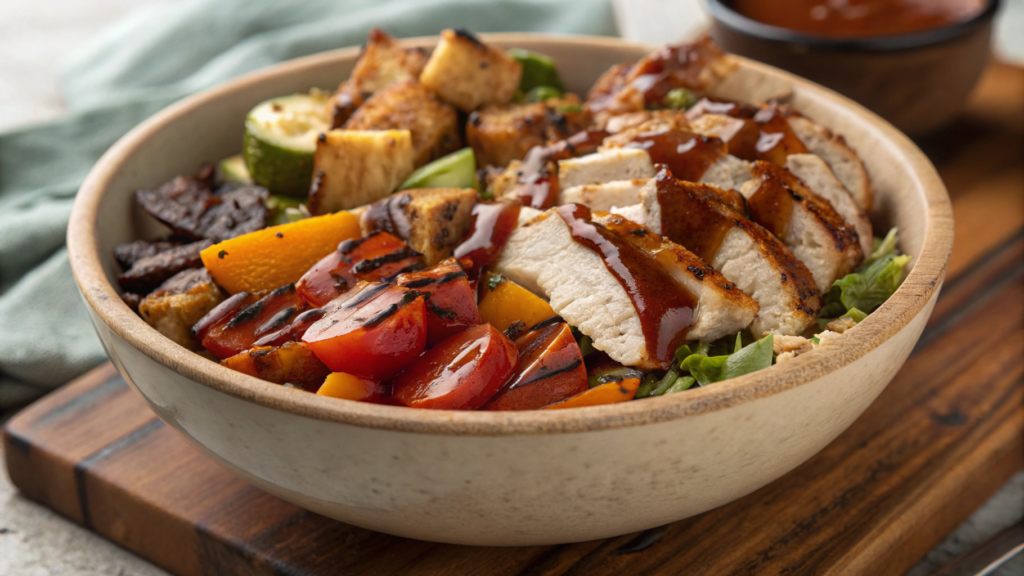
Smoky sauce, warm chicken, roasted vegetables — that’s BBQ Chicken Harvest Bowl with Smoky Sauce. We often make this version at the end of the week, when you want real food without a long process.
What you need
Base
- 1 cup cooked brown rice or farro (≈ 180–200 g)
Chicken
- 10–12 oz chicken breast or boneless thigh (≈ 280–340 g)
- 1 tbsp olive oil
- ½ tsp salt
- ½ tsp smoked paprika
- ¼ tsp garlic powder
- black pepper to taste
Vegetables
- 1 cup roasted corn or corn kernels (≈ 150 g)
- 1 cup red bell pepper, sliced into strips (≈ 120 g)
- ½ small red onion, cut into wedges
Smoky BBQ sauce
- ¼ cup good-quality BBQ sauce
- 1 tbsp apple cider vinegar
- 1 tsp maple syrup
- ½ tsp smoked paprika
- 1–2 tbsp water (for consistency)
For freshness
- a handful of cilantro or green onion
How to make it
- Prep the chicken. Pat the chicken dry with paper towels, rub with olive oil, and season with salt, paprika, garlic, and pepper. The spices shouldn’t be in a thick layer.
- Pan-sear or roast. You can pan-sear the chicken (5–6 minutes per side) or roast it at 400°F (≈ 200°C) for about 18–22 minutes. The key is not to dry it out. After cooking, let it rest for 5 minutes before slicing.
- Roast the vegetables. Toss the pepper, onion, and corn with a bit of oil and a pinch of salt. Roast for 15–20 minutes until the vegetables are soft and lightly browned. This step adds depth of flavor — without it, the bowl feels flat.
- Make the smoky sauce. Mix the BBQ sauce, vinegar, maple syrup, and paprika. Add water until the sauce is pourable but not thin. It should coat the chicken easily, not run off.
- Combine the chicken with the sauce. Slice the chicken and immediately toss it with some of the sauce while it’s still warm. This helps the flavor absorb better and keeps the chicken juicy.
- Assemble the bowl. Add the grains, then the vegetables, then the chicken. Drizzle with a bit more sauce to taste. Finish with greens for a fresh contrast.
Tip. If the sauce feels too thick, add a spoon of warm water directly in the bowl and gently mix on top. The flavor becomes softer, not weaker.
Chicken provides complete protein, vegetables add fiber, and the sauce brings fats and aroma. According to Harvard T.H. Chan School of Public Health, combinations like this — protein, fiber, and moderate fats — most often create steady satiety without heavy fullness after eating.
This bowl works well both fresh and the next day. Sometimes we cook extra chicken and then just assemble a plate in five minutes.
8. Lemon Quinoa Harvest Bowl with Roasted Broccoli
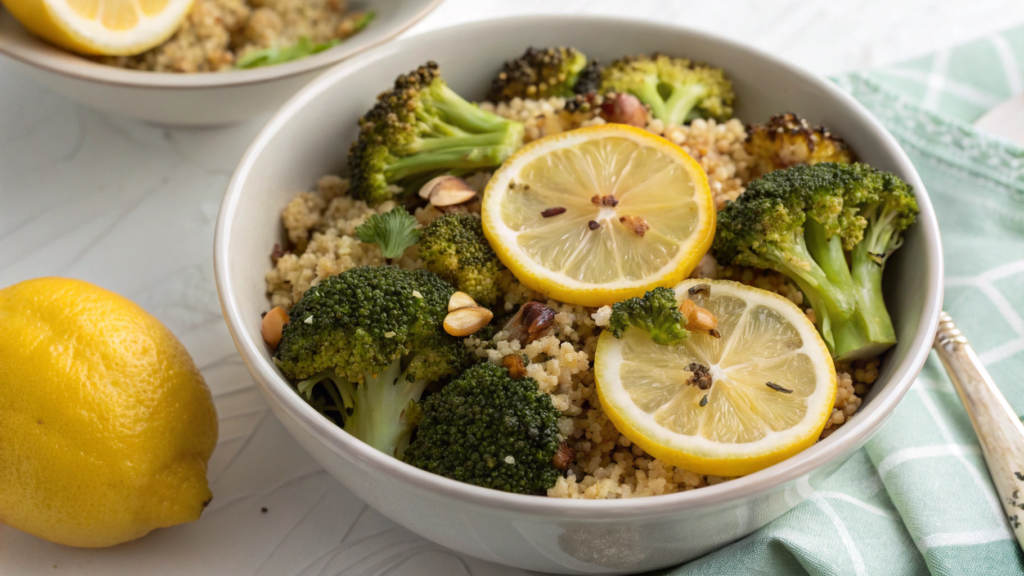
Lemon Quinoa Harvest Bowl with Roasted Broccoli — here you get lemon acidity, nutty quinoa, and roasted broccoli with edges slightly darker than “by the book.” This is food that leaves a pleasant feeling of fullness without heaviness, without the urge to lie down.
What you need
Base
- 1 cup dry quinoa (≈ 170 g), yields about 3 cups cooked
- 2 cups water or vegetable broth (≈ 480 ml)
Vegetables
- 1 large head of broccoli, cut into florets (≈ 400–450 g)
- 1½ tbsp olive oil
- salt and black pepper to taste
Add-ins
- ¼ cup grated Parmesan or Pecorino (≈ 25–30 g)
- 2 tbsp toasted sliced almonds or pine nuts
- a handful of fresh parsley
Lemon dressing
- 3 tbsp olive oil
- 2 tbsp fresh lemon juice
- 1 tsp lemon zest
- ½ tsp Dijon mustard
- salt to taste
Quinoa quality matters here — old or poorly rinsed quinoa turns bitter. I usually use 365 by Whole Foods Market Organic Quinoa because it’s consistently clean and opens up well in flavor.
How to make it
- Cook quinoa without bitterness. Rinse the quinoa thoroughly under cold water — don’t skip this. Then cook it in water or broth for 12–15 minutes, until the grains open. Remove from heat and let it sit covered for another 5 minutes, then fluff with a fork.
- Roast the broccoli properly. Spread the broccoli in a single layer, not piled up. Toss with olive oil, salt, and pepper. Roast at 425°F (≈ 220°C) for 20–25 minutes, until the edges turn deep golden. This is where the flavor comes from.
- Make the lemon dressing. Mix the oil, lemon juice, zest, and mustard. The dressing should be bright but not aggressive. If the lemon is too sharp, add a few drops of water.
- Combine quinoa with the dressing. While the quinoa is still warm, mix in part of the dressing. This helps the flavor distribute evenly instead of sitting on top.
- Add broccoli and cheese. Fold in the roasted broccoli and grated cheese. It will melt slightly and bind the ingredients without making the bowl heavy.
- Final accents. Add the nuts and parsley directly in the bowl. This matters — crunch and freshness should stay alive.
Tip. If the bowl tastes too flat, add a pinch of lemon zest right on top. The flavor lifts instantly.
In this dish, quinoa provides complex carbohydrates and plant-based protein, broccoli adds fiber, and olive oil helps the flavors open up and makes the meal more satisfying. According to Harvard T.H. Chan School of Public Health, taken together, this kind of combination often supports steady energy levels and works well for meals without a heavy feeling.
This bowl is good both warm and almost cold. Sometimes we take it with us — and it easily makes it to lunch without losing flavor.
9. Mediterranean Harvest Bowl with Hummus
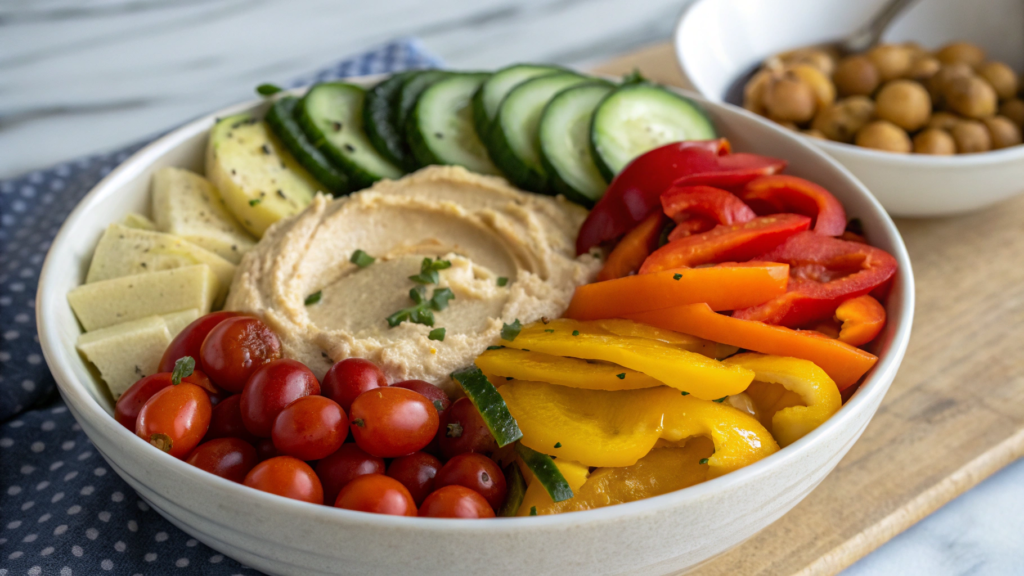
This dish is all about soft flavors, warm vegetables, and creamy hummus. Nothing sharp, nothing extra.
What you need
Base
- 1 cup cooked bulgur or farro (≈ 180–200 g)
Vegetables
- 1 cup roasted zucchini, half-moons (≈ 130–150 g)
- 1 cup roasted eggplant, cubed (≈ 150–170 g)
- 1 cup cherry tomatoes, halved (≈ 150 g)
Protein and add-ins
- ½ cup chickpeas, cooked or canned (≈ 120 g)
- ¼ cup olives, pitted (≈ 40–45 g)
Greens
- a handful of parsley or basil
Hummus
- ½ cup good-quality hummus (≈ 120 g)
- 1 tbsp extra virgin olive oil
- ½ tsp ground paprika (optional)
How to make it
- Prepare the base. Cook the bulgur or farro until tender, but so the grains still hold their shape. Let it cool to warm. A base that’s too hot “breaks” the hummus.
- Roast the vegetables. Toss the zucchini and eggplant with olive oil and salt. Roast at 400°F (≈ 200°C) for 20–25 minutes, until the vegetables are soft and lightly browned. They should be roasted, not dried out.
- Prepare the chickpeas. Chickpeas can just be warmed or quickly sautéed in a pan with a drop of oil and a pinch of paprika. This adds depth of flavor without heaviness.
- Prep the hummus. In a bowl, mix the hummus with olive oil. It becomes silkier and spreads more easily on the plate.
- Assemble the bowl. Add the grains, then the roasted vegetables and chickpeas. Add the tomatoes and olives. Spoon the hummus to the side or underneath, without mixing right away.
- Final touch. Sprinkle with greens and paprika. Mix as you eat — this way each bite feels a little different.
Tip. If the hummus feels too thick, add a teaspoon of warm water or lemon juice directly in the bowl and gently mix it in.
Hummus brings plant-based protein and fats, vegetables add fiber, and grains provide a steady base. According to Harvard T.H. Chan School of Public Health, meals like this often give even satiety and work well as a main meal without a heavy feeling.
There are no sharp flavors here — and that’s exactly why the bowl feels cohesive and calm. This option works well for both lunch and an early dinner.
10. Pomegranate and Arugula Harvest Bowl with Walnuts
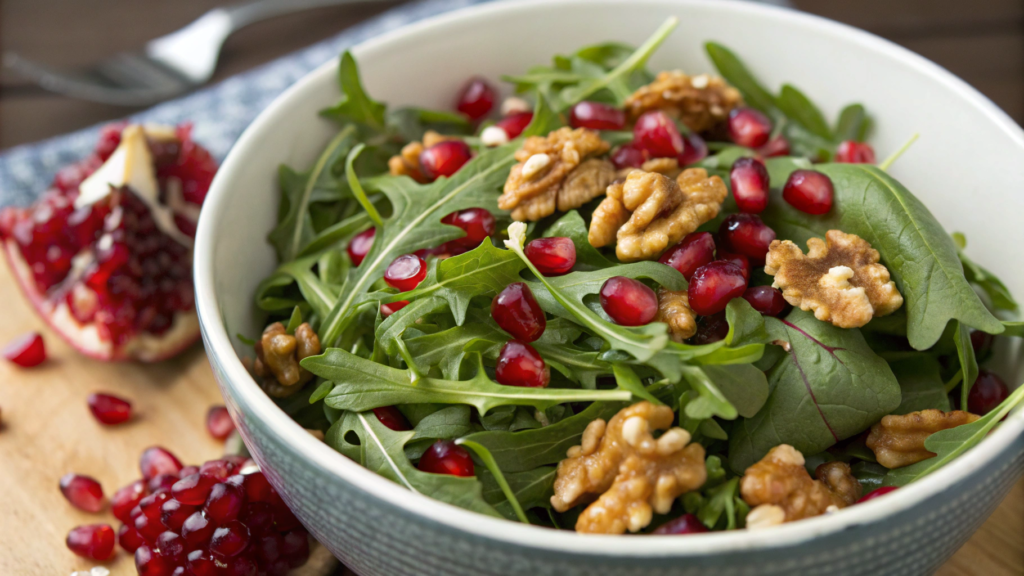
Pomegranate and Arugula Harvest Bowl with Walnuts is one of those cases where a few bold ingredients do more than a long list of add-ins. Peppery arugula, sweet-tart pomegranate, warm nuts.
What you need
Base
- 2 cups fresh arugula (≈ 60–70 g)
- ½ cup cooked quinoa or bulgur (≈ 90–100 g), optional
Add-ins
- ½ cup pomegranate seeds (≈ 85–90 g)
- ¼ cup walnuts, roughly chopped (≈ 30 g)
- ¼ cup thinly sliced red onion (≈ 30 g)
Cheese (optional)
- ¼ cup crumbled feta or goat cheese (≈ 30–40 g)
Dressing
- 3 tbsp extra virgin olive oil
- 1½ tbsp pomegranate or balsamic vinegar
- 1 tsp honey
- salt and black pepper to taste
How to make it
- Toast the nuts. Heat a dry skillet over medium heat and toast the nuts for 2–3 minutes, stirring. They should become fragrant, not dark. Let them cool slightly — the crunch becomes brighter.
- Prepare the base. If using quinoa or bulgur, they should be warm or at room temperature. Grain that’s too hot “kills” the freshness of the arugula.
- Make the dressing. Mix olive oil, vinegar, honey, salt, and pepper. The dressing should be balanced: acidity noticeable, but not sharp.
- Prep the arugula. Rinse and dry the leaves well. If they’re large, tear them by hand. Arugula should stay airy, not packed down.
- Assemble the bowl. Lay out the arugula, add the grains (if using), then pomegranate, onion, and nuts. Drizzle with dressing and gently toss.
- Add final accents. If using cheese, crumble it at the very end. It softens the sharpness of the arugula and ties the flavor together.
Tip. If the pomegranate is too tart, add a few more nuts or a bit more cheese — the balance comes back instantly.
Arugula brings bitterness and freshness, pomegranate adds acidity and sweetness, and nuts provide fats and texture. According to Harvard T.H. Chan School of Public Health, the combination of greens, nuts, and fruit is often perceived as more filling than it seems at first, thanks to fats and fiber that slow hunger.
This bowl works well at the start of the day or as a light dinner. It doesn’t require a pause after eating — on the contrary, it leaves a feeling of clarity.
Your version
There’s no right or wrong option here. There’s only what you need at the moment. Today it might be spicy cauliflower with ranch, tomorrow lemon quinoa with broccoli, and then suddenly you want pomegranate, arugula, and walnuts. And that’s normal.
We cook like this not because “that’s how it should be,” but because it makes life easier. You can swap ingredients, play with sauces, adjust to the season, the weather, your state of mind. And each time it turns into something new, even if the base is familiar.
I’m really curious which bowl from this list resonated with you the most. Or maybe you build your own versions and have a favorite combination that always works. Write about it in the comments — these things are rarely the same for different people, and that’s exactly why they’re valuable.