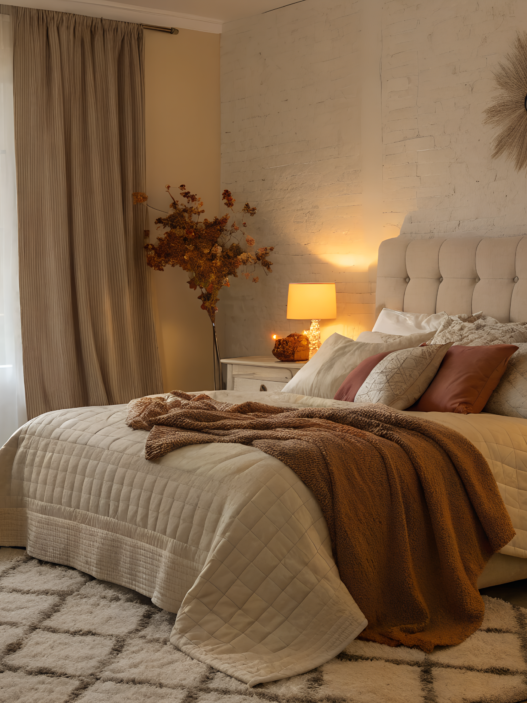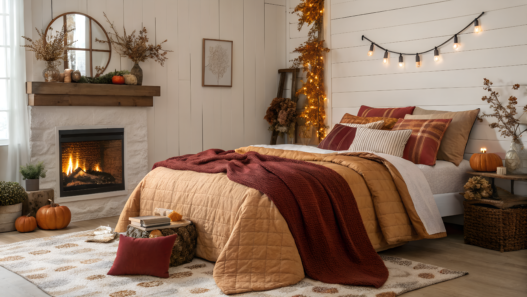
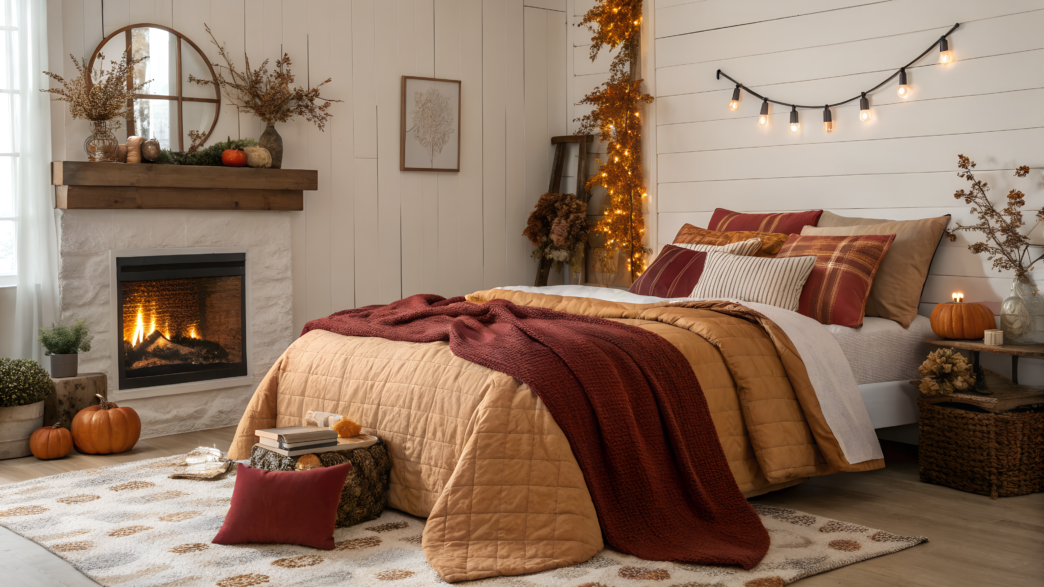
In fall, you always want more stability, soft textures, deep shades, and calm light at home. In this collection, I gathered 10 fall ideas for the bedroom that help quickly transform the space for the new season: textiles, lighting, small decorative accents, and working with materials.
We used these solutions both in Idaho and in the PNW — in homes with different layouts, lighting, and climates. And it turned out that exactly these elements give the maximum effect with minimal cost, for example, one new throw layer, a small rug rearrangement, an accent wall, warm metal, or an updated bedside zone.
Each of these ideas helps the bedroom move into fall mode without major renovation. And one more important point: most solutions can be adapted to any palette and furniture without rearranging the room.
1. Rustic Plaid Bedding for Autumn Warmth
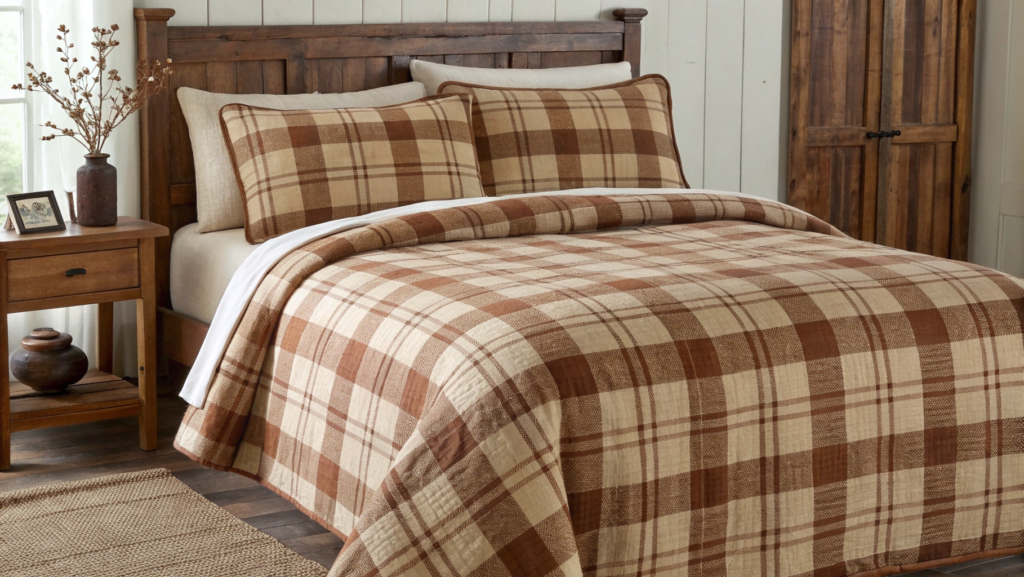
Plaid bedding in a rustic style truly sets the mood of a fall bedroom. This fabric brings a feeling of weight and calm, especially after the first cold rain of the season.
What you will need
- Plaid duvet cover or flannel blanket
- Pillowcases made of dense cotton or linen in warm tones
- One accent throw — wool or wool-like
- A pillow with embroidery or a texture inspired by a “fall home”
If you want to treat yourself to a really high-quality piece, it’s better to choose dense flannel. Many people grab the first option they see and then get surprised when the fabric loses its shape by December. Our set in a similar style, Flannel Plaid Duvet Cover Set, has served us perfectly.
How to build a cozy fall look:
- Make the bed with the plaid duvet cover, leaving the edges slightly longer than usual. Flannel is denser than cotton, and it needs a bit more space to lay flat — otherwise, it bunches up at the foot of the bed.
- Add solid pillowcases in warm shades. The contrast with the plaid makes the composition calm. If the pillowcases are linen, smooth them lightly with your hands — linen loves natural texture, not perfect smoothness.
- Place an accent throw at the foot of the bed. It’s better to choose a dense throw: it will hold its shape instead of slipping to the floor every couple of days. We often use wool throws exactly as a visual anchor.
- The final touch is a decorative pillow. But only one or two. Here, it’s not about quantity but texture. A pillow with embroidery or a dense woven pattern pulls the look together and makes it complete without overload.
As soon as you bring out the flannel, the entire bedroom changes. The room holds warmth better, the sheets slide less, and the bed feels denser and more stable. This is literally one of the fastest ways to shift the bedroom into fall mode without major costs or rearrangements.
2. Layered Knits and Throws in Earth Tones

Multilayered knitted throws in natural shades change the feeling of the bedroom. The same things are there, but it suddenly feels calmer, warmer, more functional. Layering works as a tool — both visually and in how the room feels.
Warm earthy palettes also do their part. Terracotta, ochre, soft gray, wheat tones — all these shades blend naturally. Nothing complicated, just a smart mix of textures and colors that coexist well together.
What you will need
- Chunky knit throw
- Light cotton or linen throw
- Thin bedspread or scarf-throw for the final layer
- Pillows with knitted or textured relief
- One accent element in a saturated natural shade
How to create a layered fall textile look
- Start with the heavy main throw. Chunky knit forms the base layer and sets the structure. This type of throw doesn’t slide off and keeps the overall shape of the bed.
- Add the middle layer — a cotton or linen throw. It’s slightly longer than the first and creates a neat transition between textures. This layer gives extra warmth but doesn’t create excess density.
- Place the top accent throw. A light bedspread or scarf-throw in a saturated shade creates a clear seasonal accent. You can smooth it out slightly or leave small natural folds — this makes the look calm and lived-in.
- Introduce textured pillows. One pillow with knitted cables and one with a relief pattern is enough to support the style and add depth.
During the day, you can leave two layers so the bed doesn’t overheat, and in the evening return the third to quickly add warmth without changing all the textiles. This approach is especially convenient because throws of different weights give more temperature control in the mid-season.
In the PNW, this is particularly useful: temperatures drop sharply, and the ability to adjust the bedroom in literally a minute saves both time and energy.
3. Moody Accent Wall Colors for Fall
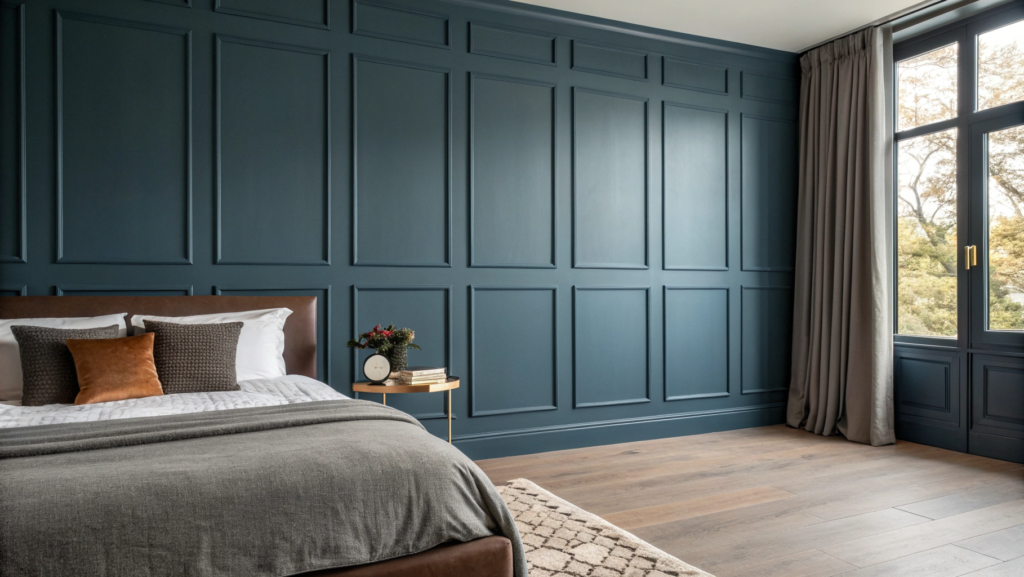
An accent wall in deep muted shades visually increases the volume of the room, softens the light, and creates a feeling of stability in a season when temperatures shift and days get shorter.
We first tried this method back in Idaho — we chose a deep gray-blue then. The room instantly became cleaner in perception: unnecessary details seemed to step back, and the bed became the main element of the space.
Popular shades that work well in fall
- Deep gray-blue — a calm backdrop that doesn’t pull attention
- Dark ochre — dense warm shade that pairs well with wood
- Copper brown — creates a stable, “heavy” visual layer
- Gray-olive — a universal color that works with white, wooden, and black furniture
- Graphite — highlights textile layers and warm lamp light
And yes, you don’t have to jump straight into dark tones. Deepened natural shades aren’t always gloom. The main thing is to choose a color that doesn’t conflict with the existing textiles and furniture.
What you will need
- Paint in the chosen deep fall shade
- Medium-size paint roller
- Brush for corners and details
- Painter’s tape
- Primer (if the wall is light or too smooth)
How to create a fall accent wall
- Choose the wall that receives the main light. On such a surface, deep shades look cleaner and shift less into “muddy” tones.
- Prepare the surface. Quickly sand it, remove dust, apply primer — especially important if the original color is light. This helps the shade lay more evenly.
- Apply painter’s tape along the edges. It helps keep clean lines and saves time on later corrections.
- Apply the first coat of paint. Use a medium-density roller — it spreads thick shades more evenly. Do not try to cover everything in one go.
- Add the second coat after the time indicated on the can. Dark shades reveal their depth only after the second application.
- Remove the painter’s tape while the paint is still slightly wet. This keeps the edge clean and without tears.
After installing the accent wall, it becomes easier to choose the rest of the room’s decor. Textiles in warm shades, wood, matte lamps — everything starts working logically. We often noticed: once you add one deep color, the decor comes together on its own without long searching.
4. Pumpkin-Inspired Tabletop Decor
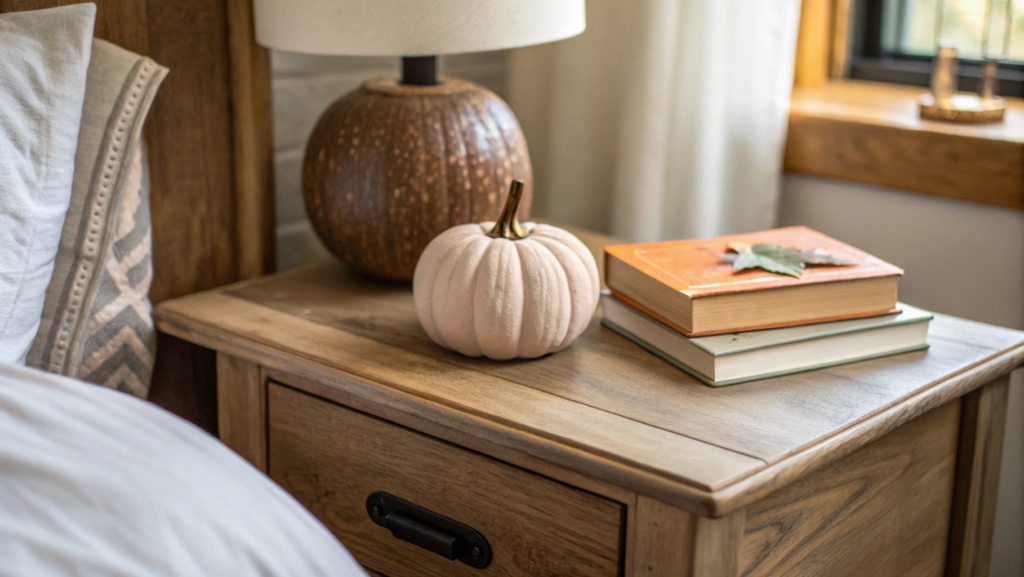
Small accent elements change the mood of the room without much effort. For example, pumpkin-inspired decor for tabletops easily pairs with wood, metal, and glass, and it adds the right amount of seasonality without overload.
Even a small ceramic pumpkin on the nightstand changes the room. Not bright, not shiny — just matte, in a soft clay shade.
What you will need
- Ceramic or wooden mini pumpkins in neutral tones (Ceramic Pumpkin Table Decor Set)
- Glass tray or wooden base for the composition
- Small vase with dried grasses or branches
- A couple of warm-metal pieces — for example, a brass candle holder
- One element with a soft texture: linen napkin, fabric base
How to create a fall composition with pumpkins
- Define the surface where the composition will sit. The best option is a space visible right when you enter the room: a nightstand, dresser, or a narrow table by the wall. The surface should be even so small elements do not roll.
- Choose the base for the composition — a glass tray or wooden stand. This base gathers the items into a whole and keeps small objects from looking chaotic. If the surface is dark, glass creates a neat contrast; if it is light, wood adds depth.
- Add one or two mini pumpkins in ceramic or wood. It’s better if the sizes differ slightly — the visual line looks calmer and more natural this way. Place them not strictly in the center but slightly off-center so the composition looks more alive.
- Place a small vertical element nearby — a vase with dried grasses or branches. The height compensates for the low items and creates a balanced structure. Simplicity matters here: one branch or a few thin grasses are enough to highlight the season.
- Introduce warm metal — a brass candle holder or a small metal detail. Metal strengthens the fall palette and reflects the soft light of lamps. Avoid overload: one metal accent works better than several.
- Add a soft texture at the base. A linen napkin or fabric pad sets the tone and softens the edges of the arrangement. The fabric should be calm in color — cream, wheat, or light olive.
- Check the composition under different lighting. In fall, the light changes quickly, and decorative pieces can look different in the morning and evening. It’s better to move the items slightly so the shadows do not create unnecessary heaviness.
Pumpkin accents work especially well in bedrooms where we don’t want bright decorations but still want a seasonal atmosphere. A small tabletop composition adds warmth, makes the room feel more collected, and overall doesn’t require complex upkeep.
5. Vintage Lantern Lighting by the Bedside
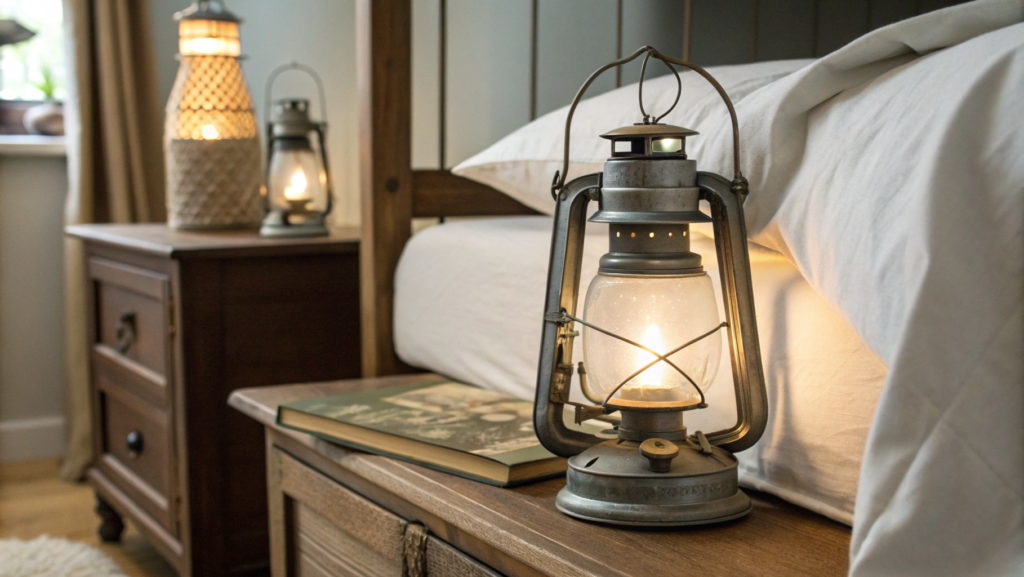
Vintage lanterns by the bedside give a soft downward direction of light, muted metal elements, and a diffused glow through matte glass. All of this creates calm and functional lighting that works both during the day and in the evening. The effect feels especially balanced in small bedrooms.
What you will need
- Vintage lantern with a metal body
- Warm-light LED bulb (2700–3000K)
- Glass or metal tray-stand
- Small decorative wooden detail
- One element with a soft texture — thin napkin or fabric base
How to create bedside lighting with a vintage lantern
- Choose a lantern with matte or ribbed glass. This kind of light doesn’t hurt the eyes and doesn’t create sharp shadows. If the glass is transparent, the light can be too direct — especially in smaller rooms.
- Install a warm LED bulb with low brightness. 2700–3000K gives a soft, even glow suitable for reading or relaxed evening lighting. You can regulate brightness with a dimmable bulb or simply use one with lower wattage.
- Place the lantern on a stand. A glass or metal tray creates a visual “zone,” separating the lantern from small items on the nightstand. This makes the composition structured and easier to clean.
- Add one small wooden detail. For example, a figurine, a box, or a mini panel. Wood softens the metal and improves the balance of materials, which is important for fall interiors.
- Use a soft fabric base. A thin linen napkin or cotton pad under the lantern stabilizes the light composition and makes the lantern look less “harsh” visually.
- Check the height placement. The light should be below eye level when you’re lying in bed. This reduces eye strain and makes the lighting more comfortable.
- Evaluate the light in the evening. Fall evenings darken quickly, and it’s important to see how the lantern behaves in low lighting. Sometimes shifting it just a few centimeters helps avoid bright reflections on the wall.
Vintage lanterns by the bedside are especially convenient in the mid-season. The light is directed yet not aggressive, and the composition doesn’t require frequent adjustments.
We usually use this format in bedrooms where we want neat, calm lighting without large table lamps. It feels both atmospheric and practical.
6. Nature-Themed Wall Art with Leaves and Branches

Natural motifs with leaves and branches add structure to the walls without overloading the space. These compositions are easy to adapt to different styles — from minimalism to a warmer, more collected interior.
After pruning the shrubs, I brought home a hawthorn branch just to see how it would look on the wall in a wooden frame. And it turned out that such details bring the room together better than any poster.
What you will need
- Wooden or metal frames (natural texture preferred)
- Pressed leaves, small branches, or dried grasses
- Cardstock or thick paper in a calm shade (cream, graphite, wheat)
- Archival double-sided tape or mounting dots
- One element with pronounced texture — wool or linen fabric as a background
How to create nature-inspired fall wall art
- Choose the base — a frame of the right size. It’s better to start with smaller formats: 5×7 or 8×10 inches. These sizes are easier to combine and do not press on the bedroom space.
- Prepare the background. Thick paper or cardstock should have a calm shade. A dark background highlights the shape of the leaves, while a light one emphasizes the structure of the branches. If you want more depth, you can use a piece of linen fabric instead of paper.
- Select the leaves or branches. Maple, oak, hawthorn leaves, small juniper branches — all of these dry easily and keep their shape. It’s important to choose elements without damage so the composition looks clean and neat.
- Attach the elements to the background. Use archival tape or special mounting dots — they do not leave stains or damage the paper. The leaf should lie flat without bubbles. A branch can be secured in two or three spots to preserve its natural line.
- Assemble the composition. It’s better to leave some air around the natural element. Dense, fully filled collages tire the eye more quickly. One expressive leaf or one larger branch works much better, especially in a bedroom setting.
- Combine several frames. A composition of 2–3 small frames creates a clear vertical or horizontal line. This helps visually balance the wall, especially if a tall lamp or nightstand is placed next to it.
- Check the lighting. Natural elements look different under warm and cool lighting. Warm light highlights yellows and browns, while cool light brings out greens and gray-olive tones. Bedrooms usually work better with warm lighting.
Nature-inspired wall art doesn’t require frequent care, easily tolerates humidity changes, and keeps its shape. And the most convenient part is that you can replace the elements as the seasons change without touching the structure of the composition itself.
7. Warm Metallics in Lamps and Hardware

Warm metals in lamps and hardware — brass, copper, warm bronze — create neat accents that don’t pull all the attention but bring the room together into a single whole.
We first understood the value of such details when we replaced the old cool silver handles on the dresser with matte brass. Everything changed instantly: the wall color became deeper, the textiles warmer, even the wood on the nightstand looked richer. Sometimes one detail is enough for the room to feel more visually balanced.
What you will need
- Lamps with brass or bronze elements
- Hardware and handles in a warm metallic shade
- Small decorative accents: mini trays, candle holders, metal frames
- Screwdriver or mounting kit for quick hardware replacement
- Cloth for caring for the metal
How to add warm metal to a bedroom interior
- Start with the lamp. The lamp is the most noticeable object after the bed. A base made of warm metal softens the light and makes the textiles warmer. If the room is small, it’s better to choose a lamp with a matte finish — it prevents glare.
- Replace the hardware on the furniture. This is an easy way to update the room in 10–15 minutes. Brass or bronze handles highlight the structure of the wood and pair well with the fall palette. It’s important to keep a single metal tone — mismatched tones become obvious quickly.
- Add one or two small metal accents. A tray for keys, a small candle holder, or a photo frame. Such elements strengthen the cohesiveness of the composition, even if the room feels visually scattered. Matte surfaces are preferable — they are more resistant to fingerprints.
- Check the lighting. Warm metal behaves differently under various lighting. In the evening, brass gets a deep honey tint, and in the morning it may look brighter. Sometimes it’s enough to slightly rotate the lamp or shift the tray for the metal to look smoother.
- Care for the surface. Warm metals may darken over time. A cloth and a gentle, non-abrasive cleaner help preserve the shade. This is especially relevant in bedrooms where lamps and handles are touched frequently.
Warm metallic elements fit perfectly into a fall interior. They help maintain visual balance between wood, textiles, and deep seasonal shades, and the room itself feels more collected and harmonious.
8. Layered Rugs in Neutral Fall Textures
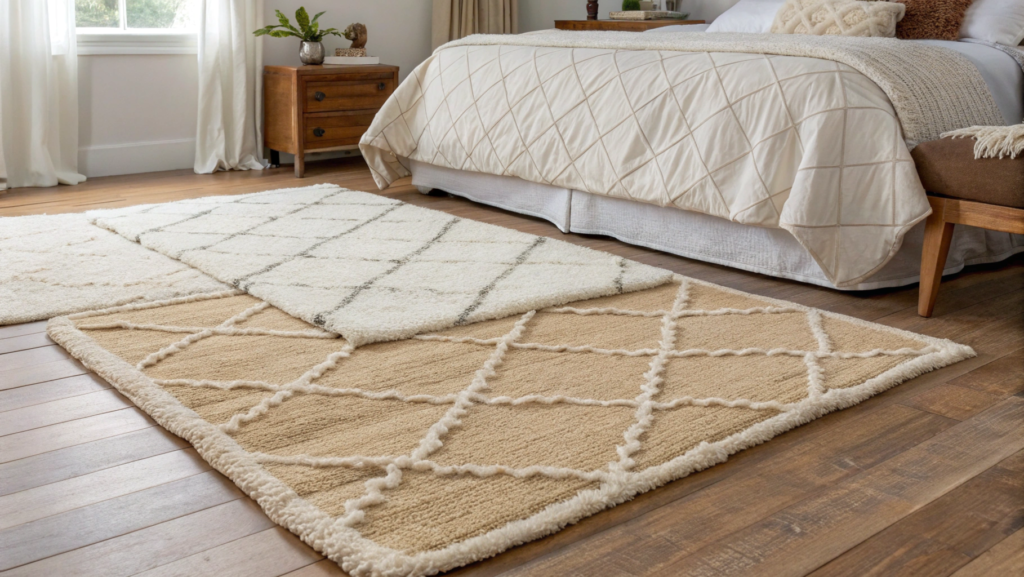
Layered rugs in neutral fall textures give the bedroom stability, reduce noise, and add the kind of softness underfoot that is often missing in the colder season.
We started using this method a few years ago, when the wooden floors in the PNW became noticeably colder. One rug didn’t solve the problem: it added warmth, but the room still felt empty. As soon as we added the second layer, everything changed. The bed area became clearer, the step quieter, and the space looked more collected.
What you will need
- Base rug in a neutral shade (jute, cotton, or wool)
- Top rug with pronounced texture — wool, berber, woven pattern
- Non-slip pad
- Small accent rug at the foot or side of the bed
How to create a layered rug composition
- Start with the base layer. Jute or cotton creates a strong foundation and lays flat even on uneven floors. This rug sets the boundaries of the zone and provides warmth underfoot.
- Add the pad. A non-slip pad holds both rugs in place and prevents shifting when walking. The pad is especially important if the bedroom has wooden or laminate floors.
- Place the second, more textured rug. It’s better to put it at an angle or slightly offset relative to the base layer. This asymmetry makes the composition more lively and softens the straight lines of the furniture.
- Choose a texture that creates contrast. If the base rug is smooth, the top one should have a pronounced pattern — berber loops, raised stripes, dense wool. Contrast helps visually highlight the area near the bed.
- Add a small accent rug if desired. It isn’t a required part of the composition. This rug is used to highlight the zone at the foot or the side of the bed or to slightly increase the floor’s texture. You can skip it — layering will still work well.
- Check the composition’s stability. Walk across the rugs several times. If the edges lift or the layer shifts, adjust the angle or add a second pad.
- Evaluate the look under evening light. Textured rugs respond to warm lamp light differently than daylight. In the evening, the texture becomes more pronounced, so it’s important to make sure it doesn’t create overly sharp shadows.
Layering on the floor adds depth to the room and makes it more resistant to seasonal temperature changes. This approach is convenient because it doesn’t require large expenses and works well in bedrooms of any size — it’s enough to choose two rugs that don’t compete with each other but help bring the space into a unified composition.
9. Candle Arrangements with Seasonal Scents
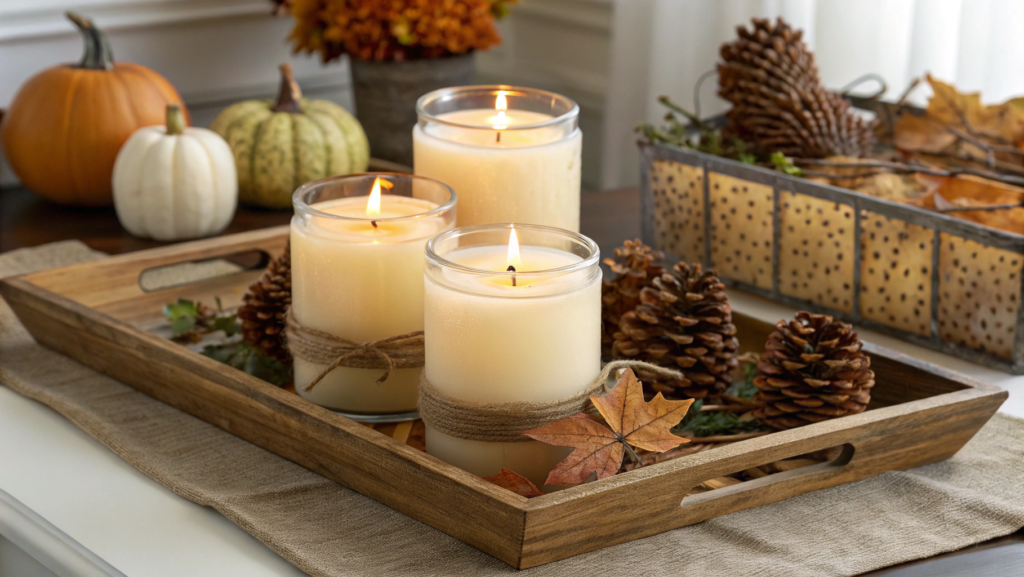
Candle arrangements with seasonal scents give two effects at once: visual warmth and an aroma that doesn’t overpower the textiles, wood, and overall fall décor.
We started using such arrangements when we noticed that single candles quickly get lost in the room. But when candles stand in a group, on a tray or in a stable structure, the light spreads more evenly, the scent disperses softer, and the space becomes more organized.
What you will need
- Candles of different heights — tumblers, pillars, tealights
- Fall-season scents: vanilla, cedar, sage, pumpkin spices
- Heat-resistant tray made of metal or glass
- Small decorative details: wooden beads, smooth stones, mini branches
- Fireproof stands for tall candles
If you need stable candles with good aromatic longevity, look at this option — Soy Wax Fall Candle Set. They burn evenly, which is convenient for multi-hour evening arrangements.
How to assemble a fall candle arrangement
- Choose a tray of the right size. It should be wide enough to hold several candles but not take up the entire space on the nightstand or dresser. Metal or glass options work best — they withstand heat well.
- Group the candles by height. Place tall ones toward the back of the tray, medium ones in the center, and low ones in front. This structure holds the light and helps the scent distribute gradually.
- Choose one main scent and one supporting scent. For example, vanilla and cedar, or pumpkin and sage. Too many scents create a heavy effect in a bedroom, so it’s better to limit yourself to two.
- Secure tall candles on fireproof stands. This prevents the surface from overheating and allows you to even out the composition’s height. Stands can be moved slightly to create clean visual lines.
- Add decorative elements. A couple of wooden beads, a small juniper twig, or a few smooth stones fill empty areas on the tray, making the arrangement tidy and stable.
- Check air direction. If candles are placed near a window or vent, their flames will move actively, causing uneven burning. In the bedroom, choose a spot with minimal airflow.
- Evaluate brightness in the evening. Fall candles give warm, dense light, and it’s important to be sure it’s not too bright for nighttime. Sometimes replacing one candle with a lower one is enough to achieve even illumination.
- Keep a safe distance from fabrics. Candles shouldn’t stand close to curtains, bedding, or decorative textiles. A minimum of 8–10 centimeters is a good guideline for small arrangements.
A small reminder: candles are always better kept within sight. Even stable arrangements on a tray require occasional attention — this helps avoid overheating the surface and protects nearby textiles.
Candle arrangements are convenient because they’re easy to move, refresh, and adapt to the season. It’s enough to switch one scent or add a new element, and the bedroom gains a new mood without a full décor update.
10. Wooden Furniture Accents with Autumn Details
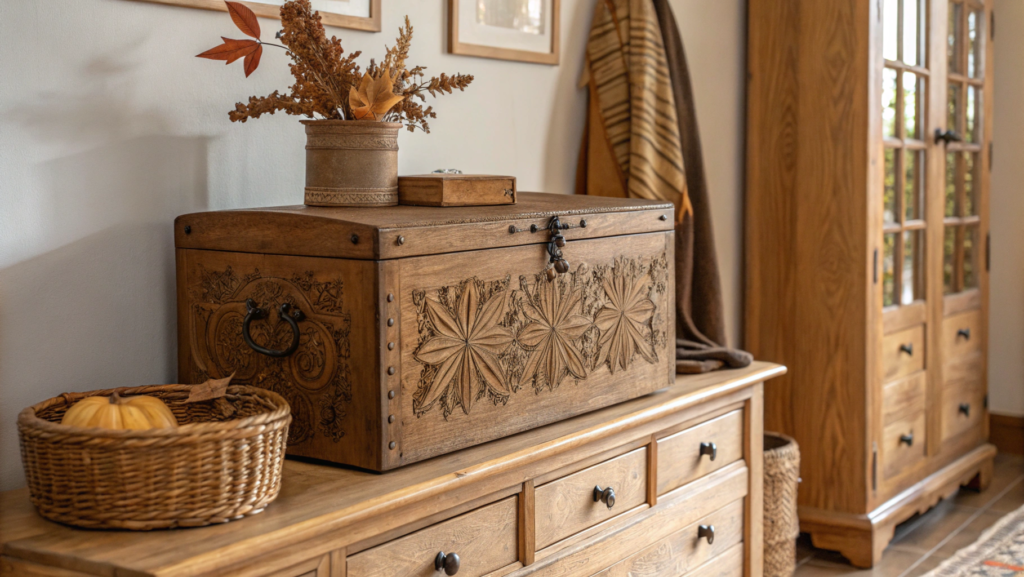
Wooden accents with autumn details give the room warm texture and calm lines without requiring major changes. These can be small inserts, functional pieces, or decorative elements — anything that visually supports the fall palette and makes the room feel more cohesive.
We found an old carved wooden box that we had set aside for repairs long ago. Lindy placed it on the dresser just temporarily so it wouldn’t get lost. And it turned out that it became the main point of the composition: the wood fit into the room so naturally that we had to adjust the other elements around it.
What you will need
- Small wooden items: boxes, mini panels, carved containers
- Fall decorative details: dried branches, small acorns, pressed leaves
- Linen or cotton cloth as a base
- Lamp with a wooden element or a wooden lamp base
- Metal or ceramic contrasting accents for balance
If you need a universal wooden accent that fits most styles, look at this option — Handcrafted Wooden Storage Box. It’s compact but expressive enough to anchor the composition.
How to add wooden accents with autumn details
- Start with one main element. This can be a wooden box, a small container, or a carved stand. One expressive piece creates the center of the composition and helps gather the other elements around it.
- Choose a spot for the composition. The best areas are the dresser, nightstand, or a small table by the wall. The surface should be stable so the elements don’t shift.
- Add a fabric base. A linen or cotton cloth softens the visual edges of the wood and sets a calm tone. Choose neutral shades: wheat, cream, light brown.
- Introduce fall decorative elements. A couple of dried branches, a small acorn, a few pressed leaves — a minimal set is enough. Natural accents should support the structure, not cover the wooden piece.
- Place a lamp or fixture with a wooden element. Light highlights the wood’s texture and makes the composition stable. In the evening, wooden elements look deeper, especially with warm color temperature lighting.
- Add a contrasting material. Ceramic or metal creates a small visual accent and prevents the composition from looking flat. One small object — like a ceramic cup or a metal candle holder — fully solves the task.
- Check the balance from a distance. Step back a few steps and evaluate: the wooden piece should be noticeable but not dominating. If it pulls too much attention, reduce the number of fall elements around it or move them closer to the edge of the surface.
Wooden accents with autumn details work well in bedrooms of any style. They add structure, strengthen the natural palette, and stay relevant throughout the season. A few elements are enough for the room to feel visually stable and collected — without major changes and without complex decorative schemes.
Your Fall Bedroom
If you look at all10 ideas together, it becomes clear that a fall bedroom is shaped not by one bright element but by small practical steps that work in combination. Somewhere layering helps, somewhere — the material, somewhere — the color or the texture.
If you are already using some of these solutions or want to try new ones, share what works in your bedroom in the fall. Which materials, colors, or elements give you a sense of warmth and structure?
I’d love to see which techniques suit you best — and maybe include them in the next breakdown.