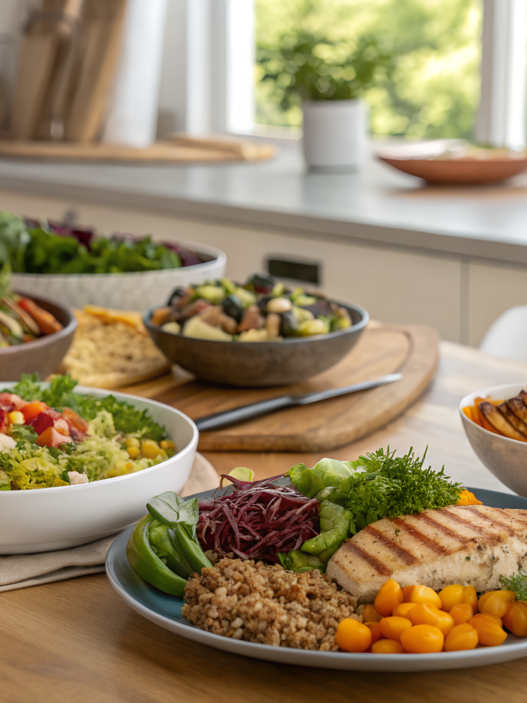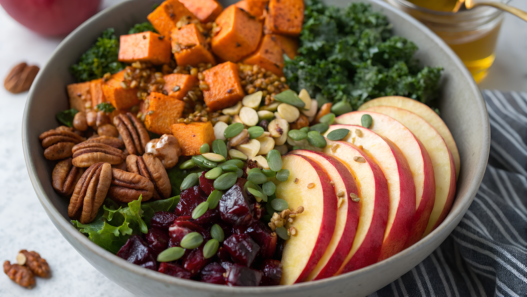

Harvest dishes are not a trend and not “clean eating.” They’re just a convenient way to cook with seasonal ingredients so food stays varied and doesn’t get boring. In one bowl, it’s easy to combine warm vegetables, grains, legumes, greens, nuts, and a simple sauce — without complex techniques or rare ingredients.
In this article, I’ve put together 10 harvest dishes that we actually cook in fall: with roasted root vegetables, mushrooms, apples, lentils, chickpeas, and herbs. Somewhere the base is more filling, somewhere lighter. Somewhere the dish is warm, somewhere closer to a salad. All recipes are easy to adapt to whatever you have on hand and work both for dinner and for food the next day.
1. Sweetgreen-Inspired Harvest Bowl with Maple Dressing
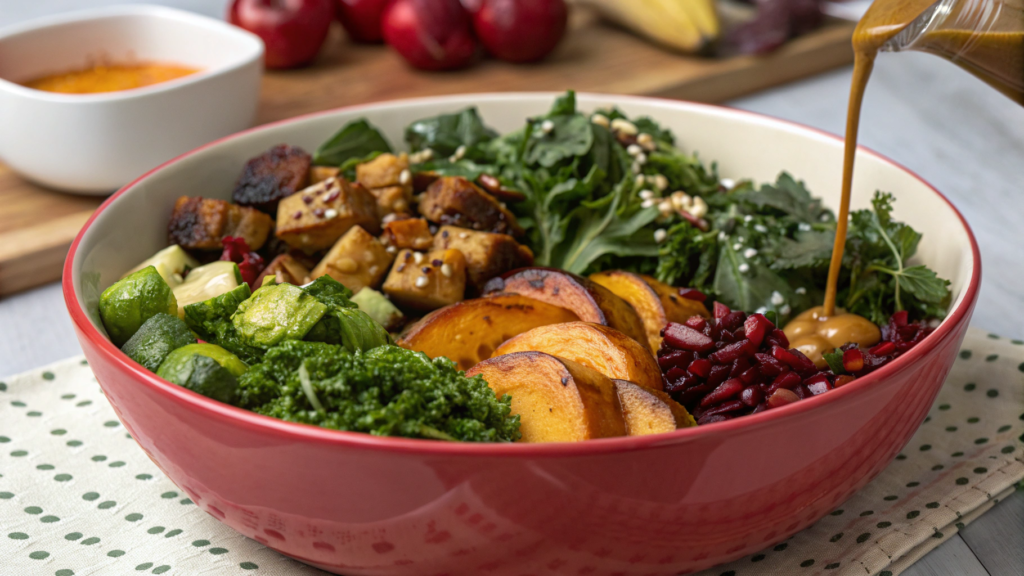
This Sweetgreen-inspired harvest bowl is a full meal made from seasonal ingredients without complicated cooking. I show how to prepare the base, roast the vegetables, make the maple dressing, and assemble everything so textures and flavors work well together. This bowl works great both for dinner and for “tomorrow’s meal.”
What You Need
Base
- Quinoa, dry — 1 cup (≈170 g; after cooking ~240 g)
Roasted Vegetables
- Butternut or muscat squash — 1½ cups, cubed (≈220 g)
- Brussels sprouts — 1 cup, cut in half (≈150 g)
- Olive oil — 1½ tbsp
- Salt, black pepper — to taste
Greens
- Baby kale or spinach — 2 cups (≈60 g)
Toppings
- Roasted chickpeas or cooked lentils — ½ cup (≈90 g)
- Goat cheese or feta — ¼ cup (≈40 g)
- Pumpkin seeds — 2 tbsp
Maple Dressing
- Extra virgin olive oil — 3 tbsp
- Apple cider vinegar — 1½ tbsp
- Maple syrup — 1½ tbsp
- Dijon mustard — 1 tsp
- Salt — to taste
For this dressing, real maple syrup is essential. Artificial syrups add sweetness without depth and make the flavor flat. I usually use Pure Maple Syrup, Grade A Amber on Amazon.
How to Make It
- Rinse the quinoa under cold water.
Cook using a 1:2 ratio with water, bring to a boil, lower the heat, and cook for 12–15 minutes.
Remove from heat and let sit covered for 5 minutes, then fluff with a fork. - Preheat the oven to 400°F (≈205°C).
Toss the squash and Brussels sprouts with olive oil, salt, and pepper.
Spread on a baking sheet in a single even layer. - Roast the vegetables for 25–30 minutes until tender and browned.
Don’t turn too often — a golden crust adds flavor. - Prepare the greens.
If using kale, lightly massage it with your hands using a drop of oil and a pinch of salt.
Spinach can be left as is. - Make the maple dressing.
Mix all ingredients in a bowl or jar and whisk with a fork until smooth.
The dressing should be thick and balanced in acidity and sweetness. - Assemble the bowl.
Place quinoa in a bowl, add warm vegetables and greens.
Drizzle with half of the dressing and toss.
Top with chickpeas, cheese, and seeds. Use the remaining dressing to taste.
This bowl is easy to prep for 2–3 meals at once. Quinoa and vegetables store well in the fridge, and the dressing can be kept separate until serving.
2. Roasted Chicken Harvest Bowl with Quinoa
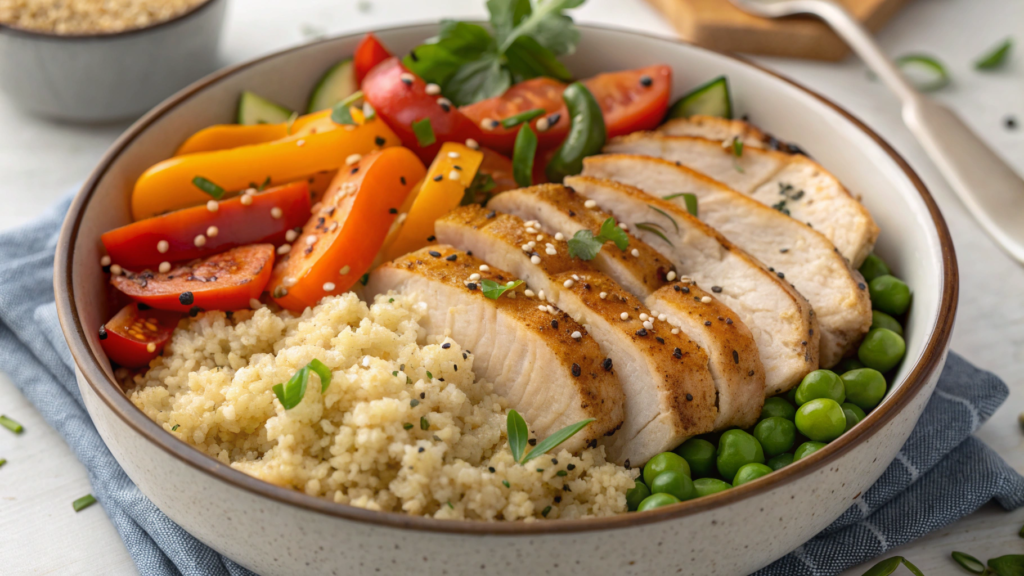
In this Roasted Chicken Harvest Bowl with Quinoa, everything is built around well-roasted chicken, neutral quinoa, and vegetables that are easy to swap by season. This bowl is convenient to assemble from whatever is already in the fridge, especially if the chicken was roasted ahead of time.
What You Need
Base
- Quinoa, dry — 1 cup (≈170 g; after cooking ~240 g)
Chicken
- Skinless, boneless chicken thighs or chicken breast — 1 lb (≈450 g)
- Olive oil — 1½ tbsp
- Paprika — 1 tsp
- Garlic powder — ½ tsp
- Dried thyme or rosemary — ½ tsp
- Salt, black pepper — to taste
Vegetables
- Carrots — 1 cup, large chunks (≈130 g)
- Red onion — 1 small, wedges (≈100 g)
- Broccoli or cauliflower — 1½ cups (≈200 g)
- Olive oil — 1 tbsp
- Salt — to taste
Extra
- Greens (arugula or spinach) — 1–2 cups (≈30–60 g)
- Lemon — ½, for juice
How to Make It
- Cook the quinoa.
Rinse the quinoa under cold water. Cook using a 1:2 ratio with water, bring to a boil, reduce the heat, and cook for 12–15 minutes. Remove from heat, cover for 5 minutes, then fluff with a fork. - Prepare the chicken.
Preheat the oven to 400°F (≈205°C). Toss the chicken with olive oil, paprika, garlic powder, herbs, salt, and pepper. Arrange on a baking sheet, leaving space between the pieces. - Prepare the vegetables.
Toss the carrots, onion, and broccoli with olive oil and salt. Spread on a second baking sheet or place next to the chicken if space allows. - Roast for 25–30 minutes.
The chicken should be fully cooked, and the vegetables should be tender with browned edges. Let the chicken rest for 5 minutes, then slice. - Serving.
Place quinoa in a bowl, add vegetables and chicken. Top with a handful of greens.
Drizzle with lemon juice and add a pinch of salt if needed.
Tip. If you’re making this bowl for several days, keep the chicken and quinoa stored separately.
This bowl works well both warm and slightly cooled. Sometimes I add a spoon of plain yogurt or mustard directly into the bowl — not as a sauce, but as a small accent. On other days, I keep everything very basic.
3. Fall Veggie Harvest Bowl with Butternut Squash
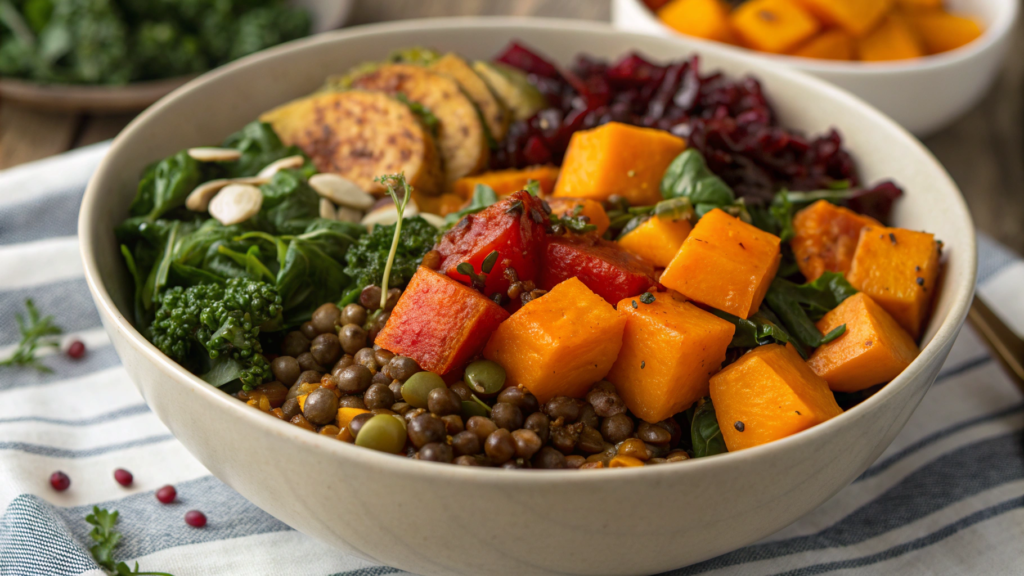
I usually make this Fall Veggie Harvest Bowl with Butternut Squash when I want to keep the plate as vegetable-forward as possible, but still filling. Roasted squash provides natural density, while the base is a warm mix of greens and lentils — it holds the bowl together and doesn’t compete with the vegetables.
What You Need
Base
- Green or brown lentils, dry — ¾ cup (≈150 g; after cooking ~1½ cups)
- Arugula or spinach — 2 cups (≈60 g)
Roasted Vegetables
- Butternut squash — 2 cups, large cubes (≈300 g)
- Red onion — 1 medium, wedges (≈150 g)
- Cauliflower — 1½ cups (≈200 g)
- Olive oil — 2 tbsp
- Salt — to taste
- Black pepper — to taste
Extra
- Pumpkin seeds — 2 tbsp
- Goat cheese or feta — ¼ cup (≈40 g)
Simple Dressing
- Olive oil — 2½ tbsp
- Apple cider vinegar or lemon juice — 1½ tbsp
- Dijon mustard — ½ tsp
- Salt — to taste
How to Make It
- Cook the lentils.
Rinse the lentils. Cover with water using a 1:3 ratio, bring to a boil, and cook for 18–22 minutes until tender but not mushy. Drain and lightly salt. - Prepare the vegetables.
Preheat the oven to 400°F (≈205°C). Toss the butternut squash, onion, and cauliflower with olive oil, salt, and pepper. Spread the vegetables in a single layer on a baking sheet. - Roast the vegetables for 30–35 minutes until soft and deeply browned.
The edges of the squash should be dark golden — that’s where most of the flavor comes from. - Prepare the base.
In a large bowl, mix the warm lentils with the greens. The greens will slightly wilt from the heat but stay fresh. - Make the dressing.
Mix all ingredients until smooth. The dressing here should be neutral, without any sweet notes. - Assemble the bowl.
Add the roasted vegetables to the base, drizzle with the dressing, and gently toss.
Top with cheese and pumpkin seeds.
Tip. I always cook lentils for bowls without salt and acid — this helps them keep their shape.If you use red lentils, this bowl won’t work: they’ll fall apart and turn everything into purée. Structure matters here.
This version is especially good served warm, right after assembling. It still works the next day, but it’s better to store the dressing separately.
4. Apple and Kale Harvest Bowl with Goat Cheese
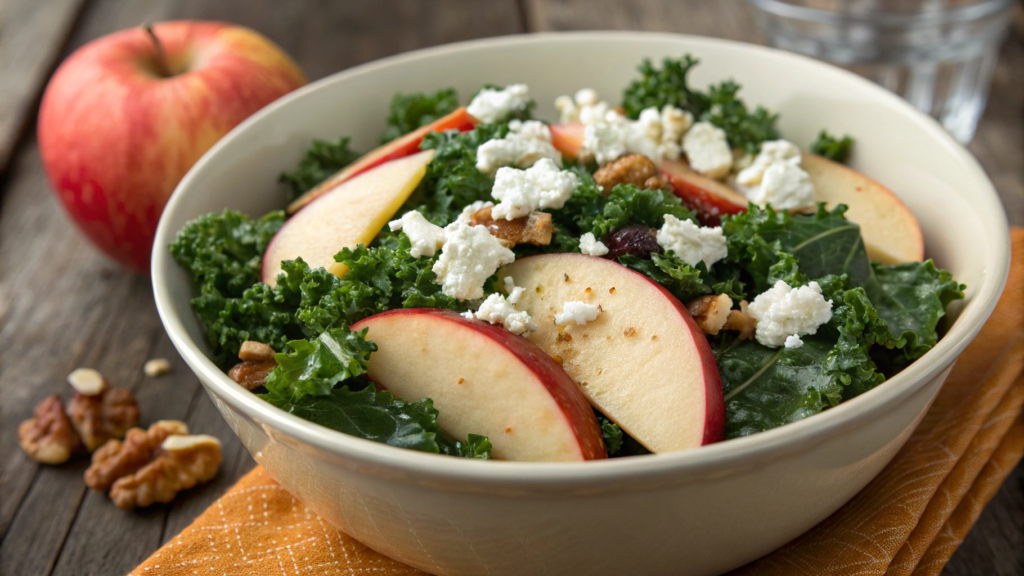
Apples and kale add crunch, light bitterness, and juiciness. Goat cheese brings the flavors to life and makes the dish feel complete.
This is a version that often comes together right after apple picking, when some apples go into storage, some into baking, and a few stay “for right now.”
What You Need
Base
- Wild rice, dry — ¾ cup (≈150 g; after cooking ~1½ cups)
Greens and Fruit
- Kale — 3 cups, roughly chopped (≈90 g)
- Apples (tart-sweet, like Honeycrisp or Pink Lady) — 2 medium, sliced (≈300 g)
Extra
- Goat cheese — ¼ cup, crumbled (≈40 g)
- Walnuts or pecans — ¼ cup, roughly chopped (≈30 g)
Dressing
- Extra virgin olive oil — 3 tbsp
- Apple cider vinegar — 1½ tbsp
- Honey or maple syrup — 1 tsp
- Dijon mustard — ½ tsp
- Salt — to taste
How to Make It
- Cook the wild rice.
Rinse the rice. Cover with water using a 1:3 ratio, bring to a boil, and cook for 35–40 minutes until tender and the grains split open.
Drain excess water and let cool slightly. - Prepare the kale.
Remove thick stems and roughly chop the leaves. Add a pinch of salt and a few drops of oil, then massage with your hands for 30–40 seconds. - Prepare the apples.
Slice the apples into wedges. If not serving right away, drizzle with a little lemon juice so they don’t brown. - Make the dressing.
Mix the oil, vinegar, honey, mustard, and salt until smooth. The dressing should taste fresh and slightly acidic. - Serve.
In a deep bowl, combine the wild rice, kale, and apples. Drizzle with the dressing and gently toss.
Top with goat cheese and nuts.
Kale works best here if the bowl rests for 10–15 minutes after assembling — the leaves soften but keep their structure.
Tip. Apples can be left raw or quickly seared in a dry pan if you want a warmer flavor.
This bowl is easiest to assemble right before serving. It’s still good the next day, but the apples lose some crunch — that’s normal, just a different character of the dish.
5. Quinoa and Roasted Carrot Harvest Bowl
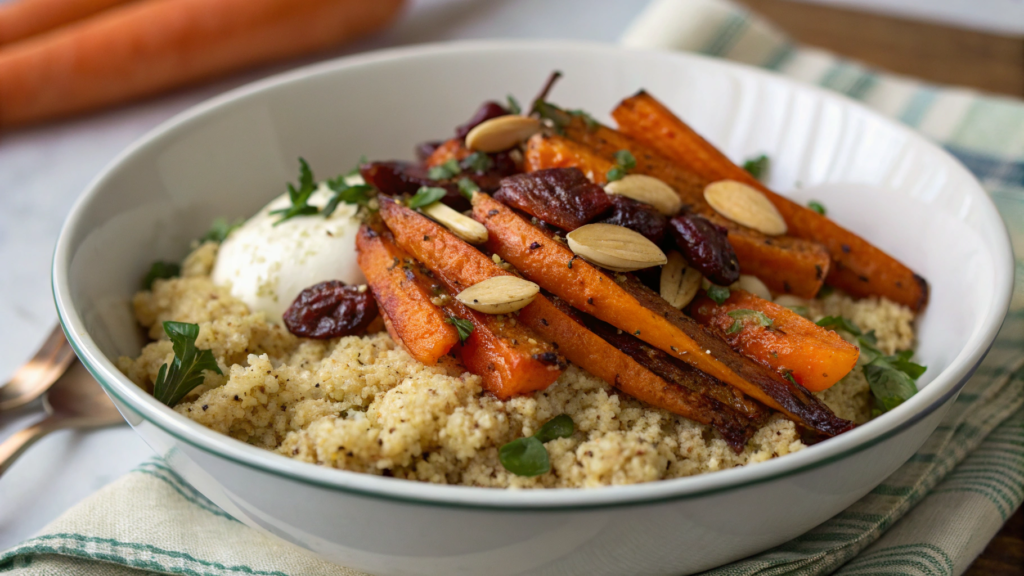
I often make this version in late fall, when carrots become naturally sweet. There are no complicated combinations here — everything is built on texture contrast: soft quinoa, roasted carrots with caramelized edges, and something creamy to bring the flavors together.
What You Need
Base
- Quinoa, dry — 1 cup (≈170 g; after cooking ~240 g)
Roasted Carrots
- Carrots — 3 cups, large pieces (≈400 g)
- Olive oil — 2 tbsp
- Ground cumin or paprika — ½ tsp
- Salt — to taste
- Black pepper — to taste
Extra
- Chickpeas, cooked or roasted — ¾ cup (≈130 g)
- Green onions or parsley — a small handful
- Feta or soft goat cheese — ¼ cup (≈40 g)
Simple Lemon Dressing
- Olive oil — 3 tbsp
- Lemon juice — 1½ tbsp
- Dijon mustard — ½ tsp
- Salt — to taste
How to Make It
- Cook the quinoa.
Rinse the quinoa under cold water. Cook using a 1:2 ratio with water, bring to a boil, reduce the heat, and cook for 12–15 minutes.
Remove from heat, cover for 5 minutes, then fluff with a fork. - Prepare the carrots.
Preheat the oven to 400°F (≈205°C). Toss the carrots with olive oil, cumin, salt, and pepper. Spread in a single layer on a baking sheet. - Roast the carrots for 30–35 minutes, until tender and well browned at the edges.
Turning once is enough. - Make the dressing.
Mix the oil, lemon juice, mustard, and salt until smooth. The dressing should taste fresh, without too much acidity. - Serve.
In a deep bowl, combine the quinoa, warm carrots, and chickpeas. Drizzle with the dressing and gently toss. Top with cheese and chopped greens.
Tip. Carrots are best cut into large pieces — thin slices dry out quickly and lose flavor.
If you’re cooking for several days, keep the dressing separate and add it right before serving.
This version reheats well and holds its structure. Sometimes I add a spoon of thick yogurt directly to the bowl — not as a sauce, but as a soft accent. On other days, I keep everything as simple as possible.
6. Warm Wild Rice Harvest Bowl with Mushrooms
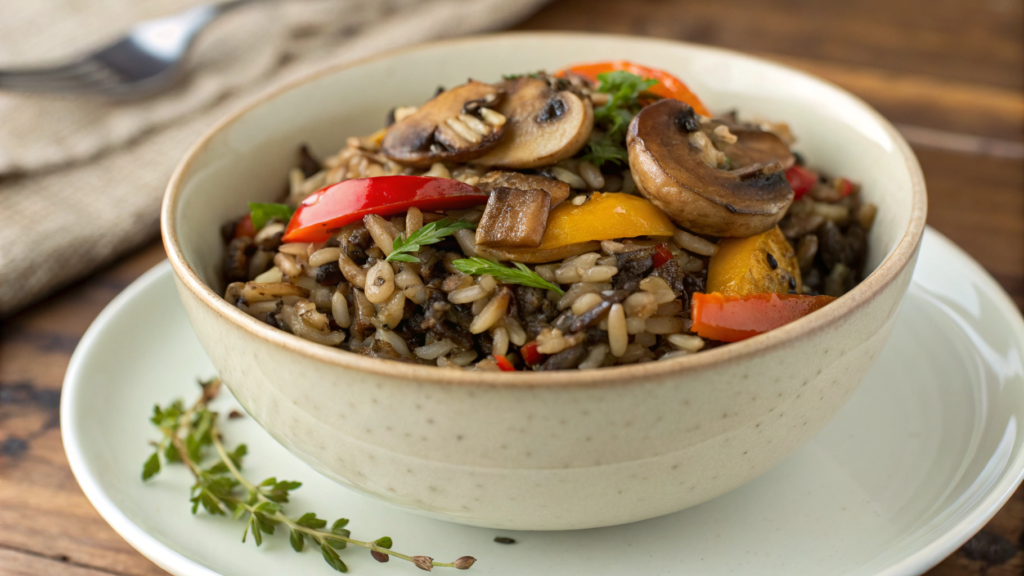
In this version, the dish is built around wild rice and mushrooms, with a minimal set of add-ins and a straightforward cooking logic. Everything is warm and cohesive, and when the mushrooms are properly sautéed, there’s no desire to complicate anything further.
What You Need
Base
- Wild rice, dry — ¾ cup (≈150 g; after cooking ~1½ cups)
Mushrooms
- Button mushrooms, cremini, or a mixed mushroom blend — 1 lb (≈450 g)
- Olive oil — 2 tbsp
- Butter — 1 tbsp
- Garlic — 2 cloves, finely chopped
- Salt — to taste
- Black pepper — to taste
Extra
- Red onion or shallot — 1 small, thinly sliced
- Thyme or rosemary — 1 tsp, fresh or dried
- Spinach or kale — 2 cups (≈60 g)
Simple Warm Dressing
- Olive oil — 2 tbsp
- Apple cider vinegar or balsamic — 1 tbsp
- Dijon mustard — ½ tsp
- Salt — to taste
How to Make It
- Cook the wild rice.
Rinse the rice. Cover with water using a 1:3 ratio, bring to a boil, and cook for 35–40 minutes until tender. Drain excess water and keep warm. - Prepare the mushrooms.
Clean the mushrooms with a dry brush or paper towel. Cut them into large pieces so they keep their shape while cooking. - Sauté the mushrooms.
Heat a wide pan over medium heat. Add the olive oil and butter. Spread the mushrooms in a single layer and leave them undisturbed for 4–5 minutes to brown.
Then add the onion, garlic, thyme, salt, and pepper. Cook for another 3–4 minutes. - Add the greens.
Add the spinach or kale directly to the mushrooms. Stir and cook for 1–2 minutes, just until the greens wilt slightly. - Make the dressing.
Mix the oil, vinegar, mustard, and salt until smooth. - Serve.
In a deep bowl, combine the warm wild rice with the mushrooms and greens.
Drizzle with the dressing and gently toss. Serve immediately while the dish is warm.
A wide-bottomed pan matters for mushrooms — if they’re too crowded, they’ll start steaming instead of browning.
Tip. It’s best to add salt closer to the end of cooking, otherwise the mushrooms release too much moisture.
Sometimes I add a little grated Parmesan directly to the bowl — not for saltiness, but for depth of flavor. On other days, I keep the dish completely plant-based.
7. Autumn Apple Cider Harvest Bowl with Sweet Potatoes
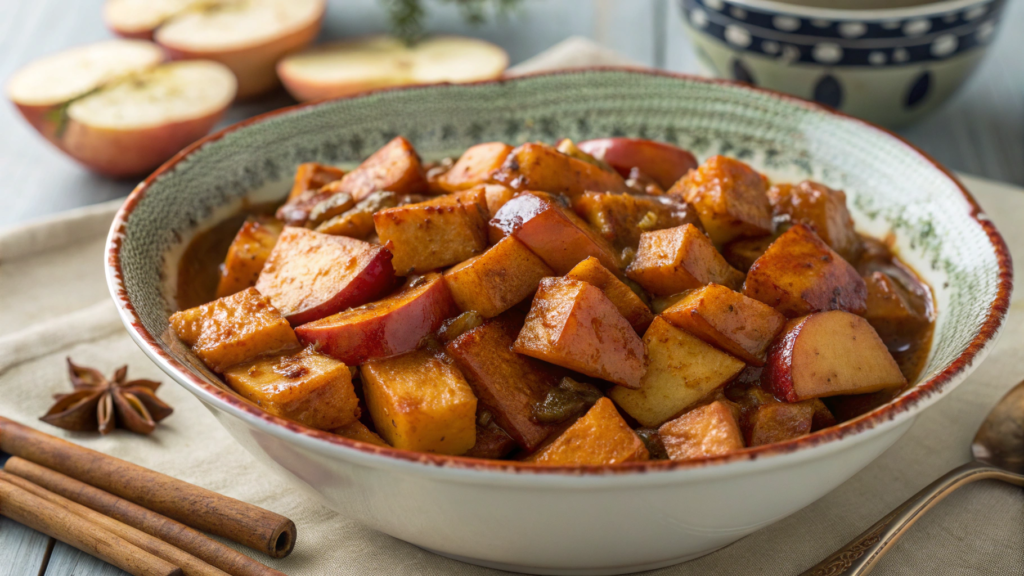
In this version, it’s important not to rush the process: the sweet potatoes need time to brown properly, and the cider should reduce slightly so the flavor becomes concentrated, not watery. The result is a dish with clear sweetness and a soft, balanced acidity.
What You Need
Base
- Brown rice or farro, dry — ¾ cup (≈150 g; after cooking ~1½ cups)
Roasted Sweet Potatoes
- Sweet potatoes — 2 large, large cubes (≈500 g)
- Olive oil — 2 tbsp
- Salt — to taste
- Black pepper — to taste
Apple Cider Glaze
- Natural apple cider — ½ cup (≈120 ml)
- Apple cider vinegar — 1 tsp
- Dijon mustard — ½ tsp
- Olive oil — 1 tbsp
Extra
- Spinach or kale — 2 cups (≈60 g)
- Dried cranberries — ¼ cup (≈30 g)
- Pecans or walnuts — ¼ cup, roughly chopped (≈30 g)
How to Make It
- Cook the grain.
Rinse the rice or farro under cold water to remove excess starch. Cover with water using a 1:3 ratio and cook until tender: about 35 minutes for rice, 25–30 minutes for farro.
Drain excess water and keep covered so the grain stays warm. - Prepare the sweet potatoes.
Preheat the oven to 400°F (≈205°C). Toss the sweet potatoes with olive oil, salt, and pepper, coating each piece well.
Spread on a baking sheet in a single layer, leaving space between cubes — this is key for browning. - Roast the sweet potatoes for 30–35 minutes, gently turning once halfway through.
The sweet potatoes should be soft inside and well browned at the edges — this is where most of the sweetness develops. - Make the apple cider glaze.
In a small saucepan, combine the cider, vinegar, and mustard.
Bring to a boil, then reduce heat and simmer for 6–8 minutes until the volume is reduced by about half. Remove from heat and whisk in the olive oil — this softens the glaze and keeps it from tasting sharp. - Prepare the greens.
If using kale, lightly massage it with a pinch of salt so the leaves soften.
Spinach can be left as is. - Serve.
In a deep bowl, combine the warm grain, roasted sweet potatoes, and greens.
Add the cranberries and nuts.
Drizzle with the apple cider glaze and gently toss so it’s evenly distributed.
Tip. For this recipe, it’s important to use real apple cider, not clear apple juice — it has more body and acidity.
If the glaze feels too concentrated, add 1–2 tbsp of hot water and stir.
This dish works best served warm, right after assembling. The next day, it becomes softer in flavor and slightly sweeter — not worse, just different.
8. Cranberry and Pecan Harvest Bowl
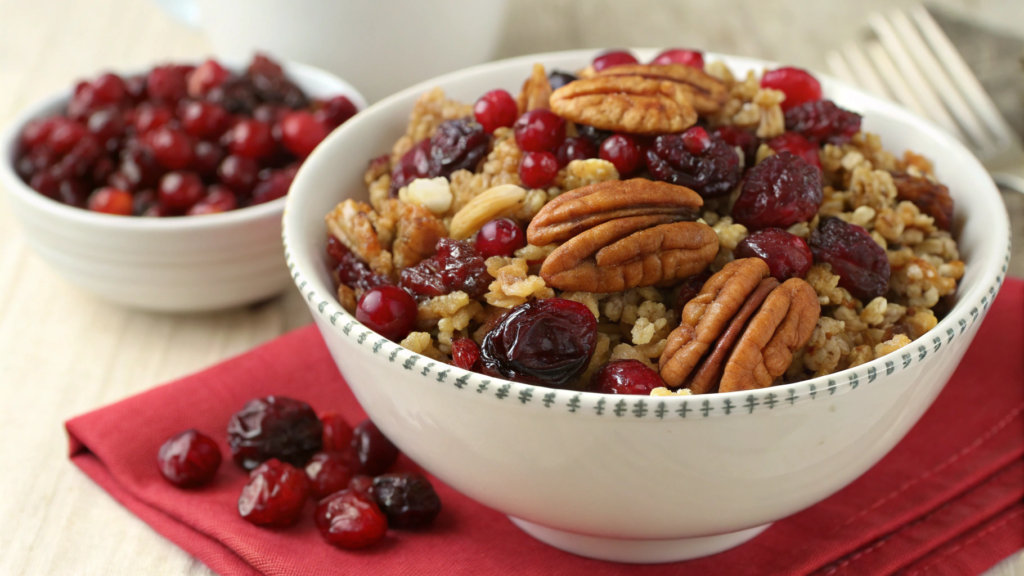
Tart cranberries, warm grains, rich nuts. The key here is not to overdo it, especially with the cranberries. They should refresh the flavor, not overpower everything. That’s why part of them stays dried, and part gets gently softened in a warm dressing.
What You Need
Base
- Farro or brown rice, dry — ¾ cup (≈150 g; after cooking ~1½ cups)
Cranberries
- Dried cranberries — ⅓ cup (≈40 g)
- Hot water — ¼ cup (≈60 ml)
Nuts
- Pecans — ½ cup, roughly chopped (≈60 g)
Greens
- Spinach or baby salad greens — 2 cups (≈60 g)
Simple Warm Dressing
- Olive oil — 3 tbsp
- Apple cider vinegar — 1½ tbsp
- Maple syrup — 1 tsp
- Salt — to taste
How to Make It
- Cook the grain.
Rinse the farro or rice under cold water to remove excess starch. Cover with water using a 1:3 ratio and cook until tender. Farro usually takes 25–30 minutes, brown rice about 35 minutes.
Drain excess water and cover to keep the grain warm. - Prepare the cranberries.
Pour hot water over the dried cranberries and let sit for 5–7 minutes. This softens the berries and reduces sharp acidity without turning them mushy.
Drain before using. - Toast the nuts.
Heat a dry skillet over medium heat. Add the pecans and toast for 3–4 minutes, stirring constantly, until fragrant.
Remove immediately — over-toasted nuts turn bitter. - Make the dressing.
Mix the olive oil, vinegar, maple syrup, and salt until smooth. The dressing should be slightly acidic, without pronounced sweetness. - Serve.
In a deep bowl, combine the warm grain and greens. Add the cranberries and toasted nuts. Drizzle with the dressing and gently toss.
Tip. If the cranberries are very dry, you can leave them in hot water a bit longer, but no more than 10 minutes. Pecans are best chopped coarsely — fine crumbs disappear and don’t add texture.
This bowl works especially well as a side for roasted turkey or chicken, but it also stands well on its own. Sometimes I add a pinch of black pepper to the dressing — not for heat, but for balance.
9. Avocado and Chickpea Harvest Bowl
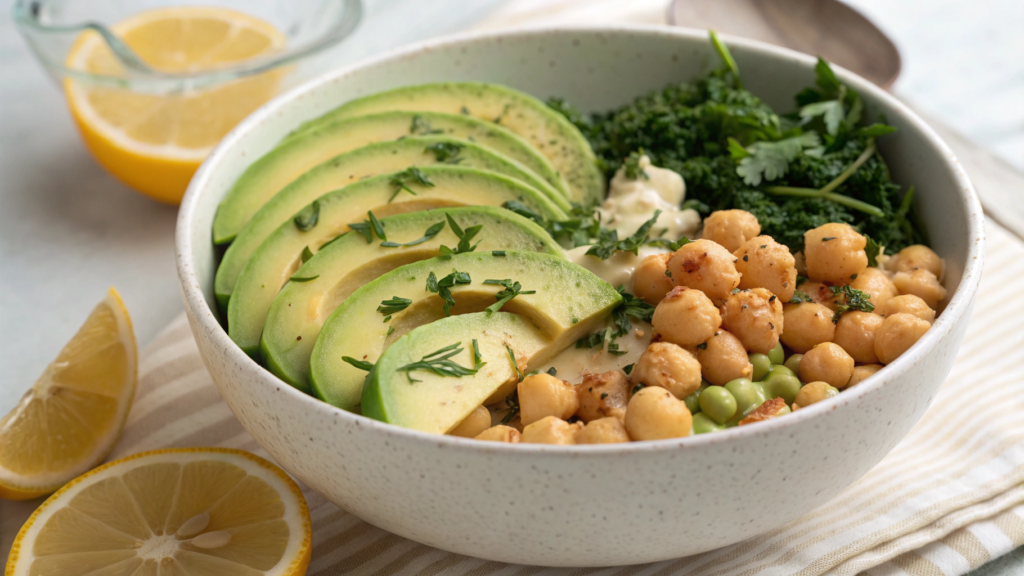
In this bowl, chickpeas provide substance and satiety, while avocado adds softness and richness. Everything else works toward balance: a bit of acidity, some greens, nothing extra.
This dish is easy to adapt by season and barely requires the stove — at most, an oven or skillet if you want the chickpeas to be more pronounced.
What You Need
Base
- Chickpeas, cooked or canned — 1½ cups (≈250 g, drained)
Vegetables and Greens
- Avocados — 2 medium, sliced
- Cucumber — 1 large, large chunks (≈200 g)
- Spinach or salad greens — 2 cups (≈60 g)
- Red onion — ¼ small, very thinly sliced
For Roasting the Chickpeas
- Olive oil — 1½ tbsp
- Paprika or smoked paprika — ½ tsp
- Cumin — ¼ tsp
- Salt — to taste
Light Lemon Dressing
- Extra virgin olive oil — 3 tbsp
- Lemon juice — 1½ tbsp
- Dijon mustard — ½ tsp
- Salt — to taste
How to Make It
- Prepare the chickpeas.
If using canned chickpeas, rinse them thoroughly under cold water and dry well with a towel. This matters: wet chickpeas won’t brown, they’ll steam in their own moisture. - Roast the chickpeas.
Preheat the oven to 400°F (≈205°C). Toss the chickpeas with olive oil, paprika, cumin, and salt. Spread in a single layer on a baking sheet and roast for 25–30 minutes, stirring once halfway through.
The chickpeas should turn golden and slightly crispy on the outside. - Prepare the vegetables.
Cut the cucumber into large pieces so it doesn’t release juice too quickly.
Slice the onion as thinly as possible — it should add flavor, not sharpness.
Slice the avocado right before serving. - Make the dressing.
Mix the oil, lemon juice, mustard, and salt until smooth. The dressing should be bright but not aggressive — avocado is naturally mild. - Serve.
In a deep bowl, combine the greens, cucumber, and red onion. Add the warm chickpeas and gently toss with part of the dressing. Arrange the avocado on top and add more dressing if needed.
Tip. If the avocado is very soft, it’s better not to mix it in — just place it on top. Chickpeas can be roasted ahead and stored in the fridge for up to three days — they stay good the next day too.
This bowl works well both as a standalone lunch and as a base for add-ins. Sometimes I add a bit of grated cheese or a spoon of yogurt straight into the bowl. On other days, I keep it very simple — chickpeas and avocado already do the work.
10. Herby Tahini Harvest Bowl with Lentils
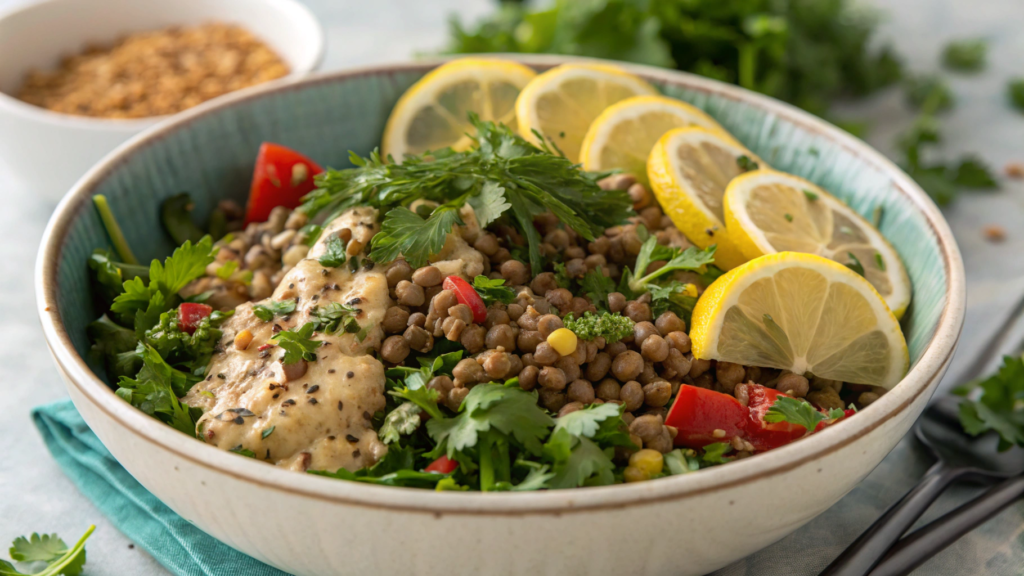
In this version, herbs, lemon, and the right lentil texture really matter. Tahini doesn’t work as a sauce “on top” here — it becomes part of the dish itself: it binds the ingredients together and makes the flavor smooth and cohesive.
What You Need
Base
- Green or brown lentils, dry — 1 cup (≈200 g; after cooking ~2½ cups)
Greens and Herbs
- Parsley — ½ cup, finely chopped
- Dill or cilantro — ¼ cup, finely chopped
- Spinach or arugula — 2 cups (≈60 g)
Vegetables
- Cucumber — 1 medium, diced (≈150 g)
- Green onions — 2–3 stalks, thinly sliced
Tahini Dressing
- Tahini — ¼ cup (≈60 g)
- Lemon juice — 2 tbsp
- Olive oil — 1½ tbsp
- Garlic — 1 small clove, very finely minced
- Warm water — 2–4 tbsp
- Salt — to taste
Extra
- Olive oil — as needed
- Black pepper — to taste
How to Make It
- Cook the lentils.
Rinse the lentils under cold water. Cover with water using roughly a 1:3 ratio and bring to a boil. Reduce the heat and cook for 18–22 minutes until tender, but with the lentils still holding their shape.
Drain and let cool slightly. It’s better to salt them after cooking. - Prepare the greens and vegetables.
Finely chop the herbs — finely matters here, so they distribute evenly. Dice the cucumber and slice the green onions thinly.
Leave the spinach or arugula whole; no need to cut them ahead of time. - Make the tahini dressing.
In a bowl, combine the tahini, lemon juice, garlic, and salt. Add the olive oil, then slowly pour in the warm water while stirring constantly. The dressing will thicken at first, then lighten in color and become creamy.
Stop when the texture resembles runny yogurt. - Combine the lentils with the dressing.
Transfer the warm lentils to a large bowl. Add part of the tahini dressing and gently mix. The lentils should be coated, not swimming in sauce. - Serve.
Add the greens, herbs, cucumber, and green onions to the lentils. Gently toss, adding more dressing if needed.
Before serving, drizzle with olive oil and add black pepper.
Tip. If the tahini tastes bitter, add a bit more lemon juice and water — this almost always balances it out. Lentils should be warm or at room temperature: cold lentils absorb dressing poorly.
This dish is especially good 15–20 minutes after assembling — the herbs open up and the flavor becomes more even. It still works the next day, but it’s better to add fresh greens right before serving.
Autumn Kitchen Notes
These recipes aren’t instructions for “how it should be,” but a starting point. In fall, ingredients naturally suggest what to do with them.
You’ll want to swap something, simplify something else, or add a familiar ingredient — and that’s normal. These dishes live because of their flexibility.If one of the bowls resonated with you, share it in the comments. I’m curious what you’d keep exactly as is, and what you’d adapt to your own kitchen, your season, and your rhythm. Very often, the best combinations are born in conversations like these.