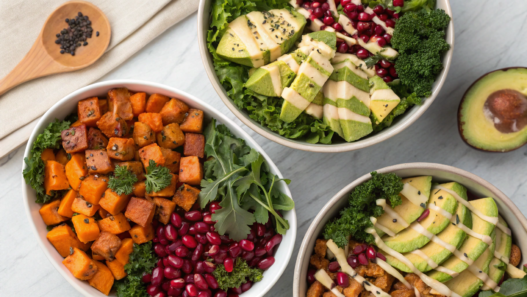
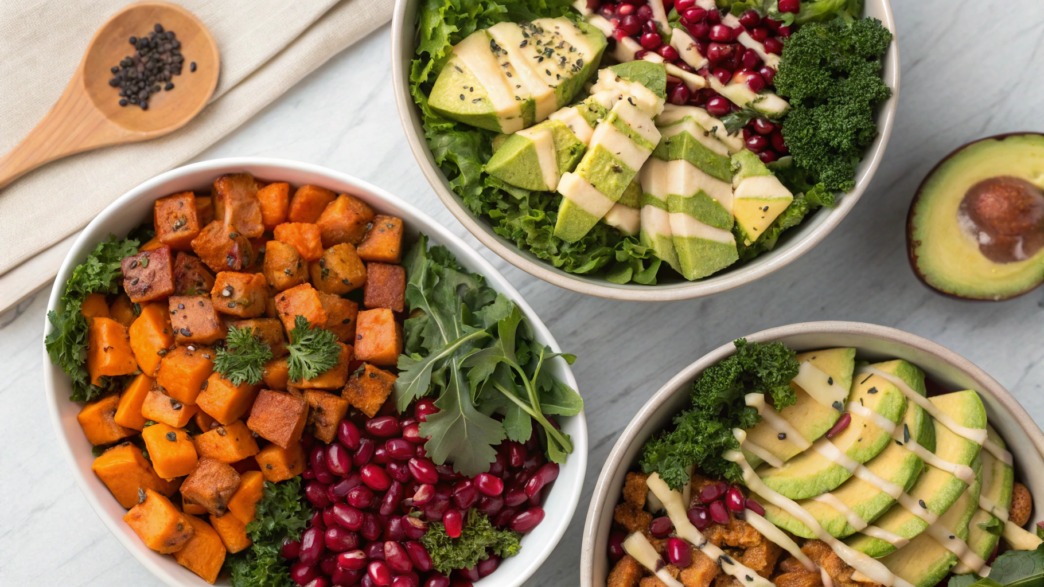
In the fall, we always have lots of vegetables at home, and I’m constantly looking for new ways to cook them. That’s why fall harvest bowls have become one of my favorite lunch or dinner options. You can combine roasted vegetables, grains, fresh greens, and something filling in one bowl. And if you add an interesting dressing, you get a dish you could easily order at a good restaurant!
Lindy and I love home-cooked food, and we rarely pass up a chance to try cooking something in a way that makes a familiar dish surprise us with its flavor.
So I’ve put together 10 fall harvest bowl recipes where I’ll show you how to make familiar ingredients taste better with simple sauces, spices, and a few little extras. I hope these ideas come in handy for you too, especially when the fall harvest is already over, but you still have plenty of vegetables at home.
1. Roasted Sweet Potato Harvest Bowl With Maple Tahini Dressing
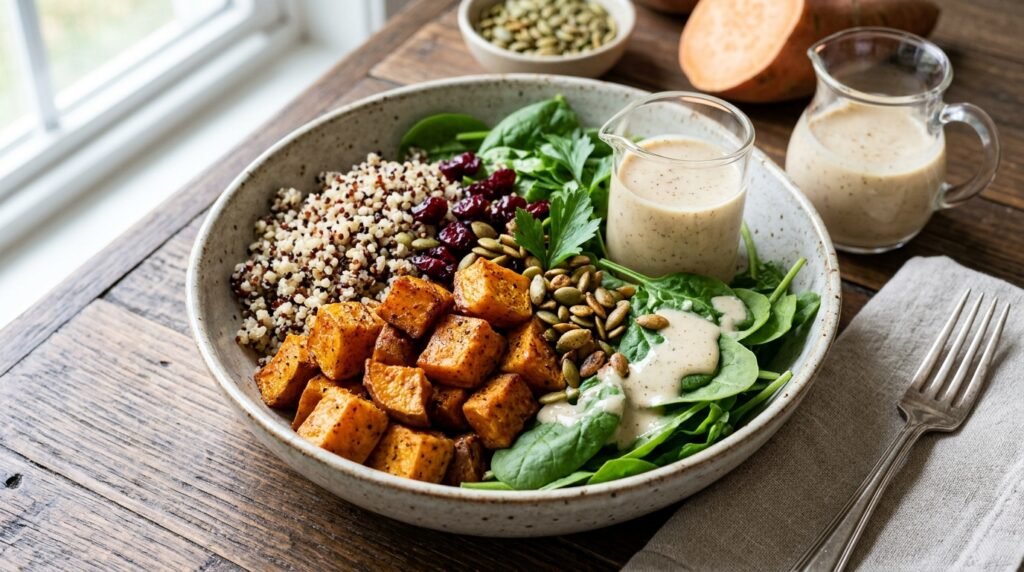
When we’re harvesting our fall crops, sweet potatoes are usually among the first vegetables we roast in the oven with olive oil and spices, until the edges are golden brown and the centers are soft and sweet.
But today, I suggest going a little further and turning them into a complete fall harvest bowl with quinoa, fresh spinach, dried cranberries, and pumpkin seeds.
You can mix up the tahini, maple syrup, and lemon juice dressing in just a couple of minutes, but it’s what gives this familiar combination of vegetables and grains that restaurant-style flavor we love ordering.
What you’ll need
Makes 2 large servings.
For the harvest bowl
- 2 medium sweet potatoes (about 1 lb / 450 g)
- ½ cup dry quinoa (about 85 g)
- 2 cups fresh baby spinach (about 60 g)
- ½ small red onion
- ¼ cup dried cranberries (about 30 g)
- ¼ cup shelled pumpkin seeds (about 30 g)
- 1½ tbsp olive oil
- ½ tsp smoked paprika
- ¼ tsp ground cumin
- Salt and black pepper to taste
For the maple tahini dressing
- 3 tbsp tahini (sesame paste)
- 1½ tbsp fresh lemon juice
- 1 tbsp pure maple syrup
- 1 small garlic clove
- 2–4 tbsp cold water
- A pinch of salt
How to make it
1. Roast the sweet potatoes until golden brown. Preheat the oven to 425°F (220°C). Cut the sweet potatoes into roughly ¾-inch (2 cm) cubes and toss them with olive oil, paprika, cumin, salt, and pepper.
Spread the pieces in a single layer on a large metal baking sheet, leaving a little space between them. Roast for 25–30 minutes, flipping them about halfway through. Don’t crowd the sweet potatoes, or they’ll end up steaming in their own moisture instead of browning.
2. Cook the quinoa. While the sweet potatoes are in the oven, rinse the quinoa under cold water. Transfer it to a small saucepan, add 1 cup of water and a pinch of salt. Bring to a boil, cover, and simmer over low heat for about 15 minutes, until the water is absorbed.
Then remove the saucepan from the heat, leave it covered for another 5 minutes, and gently fluff the quinoa with a fork.
3. Mix the dressing. In a small bowl, combine the tahini, lemon juice, maple syrup, finely grated garlic, and salt. Whisk everything together, gradually adding cold water one tablespoon at a time.
At first, the tahini might thicken quite a bit, and that’s normal. Keep stirring, and soon you’ll have a smooth, light-colored sauce. We’re looking for the consistency of heavy cream, so the dressing flows nicely off a spoon without pooling at the bottom of the bowl.
4. Prepare the remaining ingredients. Thinly slice the red onion into half-moons, then rinse and dry the spinach. You can lightly toast the pumpkin seeds in a dry skillet for 2–3 minutes, stirring constantly.
5. Assemble the harvest bowl. Divide the quinoa between two deep bowls. Add the spinach, warm roasted sweet potatoes, red onion, and dried cranberries. Drizzle with the maple tahini dressing and sprinkle with pumpkin seeds.
By the way, you can make the dressing ahead of time. It’ll keep just fine in a sealed jar in the fridge for 3–4 days. Before serving, simply stir in a little water, since tahini gets thicker when chilled.
We grow sweet potatoes on our homestead, and every season I try to find new ways to cook them. This recipe is one of those ways. What I really love here is the combination of sweet roasted sweet potatoes and the tangy tahini dressing. And the cranberries and crunchy pumpkin seeds make this harvest bowl even tastier.
2. Sweetgreen Style Harvest Bowl With Chicken
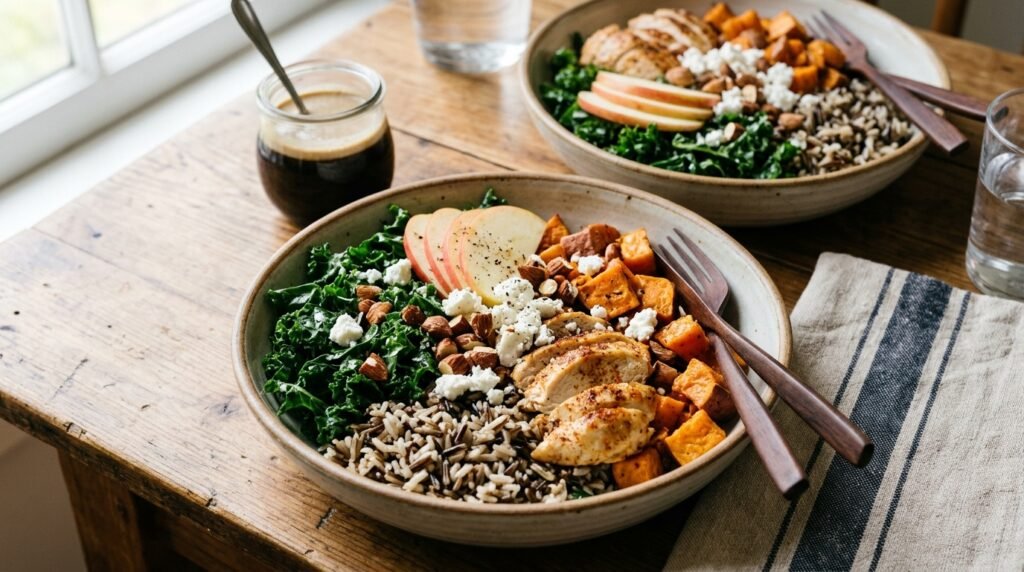
The American restaurant chain Sweetgreen has a popular harvest bowl with chicken, wild rice, sweet potatoes, and apples. I make it pretty often because I love the combination of warm roasted ingredients with fresh kale, goat cheese, and crunchy almonds. I recommend trying to make it at home yourself, too.
What you’ll need
Makes 2 large servings.
For the harvest bowl
- ¾ lb (340 g) boneless, skinless chicken breast
- 1 medium sweet potato (about ½ lb / 225 g)
- ½ cup dry wild rice blend (about 85 g)
- 3 cups thinly sliced kale (about 90 g)
- 1 large sweet apple, such as Honeycrisp
- 2 oz (55 g) soft goat cheese
- ¼ cup roasted almonds (about 35 g)
- 1½ tbsp olive oil
- ½ tsp garlic powder
- ½ tsp paprika
- ¼ tsp onion powder
- Salt and black pepper to taste
For the balsamic dressing
- 3 tbsp olive oil
- 2 tbsp balsamic vinegar
- 1 tsp Dijon mustard
- 1 tsp honey
- Salt and black pepper to taste
How to make it
1. Start with the wild rice. Rinse it under cold water, transfer it to a saucepan, and add water according to the package instructions. Add a little salt, cover, and cook for 35–45 minutes, until the grains are tender but still have a nice bite to them.
I recommend using a wild rice blend rather than regular white rice. It has a more pronounced nutty flavor that goes wonderfully with the sweet potato.
2. Roast the sweet potato and chicken. Preheat the oven to 425°F (220°C). Cut the sweet potato into roughly ¾-inch (2 cm) cubes and toss with ½ tbsp olive oil, salt, and a little paprika.
Rub the chicken breast with the remaining oil, garlic powder, onion powder, paprika, salt, and pepper. If the breast is thicker on one end, gently pound it to an even thickness.
Arrange the sweet potato and chicken on a large baking sheet, leaving some space between them. The sweet potato will need about 25–30 minutes, while the chicken usually takes 18–25 minutes, depending on its thickness. The chicken is done when the thickest part reaches an internal temperature of 165°F (74°C). A meat thermometer makes it easy to check.
Transfer the cooked chicken to a plate and let it rest for 5 minutes before slicing. If needed, return the sweet potato to the oven for a few more minutes.
3. Prepare the kale and other toppings. Remove the tough center stems from the kale and cut the leaves into thin strips. Add a teaspoon of olive oil from the dressing ingredients and gently massage the kale with your hands for about a minute. The leaves will soften and be much nicer to eat raw.
Slice the apple into small wedges right before serving. Roughly chop the almonds with a knife and crumble the goat cheese into small pieces.
4. Make the balsamic dressing. In a small bowl, combine the vinegar, mustard, honey, salt, and pepper. Slowly pour in the remaining olive oil, whisking constantly.
You’ll get a slightly thick dressing that coats the ingredients instead of just running to the bottom of the bowl. If you’re using a particularly acidic balsamic vinegar, add a little more honey.
5. Assemble the harvest bowl. Divide the warm rice and kale between two deep bowls. Arrange the roasted sweet potato, sliced chicken, and apples on top. Add the crumbled goat cheese, sprinkle with almonds, and drizzle with the balsamic dressing.
Don’t mix everything too much. Let the apples stay crunchy, the cheese remain in separate soft pieces, and the chicken and rice stay warm.
Lindy and I have gotten into the habit of cooking enough grains for several meals at once. That works really well for this bowl, too. You can cook the wild rice a day or two ahead, and roast the chicken and sweet potato ahead of time, then reheat them before dinner. It’s best to add the apples, goat cheese, and almonds at the last minute.
I love the idea behind this restaurant dish. There’s nothing in it that we couldn’t make at home with everyday ingredients. And when we have fresh apples and kale from the garden in the fall, there’s very little left to buy. I think next time we’ll try adding toasted walnuts instead of almonds. They go wonderfully with apples and goat cheese, too.
3. Crispy Chickpea Harvest Bowl With Apple Cider Sauce
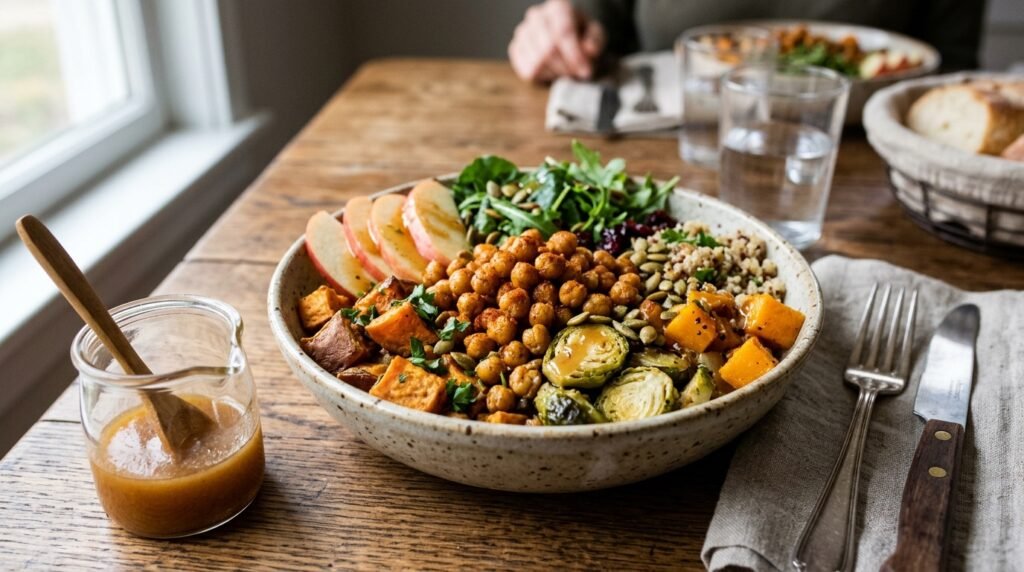
Lindy and I always have a few cans of chickpeas in our pantry, and we love roasting them with spices. They turn into little crunchy bites that you can even snack on instead of croutons.
For this fall harvest bowl, I suggest using roasted chickpeas. They go wonderfully with seasonal vegetables, while the apple cider vinegar dressing adds a nice tangy flavor. The result is a filling and really delicious dinner made with everyday ingredients.
What you’ll need
Makes 2 large servings.
For the harvest bowl
- 1 can chickpeas (15 oz / 425 g)
- ½ lb (225 g) Brussels sprouts
- ½ lb (225 g) peeled butternut squash
- ½ cup dry quinoa (about 85 g)
- 2 cups chopped kale (about 60 g)
- ¼ cup dried cranberries (about 30 g)
- 2 tbsp olive oil
- ½ tsp smoked paprika
- ¼ tsp garlic powder
- Salt and black pepper to taste
For the apple cider vinegar dressing
- 2 tbsp apple cider vinegar
- 3 tbsp olive oil
- 2 tsp honey
- 1 tsp Dijon mustard
- 1 tbsp finely chopped shallot
- Salt and black pepper to taste
How to make it
1. Prepare the chickpeas. Preheat the oven to 425°F (220°C). Drain the liquid from the can of chickpeas, rinse them under cold water, and thoroughly dry them with paper towels. Remove any thin skins that come off easily.
And don’t skip this step! The drier the chickpeas are before roasting, the better they’ll brown. Transfer them to a bowl, add 1 tbsp olive oil, smoked paprika, garlic powder, salt, and pepper. Mix well.
2. Roast the chickpeas and vegetables. Spread the chickpeas on one baking sheet. On another, arrange the Brussels sprouts, cut in half, and the butternut squash, cut into roughly ¾-inch (2 cm) cubes. Toss the vegetables with the remaining tablespoon of olive oil, salt, and pepper first.
Place both baking sheets in the oven for 25–30 minutes. After about 15 minutes, flip the vegetables and shake the baking sheet with the chickpeas. The Brussels sprouts should be browned around the edges, the squash should be tender, and the chickpeas should be golden and crispy.
3. Cook the quinoa. While everything is roasting, rinse the quinoa, add 1 cup of water and a pinch of salt, and bring to a boil. Reduce the heat, cover, and cook for about 15 minutes. Then remove from the heat, let it sit for 5 minutes, and fluff with a fork.
4. Make the apple cider vinegar dressing. Combine the apple cider vinegar, olive oil, honey, Dijon mustard, finely chopped shallot, salt, and pepper in a small jar. Close the lid and shake vigorously until everything is combined.
For dressings like this, it’s convenient to use a special shaker bottle with a lid, like the OXO Good Grips Salad Dressing Shaker. You can mix the dressing right in it and store any leftovers in the fridge.
5. Assemble the fall harvest bowl. Remove the tough stems from the kale and cut the leaves into small pieces. Add a spoonful of the prepared dressing and gently massage the leaves with your hands to soften them.
Divide the quinoa and kale between deep bowls. Add the hot butternut squash, Brussels sprouts, and dried cranberries, then drizzle with the remaining dressing. I add the crispy chickpeas last, right before serving, so they don’t get soggy.
You can use even small leftovers from your fall harvest for this bowl. For example, a few Brussels sprouts left in the garden or half a butternut squash left over after making soup. I try not to waste anything we’ve grown with our own hands, and recipes like this really help with that. Just remember, I recommend roasting the chickpeas right before serving, because that crispy coating is what makes them so delicious in this bowl.
4. Wild Rice Harvest Bowl With Cranberry Herb Dressing
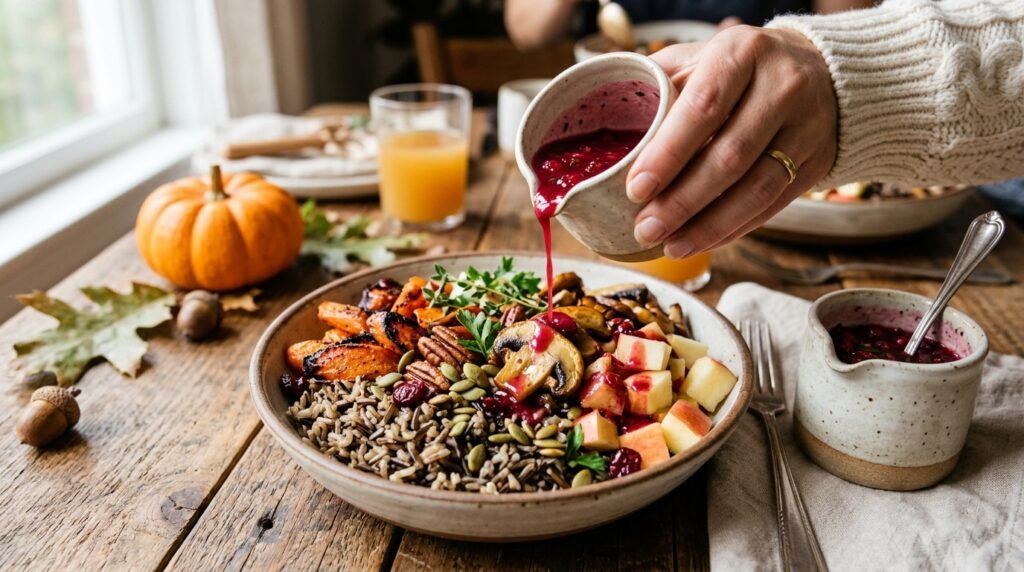
I fell in love with wild rice for its unusual nutty flavor and firm texture. It’s nothing like regular white rice, and when you combine it with roasted vegetables, it makes a wonderful base for fall dishes.
Let’s make a wild rice harvest bowl with roasted carrots, mushrooms, and fresh apple, and prepare the dressing with real cranberries, honey, and fresh herbs. By the way, you can use this dressing for other fall salads, too.
What you’ll need
Makes 2 large servings.
For the harvest bowl
- ½ cup dry wild rice (about 80 g)
- 2 medium carrots
- 6 oz (170 g) fresh button mushrooms
- 2 cups fresh arugula (about 40 g)
- 1 small sweet apple
- ¼ cup walnuts (about 30 g)
- 1½ tbsp olive oil
- ½ tsp dried thyme
- Salt and black pepper to taste
For the cranberry herb dressing
- ⅓ cup fresh or frozen cranberries (about 35 g)
- 2 tbsp olive oil
- 1 tbsp apple cider vinegar
- 1 tbsp honey
- 2 tbsp water
- 1 tbsp finely chopped fresh parsley
- ½ tsp fresh thyme leaves
- A pinch of salt
How to make it
1. Cook the wild rice. Rinse it under cold water and transfer it to a saucepan. Add 1½ cups of water and a little salt, then bring to a boil. Reduce the heat, cover, and simmer for about 40–50 minutes, until the grains are tender and some of them have split open.
Wild rice has one interesting feature. Even after cooking, it stays a little chewy, and that’s perfectly fine. Drain any excess water, if there’s any left, and fluff the grains with a fork.
2. Roast the carrots and mushrooms. Preheat the oven to 425°F (220°C). Cut the carrots into pieces about ½ inch (1.3 cm) thick, and cut the mushrooms in half or into quarters if they’re large.
Toss the vegetables with olive oil, dried thyme, salt, and pepper. Spread them in a single layer on a baking sheet and roast for about 20–25 minutes. Give them a gentle stir after 12 minutes.
The carrots should be tender and lightly browned, while the mushrooms should lose some of their moisture and develop a richer flavor. Don’t cut the mushrooms too small, because they shrink quite a bit during roasting.
3. Make the cranberry dressing. In a small saucepan, combine the cranberries, honey, and 2 tbsp water. Heat over medium heat for about 5–7 minutes, until the berries start to burst and soften. Remove from the heat and let them cool slightly.
Transfer the cranberries along with their liquid to a small blender. Add the apple cider vinegar, olive oil, parsley, fresh thyme, and salt. Blend until smooth.
Be sure to taste the dressing before serving. Fresh cranberries can be pretty tart, so add a little more honey if needed. If the sauce turns out too thick, thin it with a teaspoon of water.
4. Prepare the fresh ingredients. Cut the apple into thin slices and lightly toast the walnuts in a dry skillet for about 3–4 minutes. Don’t forget to stir them so they don’t burn. Rinse the arugula and dry it thoroughly.
5. Assemble the harvest bowl. Divide the warm wild rice between two deep bowls. Add the roasted carrots and mushrooms, fresh arugula, and apple slices.
Drizzle with the cranberry herb dressing and sprinkle with toasted walnuts. You can serve some of the dressing on the side so everyone can add as much as they like.
We grow several kinds of herbs on our homestead, and I try to use them not only in hot dishes but also in homemade sauces. Fresh thyme is a great addition here, although you only need a little, or it’ll overpower the cranberry flavor.
Lindy loves this bowl cold, too, and I agree with her. Sometimes I intentionally cook a little extra wild rice so I can make a salad with fresh vegetables and cranberry dressing the next day. It makes a great lunch that’s easy to take with you. I add the apples and walnuts right before eating so they stay fresh and crunchy. Do you prefer your harvest bowls warm or cold?
5. Honey Mustard Chicken Harvest Bowl With Roasted Apples
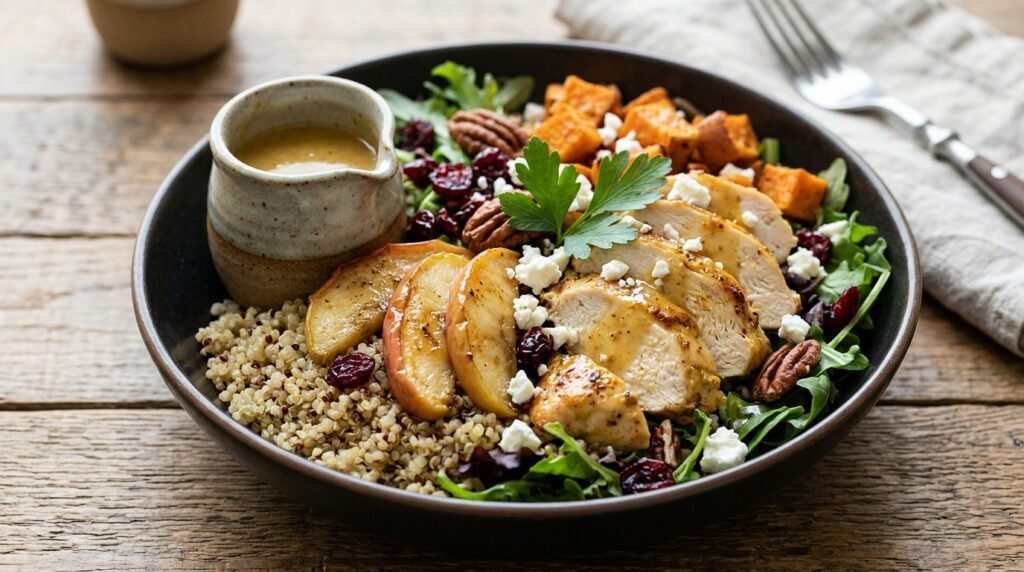
We’re used to adding apples to pies, desserts, and fresh salads, but roasted apples with chicken deserve some attention of their own. As they cook, they become soft, caramelize slightly around the edges, and develop a richer flavor. And sweet apples work just as well here as tart ones.
I usually use part of the honey mustard mixture to roast the chicken and save the rest for the dressing. This gives the dish a richer flavor, and we don’t have to make two different sauces.
What you’ll need
Makes 2 large servings.
For the harvest bowl
- ¾ lb (340 g) boneless, skinless chicken thighs
- 2 medium apples, such as Gala or Honeycrisp
- ½ cup dry brown rice (about 95 g)
- 2 cups fresh baby spinach (about 60 g)
- ½ small red onion
- ¼ cup pecans (about 30 g)
- 1 tbsp olive oil
- ½ tsp dried thyme
- Salt and black pepper to taste
For the honey mustard sauce
- 2 tbsp Dijon mustard
- 2 tbsp honey
- 2 tbsp olive oil
- 1 tbsp apple cider vinegar
- 1 small garlic clove
- A pinch of salt
How to make it
1. Cook the brown rice. Rinse the rice under cold water, transfer it to a saucepan, and add water according to the package instructions. Bring to a boil, reduce the heat, and cook covered for about 35–45 minutes, until the rice is tender. Then leave it covered for another 5 minutes and fluff with a fork.
2. Prepare the honey mustard sauce. In a bowl, combine the Dijon mustard, honey, olive oil, apple cider vinegar, finely grated garlic, and a pinch of salt.
Right away, set aside half of the sauce in a separate clean container for serving. We’ll use the other half for the chicken.
By the way, Dijon mustard works better here than regular yellow mustard. It has a milder flavor, and together with honey and apple cider vinegar, it makes a wonderful dressing you can use for other salads, too.
3. Roast the chicken. Preheat the oven to 425°F (220°C). Pat the chicken thighs dry with a paper towel, lightly season with salt and pepper, and place them in a baking dish.
Brush the chicken with the prepared half of the sauce and roast for about 20–25 minutes. The exact time depends on the thickness of the pieces, so be sure to check for doneness. The temperature in the thickest part should reach 165°F (74°C).
After roasting, let the chicken rest for 5 minutes, then cut it into strips.
4. Roast the apples and onion. While the chicken is cooking, remove the cores from the apples and cut them into large wedges about ¾ inch (2 cm) thick. Leave the skins on, since they help the pieces hold their shape.
Cut the red onion into thick wedges. Toss it with the apples, 1 tbsp olive oil, thyme, salt, and a little pepper.
Spread everything on a separate baking sheet and roast for 12–18 minutes. The apples should soften and brown slightly, but not turn into mush.
For this recipe, it’s best to use firm apples that hold their shape well when roasted. Honeycrisp and Pink Lady are great choices.
5. Assemble the harvest bowl. Lightly toast the pecans in a dry skillet for 2–3 minutes. Rinse and dry the spinach.
Divide the warm brown rice, fresh spinach, chicken pieces, roasted apples, and red onion between deep bowls. Sprinkle with pecans and drizzle with the honey mustard dressing we set aside earlier.
It’s best to add the apples while they’re still warm. They’ll make a nice contrast with the fresh spinach, while the pecans add a little crunch.
We always have several varieties of apples at home. Some go into baking, others we eat fresh, and firm, sweet apples are great for roasting. For this harvest bowl, I choose exactly those kinds, so they stay in whole wedges and keep their natural sweetness.
And I love that the apples aren’t just an extra addition to the chicken here, but one of the main ingredients. Try cooking them this way sometime. Maybe you’ll start adding roasted apples to savory dishes more often, too!
6. Butternut Squash Harvest Bowl With Creamy Miso Sauce
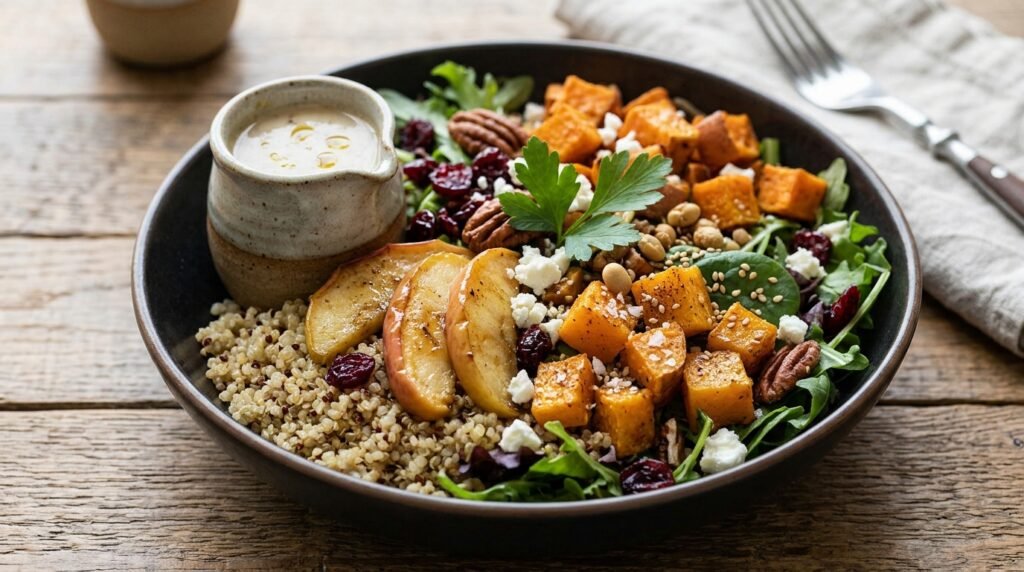
Butternut squash is one of my favorite fall vegetables. We’ve been growing it for years, and I still can’t get over how differently it tastes in different dishes. You can make a sweet pie, a thick soup, or simply roast it with your favorite spices.
This bowl combines sweet roasted butternut squash with a savory, creamy miso sauce. Miso is a fermented soybean paste often used in Japanese cooking. It has a rich flavor, so even a small amount can change the taste of familiar vegetable dishes.
What you’ll need
Makes 2 large servings.
For the harvest bowl
- ¾ lb (340 g) peeled butternut squash
- ½ cup dry bulgur (about 90 g)
- 1 can green lentils (15 oz / 425 g)
- 2 cups chopped kale (about 60 g)
- 1 cup broccoli florets (about 90 g)
- ½ small red onion
- 2 tbsp shelled pumpkin seeds
- 1½ tbsp olive oil
- ½ tsp dried oregano
- ¼ tsp red pepper flakes
- Salt and black pepper to taste
For the creamy miso sauce
- 1 tbsp white miso paste
- 2 tbsp tahini (sesame paste)
- 1 tbsp rice vinegar
- 1 tsp maple syrup
- 1 tsp toasted sesame oil
- 2–4 tbsp warm water
How to make it
1. Roast the butternut squash. Preheat the oven to 425°F (220°C). Peel the squash, remove the seeds, and cut it into roughly ¾-inch (2 cm) cubes.
Toss it with 1 tbsp olive oil, dried oregano, red pepper flakes, salt, and black pepper. Spread it in a single layer on a baking sheet and roast for about 25–30 minutes, turning the pieces halfway through cooking.
The squash should be tender inside and lightly browned around the edges. It’s better not to cover the baking sheet with foil, or the vegetables will mostly steam instead of roast.
2. Roast the broccoli. While the squash is roasting, cut the broccoli into small florets. Toss with ½ tbsp olive oil and a pinch of salt.
About 12–15 minutes after the squash starts roasting, add the broccoli to an open area of the same baking sheet. If there’s not enough room, use a second baking sheet. Return the vegetables to the oven for another 12–15 minutes.
The broccoli should still have a little bite, with browned tips, and the squash should be fully cooked by then.
3. Cook the bulgur with lentils and kale. Add 1 cup of water to the bulgur, add a little salt, and bring to a boil. Reduce the heat, cover, and simmer for about 10–12 minutes, until the grain absorbs the water. If the package gives a different cooking time, follow those instructions.
While the bulgur is cooking, thinly slice the red onion into half-moons. Drain the liquid from the can of lentils and rinse them.
Heat a little water in a skillet, add the onion, and cook for about 3–4 minutes until soft. Then add the lentils and chopped kale with the tough stems removed. Cook for another 4–5 minutes, stirring occasionally. Add a little more water if needed to keep the vegetables from sticking.
Mix the cooked bulgur with the lentils and greens.
4. Make the creamy miso sauce. In a small bowl, combine the white miso paste, tahini, rice vinegar, maple syrup, and sesame oil.
Gradually add warm water, one tablespoon at a time, whisking thoroughly. We want a smooth, creamy sauce that’s thin enough to drizzle over the cooked vegetables.
I recommend using Hikari Miso Organic White Miso, since it has a milder, slightly sweeter flavor compared to red miso. The paste is already salty, so you usually don’t need to add salt to the sauce. It’s better to taste it first.
5. Assemble the harvest bowl. Divide the bulgur with lentils and kale between the bowls. Arrange the roasted butternut squash and broccoli on top.
Drizzle everything with the creamy miso sauce and sprinkle with pumpkin seeds. You can toast them in a dry skillet for 2–3 minutes beforehand to bring out their aroma.
As you can see, miso paste isn’t just for traditional Japanese soups. I add a little to vegetable sauces and dressings when I want a richer flavor without using lots of spices.
Butternut squash stores well in a cool, dry place, so we save part of our fall harvest for winter. It’s wonderful to take out a squash we grew ourselves several months after harvesting it and make something interesting with it. And this bowl is a great reason to try the unusual combination of butternut squash and miso.
7. Autumn Kale Harvest Bowl With Parmesan Breadcrumbs
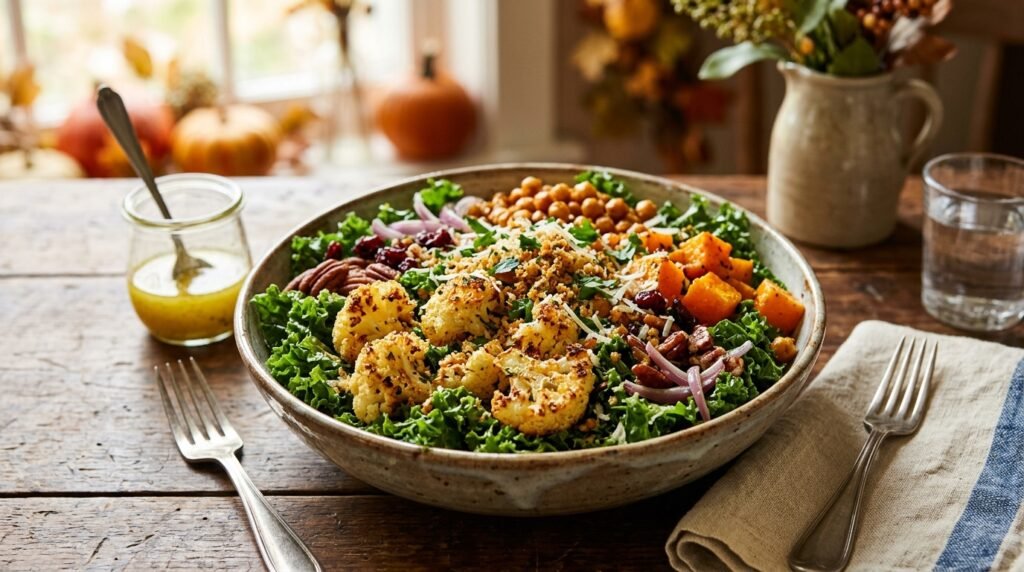
When we first started gardening, I didn’t appreciate kale right away. Its leaves are pretty dense, sometimes even a little tough, especially compared to regular salad greens. But over time, I learned how to prepare it properly, and now kale has a well-deserved place in our kitchen.
What I liked about this recipe was the unusual way of preparing cauliflower with Parmesan and breadcrumbs. They’re roasted together until the cheese turns golden brown and the breadcrumbs get crispy. Then they’re added to fresh kale with a lemon dressing. The result is a wonderful fall harvest bowl with warm vegetables and a flavorful cheesy crust!
What you’ll need
Makes 2–3 servings.
For the harvest bowl
- 1¼ lb (about 570 g) cauliflower
- 6 oz (170 g) fresh kale
- ¼ small red onion
- ¼ cup hazelnuts (about 35 g)
- ¾ cup finely grated Parmesan (about 43 g)
- 2 tbsp fine breadcrumbs
- ¼ cup olive oil (60 ml)
- 2 tbsp fresh lemon juice
- Salt and black pepper to taste
How to make it
1. Prepare the cauliflower. Preheat the oven to 450°F (230°C). Cut the cauliflower into florets about 1 inch (2.5 cm) in size. Try to keep them the same size so they cook evenly.
Transfer the cauliflower to a large bowl, add 2 tbsp olive oil, ¼ tsp salt, and a little black pepper. Toss everything together, then sprinkle with breadcrumbs and ½ cup grated Parmesan.
Toss again and spread the florets on a parchment-lined baking sheet. Sprinkle any leftover cheese and breadcrumbs from the bowl over the top.
2. Roast the cauliflower with cheese and hazelnuts. Place the baking sheet in the oven for 15–20 minutes. The cauliflower should be almost tender but still have a little firmness.
Take the baking sheet out and carefully turn the florets with a wide spatula. Sprinkle with roughly chopped hazelnuts and another ⅛ cup Parmesan.
Return to the oven for 8–10 minutes, until the cheese turns golden brown and the nuts are lightly toasted.
For this dish, it’s best to use fine breadcrumbs rather than large bread cubes. They mix with the Parmesan and form a thin, crispy coating around the florets.
3. Prepare the kale with lemon dressing. While the cauliflower is roasting, remove the tough center stems from the kale and cut the leaves into thin strips.
Slice the red onion as thinly as possible and transfer it to a large bowl. Add the lemon juice and ⅛ tsp salt, stir, and leave for a few minutes. The onion will soften a little, and its sharp flavor will become milder.
Then pour in the remaining 2 tbsp olive oil, add the remaining ⅛ cup Parmesan, and mix with a fork.
Add the sliced kale to the same bowl and toss well with the dressing. Let it sit for about 10 minutes so the leaves soften a little.
By the way, Tuscan kale, with its long, dark green leaves, is a good choice for this salad. If you’re growing regular curly kale, that’ll work too. The main thing is to remove the tough stems and slice the leaves thinly enough.
4. Assemble the fall harvest bowl. Transfer the warm roasted cauliflower to the bowl with the kale and gently toss everything together. Taste and add a little salt or black pepper if needed.
Divide the salad between bowls. Top with the toasted bits of Parmesan, breadcrumbs, and hazelnuts left on the baking sheet after roasting. They give the salad a nice crunch and a rich, cheesy flavor.
One of the advantages of kale is that it handles cool fall weather well, and some varieties even taste sweeter after a light frost. So we can harvest fresh leaves when most vegetables are already out of season and make hearty bowls like this.
And now I make a little extra of those crispy Parmesan breadcrumbs, since they’re great with other vegetables, salads, and even soups. Try making some extra yourself. I think you’ll quickly find ways to use them.
8. Smoky Turkey Harvest Bowl With Sweet Potato
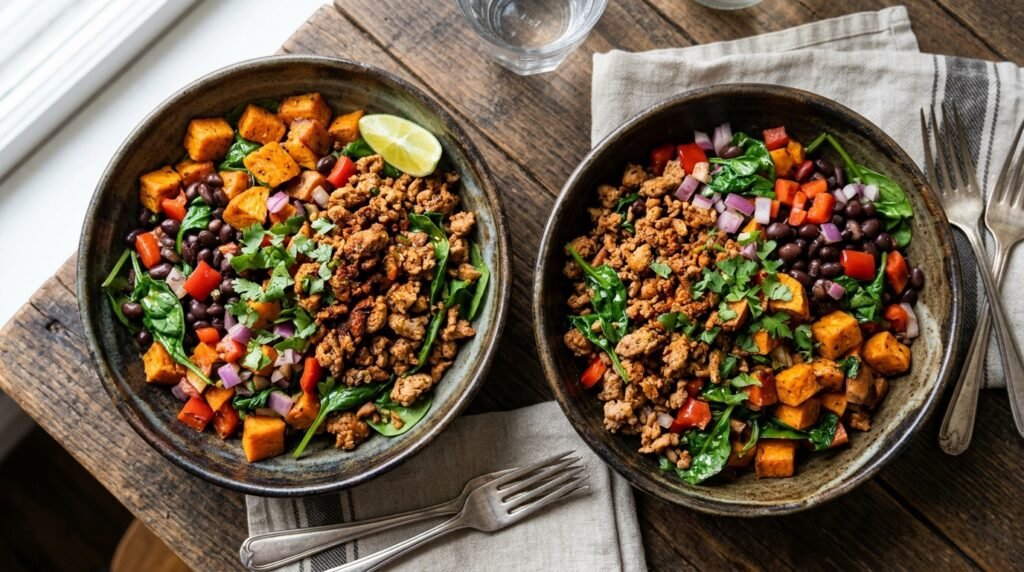
Smoked paprika gives meat a grilled-like aroma, even when we’re using a regular skillet. And it goes wonderfully with turkey. Unlike hot peppers, smoked paprika adds flavor and aroma rather than heat.
What you’ll need
Makes 2 large servings.
For the harvest bowl
- ¾ lb (340 g) ground turkey
- 1 large sweet potato (about ¾ lb / 340 g)
- ½ can black beans (about ¾ cup / 130 g drained)
- 1 small red bell pepper
- ½ small red onion
- 2 cups fresh baby spinach (about 60 g)
- 1½ tbsp olive oil
- 1 tsp smoked paprika
- ½ tsp ground cumin
- ½ tsp garlic powder
- ¼ tsp dried oregano
- Salt and black pepper to taste
For the lime sauce
- ¼ cup plain Greek yogurt (about 60 g)
- 1 tbsp fresh lime juice
- ½ tsp honey
- 1–2 tsp water
- A pinch of salt
How to make it
1. Roast the sweet potato. Preheat the oven to 425°F (220°C). Peel the sweet potato and cut it into roughly ¾-inch (2 cm) cubes. Toss with 1 tbsp olive oil, ½ tsp smoked paprika, salt, and a little black pepper.
Spread the pieces in a single layer on a baking sheet and roast for 25–30 minutes, turning them about halfway through. The sweet potato should be tender inside and lightly browned around the edges.
I cut it into roughly equal-sized pieces so they all cook at the same time.
2. Cook the turkey with spices. While the sweet potato is roasting, heat the remaining ½ tbsp olive oil in a large skillet. Add the ground turkey and cook over medium heat for about 5–7 minutes, breaking the meat into small pieces with a spatula.
When the turkey starts to brown, add the remaining ½ tsp smoked paprika, cumin, garlic powder, oregano, salt, and pepper.
Stir and cook for a few more minutes until the meat is fully cooked. The internal temperature of cooked ground turkey should reach 165°F (74°C).
By the way, if you’re using lean ground turkey, you can add 1–2 tbsp water while cooking. This helps distribute the spices more evenly through the meat and keeps the turkey juicier.
3. Prepare the beans and vegetables. Rinse the black beans under cold water and leave them in a colander to drain.
Cut the red bell pepper into small cubes and the onion into thin half-moons. Add the beans to the cooked turkey and warm them in the skillet for about 2 minutes.
Leave the bell pepper and onion raw. They’ll add a nice crunch to the dish and go well with the hot turkey and sweet potato.
4. Make the yogurt sauce. In a small bowl, combine the Greek yogurt, lime juice, honey, and a pinch of salt. Stir with a spoon until smooth.
Gradually add 1–2 tsp water until the sauce is thin enough to drizzle over the bowl.
For this recipe, choose plain Greek yogurt without added sugar or flavorings. It’s thick, so we’ll only need a little water.
5. Assemble the harvest bowl. Rinse and dry the spinach, then divide it between the bowls. Add the hot sweet potato, turkey with beans, fresh bell pepper, and red onion on top.
Drizzle everything with the lime yogurt sauce. If you like, you can add a little more freshly squeezed lime juice right before serving.
I love the combination of sweet potato and spiced turkey for the sweetness of the vegetables and the light smoky aroma of the meat. This bowl also has fresh greens and beans, so it makes a pretty filling dinner, and you don’t need any expensive or hard-to-find ingredients to make it. We usually already have most of the ingredients at home, and these are exactly the kinds of recipes I love saving in my recipe collection.
9. Farro Harvest Bowl With Roasted Grapes and Feta
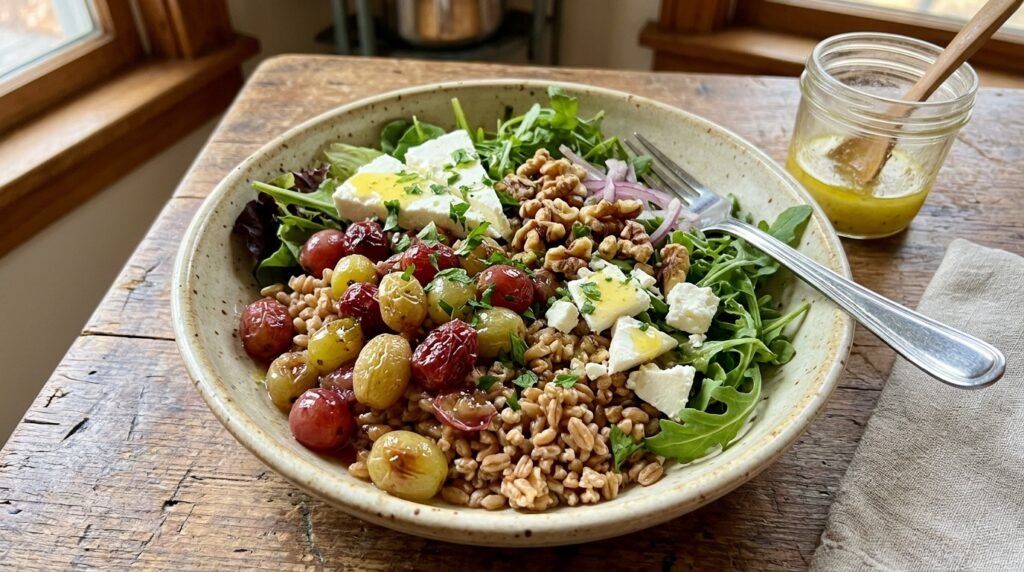
Have you ever tried roasting grapes? We’re used to eating them fresh or adding them to fruit salads, but after roasting, the grapes become soft, their skins split slightly, and their juice gets sweeter and richer. And it’s really delicious!
This time, let’s make a fall harvest bowl with farro, roasted grapes, feta, and fresh greens. Farro is an ancient type of wheat with a nice nutty flavor that goes well with vegetables, fruit, and cheese. And a few spoonfuls of lemon dressing will add some freshness to the dish.
What you’ll need
Makes 2 large servings.
For the harvest bowl
- ½ cup dry pearled farro (about 90 g)
- 1½ cups seedless red grapes (about 225 g)
- 2 cups fresh arugula (about 40 g)
- ½ small red onion
- 2 oz (55 g) feta cheese
- ¼ cup walnuts (about 30 g)
- 1 tbsp olive oil
- 1 tbsp finely chopped fresh parsley
- Salt and black pepper to taste
For the lemon dressing
- 2 tbsp olive oil
- 1½ tbsp fresh lemon juice
- 1 tsp Dijon mustard
- 1 tsp honey
- ½ tsp finely grated lemon zest
- Salt and black pepper to taste
How to make it
1. Cook the farro. Rinse the farro under cold water, transfer it to a saucepan, and add 1½ cups of water. Add a little salt, bring to a boil, and reduce the heat.
Simmer for about 25–30 minutes, until the grains are tender but still have a little chew to them. Drain any excess water and let the farro cool slightly.
Keep in mind that cooking time depends on how the farro is processed. Pearled farro cooks faster, while whole-grain farro may need 45–60 minutes. I use pearled farro and always check the package instructions.
2. Roast the grapes and red onion. Preheat the oven to 425°F (220°C). Cut the red onion into half-moons about ½ inch (1.3 cm) thick, toss with half the olive oil, salt, and black pepper. Spread on a baking sheet and roast for 12–15 minutes.
Meanwhile, remove the grapes from their stems, rinse them, and dry them thoroughly. Add them to the onion, drizzle with the remaining olive oil, gently toss, and return to the oven for another 10–15 minutes.
Start checking the grapes after 10 minutes. They should soften and wrinkle slightly, and some may burst and release their juice. Don’t overcook them, or they’ll lose their shape. And don’t pour out the juice left on the baking sheet! We’ll add it to the finished bowl along with the grapes.
3. Make the lemon dressing. In a small bowl, combine the olive oil, fresh lemon juice, Dijon mustard, honey, and lemon zest.
Add a pinch of salt and a little black pepper, then whisk thoroughly until smooth.
The dressing should be slightly tangy. There’s no need to add extra honey, since the roasted grapes already bring sweetness to the dish.
4. Prepare the greens, cheese, and nuts. Rinse and dry the arugula. Break the feta into small pieces with your hands.
Roughly chop the walnuts and toast them in a dry skillet over medium heat for about 3–4 minutes, stirring occasionally. As soon as you notice a pleasant nutty aroma, remove them from the heat.
Finely chop the parsley. It’ll add a fresh aroma that goes well with the feta and lemon dressing.
5. Assemble the harvest bowl. Divide the warm farro between the bowls. Arrange the fresh arugula, roasted grapes, and red onion on top.
Drizzle with the juice left from roasting the grapes and the lemon dressing. Add the feta pieces on top, then sprinkle with walnuts and fresh parsley.
I add the feta at the very end so it doesn’t get too warm from the farro and soften too much.
We grow plenty of familiar vegetables and greens on our homestead, but I like trying new ingredient combinations from time to time. Roasted grapes with salty feta are a perfect example.
And you can use roasted grapes for more than just harvest bowls. They go wonderfully with baked cheese, meat, and even toasted bread. I recommend roasting a few extra grapes sometime and trying them with other dishes. You might also be surprised by how interesting ordinary grapes can taste.
10. Harvest Bowl Salad With Carrot Ginger Dressing
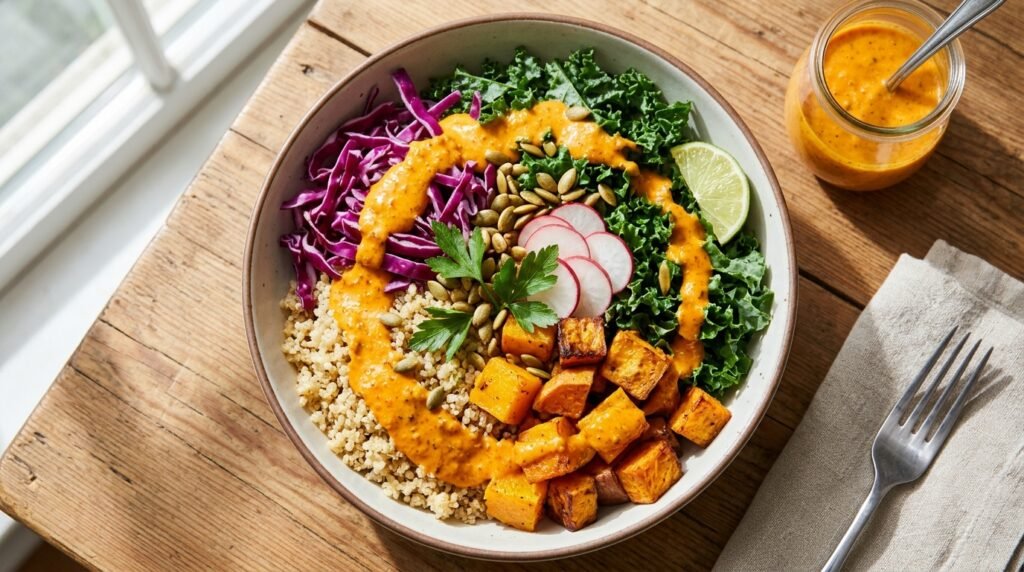
We add carrots to soups, stews, and salads, and roast them with other root vegetables. But one day, I discovered another wonderful way to use them — carrot ginger dressing. Similar sauces are often served with salads in Japanese restaurants, and I really love their fresh, slightly spicy flavor.
For our bowl, we’ll make a salad with quinoa, roasted butternut squash, sweet potato, and fresh red cabbage, where the bright orange carrot ginger dressing will add a nice tang and a little kick to the vegetables.
What you’ll need
Makes 2 large servings.
For the harvest bowl
- ½ cup dry quinoa (about 85 g)
- ½ lb (225 g) peeled butternut squash
- ½ lb (225 g) sweet potato
- 1 cup thinly shredded red cabbage (about 70 g)
- 2 cups fresh baby spinach (about 60 g)
- ½ small sweet apple
- ¼ cup shelled pumpkin seeds (about 30 g)
- 1 tbsp olive oil
- ½ tsp ground cumin
- Salt and black pepper to taste
For the carrot ginger dressing
- 1 medium carrot (about 4 oz / 115 g)
- 1 tsp finely grated fresh ginger
- 1 tbsp rice vinegar
- 1 tsp white miso paste
- 1 tsp honey
- 1 tsp toasted sesame oil
- 1 tbsp neutral vegetable oil
- 2–3 tbsp water
How to make it
1. Roast the squash and sweet potato. Preheat the oven to 425°F (220°C). Peel the squash and sweet potato, cut them into roughly ¾-inch (2 cm) cubes, and transfer them to a large bowl.
Add 1 tbsp olive oil, cumin, salt, and black pepper. Toss everything together so the spices coat the vegetables evenly.
Spread the pieces in a single layer on a baking sheet and roast for 25–30 minutes, turning them about halfway through. The cooked vegetables should be easy to pierce with a fork and lightly browned around the edges.
2. Cook the quinoa. While the vegetables are in the oven, rinse the quinoa thoroughly under cold water. Transfer it to a small saucepan, add 1 cup of water and a pinch of salt.
Bring to a boil, reduce the heat, and simmer covered for about 15 minutes, until the water is absorbed. Then remove the saucepan from the heat, let it sit for 5 minutes, and fluff the quinoa with a fork.
3. Make the carrot ginger dressing. Peel the carrot and cut it into small pieces. Transfer it to a blender, then add the fresh ginger, rice vinegar, white miso paste, honey, and both types of oil.
Pour in 2 tbsp water and blend until you get a smooth sauce. If the mixture is too thick, add a little more water and keep blending.
The secret to this dressing is fresh carrots and ginger. The carrot gives it natural sweetness, while the ginger adds a little heat. Don’t add too much ginger right away, especially if you’re making this kind of sauce for the first time. Its flavor is pretty strong, and even a small amount is noticeable.
Be sure to taste the finished dressing. If it’s too tart, add a little honey. And if you like a stronger ginger flavor, add just another pinch of freshly grated ginger.
4. Prepare the fresh vegetables and seeds. Shred the red cabbage as thinly as possible. Rinse and thoroughly dry the spinach, then cut the apple into small, thin slices.
Add the pumpkin seeds to a dry skillet and toast over medium heat for about 2–3 minutes, stirring occasionally. As soon as they start to crackle slightly and you notice a pleasant nutty aroma, remove the skillet from the heat.
5. Assemble the harvest bowl salad. Divide the quinoa between deep bowls. Add the fresh spinach, shredded red cabbage, warm roasted butternut squash, and sweet potato.
Arrange the apple slices on top, drizzle everything with the carrot ginger dressing, and sprinkle with toasted pumpkin seeds.
These days, I appreciate carrots much more for their versatility. You can make so many different dishes with them, including restaurant-style dressings! I like that in this bowl, carrots become the main ingredient in the sauce rather than just another vegetable in the salad. And I think I’ll be making this dressing more often now, especially since we almost never run out of carrots at home.
Our harvest bowls
As you’ve seen, fall harvest bowls give us lots of options for home cooking. Just look in the fridge, pick a few seasonal vegetables, and make a good dressing to go with them. Lindy and I do this pretty often, especially when we need to use up what’s left from the harvest.
What vegetables, grains, and dressings do you add to your bowls most often? And which of these ten recipes would you like to try first? Share in the comments, I’d love to read your ideas.