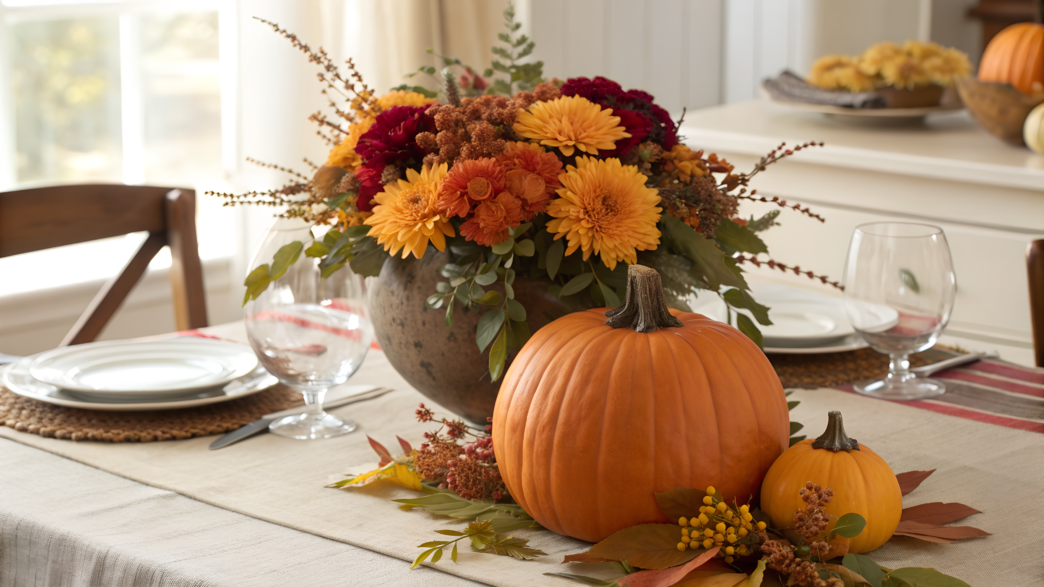
Fall decor ideas are endless, and you can bring them to life with the simplest materials. Try turning a pumpkin into a vase, add flowers — and you already have a pumpkin centerpiece that will impress both guests and the host.
Lindy and I have tried dozens of different combinations. We carved and didn’t carve, placed pumpkins on the table, on the mantel, and even in the bedroom. Every time the result was different, but the main conclusion stayed the same: pumpkin arrangements always look beautiful. In this collection, I’ve gathered my favorite ideas — from quick “on the go” options to more complex, layered creations for special celebrations.
So grab a knife, a couple of fresh or artificial flowers (both versions work great!), and let’s turn an ordinary pumpkin into a true fall table decoration.
1. White Pumpkin Vase with Roses & Eucalyptus
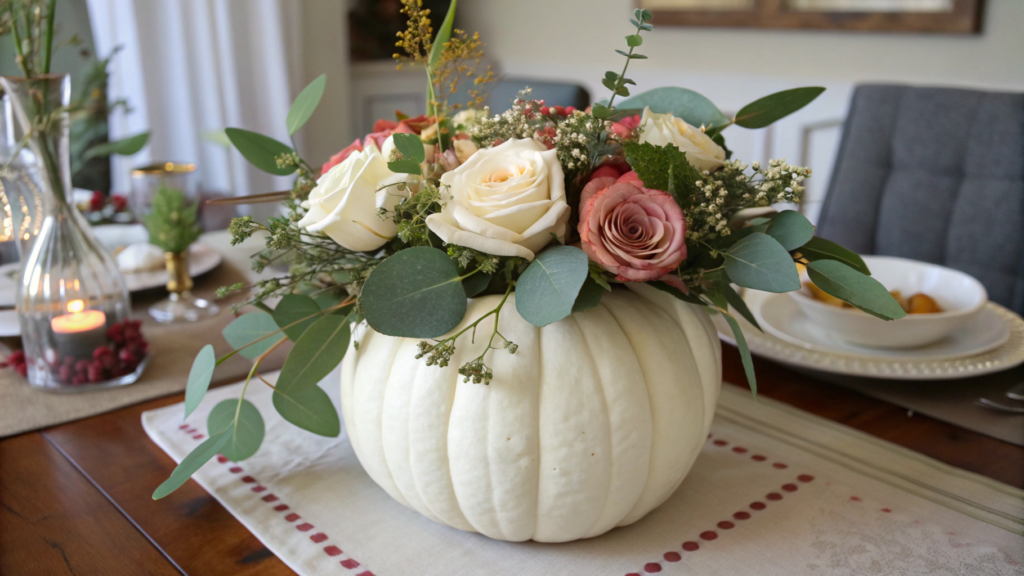
White pumpkins are already a work of art on their own. Their soft, matte color creates a sense of freshness and elegance. But if you turn such a pumpkin into a vase and add roses and eucalyptus, you get a truly stylish fall centerpiece.
The aroma of eucalyptus blends with the sweet scent of roses — instantly filling the room with a festive atmosphere.
How to make a white pumpkin vase:
- Choose a fresh white pumpkin of medium size — about 8–10 inches (20–25 cm) in diameter.
- Cut off the top and carefully scoop out the pulp and seeds.
- Place a plastic or glass container inside (a small yogurt jar or vase works well). This will help keep the flowers fresh longer and prevent moisture from spoiling the pumpkin.
- Fill the container with water and add a little flower food.
The pumpkin arrangement:
- The base should include 6–8 roses — white or blush (with stems about 12 inches / 30 cm long).
- Add a few sprigs of eucalyptus — they bring lightness and a slightly wild touch.
- Optionally, insert a few sprigs of baby’s breath or dried flowers for a more layered look.
This type of fall floral arrangement is perfect for the living room or dining table. A white pumpkin with roses and eucalyptus looks especially striking on a wooden surface or surrounded by candles.
Tip. If you can’t find fresh roses or want the arrangement to last longer, try using artificial flowers. They are so realistic now that it’s hard to tell them apart from real ones.
2. Mini Pumpkin Floral with Marigolds
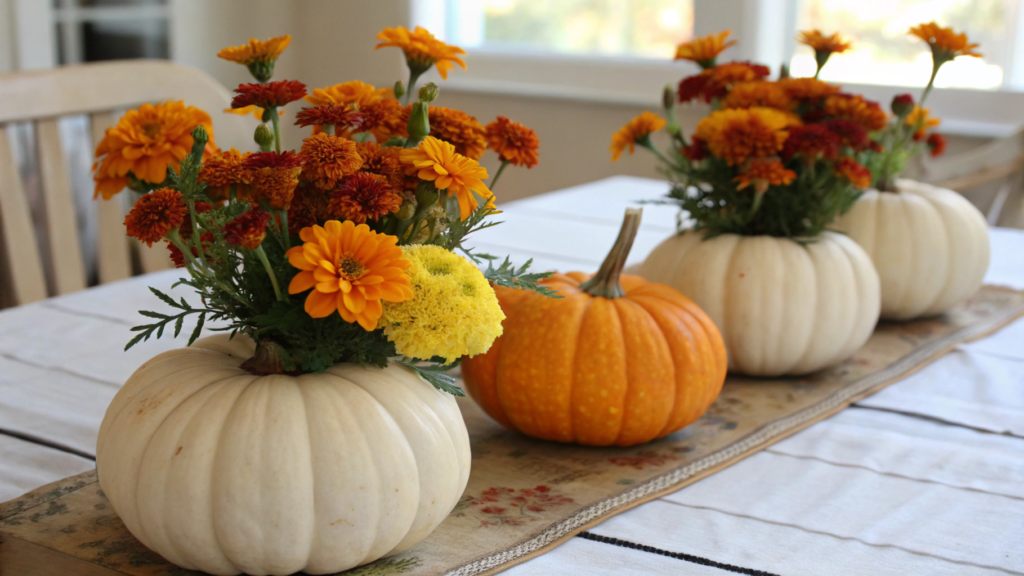
Mini pumpkins are probably the most charming thing fall gives us, and they always bring a smile. They’re small, cute, and perfect for turning into miniature vases. When we once made such compositions with marigolds, everyone loved them so much that guests took them home as souvenirs!
What you need:
- Mini pumpkins (3–4 inches / 7–10 cm in diameter)
- 2–3 marigold flowers for each pumpkin
- Small plastic cup, yogurt jar, or spice jar for water
- Rosemary, parsley, or eucalyptus sprigs for greenery
- Optional: dried flowers or baby’s breath
- Vinegar solution (1 tbsp per cup of water) to wipe pumpkins if needed
How to turn a mini pumpkin into a vase:
Choosing mini pumpkins.
The best options are pumpkins about 3–4 inches (7–10 cm) in diameter, firm and evenly shaped. Pick ones with tough skin and no blemishes. If you want the decor to last a week, wipe the pumpkins with a weak vinegar solution (1 tbsp per cup of water) — it slows down mold.
Preparing the opening.
Use a sharp knife to slice off the top — about 1 inch (2.5 cm). The hole doesn’t need to be large, just big enough for a small cup or jar. For scooping out seeds and fibers, a teaspoon or even an ice cream scoop works great — its sharp edge scrapes out the inside easily.
Creating the inner “vase.”
To keep moisture from damaging the pumpkin, place a plastic cup, small yogurt jar, or spice jar inside. The key is that it fits completely and stays hidden. Fill the container with water and add a bit of flower food if you’re using fresh stems.
Filling with flowers.
Marigolds are the perfect choice for mini pumpkins. Their short, sturdy stems hold shape beautifully. Place 2–3 flowers in each pumpkin, mixing golden, dark orange, and bright yellow tones. If the marigolds are from your garden, cut them in the morning when they’re freshest.
Adding greenery.
Try a sprig of rosemary or parsley — they don’t just look good but add a light fragrance. For a more elegant look, you can also use eucalyptus.
Final touches.
Each mini pumpkin can be slightly different. Add dried flowers to one, a couple of sprigs of baby’s breath to another. On the table, you’ll get a whole gallery of tiny fall arrangements.
These mini pumpkin floral arrangements work beautifully as personal decorations at each guest’s place setting. Imagine: every plate has a small pumpkin with flowers — no expensive bouquets needed, but the impression is unforgettable.
They also look amazing as part of a long table centerpiece — line them up or group them into a little “pumpkin garden.” And of course, they’re perfect as small gift favors for friends.
Tip. If you want the composition to last longer, use artificial marigolds. Very realistic ones can be found like Marigolds Artificial Flowers on Amazon.
3. Sunflower + Pumpkin Harvest Arrangement
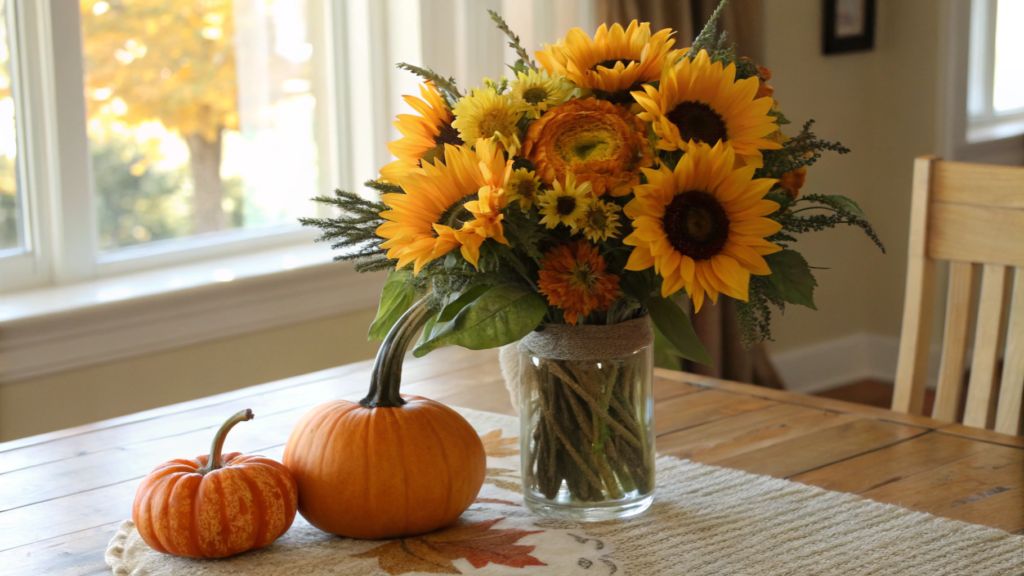
Sunflower arrangements instantly set the mood. Just place them in a vase, and the whole house feels brighter. But when you combine sunflowers with a pumpkin, you get an extraordinary fall centerpiece that radiates warmth and harvest vibes.
What you need:
- Large orange pumpkin (10–12 inches / 25–30 cm in diameter)
- 5–7 sunflowers (stems 18–24 inches / 45–60 cm)
- Decorative mini corn cobs (3–5 inches / 7–12 cm)
- Maple or oak branches with leaves
- 3–4 mini pumpkins
- Eucalyptus or ruscus sprigs for greenery
- Plastic or glass container for water
How to assemble this pumpkin arrangement:
The base — a large pumpkin.
Choose one big pumpkin about 10–12 inches (25–30 cm) in diameter. A classic orange variety works best since sunflowers stand out vividly against it. Cut off the top, scoop out the inside as you would with a regular vase, and place a plastic or glass container inside to hold water.
The central accent — sunflowers.
For maximum effect, use 5–7 sunflowers with long stems (18–24 inches / 45–60 cm). They become the “sunny” center of the arrangement. Position them so they extend slightly beyond the pumpkin’s edge, creating a rounded silhouette.
Filling the space.
Between the sunflowers, add sprigs of decorative corn cobs (small ones, 3–5 inches / 7–12 cm). Tie them with twine to wooden skewers and insert into the pumpkin so they stay upright. You can also mix in maple or oak branches with bright leaves for an autumnal touch.
The second accent — mini pumpkins.
To enhance the harvest feel, place 3–4 mini pumpkins around the main pumpkin-vase. You can even tuck one small pumpkin directly inside the arrangement among the sunflowers — it looks unexpected and charming.
Finishing details.
Add a few sprigs of greenery like eucalyptus or ruscus to soften the bold colors. Don’t forget about height: let one or two branches stick out slightly above the rest to create a natural, “field-like” effect.
It works beautifully as a centerpiece on the holiday table, especially for Thanksgiving. It also shines on the mantel, where it becomes a bright accent in the living room. And in the entryway, it greets guests with cheerful “sunny” energy right at the door.
Tip. If you don’t have access to fresh sunflowers in season, you can easily replace them with high-quality artificial sunflowers. They look so natural, and the arrangement will last as long as you want.
4. Rustic Wheat & Pumpkin Centerpiece
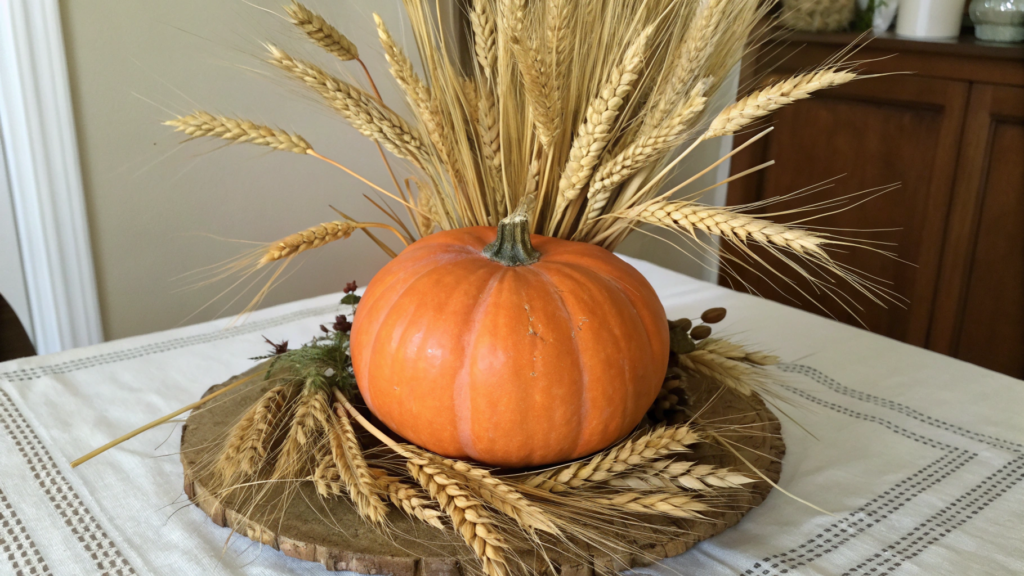
Golden wheat stalks instantly bring associations with fields, harvest, and rustic calm. And when you combine wheat with a pumpkin, you get that timeless rustic style centerpiece that never goes out of fashion.
I experiment with wheat and pumpkins every year, and each time the arrangement looks new and different.
What you need for the arrangement:
- One large pumpkin (10–12 inches / 25–30 cm in diameter) for the base.
- About 20–25 dried wheat stalks to create volume.
- Mini pumpkins (3–4 pieces, each 3–4 inches / 7–10 cm).
- Twine or jute ribbon for rustic charm.
- Optional: a couple of candles in glass jars or holders.
How to assemble this pumpkin arrangement:
Prepare the pumpkin.
Slice off the top and clean out the inside. Place a tall glass or jar inside — it will act as support for the wheat and keep it from falling apart.
Form the wheat bouquet.
Gather the stalks into a bundle and trim the ends so they are about the same length (12–15 inches / 30–38 cm). Tie them with twine — it’s practical and adds a decorative touch.
Set it into the pumpkin.
Place the bundle into the jar inside the pumpkin. Secure it with small stones or sand if needed. The wheat should stand upright, not fall to the sides.
Add the mini pumpkins.
Arrange them around the large pumpkin like small companions. The contrast in sizes makes the composition feel alive.
Finishing touches.
Wrap the base of the pumpkin with jute ribbon or a piece of burlap. Add a couple of dry leaves or sprigs of lavender for a light scent.
This design lasts a long time — dried wheat doesn’t wilt, so the centerpiece can stand for months. It fits perfectly with farmhouse or boho interiors. And finally, it symbolizes harvest and abundance, making it an excellent choice for the holiday table.
This pumpkin arrangement works best as a centerpiece on the festive table — it sets the tone for the whole dinner. If the pumpkin is large and tall, you can also place it on a sideboard or console so it doesn’t block conversation at the table.
Tip. If you don’t have access to freshly cut wheat, check out Dried Wheat Stalks on Amazon. They come in ready-made bundles and are very convenient for decor.
5. No-Carve Dahlia Pumpkin Vase
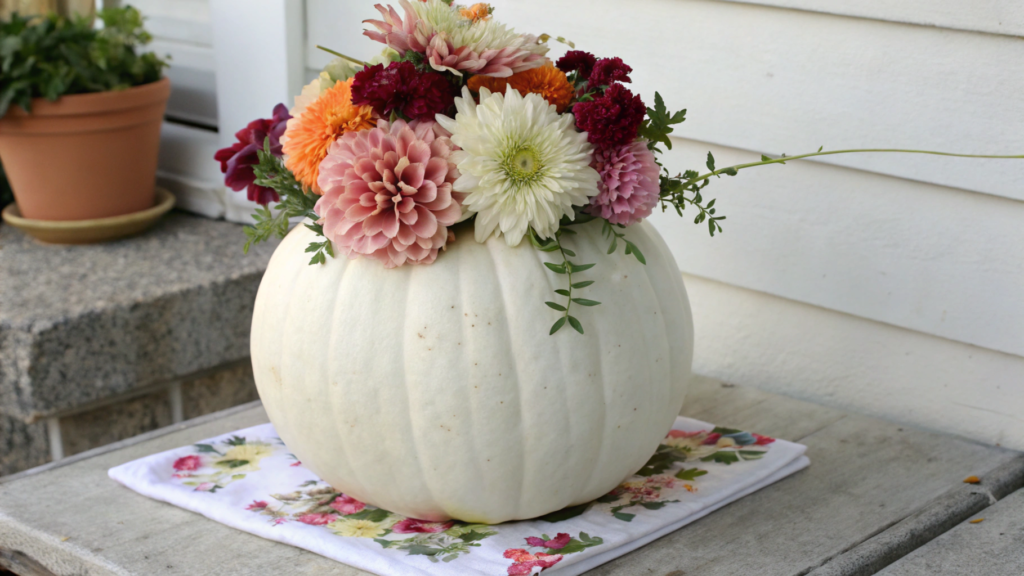
A pumpkin with dahlias without carving combines beauty and simplicity. Instead of struggling with a knife and cleaning out the inside, you just use the pumpkin’s surface as a base. It’s quick, neat, and looks incredibly elegant.
I tried this once when we had almost no time — guests were supposed to arrive in just a couple of hours. We grabbed a large white pumpkin, attached a small floral foam with flowers on top, and that was it! No one even realized the pumpkin wasn’t hollowed out. On the contrary, everyone kept asking: “How did you make it look so perfect?”
What you need:
- Medium white or light-orange pumpkin (8–10 inches / 20–25 cm in diameter)
- 6–8 dahlias (stems 8–10 inches / 20–25 cm)
- Eucalyptus or fern sprigs
- Floral foam block (about 3×3 inches / 7×7 cm)
- Double-sided tape or floral adhesive dots
- Optional: rubber band and greenery to hide it
How to assemble this pumpkin arrangement:
Preparing the pumpkin.
Take a medium white or light-orange pumpkin about 8–10 inches (20–25 cm) in diameter. Wash it and dry thoroughly so the surface is clean and dry — this way the floral foam sticks better. Optionally, rub the skin with a little vegetable oil to make it shine and look fresh.
Working with floral foam.
Use a small piece of floral foam about 3×3 inches (7×7 cm). Soak it in water — let it fully absorb on its own without pressing it down. This ensures the flowers get even moisture. After soaking, trim the bottom slightly so it sits flat on the pumpkin. For convenience, you can use Oasis Floral Foam Bricks on Amazon.
Fixing the foam to the pumpkin.
To secure the foam, use double-sided mounting tape or floral adhesive dots. For extra reliability, wrap a thin rubber band around the pumpkin, later covering it with greenery. The foam must not slide — otherwise the arrangement will lose its shape.
Creating the composition.
Now comes the fun part — working with the flowers! Take 6–8 fresh dahlias with stems about 8–10 inches (20–25 cm) long. Insert them into the foam, starting with a central flower, then adding the rest around it.
Between them, place eucalyptus sprigs or fern leaves for lightness and volume. The flowers should slightly hang over the pumpkin’s edges to create the effect of a “spilling bouquet.”
This design is especially convenient when you need beautiful decor quickly and without mess. No carving, no risk of ruining the pumpkin, and the result looks professional. It works even for those who have never tried floral arranging because it requires no special skills. Another plus: the pumpkin stays whole and can be reused later — either for cooking or for new decorations.
6. Pumpkin Floral with Pampas & Cream Roses
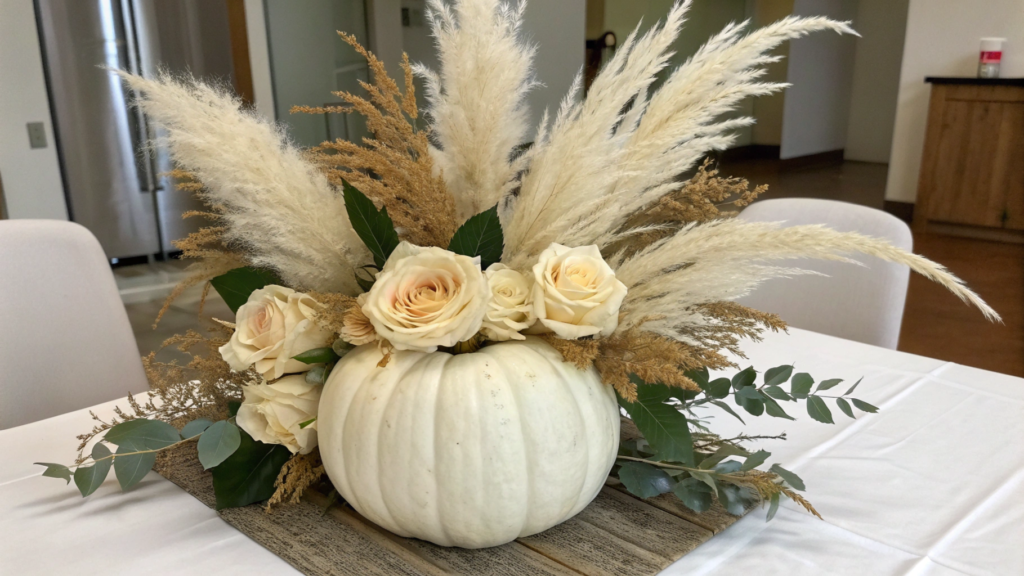
In this pumpkin arrangement, fluffy pampas grass plumes pair beautifully with delicate cream roses, creating a light, airy, and very stylish look. We first made this decor for Thanksgiving, and our friends loved it so much — we kept admiring it ourselves long after the dinner was over.
What you need:
- Medium or large pumpkin (10–12 inches / 25–30 cm in diameter), preferably white or beige
- 4–6 pampas grass stems (20–30 inches / 50–75 cm)
- 6–8 cream roses (stems about 12 inches / 30 cm)
- Eucalyptus, ruscus, or olive branches for greenery
- Optional: cotton stems or white astilbe
- Glass jar or water container
How to assemble this pumpkin arrangement:
Preparing the pumpkin.
Take a medium or large pumpkin about 10–12 inches (25–30 cm) in diameter. A white or light beige variety (sugar pumpkin or white pumpkin) works best — the roses and pampas stand out especially well against this background. Slice off the top, scoop out the seeds and fibers. To preserve the shape and protect the flesh from moisture, always insert a glass jar or container for water inside.
Preparing the pampas grass.
Pampas grass can be tricky since it sheds a lot. Lightly spray the plumes with hairspray before use. This helps “fix” the feathers and prevents them from scattering around the house. For the pumpkin arrangement, 4–6 stems about 20–30 inches (50–75 cm) long are enough. Place them in the jar first to set the height and volume. You can angle them slightly to the sides to create a cloud-like silhouette.
If fresh stems aren’t available, high-quality artificial pampas grass works well too.
Adding the roses.
Next comes the cream roses. Take 6–8 large blooms on stems about 12 inches (30 cm) long. Insert them closer to the center, leaving room for greenery. The roses should appear as if they’re “emerging” from the pampas cloud. The combination of fluffy textures and smooth petals creates a stunning contrast. To keep the flowers fresh longer, trim stems at an angle and add a flower food packet to the water.
Greenery and accents.
To keep the arrangement from looking too strict, add some greenery: eucalyptus, ruscus, or olive branches. These bring freshness and fill the gaps between roses. You can also add a few dried cotton stems or white astilbe — they enhance the soft, light palette.
This composition works best in spaces where it has room to “breathe.” As a dining table centerpiece, it instantly becomes the main accent. But height matters: pampas can block views, so I usually place it slightly off-center or shape it asymmetrically so guests can see each other freely.
On a buffet or sideboard, it looks even more refined. In the entryway, it’s the first thing guests notice — and the impact is strongest there.
On the mantel, pampas extends the vertical lines of the fireplace, while the cream roses soften the overall look. The room feels taller, and the decor becomes even more airy.
Tip. If you want the arrangement to look especially luxurious, use roses of different sizes: larger blooms for the center and mini roses for side accents. For longer life, mix fresh flowers with artificial roses — the blend looks seamless and lasts much longer.
7. Pumpkin Vase for Thanksgiving Table
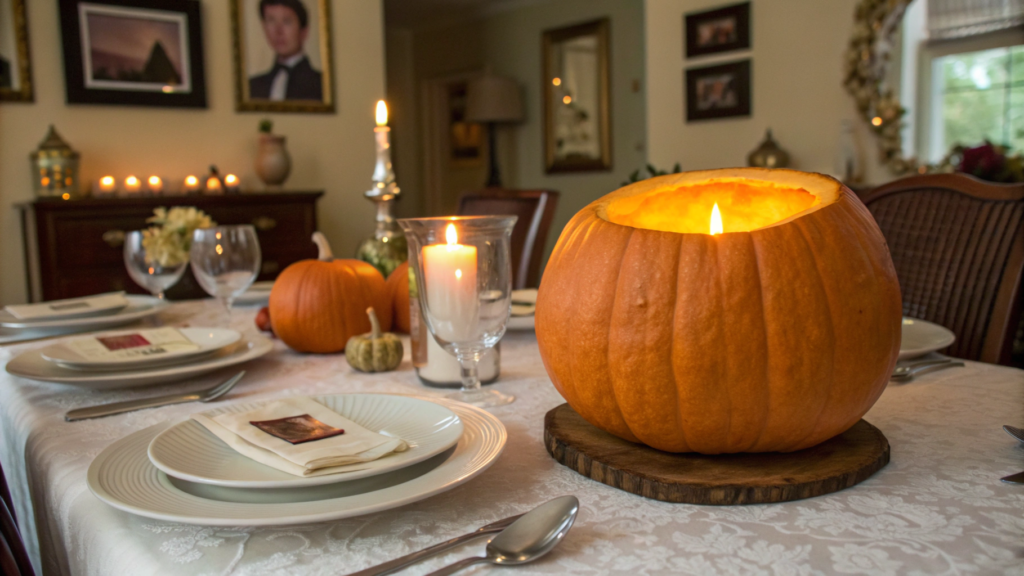
No holiday is associated with pumpkins as much as Thanksgiving. That’s why a pumpkin vase centerpiece for the festive table becomes not just decoration but a symbol of abundance, comfort, and family warmth.
What you need:
- A large pumpkin (12–14 inches / 30–35 cm in diameter), preferably classic orange.
- Cut flowers in a warm palette: chrysanthemums, dahlias, asters, roses — about 10–12 stems.
- Greenery and fillers: eucalyptus, oak leaves, berry branches (such as hypericum).
- Mini pumpkins and a few pinecones to surround the base.
- A glass jar or bowl for water to protect the pumpkin flesh.
How to assemble this pumpkin arrangement:
Prepare the base.
Slice off the top and scoop out the inside. Insert a jar or container — this protects from moisture and extends the arrangement’s life.
Add the flowers.
Start with the largest blooms: 3–4 dahlias or chrysanthemums. They become the central accent.
Fill the gaps.
Insert roses and asters, creating a smooth gradient of shades. Warm tones from burgundy to yellow work especially well here.
Weave in the greenery.
Eucalyptus and oak leaves add volume and airiness. A few berry branches bring a bright autumn touch.
Frame the composition.
Surround the pumpkin vase with mini pumpkins and a few pinecones. The table instantly gains layers, and the arrangement feels even richer.
Why this option is so popular? It perfectly reflects the essence of the holiday: the pumpkin symbolizes harvest, the flowers symbolize joy, and the greenery represents life. Together, they transform an ordinary table into a warm, generous space. This kind of centerpiece unites people at the table, highlights seasonality, and makes the celebration memorable.
Tip. To keep the flowers fresh longer, add flower food to the water and refresh it every 2–3 days. And if you’re short on time, use high-quality artificial chrysanthemums — they look strikingly real and last indefinitely.
8. Soft Pastel Floral Pumpkin Design
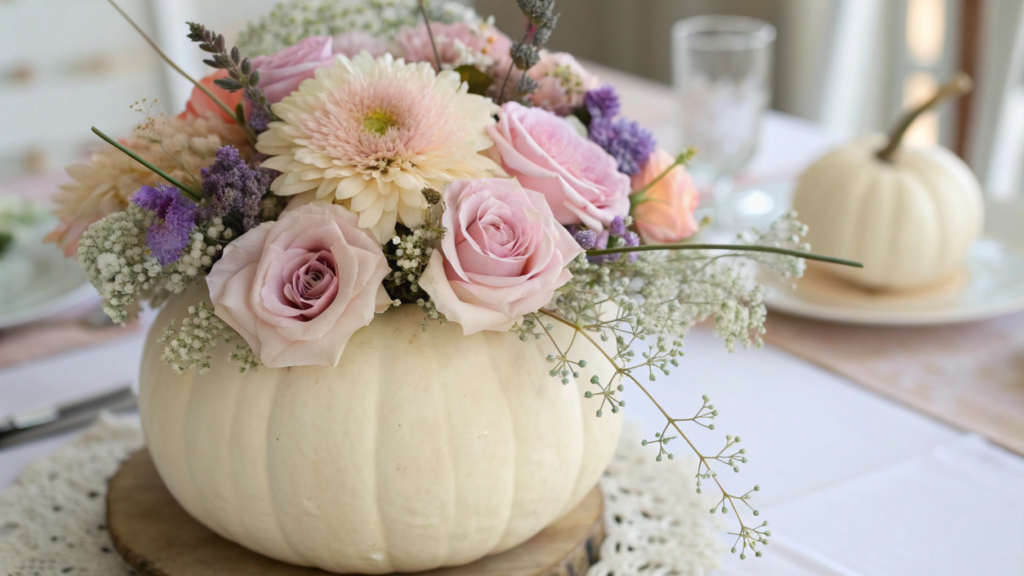
I once made this kind of arrangement in November, when I was already tired of the bright orange tones everywhere. A white or light beige pumpkin as a vase, filled with pink, cream, and lavender flowers — and you get a very refined decor that works beautifully not only in fall but also at the start of winter.
What you need:
- A white or light beige pumpkin about 8–10 inches (20–25 cm) in diameter.
- Pastel flowers: roses, ranunculus, asters, or even tulips (8–10 stems).
- Filler greenery — silver-toned eucalyptus or soft ruscus.
- A container or jar for water to protect the pumpkin.
How to assemble this pumpkin arrangement:
Prepare the pumpkin.
Take a white or light beige pumpkin (8–10 inches / 20–25 cm). Slice off the top and scoop out the seeds with an ice cream scoop — it’s the easiest tool for scraping even the fibers. To prevent mold, wipe the inner walls with a vinegar solution (1 tbsp per cup of water). Always place a jar or plastic container inside so water doesn’t touch the pumpkin flesh.
Lay the base with large blooms.
Start with 2–3 cream roses or white asters. Trim stems at an angle to about 10–12 inches (25–30 cm). Insert them crosswise into the container — this creates a “framework” to support the whole arrangement. It’s a small florist secret: if the first flowers are positioned correctly, the rest of the arrangement practically builds itself.
Add pastel accents.
Now bring in the pink and lavender tones. Use 3–4 ranunculus or rose buds. Place them slightly higher or lower than the cream flowers to create layering. If all the flowers sit at the same level, the arrangement looks flat. Height variation makes it feel alive and more natural.
Insert the greenery.
Silver eucalyptus is essential here. Its branches softly frame the pastel blooms and add lightness. Don’t overload with greenery — 3–4 sprigs gently hanging over the edges are enough. For extra softness, add a couple of ruscus stems — its texture is gentler.
Final placement.
Step back a few feet and check how the arrangement looks from the side. If you see an empty spot, don’t rush to fill it completely. Insert a small bud or leaf to keep the airy feel. Remember: in pastel arrangements, less clutter equals more elegance.
The pastel palette creates a sense of calm and harmony, making this arrangement the opposite of bold “harvest” versions. It fits beautifully into minimal or boho interiors, adding a gentle accent without overwhelming the space.
This design works best in a bedroom, study, or on a living room sideboard, where a quiet touch is needed. But it’s also perfect as a centerpiece — especially for gatherings where you want to highlight intimacy and coziness rather than festive grandeur.
9. Burgundy & Gold Pumpkin Arrangement
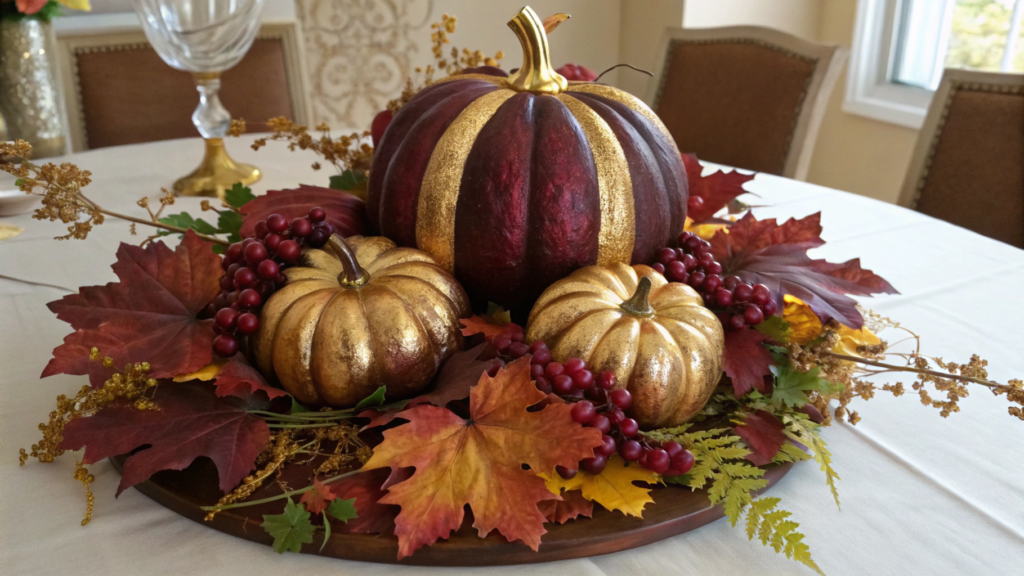
If pastel arrangements highlight tenderness, then a burgundy and gold palette emphasizes strength and richness. This kind of decor instantly makes the table feel “luxurious” and festive, adding a sense of elegance. In fall, burgundy tones are everywhere: maple leaves, grapevines, ripe apples. Combined with golden accents, they turn into a true celebration of color.
What you need:
- A large pumpkin (12–14 inches / 30–35 cm) — ideally white or dark green, since burgundy and gold stand out more vividly against them.
- Burgundy flowers: dahlias, roses, chrysanthemums, or amaranth (8–10 stems).
- Golden accents: painted dried flowers, eucalyptus branches with gold spray, or decorative berries.
- A bit of greenery to soften transitions.
- A water container or floral foam.
How to assemble this pumpkin arrangement:
Prepare the pumpkin.
Take a large, stable pumpkin, cut off the top, and scoop out the seeds. Insert a jar or plastic container inside. If you want even more “luxury,” paint the pumpkin with gold acrylic paint or leave it natural. Sometimes I spray just the top lightly with gold spray — and it immediately elevates the whole look.
Lay the base with burgundy flowers.
Start with 3–4 large dahlias or roses. Trim stems at an angle to about 10–12 inches (25–30 cm). Place them crosswise to form the heart of the arrangement. They should carry the strongest color accent.
Add golden elements.
Here, creativity is key. You can use dry leaves sprayed gold, or eucalyptus branches with a soft golden dusting. Decorative berries also work beautifully. Insert 4–5 golden accents among the burgundy flowers to make the design pop. For an easy option, try Artificial Gold Leaves on Amazon.
Fill with greenery.
Add a few neutral sprigs of greenery, like ruscus or eucalyptus. They pull the arrangement together and keep the bold colors from clashing. The greenery shouldn’t cover the gold — just highlight it.
Finishing touches.
I love adding a couple of trailing elements — like amaranth or long grasses. They bring movement and make the arrangement feel alive.
The burgundy and gold palette instantly creates a sense of festivity and richness. This decor works best as the centerpiece of a holiday table, where it becomes the evening’s main theme. But it also looks stunning on the mantel or in the entryway: imagine guests walking in and the first thing they see is a glowing burgundy pumpkin with golden accents — the festive mood appears instantly.
10. European-Inspired Pumpkin Floral
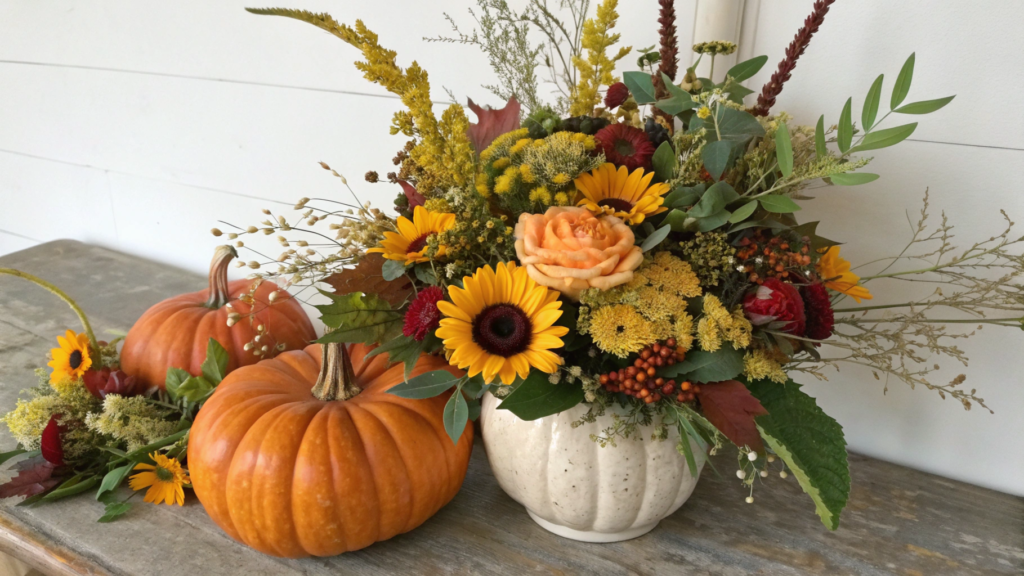
European floral design has always been known for its effortless style, elegance, and ability to mix simple seasonal materials with luxurious details. The key here is asymmetry, movement, and natural flow. Such arrangements never look “too perfect,” like in catalogs. The flowers feel as if they’ve just been gathered from a meadow and placed in a beautiful vase.
That’s exactly the inspiration behind the European-Inspired Pumpkin Floral.
What you need:
- A medium or large pumpkin (10–12 inches / 25–30 cm), preferably white or cream.
- Main flowers: garden roses, peonies, ranunculus, or anemones (6–8 stems).
- Additional accents: olive branches, lavender, or dried grasses.
- Filler flowers: carnations, asters, or baby’s breath.
- A water container or floral foam.
How to assemble this pumpkin arrangement:
Prepare the pumpkin.
Cut off the top and scoop out the flesh. Insert a jar or bowl of water. For authenticity, you can leave the cut slightly uneven — European style favors a touch of “natural imperfection.”
Add the main flowers.
Place 2–3 roses or peonies in the center, but not too close together. Leave space between them for airiness. Stem length should be about 10–12 inches (25–30 cm).
Add asymmetry.
Insert 1–2 long olive or eucalyptus branches so they drape off the side. This creates the casual European look. The looseness is intentional — the elements should vary in length, not line up evenly.
Weave in textures.
Add a few dried grasses or sprigs of lavender for softness and fragrance. Scatter in some baby’s breath for delicate highlights.
Finish the arrangement.
Tilt the design slightly to one side — one part fuller, the other lighter. This asymmetry gives the arrangement its distinct European character.
Why this design is unique? It feels like the flowers were just picked outside and casually placed in the pumpkin. The natural flow, soft imbalance, and richness of textures make it incredibly versatile.
It looks beautiful in the living room on a coffee table, where it becomes a conversation piece. It also works well in the entryway, welcoming guests with a distinct atmosphere. And as a dining table centerpiece, it creates the effect of freshly gathered flowers arranged effortlessly.
Tip. If seasonal roses or peonies aren’t available, substitute with high-quality artificial garden roses.
The Symbol of Fall
Pumpkins are the symbol of autumn, warmth, and abundance. And that’s why they fit seamlessly into any decor. White, orange, tiny, or oversized — each one finds its place in a floral arrangement.
These 10 pumpkin floral ideas are just a starting point. The rest depends on your mood and creativity. A white pumpkin with roses can become the highlight of your entryway, while a lush sunflower arrangement can be the main autumn accent in your kitchen. But nothing stops you from creating your own version — one that becomes the true centerpiece of your celebration.Share in the comments which design feels most like you. Post your photos too — they inspire others and turn ideas into lasting traditions. Fall comes around every year, but the ideas only grow richer.