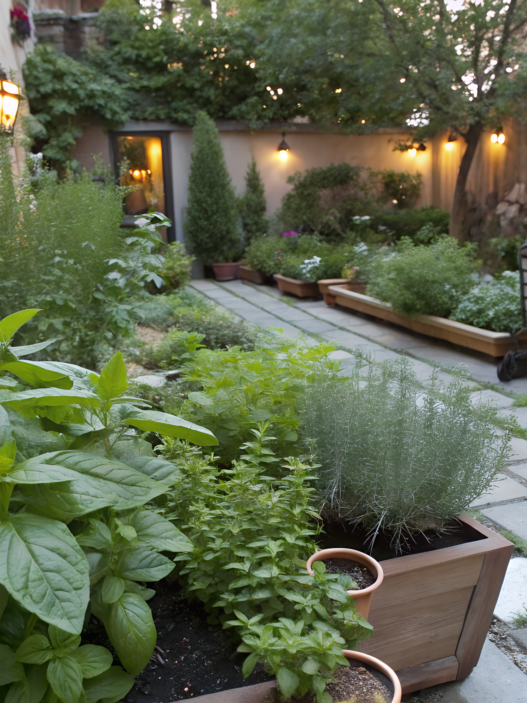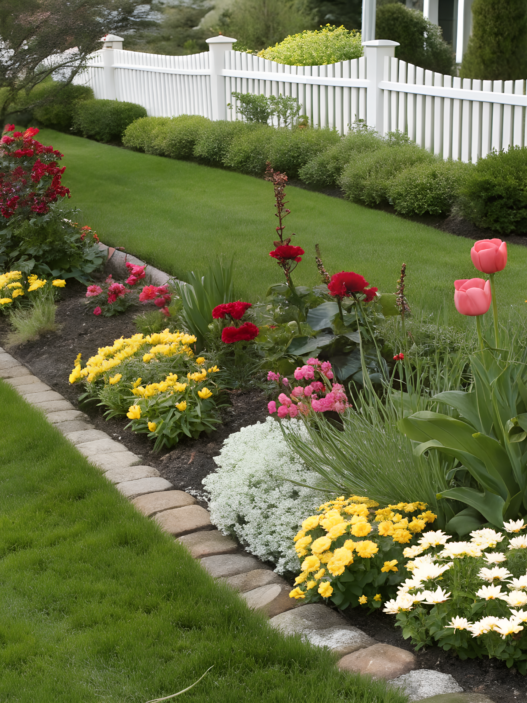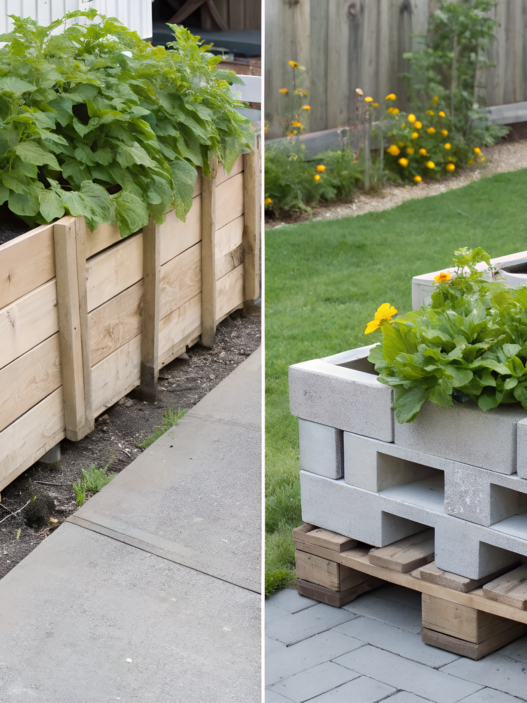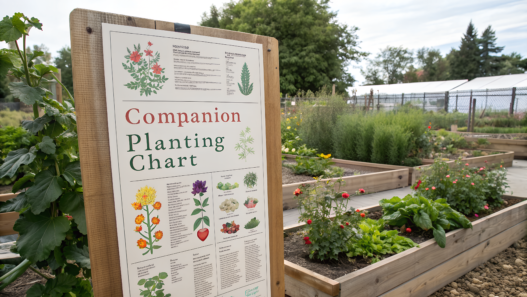
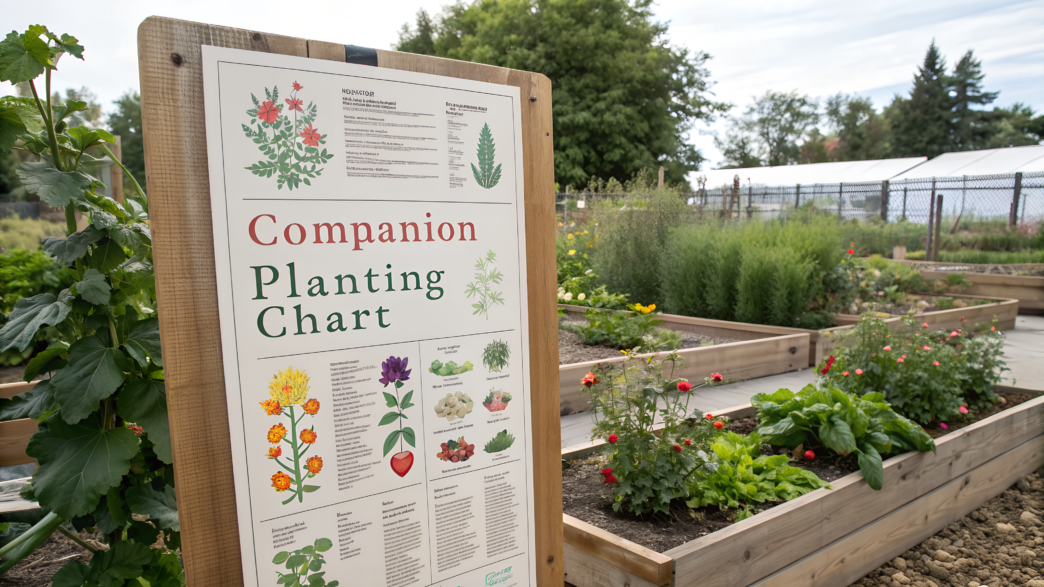
Season after season, we repeat the same привычный сценарий: tomatoes in their own straight row, carrots in a careful line, cabbage in a compact, orderly patch. It seems smart and looks perfectly planned — yet without Companion Planting Charts, we may be designing our gardens for symmetry instead of true synergy.
And then the pests show up. The soil dries out. The leaves turn yellow. The harvest gets smaller.
It’s not that you’re doing something wrong. Most of the time, plants are simply growing in the wrong company.
Over the years working with a small plot in Idaho, and later on 2 acres in a more humid climate, I noticed one pattern: the right plant neighbors change crop behavior. Soil temperature. Pest pressure. Even flavor.
Below are 10 companion planting charts that help fix common garden mistakes.. Not theoretical ones. The ones we’ve actually tested in real conditions.
1. Tomatoes With Basil and Marigolds
Companion planting tomatoes with basil and marigolds is a way to actually fix mistakes almost every beginner makes (and honestly, many experienced gardeners too).
I’ve seen tomatoes in Idaho look amazing in June… and by July already struggle with aphids, whiteflies, and leaf spot. And that’s when it felt like we were doing everything by the book.
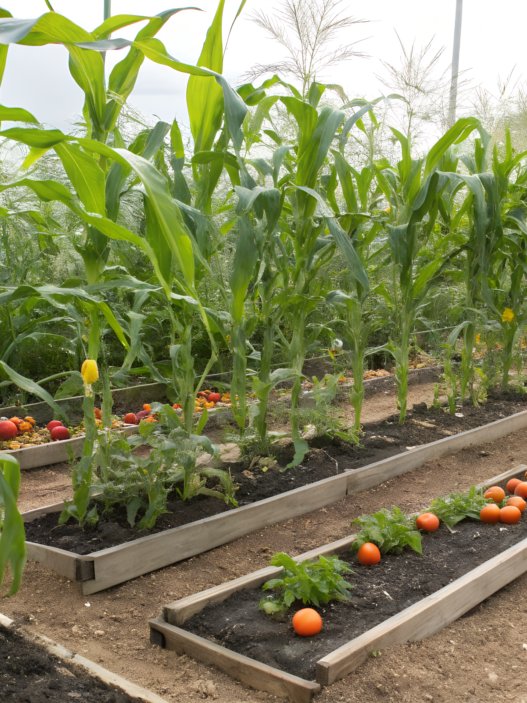
Today I plant tomatoes only in a trio. And the difference is noticeable.
Why Tomatoes Often “Get Sick”
Typical tomato growing mistakes:
- planting in monoculture
- poor air circulation
- weak pollinator attraction
- no protection from soil pests
- excess nitrogen → lots of leaves, few fruits
A University of California study showed that polyculture plantings reduce pest pressure by 20–60% due to biodiversity (UC ANR, Integrated Pest Management Program).
A 2008 study published in the Journal of Chemical Ecology confirmed that basil releases volatile compounds that can mask tomato scent for certain insect pests.
This isn’t “grandma’s advice.” It’s biochemistry.
How the Trio Works: Tomato + Basil + Marigolds
1. Tomato — the main resource consumer
- Root system goes 24–36 inches (60–90 cm) deep
- Uses 1–2 inches of water per week (2.5–5 cm)
- Actively consumes nitrogen and potassium
Tomatoes create a vertical structure up to 6–7 ft (1.8–2.1 m), form partial shade, and set the microclimate of the bed. But without support, they quickly become vulnerable to aphids and whiteflies.
2. Basil — biochemical defense and pollinator magnet
- Height 12–24 inches (30–60 cm)
- Releases eugenol and linalool — volatile compounds that affect insect behavior
- Flowering attracts bees and hoverflies
Research shows that aromatic plants can reduce pest orientation by mixing scent signals (Journal of Chemical Ecology). In practice, this means fewer thrips on lower leaves and more bees working the bed in the morning.
3. Marigolds — working with the soil, not the air
- Height 6–18 inches (15–45 cm)
- Roots release thiophenes
- Reduce root nematode populations (Cornell Cooperative Extension data)
They operate below soil level, which is often underestimated. Dense planting along the perimeter also reduces moisture evaporation by 20–30% by shading the soil surface.
4. Together, They Create a Functional System
- Upper layer — tomato
- Middle layer — basil
- Lower layer — marigolds
Different root depths mean less competition; scent profiles mean less targeted pest pressure; growth timing creates a more stable ecosystem.
This is not just a “nice combination.” It’s a working mini agro-ecosystem.
Planting Layout (Working Model for a 4 ft x 8 ft Bed)
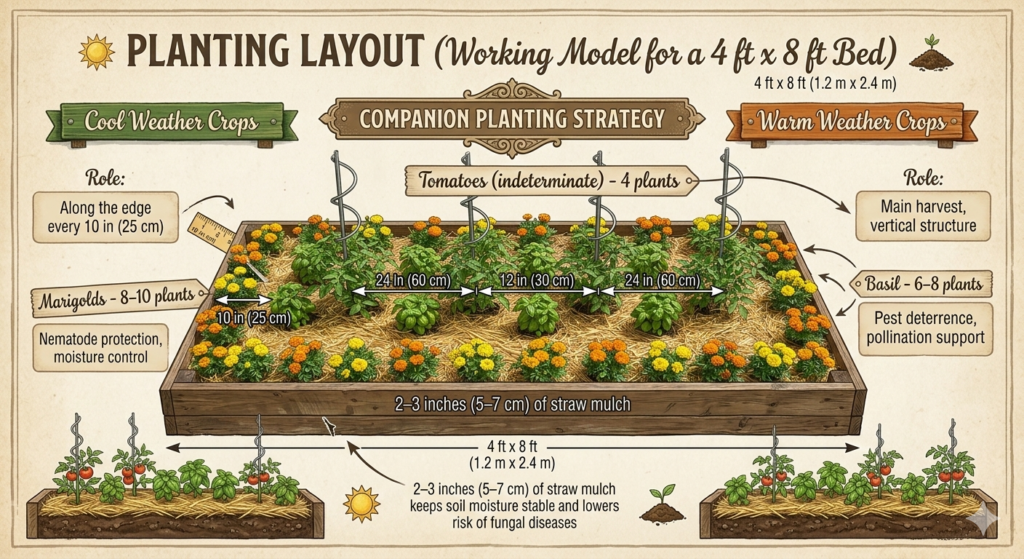
Bed size: 4 ft x 8 ft (1.2 m x 2.4 m)
| Crop | Quantity | Spacing | Role |
| Tomatoes (indeterminate) | 4 plants | 24 in (60 cm) | Main harvest, vertical structure |
| Basil | 6–8 plants | 12 in (30 cm) | Pest deterrence, pollination support |
| Marigolds | 8–10 plants | Along the edge every 10 in (25 cm) | Nematode protection, moisture control |
Place tomatoes in the center row. Basil goes between each tomato. Marigolds are planted around the perimeter to create a living border.
I usually add 2–3 inches of straw mulch (5–7 cm). It keeps soil moisture stable and lowers the risk of fungal diseases like late blight.
Varieties That Work Well in This Trio
Tomatoes
- Cherokee Purple
- San Marzano
- Brandywine
Basil
- Genovese
- Sweet Italian Large Leaf
Marigolds
- Tagetes patula (French marigold)
- Tagetes erecta (African marigold)
What’s Important Not to Forget
- Do not overcrowd plantings
- Remove lower tomato leaves up to 8–10 inches (20–25 cm) from the ground
- Stake plants at least up to 6–7 ft (1.8–2.1 m)
I use 54-inch (137 cm) metal cages, but for indeterminate varieties 72 inches (183 cm) works better. When we switched to proper supports, yield increased by almost 15% — fewer broken stems and better light exposure.
A Small Personal Story
In my first year in Idaho, I planted 18 tomatoes in a single row. No companions. Leaves started curling in July. Aphids. Whiteflies. Dust.
I remember standing there with a hose in my hands thinking, “What am I doing wrong?”
The next season I added basil. And marigolds. And mulch. The harvest increased from about 120 lbs (54 kg) to almost 165 lbs (75 kg) on the same area. That’s not a coincidence.
If you already have tomatoes growing, try adding basil right now — even in a container. Watch how the system responds.
2. Cucumbers With Dill and Nasturtiums
Dill and nasturtium can genuinely save cucumbers from beetles and powdery mildew. Our cucumbers in Idaho used to grow like crazy. Vines 6–8 ft (1.8–2.4 m) long, leaves the size of palms. And then the cucumber beetles would arrive. And that was it. Leaves full of holes, fruit sets dropping.
That’s where dill and nasturtium really change the picture.
How the Trio Works: Cucumber + Dill + Nasturtium
1. Cucumber — fast-growing but vulnerable
- Roots mostly at a depth of 12–18 inches (30–45 cm)
- Requires 1–1.5 inches of water per week (2.5–4 cm)
- Vines can reach up to 8 ft (2.4 m)
Cucumbers build green mass quickly. And that attracts pests. Especially the striped cucumber beetle, which spreads bacterial wilt. In monoculture, they look like an open buffet for insects.
2. Dill — attracts predators that do the dirty work
- Height 24–36 inches (60–90 cm)
- Flowers in 40–50 days
- Loved by parasitic wasps and lady beetles
Umbel crops, including dill, increase the population of beneficial insects in the garden. When dill starts flowering, life literally appears around it. Aphids on cucumbers noticeably decrease. I don’t spray. I interplant dill.
3. Nasturtium — a living trap crop
- Trails 3–5 ft (0.9–1.5 m)
- Blooms in 35–52 days
- Functions as a trap crop
Nasturtium often pulls aphids and flea beetles onto itself. Yes, sometimes it looks “damaged.” But the cucumbers stay intact. Its dense leaf carpet also reduces moisture evaporation by about 20% in hot weather. And cucumbers love stable moisture.
Example Planting Layout (4 ft x 8 ft bed / 1.2 m x 2.4 m)
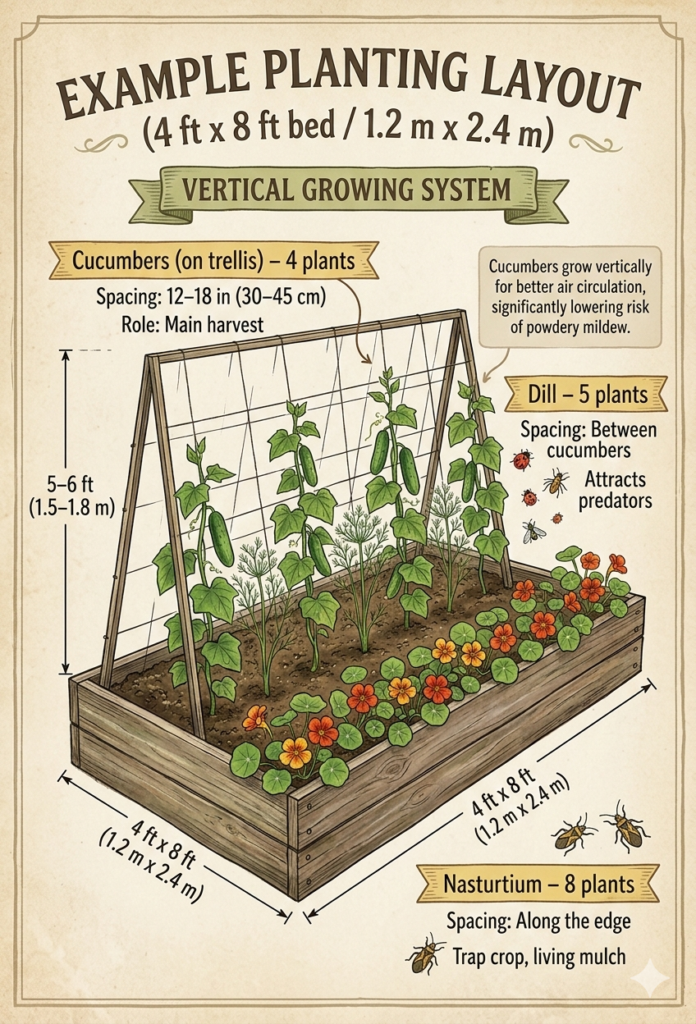
| Crop | Quantity | Spacing | Role in the system |
| Cucumbers (on trellis) | 4–6 plants | 12–18 in (30–45 cm) | Main harvest |
| Dill | 4–5 plants | Between cucumbers | Attracts predators |
| Nasturtium | 6–8 plants | Along the edge | Trap crop, living mulch |
I always grow cucumbers vertically — at least 5–6 ft (1.5–1.8 m) high. This significantly lowers the risk of powdery mildew thanks to better air circulation.
We use strong netting like VIVOSUN Heavy Duty Polyester Plant Trellis Netting 5×15 ft. When cucumbers climb upward, leaves dry faster after morning dew. And that directly affects fungal disease development.
Varieties That Perform Well
Cucumbers
- Marketmore 76
- Armenian Cucumber
- Boston Pickling
Dill
- Bouquet
- Mammoth
Nasturtium
- Alaska
- Jewel Mix
From Experience
One year I planted cucumbers separately, and within three weeks the leaves started filling with holes. Then powdery mildew showed up.
The next season I added dill simply because I love pickles. And nasturtium because it looked pretty.
Beetles became noticeably fewer. And yield increased from about 55 lbs (25 kg) to nearly 80 lbs (36 kg) on the same area. Sometimes solutions are simpler than we think.
When cucumbers grow not alone but alongside dill and nasturtium, the bed starts functioning as a small ecosystem, not a vulnerable vegetable row. And you feel it — less panic about beetles, less rushing to fix problems, more straight, crisp cucumbers in the basket.
3. Potatoes With Beans and Horseradish
I didn’t start using this combination right away… but after one very frustrating season.
Potatoes seem like an independent crop. Plant them. Hill them. Wait. But in reality, they heavily deplete the soil and attract pests — especially when grown as a clean monoculture.
I planted potatoes on a 20 ft x 25 ft plot (6 x 7.5 m). The yield was decent — around 180 lbs (82 kg). But the tops looked tired, and we were hand-picking beetles every evening. We were exhausted.
How the Trio Works: Potato + Beans + Horseradish
1. Potato — a heavy potassium feeder
- Planting depth: 4–6 inches (10–15 cm)
- Hilling up to 8–10 inches (20–25 cm)
- Root system within 12–18 inches (30–45 cm)
- Yield ratio: 1 lb seed potato produces 8–12 lbs of harvest (3.5–5.5 kg)
Potatoes actively draw potassium and phosphorus from the soil. If the soil is poor, tubers stay small. And when foliage weakens, Colorado potato beetles show up faster.
2. Beans — a natural nitrogen source
- Root depth: up to 24 inches (60 cm)
- Spacing: 4–6 inches (10–15 cm)
- Bush bean height: 18–24 inches (45–60 cm)
Legumes work through symbiosis with rhizobial bacteria. They fix atmospheric nitrogen and make it available in the soil.
USDA research confirms that legumes can add 40–200 lbs of nitrogen per acre (45–225 kg per hectare), depending on conditions.
In practice, it looks like this: darker potato foliage. Stronger stems. Less chlorosis.
I plant bush beans between potato rows every 12 inches (30 cm). Tuber yield increased by about 10–15% without additional fertilizers.
3. Horseradish — protection on the perimeter
- Root depth: up to 24–30 inches (60–75 cm)
- Leaf rosette diameter: up to 2 ft (60 cm)
- Perennial crop
Horseradish contains glucosinolates — compounds that, when broken down, form isothiocyanates. These substances have natural fungicidal and insecticidal properties.
Some agronomic studies note that planting horseradish along the perimeter can reduce pest pressure on neighboring crops.
I never plant it inside the bed. Only along the edge, about 18–24 inches (45–60 cm) from the first potato row. Colorado beetles didn’t disappear. But there were noticeably fewer.
Planting Layout (4 ft x 12 ft bed / 1.2 m x 3.6 m)
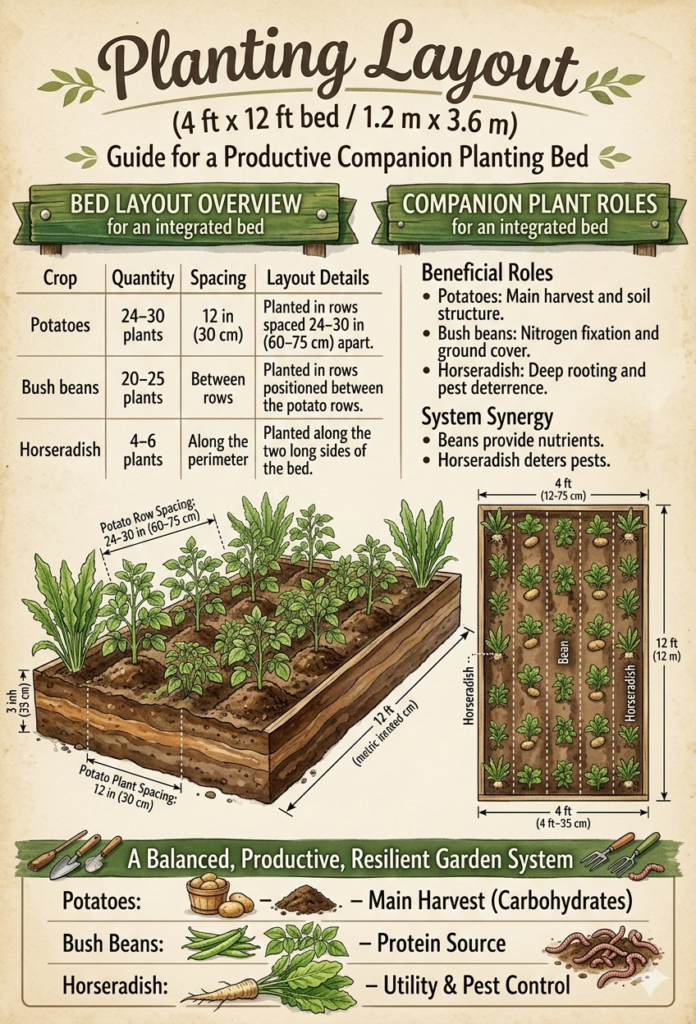
| Crop | Quantity | Spacing | Role in the system |
| Potatoes | 24–30 plants | 12 in (30 cm) | Main harvest |
| Bush beans | 20–25 plants | Between rows | Nitrogen fixation |
| Horseradish | 4–6 plants | Along the perimeter | Pest reduction |
Potatoes are planted in rows spaced 24–30 inches (60–75 cm) apart. Between those rows — bush beans. Along the long sides of the bed — horseradish.
Varieties That Work Well
Potatoes
- Yukon Gold
- Russet Burbank
- Red Pontiac
Beans
- Blue Lake Bush
- Provider
Horseradish
- Bohemian
Potatoes love loose soil. We use garden forks to carefully lift without damaging tubers. When digging gently, losses drop significantly. We used to have up to 10% damaged tubers. Now it’s under 3% harvest loss.
When potatoes grow not alone but alongside beans and horseradish, the bed becomes a system. The soil feels more alive. The foliage looks stronger. And even beetle picking no longer turns into an evening ritual.
Try dedicating at least one bed to this combination this season. Then compare the tubers — their size, density, flavor. And honestly ask yourself: do you feel the difference?
4. Strawberries With Borage and Chives
This is one of the most beautiful companion planting combinations in the garden. Strawberries seem delicate. Low-growing. Vulnerable. They love stable moisture but can’t tolerate soggy soil. In Idaho, my first beds looked great in spring… and by mid-June gray mold and aphids would take over.
That’s when it makes sense to think about the right plant neighbors.
How the Trio Works: Strawberry + Borage + Chives
1. Strawberry — shallow roots and moisture sensitivity
- Root system: 6–12 inches (15–30 cm)
- Spacing between plants: 12–18 inches (30–45 cm)
- Yield: 0.5–1 lb per plant per season (0.2–0.45 kg)
Strawberries love loose, organically rich soil. But because of their shallow roots, they react quickly to moisture swings. If soil compacts or stays wet too long, the risk of Botrytis (gray mold) increases significantly.
2. Borage — pollinator attraction and mineral support
- Height: 24–36 inches (60–90 cm)
- Root depth: up to 24 inches (60 cm)
- Blooms in 8–10 weeks
Borage is a magnet for bees. Its blue flowers stay active all day. Research from the University of Sussex on pollination shows that increased pollinator activity directly affects berry size and shape in crops that rely on cross-pollination.
In practice, this means fuller, evenly formed berries without “empty” sections.
Borage also acts as a dynamic accumulator, pulling potassium and calcium from deeper soil layers. When leaves are cut and used as mulch, those minerals return to the topsoil. I cut the leaves mid-season and lay them between strawberry plants. The soil becomes softer and more biologically active.
3. Chives — natural fungal and aphid protection
- Height: 10–15 inches (25–38 cm)
- Perennial
- Spacing: 8–10 inches (20–25 cm)
Alliums release sulfur-containing compounds. Research published in Crop Protection Journal shows that growing crops near onions can reduce fungal disease pressure thanks to volatile phytoncides.
In my experience, aphids on strawberries dropped noticeably once I planted chives along the perimeter. Plus, chives bloom earlier than strawberries in spring, attracting early pollinators before the main berry flowering begins.
Planting Layout (4 ft x 8 ft bed / 1.2 m x 2.4 m)
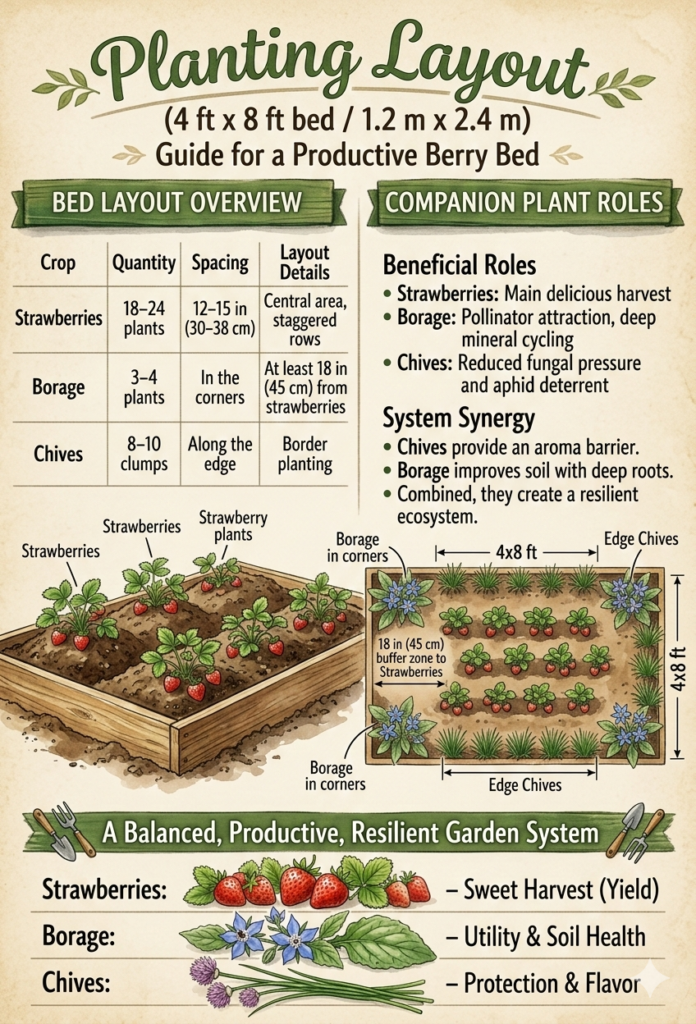
| Crop | Quantity | Spacing | Role in the system |
| Strawberries | 18–24 plants | 12–15 in (30–38 cm) | Main harvest |
| Borage | 3–4 plants | In the corners | Pollinator attraction, mineral cycling |
| Chives | 8–10 clumps | Along the edge | Reduced fungal pressure and aphids |
I leave at least 18 inches (45 cm) between borage and the nearest strawberry plants — it grows large and can cast shade if planted too close.
Varieties That Work Well Together
Strawberries
- Albion
- Seascape
- Chandler
Borage
- Common Borage
Chives
- Garlic Chives
- Common Chives
Support and Care
Strawberries need at least 2 inches of mulch (5 cm). We use straw or shredded leaves. This reduces berry contact with soil and lowers rot risk. Planting depth is critical — the crown must sit at soil level. Not deeper. Not higher. This directly affects winter survival and plant vigor.
When I added borage and chives, yield increased from about 28 lbs (12.7 kg) to 36 lbs (16.3 kg) on the same area. The berries became firmer. And the sweetness — noticeably higher. Maybe it’s better pollination. Maybe improved mineral balance. Most likely — both working together.
Try adding at least one borage plant to your strawberry bed this season. Then pay attention not only to yield, but to flavor.
5. Carrots With Onions and Rosemary
Carrots are a quiet crop. They grow underground. Slowly. Almost invisibly. And that’s exactly why it’s easy to lose them without even realizing what’s happening. One season I pulled carrots 7–8 inches long (18–20 cm)… with beautiful orange tunnels inside. Larvae. That was it.
Since then, my carrots never grow alone.
How the Trio Works: Carrot + Onion + Rosemary
1. Carrot — a sweet scent pests can detect
- Root depth: 6–12 inches (15–30 cm), long varieties up to 14 inches (35 cm)
- Spacing: 2–3 inches (5–7 cm) after thinning
- Yield: 1–2 lbs per linear foot (1.5–3 kg per meter)
The carrot fly navigates by the smell of carrot foliage. When you thin carrots, the aroma intensifies. It’s basically an open invitation.
Research published in Annals of Applied Biology shows that masking crop scent reduces pest host-finding accuracy. That’s where onions and rosemary come in.
2. Onion — a natural aromatic barrier
- Root depth: 8–12 inches (20–30 cm)
- Spacing: 4 inches (10 cm)
- Green tops height: 12–18 inches (30–45 cm)
Onions release sulfur-containing volatile compounds. These smells disrupt carrot fly orientation and make it harder for pests to locate their target.
I plant onions in a staggered pattern between carrot rows every 8–10 inches (20–25 cm). The percentage of damaged roots dropped from about 25% to under 8% in one season.
3. Rosemary — dense aroma and microclimate control
- Height: 24–36 inches (60–90 cm)
- Width: up to 2 ft (60 cm)
- Perennial in zones 7–10
Rosemary contains camphor and rosmarinic acid — compounds with natural insect-repelling properties. It doesn’t directly kill pests. It creates a strong aromatic background that blends and confuses scent signals.
Rosemary also improves airflow along the edges of the bed. Carrots are sensitive to stagnant moisture, which increases fungal risk. After moving to a more humid climate in the PNW, I started planting rosemary along the southern edge of the bed. The carrots became straighter, with fewer black spots near the base.
Planting Layout (3 ft x 8 ft bed / 0.9 m x 2.4 m)
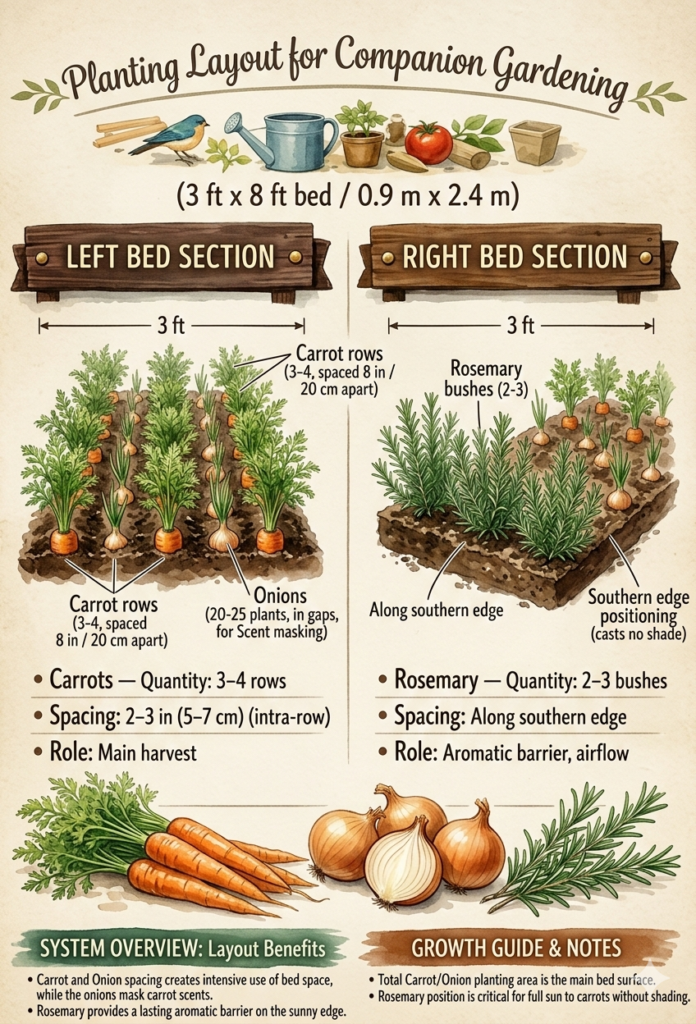
| Crop | Quantity | Spacing | Role in the system |
| Carrots | 3–4 rows | 2–3 in (5–7 cm) | Main harvest |
| Onions | 20–25 plants | Between rows | Scent masking |
| Rosemary | 2–3 bushes | Along southern edge | Aromatic barrier, airflow |
Carrot rows are spaced 8 inches (20 cm) apart. Onions are planted in the gaps. Rosemary stays along the edge so it doesn’t cast shade over the bed.
Varieties That Work Well Together
Carrots
- Nantes
- Danvers 126
- Scarlet Nantes
Onions
- Yellow Sweet Spanish
- Red Creole
Rosemary
- Arp (more cold-hardy)
- Tuscan Blue
My Experience
The year I lost a quarter of my crop to larvae, I almost gave up on carrots. Too much effort for too much uncertainty.
But once I added onions and rosemary, everything felt calmer. Fewer surprises. More straight, crisp roots 8–10 inches long (20–25 cm).
Sometimes it’s not treatment that changes the outcome. It’s the right plant neighbor.
When carrots grow next to onions and rosemary, the bed stops being easy prey. Scents overlap. Soil stays loose. And you pull root after root — clean, dense, with no unpleasant surprises inside.
6. Cabbage Family With Thyme and Calendula
Brassicas are magnets for pests. Broccoli, cauliflower, kale, Brussels sprouts — they smell fresh to us… and like dinner to insects.
How the Trio Works: Brassicas + Thyme + Calendula
1. Brassicas — large leaves and strong glucosinolate scent
- Root depth: 12–18 inches (30–45 cm)
- Spacing: 18–24 inches (45–60 cm)
- Broccoli yield: 1–2 lbs per plant (0.5–0.9 kg)
Brassicas release sulfur-containing compounds called glucosinolates. These chemicals attract specialized pests like cabbage moths and cabbage white butterflies.
That’s why scent masking is the key strategy.
2. Thyme — a low aromatic barrier
- Height: 6–12 inches (15–30 cm)
- Spread: up to 18 inches (45 cm)
- Perennial in zones 5–9
Thyme contains thymol — a compound with natural insect-repelling properties. Publications in the Journal of Applied Entomology note that thyme essential oils influence pest behavior.
When thyme grows at the base of cabbage plants, it creates a dense aromatic layer. Butterflies struggle to “read” the crop’s scent. Another benefit: thyme covers the soil surface. Less evaporation. Fewer weeds. More stable moisture.
3. Calendula — attracting beneficial insects
- Height: 12–24 inches (30–60 cm)
- Blooms in 45–55 days
- Spacing: 10–12 inches (25–30 cm)
Calendula attracts hoverflies and parasitic wasps — natural enemies of caterpillars and aphids.
Research from Iowa State Extension shows that having flowering plants increases the activity and diversity of beneficial insects in vegetable gardens, reducing overall pest pressure.
And yes, calendula can also act as a light trap crop for aphids.
Planting Layout (4 ft x 8 ft bed / 1.2 m x 2.4 m)
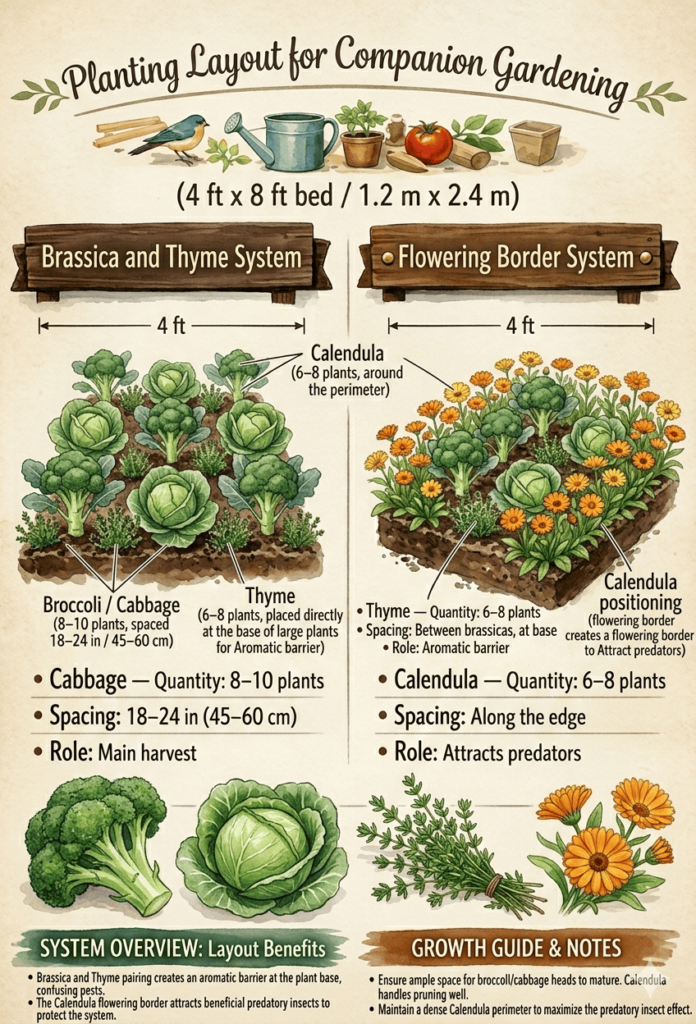
| Crop | Quantity | Spacing | Role in the system |
| Broccoli / Cabbage | 8–10 plants | 18–24 in (45–60 cm) | Main harvest |
| Thyme | 6–8 plants | Between brassicas | Aromatic barrier |
| Calendula | 6–8 plants | Along the edge | Attracts predators |
I place thyme directly at the base of large plants. Calendula goes around the perimeter to create a flowering border.
Varieties That Work Well
Broccoli
- Green Magic
- Calabrese
Cabbage
- Copenhagen Market
- Red Acre
Thyme
- English Thyme
- German Winter
Calendula
- Pacific Beauty
- Resina
Plant Support and Care
Brassicas need consistent moisture — about 1–1.5 inches of water per week (2.5–4 cm). Early in the season, while plants are still young, we use lightweight row cover like Agfabric Plant Covers Freeze Protection Floating Row Cover 10×30 ft.
It’s not permanent plastic protection. It’s temporary support. Once plants mature, the aromatic defense system begins working on its own.
My Experience
The year I added thyme and calendula, I stopped collecting caterpillars every evening. There was still some damage — but minimal. Broccoli yield increased from about 14 lbs (6.3 kg) to nearly 19 lbs (8.6 kg) on the same space.
More importantly, I stopped feeling anxious every time I opened the leaves.
When brassicas grow surrounded by herbs and flowers, the bed becomes balanced. You observe more. You rescue less. Try adding thyme to at least one row of cabbage this season. See if your garden feels calmer — and more productive.
7. Peppers With Basil and Alliums
This companion planting setup helps reduce aphids and spider mites and improves fruit set. Peppers look strong. But in reality, they’re more stress-sensitive than most people think.
When I stopped planting peppers as a “separate bed” and started growing them in a system, the difference was noticeable in the very first season.
How the Trio Works: Peppers + Basil + Alliums
1. Peppers — heat-loving and stress-sensitive
- Root depth: 12–18 inches (30–45 cm)
- Spacing: 18 inches (45 cm)
- Optimal temperature: 70–85°F (21–29°C)
- Sweet pepper yield: 3–5 lbs per plant (1.3–2.2 kg)
Peppers react strongly to temperature and moisture swings. When heat rises above 95°F (35°C), pollen can become sterile. Blossoms drop. Fruit set declines.
They’re also highly vulnerable to aphids and spider mites, especially in dry conditions.
2. Basil — microclimate regulation and pest deterrence
- Height: 18–24 inches (45–60 cm)
- Spacing: 10–12 inches (25–30 cm)
- Blooms in 6–8 weeks
Basil creates light shade at the base of pepper plants. That alone can lower soil temperature by several degrees. In extreme heat, that’s critical.
It releases eugenol and linalool — volatile compounds that affect aphid and thrips orientation. Publications in the Journal of Chemical Ecology show that aromatic plants can alter herbivore behavior.
In practice — fewer aphids clustering on growing tips. Another detail: flowering basil attracts bees. Peppers are self-pollinating, but insect vibration improves pollination efficiency and increases fruit set.
3. Alliums (onions, garlic, green onions) — sulfur-based defense
- Root depth: 8–12 inches (20–30 cm)
- Spacing: 4–6 inches (10–15 cm)
- Height: up to 18 inches (45 cm)
Alliums release allicin and other sulfur-containing compounds. These substances have natural antifungal and insect-repelling properties.
Research from University of Minnesota Extension notes that growing onions nearby may reduce aphid and mite populations due to background scent interference.
I plant green onions between pepper plants roughly every 8 inches (20 cm). In dry seasons, this noticeably reduces spider mite flare-ups.
4. Root Structure — Minimal Competition
Peppers don’t like fighting underground. Their roots occupy the mid-layer of soil. Onions and garlic stay compact. Basil works closer to the surface.
The roots don’t compete — they distribute across different soil levels. And it shows. Pepper plants look calmer. Leaves are darker. Stems are thicker. Less curling. Less heat stress.
When there’s no underground competition, there’s less above-ground stress.
Planting Layout (4 ft x 8 ft bed / 1.2 m x 2.4 m)
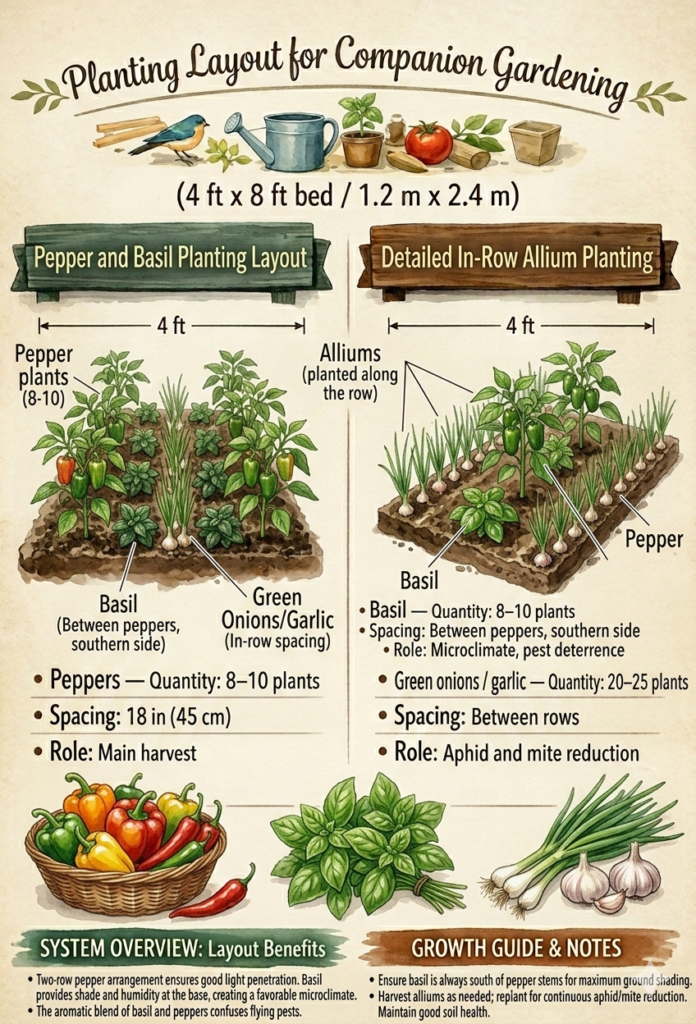
| Crop | Quantity | Spacing | Role in the system |
| Peppers | 8–10 plants | 18 in (45 cm) | Main harvest |
| Basil | 8–10 plants | Between peppers | Microclimate, pest deterrence |
| Green onions / garlic | 20–25 plants | Between rows | Aphid and mite reduction |
Peppers are arranged in two rows. Basil goes slightly toward the southern side of each plant. Alliums are planted along the row spacing.
Varieties That Work Well
Peppers
- California Wonder
- Jalapeño Early
- King of the North
Basil
- Genovese
- Italian Large Leaf
Alliums
- Evergreen Bunching Onion
- Garlic Music
Peppers break easily under fruit weight — especially when carrying 6–8 large peppers weighing 6–8 oz (170–225 g) each. Staking reduces branch breakage and improves light exposure. One season, proper support added about 10% more yield simply by saving branches.
My Experience
When I grow peppers together with basil and green onions, the tops stop getting sticky from aphids.
Yield increased from about 22 lbs (10 kg) to nearly 28 lbs (12.7 kg) on the same space. Fruits became more uniform. Walls thicker. Sometimes peppers don’t need more fertilizer. They need the right company.
8. Corn With Beans and Squash
Companion planting corn with beans and squash is the classic “Three Sisters” system. But if you do it wrong, it turns into chaos. If you do it right, it becomes one of the most productive square-foot combinations you can grow.
When we first moved to the PNW, I decided to “honor tradition” and planted corn, beans, and squash together. No calculations. No spacing plan. The beans pulled the corn down. The squash shaded everything.
The system works — but only if you understand why.
How the Trio Works: Corn + Beans + Squash
1. Corn — vertical support and wind protection
- Root depth: up to 24 inches (60 cm)
- Height: 6–10 ft (1.8–3 m)
- Spacing: 12 inches (30 cm)
- Yield: 1–2 ears per stalk
Corn creates a natural trellis for climbing beans.
But here’s the key detail: corn requires block planting for proper wind pollination. Minimum four rows, not a single line. I plant it in a 4 ft x 6 ft block (1.2 x 1.8 m), not a long row.
2. Pole Beans — nitrogen fixation and vertical efficiency
- Root depth: up to 24 inches (60 cm)
- Vine length: 6–8 ft (1.8–2.4 m)
- Spacing: 6 inches (15 cm)
Beans fix atmospheric nitrogen through rhizobial bacteria. That benefits the system — but timing matters.
If planted too early, beans can overpower young corn. I wait until corn reaches 6–8 inches (15–20 cm) tall before adding beans. This step is critical for balance.
3. Squash — living mulch and weed suppression
- Vine length: 8–12 ft (2.4–3.6 m)
- Leaf diameter: 12–18 inches (30–45 cm)
- Spacing: 36–48 inches (90–120 cm)
Squash covers the soil with large leaves. That reduces moisture evaporation and cools the root zone of corn.
The dense canopy suppresses weeds naturally. And the prickly vines partially deter raccoons and small animals. Tested.
4. Root Structure — Layered Soil Use
Below ground, there’s structure too. Corn develops a strong, deep anchoring root system. Beans occupy the mid-layer. Squash spreads wide near the surface.
They divide the soil vertically. Less competition. Better nutrient distribution. If your soil is loose at least 12–15 inches deep (30–38 cm), the system stays stable.
When roots have space, plants grow evenly. Less stress. More consistency.
Planting Layout (6 ft x 6 ft block / 1.8 m x 1.8 m)
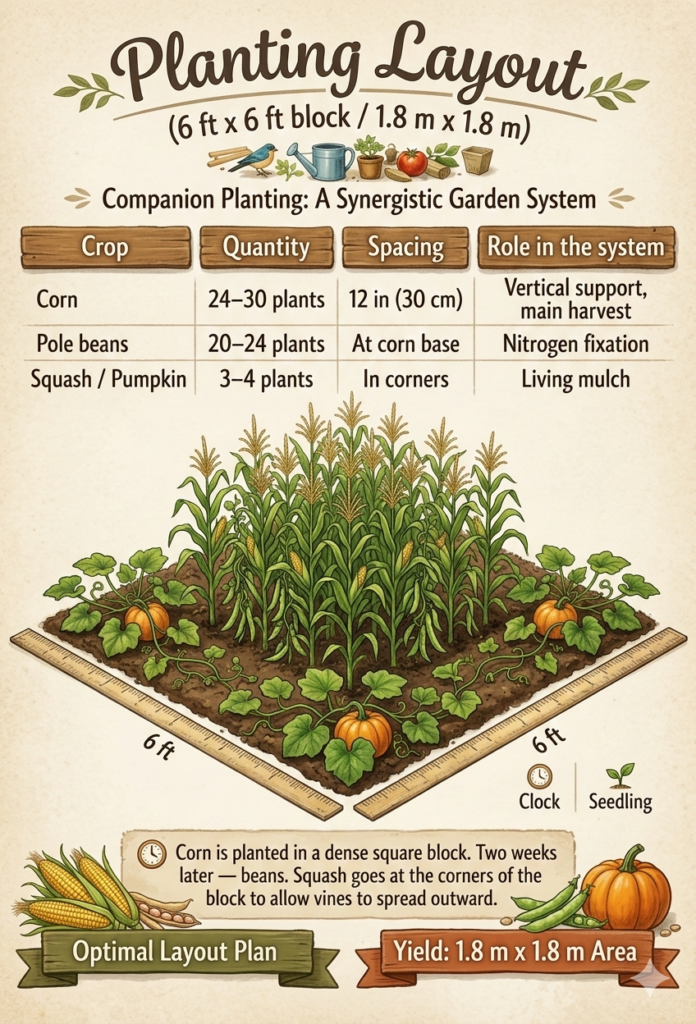
| Crop | Quantity | Spacing | Role in the system |
| Corn | 24–30 plants | 12 in (30 cm) | Vertical support, main harvest |
| Pole beans | 20–24 plants | At corn base | Nitrogen fixation |
| Squash / Pumpkin | 3–4 plants | In corners | Living mulch |
Corn is planted in a dense square block. Two weeks later — beans. Squash goes at the corners of the block to allow vines to spread outward.
Varieties That Work Well
Corn
- Golden Bantam
- Silver Queen
Beans
- Kentucky Wonder Pole
- Blue Lake Pole
Squash / Pumpkin
- Butternut
- Sugar Pie Pumpkin
- Seminole Pumpkin
Personal Note
The first time I built the system correctly — with block planting, delayed beans, and controlled spacing — the harvest was completely different.
From a 6 ft x 6 ft area (1.8 x 1.8 m), we harvested:
- 28 full-sized ears of corn
- About 18 lbs of beans (8 kg)
- 5 pumpkins weighing 6–8 lbs each (2.7–3.6 kg)
And almost no weeding. That’s not magic. It’s timing, structure, and layered growth working together.
When corn, beans, and squash grow as a system, the bed becomes a single organism. You feel it — in the soil moisture, the density of leaves, the steady growth. Try testing it on one block in your garden and see how the balance changes.
9. Lettuce With Chives and Cilantro
Companion planting lettuce with chives and cilantro extends the harvest season, reduces aphids, and helps control bolting in heat. Lettuce seems simple. But once temperatures rise above 80°F (27°C), it rushes to flower.
Years ago in Idaho, I lost an entire bed in one hot week. Leaves turned bitter. Stems stretched. That was it. Since then, my lettuce never grows as a bare monoculture.
How the Trio Works: Lettuce + Chives + Cilantro
1. Lettuce — shallow roots and heat sensitivity
- Root depth: 6–8 inches (15–20 cm)
- Spacing: 8–10 inches (20–25 cm)
- Yield: 0.5–1 lb per plant (0.2–0.45 kg)
- Optimal temperature: 60–70°F (15–21°C)
Lettuce reacts quickly to stress. Above 85°F (29°C), hormonal signals trigger bolting. Leaves turn bitter due to increased lactucopicrin. Young foliage is also highly vulnerable to aphids.
2. Chives — aphid deterrence and vertical structure
- Height: 10–15 inches (25–38 cm)
- Spacing: 6–8 inches (15–20 cm)
- Perennial
Chives release sulfur compounds like allicin. These create an aromatic background that reduces aphid orientation. But there’s also a structural effect. Chives form light vertical clusters that subtly disrupt airflow patterns, limiting large-scale pest settlement.
I plant chive clumps every 12 inches (30 cm) along the bed’s edge to create a natural pest barrier.
3. Cilantro — temporary shade and beneficial insect support
- Height: 12–24 inches (30–60 cm)
- Flowers in 40–50 days
- Root depth: up to 12 inches (30 cm)
Cilantro grows slightly faster than lettuce and provides light filtered shade. During heat waves, that can lower soil temperature by a few degrees — enough to delay stress response.
When cilantro flowers, it attracts parasitic wasps and hoverflies. Flowering umbel crops increase beneficial insect activity, which naturally reduces aphid pressure.
I don’t pull cilantro when it bolts. I let it work.
4. Different Growth Speeds — Seasonal Balance
They operate on different rhythms. Lettuce grows fast and produces early leaves. Cilantro rises later and starts flowering. Chives remain steady and return every season.
The bed never becomes exposed or overheated. Growth shifts gradually instead of spiking under stress. Lettuce bolts later — often by about a week. In spring, an extra 7–10 days is significant.
Planting Layout (3 ft x 6 ft bed / 0.9 m x 1.8 m)
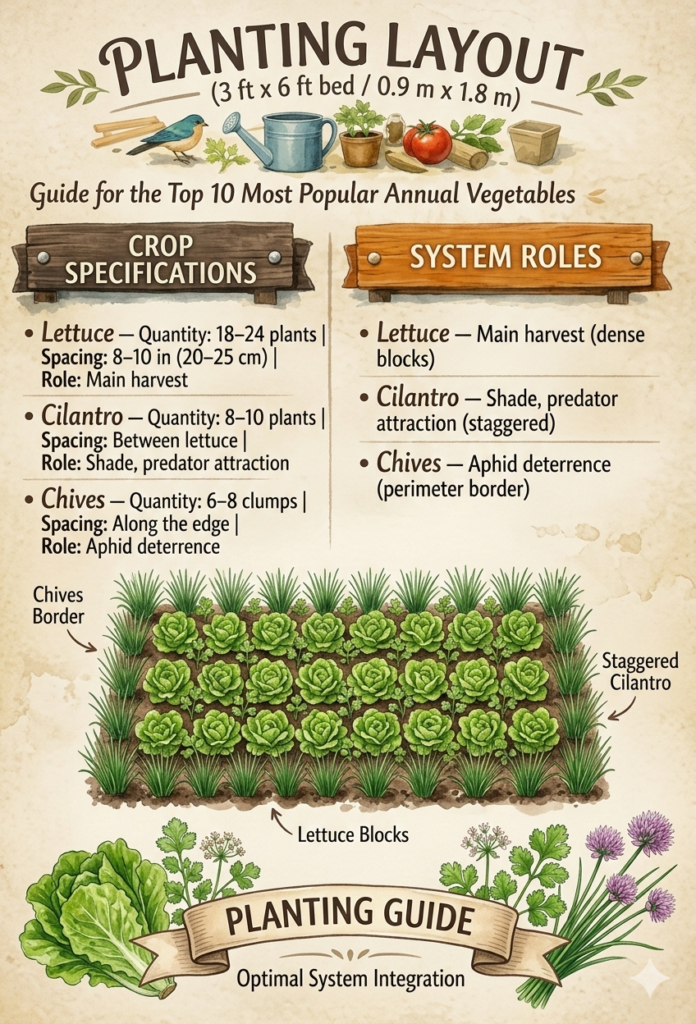
| Crop | Quantity | Spacing | Role in the system |
| Lettuce | 18–24 plants | 8–10 in (20–25 cm) | Main harvest |
| Chives | 6–8 clumps | Along the edge | Aphid deterrence |
| Cilantro | 8–10 plants | Between lettuce | Shade, predator attraction |
Lettuce is planted in dense blocks. Cilantro is staggered between rows. Chives form a perimeter border.
Varieties That Work Well
Lettuce
- Buttercrunch
- Romaine Paris Island
- Black Seeded Simpson
Chives
- Common Chives
- Garlic Chives
Cilantro
- Santo
- Slow Bolt
Support and Care
Lettuce requires consistent moisture — at least 1 inch of water per week (2.5 cm). We use drip irrigation to avoid wetting leaves. A system like Rain Bird Drip Irrigation Kit for Garden Beds helps maintain even soil moisture while reducing fungal risk.
Personal Note
One season, I planted lettuce alone in neat rows. Within three weeks — aphids. Then heat. Then bolting.
After adding cilantro and chives, bolting was delayed by nearly a week. Yield increased from about 12 lbs (5.4 kg) to 16 lbs (7.2 kg) on the same space.
Sometimes lettuce doesn’t need more water. It needs the right companions.
When lettuce grows among aromatic herbs, harvesting feels steady. Not rushed. Try planting lettuce in a system this season — and see whether your harvest becomes longer and more stable.
10. Radishes With Spinach and Mint
Companion planting radishes with spinach and mint is a way to get crisp radishes without woodiness, fewer flea beetles, and more stable spring soil moisture.
Radishes seem like the easiest crop. 25–30 days — and done. But once temperatures rise above 75°F (24°C), they turn spicy, hollow inside, or bolt. I’ve been there. Warm spring, beautiful tops… and empty centers.
How the Trio Works: Radish + Spinach + Mint
1. Radish — fast cycle and temperature sensitivity
- Root depth: 4–6 inches (10–15 cm)
- Spacing: 2 inches (5 cm)
- Maturity: 25–35 days
- Yield: 8–12 radishes per linear foot (30 cm)
Radishes form roots quickly, but heat triggers flowering. Any sharp fluctuation affects texture. The difference between steady cool soil and sudden warmth determines whether you harvest crunch — or disappointment.
2. Spinach — natural shade and moisture retention
- Root depth: 6–12 inches (15–30 cm)
- Height: 8–12 inches (20–30 cm)
- Optimal temperature: 50–70°F (10–21°C)
Spinach grows slightly slower than radishes, but its leaves create soft surface shade. That can lower soil temperature by a few degrees. For radishes, the difference between 70°F and 80°F (21°C and 27°C) is critical.
I plant spinach in a staggered pattern between radish rows to create a cooler root zone.
3. Mint — aromatic defense against flea beetles
- Height: 12–24 inches (30–60 cm)
- Aggressive root system
- Best grown in containers
Crucifer flea beetles are the main enemy of radishes. They damage leaves and reduce photosynthesis.
Mint contains menthol and essential oils that create a strong aromatic background. Research in the Journal of Pest Science shows that menthol influences small insect behavior.
But mint must never be planted loose in the bed. I grow it in 12-inch (30 cm) deep containers and place them along the edges. This provides aromatic protection without invasion.
4. Different Growth Speeds — Smart Timing
Radishes are ready in 30 days. Spinach continues growing after radishes are harvested. Mint remains as a perennial edge structure.
The bed doesn’t sit empty. Space is used sequentially. That’s especially efficient during spring rotation.
Planting Layout (3 ft x 6 ft bed / 0.9 m x 1.8 m)
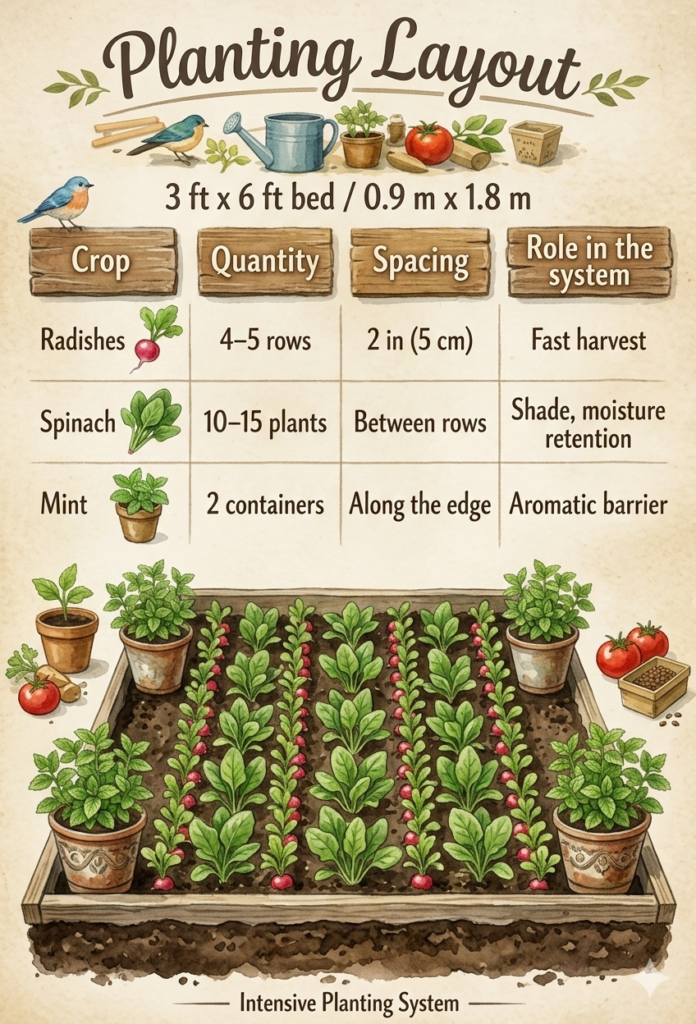
| Crop | Quantity | Spacing | Role in the system |
| Radishes | 4–5 rows | 2 in (5 cm) | Fast harvest |
| Spinach | 10–15 plants | Between rows | Shade, moisture retention |
| Mint | 2 containers | Along the edge | Aromatic barrier |
Radishes are planted in dense rows spaced 6 inches (15 cm) apart. Spinach fills the gaps. Mint containers sit along the long sides of the bed.
Varieties That Work Well
Radishes
- Cherry Belle
- French Breakfast
- Easter Egg
Spinach
- Bloomsdale
- Space Hybrid
Mint
- Peppermint
- Spearmint
When radishes grow alongside spinach and aromatic mint, the bed overheats less. There are fewer holes in the leaves. More crunch. Sometimes radishes don’t need more fertilizer. They need more shade and better neighbors.
Beneficial Neighboring
If you’ve read this far, you’ve probably noticed something: sometimes the issue isn’t that we’re doing too little. It’s that we’re repeating the same layout every year.
Try changing just one bed this season. Not the whole garden. Not the entire system. Just one.
Plant the crops together. Let them work as a team. And then write in the comments — what changed? Did the harvest last longer? Did the bed feel more stable?
I’m genuinely curious what shifts when you let plants work as a system.