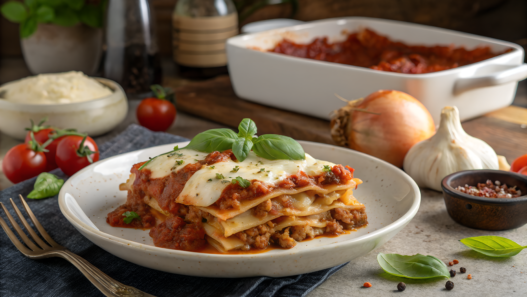
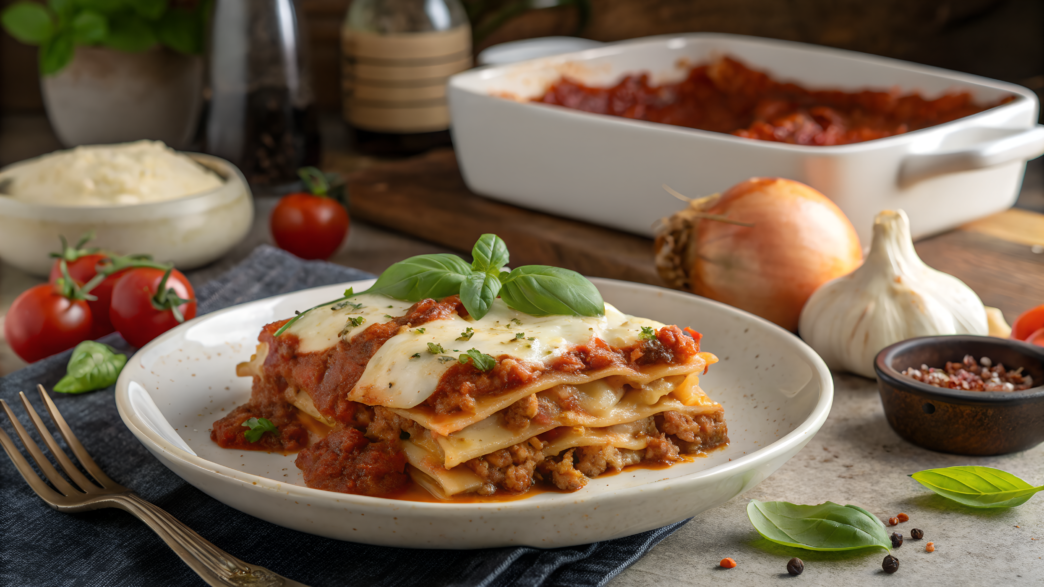
10 lasagna recipes that taste like Italy with shockingly simple steps show how the same dish can change while staying familiar and homemade.
We’ve tried a lot with Lindy, and every time we realize that lasagna doesn’t have to be complicated to be good. Sometimes it’s enough to change one element: add lemon zest, swap noodles for ravioli, or just give the sauce more time. And the dish already feels different.
Here you’ll find different versions. Somewhere texture works, somewhere it’s flavor balance, somewhere it’s just a good combination of products. And like I always say, almost all recipes can be adapted to your taste — that’s normal. We do it every time.
1. Nonna Style Classic Lasagna With Slow Simmered Meat Sauce
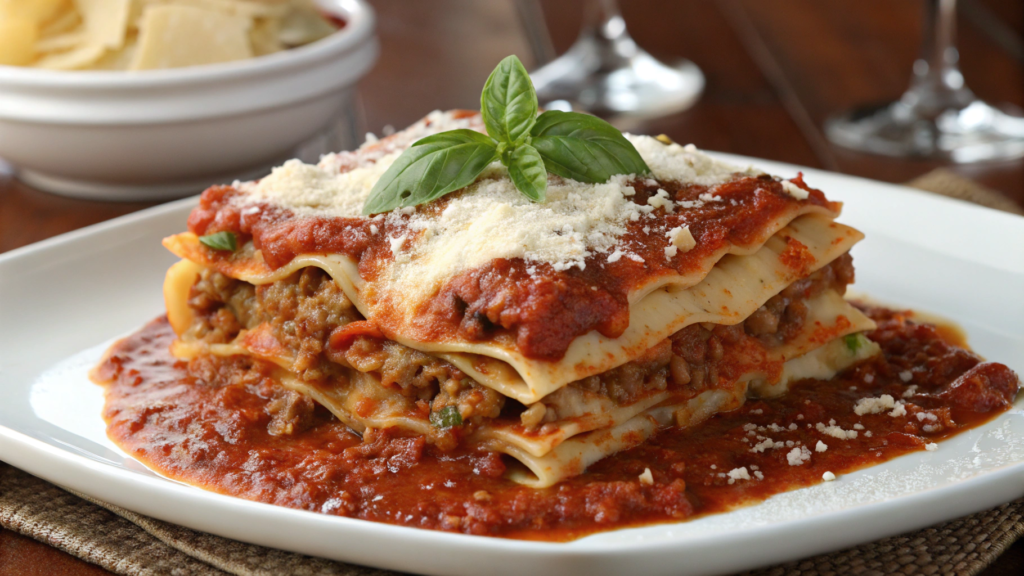
The whole point of Nonna style classic lasagna with slow simmered meat sauce is the sauce that doesn’t boil on high heat but slowly simmers on the stove.
And there’s nothing complicated here — you just need time and the right base.
What you’ll need
- 2 tbsp olive oil
- 1 medium onion, finely diced
- 4 cloves garlic, minced
- 1 lb ground beef (450 g)
- 1/2 lb ground pork (225 g)
- 1 can crushed tomatoes (28 oz / ~800 g)
- 2 tbsp tomato paste
- 1/2 cup dry red wine (120 ml)
- 1 tsp dried oregano
- 1 tsp dried basil
- 1/2 tsp sugar
- salt and black pepper to taste
- 9–12 lasagna noodles (dry or fresh lasagna sheets)
- 1 1/2 cups ricotta cheese (360 g)
- 1 egg
- 2 cups shredded mozzarella (450 g)
- 1/2 cup grated parmesan (50 g)
I use Amazon Basics Rectangular Baking Dish, Oven Safe Glass — it has the right depth, and the layers don’t fall apart.
How to make
- Heat olive oil over medium heat and add the finely diced onion. Cook it for 6–8 minutes, stirring occasionally, until it becomes soft and translucent. Don’t brown it — here it’s important to keep the softness and light sweetness, that’s what will later build the base of the whole sauce.
- Add the minced garlic and after a minute add the mix of ground beef and pork. Break it up right away into small pieces with a spatula, without leaving large chunks — this way the texture of the sauce will be more even. Cook until the meat fully changes color, without browning, just cook it through.
- Pour in the red wine and let it evaporate calmly for 2–3 minutes. Don’t rush to stir — let the sharp smell go away, leaving only depth of flavor in the sauce.
- Add crushed tomatoes, tomato paste, oregano, and basil, mix and lower the heat to minimum. The sauce shouldn’t boil, just barely “bubble”. Leave it for 40–60 minutes — during this time it will become thicker, softer in taste, and more rich.
- While the sauce cooks, boil the lasagna sheets to al dente if you’re using dry ones — they shouldn’t be fully soft because they will still bake.
- In a separate bowl, mix ricotta with the egg and a pinch of salt. The consistency should be creamy but dense, so the layer holds shape and doesn’t spread during assembly.
Assembly and baking
Spread a bit of meat sauce on the bottom of the dish so the first layer doesn’t stick. Add lasagna sheets on top, then evenly spread ricotta, another layer of sauce, and some mozzarella. Repeat these layers 3–4 times, without overloading the dish — the layers shouldn’t turn into one dense mass.
The final layer is sauce, mozzarella, and some parmesan. Parmesan on top gives a light crust that forms in the oven.
Bake at 375°F (190°C) for about 35–40 minutes. At the end, you can turn on top heat for 2–3 minutes — you’ll get slightly crispy edges and a more defined texture on top.
A small tip
If you can, make the sauce a day before assembling. The next day the flavor becomes deeper. We started doing this by accident when we didn’t finish cooking everything in one evening, and now we only do it this way.
Try not to overload the lasagna with ingredients. Here, balance matters more than quantity.
Serving and presentation
Don’t cut it right away. Let it sit for at least 15 minutes. The layers will stabilize, and the pieces will hold their shape.
Before serving:
- add some fresh basil
- drizzle lightly with olive oil
- serve with a simple green salad
Sometimes we just put the dish right on the table. And everyone serves themselves. It’s not restaurant-style plating, but that’s exactly how food becomes part of the evening, not just a dish.
2. Samin Nosrat Inspired Lemon Zest Ricotta Lasagna
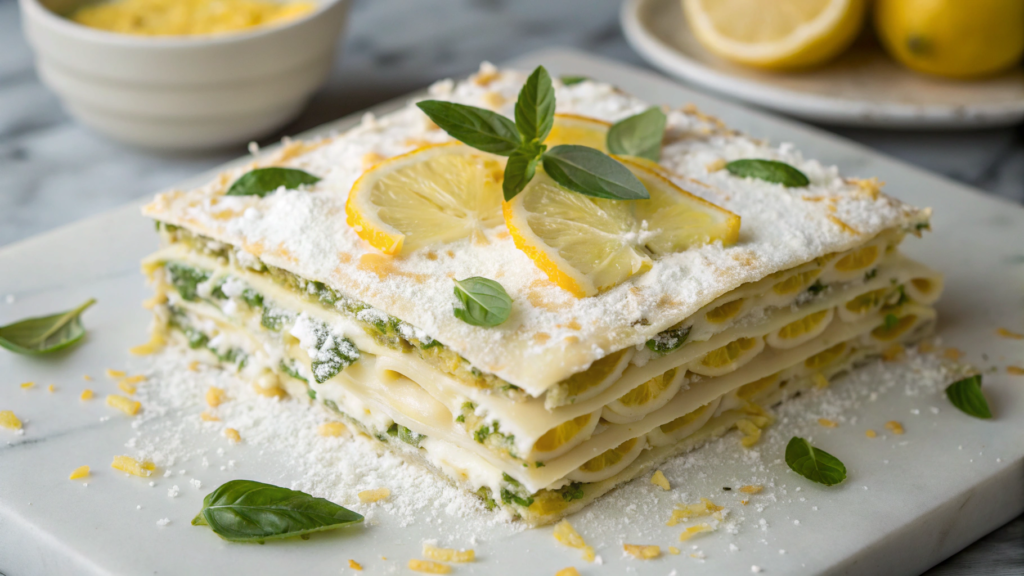
In this recipe, there’s a balanced combination of acid, fat, and soft texture. Lemon here is not just for flavor, but to bring everything together and make the dish feel lighter.
In Salt, Fat, Acid, Heat, it’s explained that acid enhances flavor perception and balances fat. Here it works very clearly — lemon zest makes ricotta more expressive without making it heavy.
What you’ll need
- 2 tbsp olive oil
- 3 cloves garlic, minced
- 4 cups fresh spinach (120 g)
- 1 1/2 cups ricotta cheese (360 g)
- zest of 1 lemon
- 1 tbsp lemon juice (15 ml)
- 1 egg
- 2 cups shredded mozzarella (450 g)
- 1/2 cup grated parmesan (50 g)
- 9–12 lasagna noodles
- salt and black pepper to taste
For this lasagna, it’s удобно to use a dish with slightly less depth so the layers don’t become too heavy. It’s easier to control the thickness of the layers this way.
How to make
- Heat olive oil and add the minced garlic. Cook it for about a minute, just until it becomes aromatic but doesn’t start to darken. Then add fresh spinach and cook for another couple of minutes, until it reduces in volume and becomes soft. It’s better to lightly squeeze out the extra liquid — this way the filling won’t be watery.
- In a bowl, mix ricotta, egg, lemon zest, and a bit of lemon juice. Add a pinch of salt and black pepper. The consistency should be creamy but not runny. It’s better to grate the zest finely — this way it spreads evenly and doesn’t show up in chunks.
- Boil the lasagna sheets to al dente if you’re using dry ones. They should stay slightly firm — during baking they will reach the right texture and won’t turn into a soft mass.
- Mix the slightly cooled spinach with part of the ricotta or layer them separately — both options work, but when mixed, the flavor becomes more even.
Assembly and baking
Spread a bit of ricotta or a thin layer of cheese on the bottom of the dish, then add lasagna sheets, on top — a layer of ricotta with lemon zest, some spinach, and some mozzarella. Repeat these layers 3–4 times, without making them too thick — in this version it’s important to keep a light feel.
The final layer is mozzarella and some parmesan. Parmesan on top gives a light golden crust, and mozzarella gives softness.
Bake at 375°F (190°C) for about 30–35 minutes. Don’t overbake here — this lasagna should stay soft, not dense.
A practical tip from experience
If you feel that ricotta is too thick — add 1–2 tablespoons of warm milk. This will make the texture softer, and the layers will spread more evenly. And I’d suggest not overdoing the lemon. It’s an accent, not the main flavor.
Serving
Let the lasagna sit for 10–15 minutes before serving — the layers will become neater. Before serving, you can add a bit of fresh lemon zest or a drop of olive oil on top. The serving here is simple: a green salad with a light dressing and a glass of white wine.
3. Lasagna Recipe With Cottage Cheese and Extra Garlicky Spinach
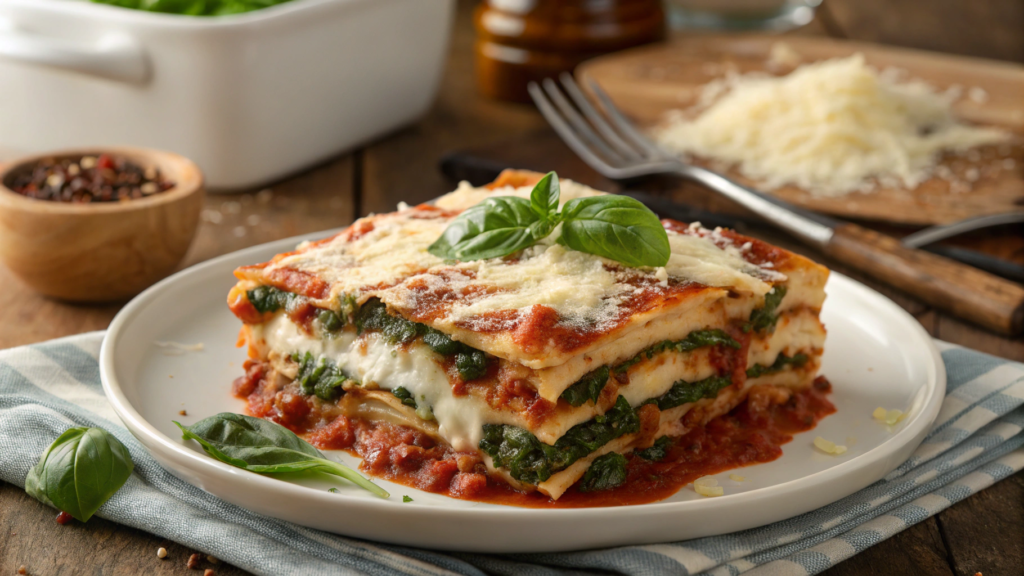
Lasagna recipe with cottage cheese and extra garlicky spinach — cottage cheese actually gives a lighter texture and a slightly more pronounced flavor, especially if you build the other elements right.
Cottage cheese in lasagna might sound a bit unusual, but once you add a lot of garlic and work properly with the spinach — everything falls into place. In the end, you get a really solid dish.
What you’ll need
- 2 tbsp olive oil
- 5–6 cloves garlic, minced
- 5 cups fresh spinach (150 g)
- 2 cups cottage cheese (450 g)
- 1 egg
- 2 cups shredded mozzarella (450 g)
- 1/2 cup grated parmesan (50g)
- 1 jar marinara sauce (24 oz / ~680 g)
- 9–12 lasagna noodles
- salt and black pepper to taste
If cottage cheese is too grainy, you can blend it slightly. I sometimes do this when I want a more even texture.
How to make
- Heat olive oil and add the minced garlic. Don’t hold back — here it plays a key role. Cook for about a minute, until it becomes aromatic but doesn’t start to darken.
- Add spinach and cook until it reduces in volume. It takes just a couple of minutes, but it’s important not to leave extra moisture — if there’s too much, gently squeeze the spinach so the filling doesn’t become watery.
- In a bowl, mix cottage cheese with the egg, salt, and pepper. If the texture feels too rough, blend it slightly — it will become more creamy and spread better across the layers.
- Boil the lasagna sheets to al dente if you’re using dry ones. They should stay slightly firm so they don’t fall apart during baking.
Assembly and baking
Spread some marinara sauce on the bottom of the dish, then a layer of lasagna sheets. On top, add cottage cheese, then spinach with garlic, and some mozzarella. Repeat 3–4 layers, without making them too thick — it’s better to have more layers, but cleaner ones.
The final layer is sauce, mozzarella, and some parmesan. Bake at 375°F (190°C) for about 35–40 minutes. At the end, you can turn on top heat for a couple of minutes to get a slightly golden surface.
Serving and presentation
This lasagna turns out softer and lighter than the classic one, so it’s better to keep the serving simple. Don’t add heavy sides — some greens or a light salad are enough so the flavor doesn’t get lost.
- add some freshly ground black pepper right before serving
- sprinkle fresh herbs on top (parsley or basil)
- serve with a simple green salad with a light dressing
- you can add a bit of extra virgin olive oil on top for a softer taste
Sometimes we cut it a bit casually, and the pieces aren’t perfect in shape. And that’s fine. This lasagna doesn’t need perfect squares — you just want to finish every last layer.
It’s a good idea to experiment with the amount of garlic. It’s easy to find your own balance here, and that’s what makes this version feel personal.
Tip from our practice
If you’re using cottage cheese, definitely pay attention to the moisture. Some brands have too much whey — and then the layers start to “slide”. In that case, just transfer it into a sieve for 10–15 minutes before cooking. You’ll feel the difference right away — the structure becomes firmer, and the lasagna holds its shape much better.
4. Crispy Edge Sheet Pan Lasagna With Broiled Mozzarella Corners
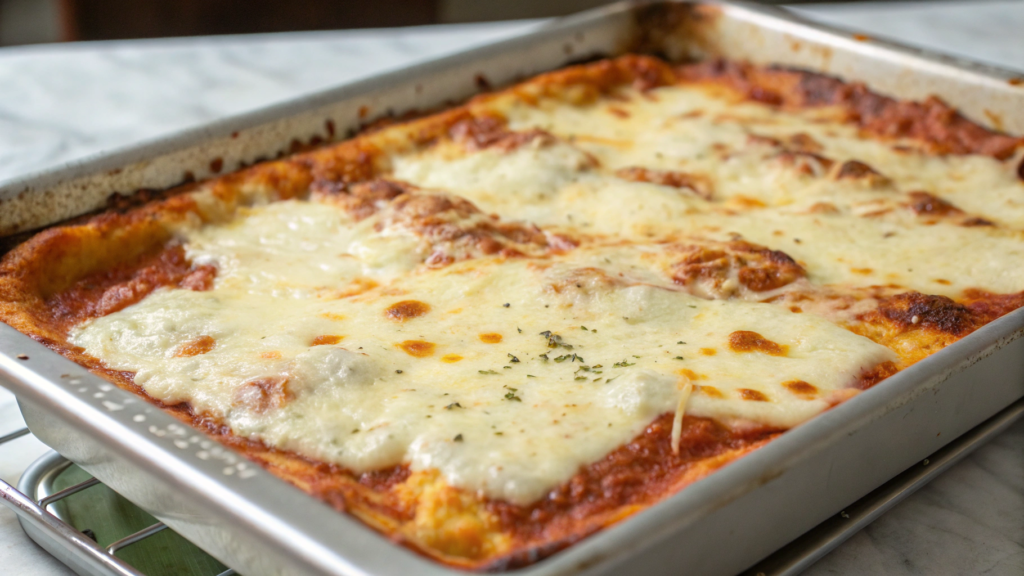
Crispy edge sheet pan lasagna with broiled mozzarella corners — this is a thinner version with more baked surface area.
When the layers are slightly thinner and the area is larger, the texture becomes more interesting. The center stays soft, the cheese stretches the way it should, and along the edges you get a proper crispy crust. And if you add more mozzarella in the corners on top, then turn on top heat for a couple of minutes — you get exactly what made many people love this version.
What you’ll need
- 2 tbsp olive oil
- 1 medium onion, finely diced
- 4 cloves garlic, minced
- 1 lb ground beef or Italian sausage (450 g)
- 1 jar marinara sauce (24 oz / ~680 g)
- 2 tbsp tomato paste
- 1 tsp dried oregano
- 1/2 tsp dried basil
- salt and black pepper to taste
- 9 lasagna noodles
- 1 1/2 cups ricotta cheese (360 g)
- 1 egg
- 2 1/2 cups shredded mozzarella (560 g)
- 1/2 cup grated parmesan (50 g)
- some fresh basil for serving
For this version, it’s especially convenient to use a large sheet pan or a shallow dish.
How to make
- Heat olive oil and add the finely diced onion. Cook it for a few minutes until it becomes soft and loses its sharpness. Then add garlic and after a minute add the ground meat or sausage. Break it into small pieces and cook until it fully changes color. You don’t need heavy browning, but it shouldn’t be a gray watery mass either — let the meat set a bit so the sauce gets a more defined flavor.
- Add tomato paste, mix it with the meat, and let it heat for a minute right in the pan. It’s a small step, but it really improves the taste. Then pour in marinara sauce, add oregano, basil, salt, and pepper. Lower the heat and let the sauce sit for 15–20 minutes. It shouldn’t be too liquid, because in a sheet pan version extra moisture really gets in the way — the layers start to spread and the base doesn’t hold shape.
- While the sauce cooks, boil the lasagna sheets to al dente if you’re using dry ones. Don’t overcook them — this is important. In a thin lasagna, soft sheets lose structure especially fast.
- In a separate bowl, mix ricotta with the egg and a pinch of salt. The mixture should be creamy and dense enough so you can spread it with a spoon, not pour it.
- Prepare the sheet pan or dish: lightly grease it or add a very thin layer of sauce. This helps the bottom layer not stick and gives a more even assembly. If the sheets don’t fit perfectly — it’s fine. You can break them or overlap slightly. In this version, it works well because everything will set into one layer anyway.
Tip
If you want more pronounced crispy edges, don’t make the top layer too wet. Too much sauce on top sounds good in theory, but in practice it’s better to keep a thin layer of sauce and add a bit more cheese along the edges. That’s how the corners actually brown instead of staying soft under the cheese.
Assembly and baking
Spread some meat sauce on the bottom of the dish, then a layer of lasagna sheets. Add ricotta in small portions, then more sauce and sprinkle mozzarella. Repeat 2–3 times. You don’t need much height here — the idea is to keep the lasagna slightly lower than usual and get more baked surface.
On the top layer, add sauce, then generously sprinkle mozzarella, adding a bit more in the corners. These corners will brown nicely under top heat. You can add some parmesan on top for a more pronounced crust.
Bake at 400°F (200°C) for about 25–30 minutes, until the cheese melts and the edges start to darken. After that, turn on top heat for another 2–4 minutes. The corners should become golden and bubbling, but not dried out. Here, it really comes down to just a few minutes.
Serving and presentation
This lasagna has a completely different vibe when serving. You want to cut it not into big “restaurant” pieces, but almost like a shared bake — into squares or rectangles, so everyone gets both a soft center and a crispy edge.
Before serving, let it sit for about 10 minutes. Then you can:
- add fresh basil on top for a fresh contrast to the baked cheese
- sprinkle a bit of parmesan right before serving
- serve with a simple green salad without heavy dressing
- cut the pieces slightly smaller than usual, because this lasagna is easy to go back for more
And honestly, the ones who get the corners are lucky. Those are the best pieces on the whole pan.
5. White Chicken Lasagna With Roasted Garlic Alfredo
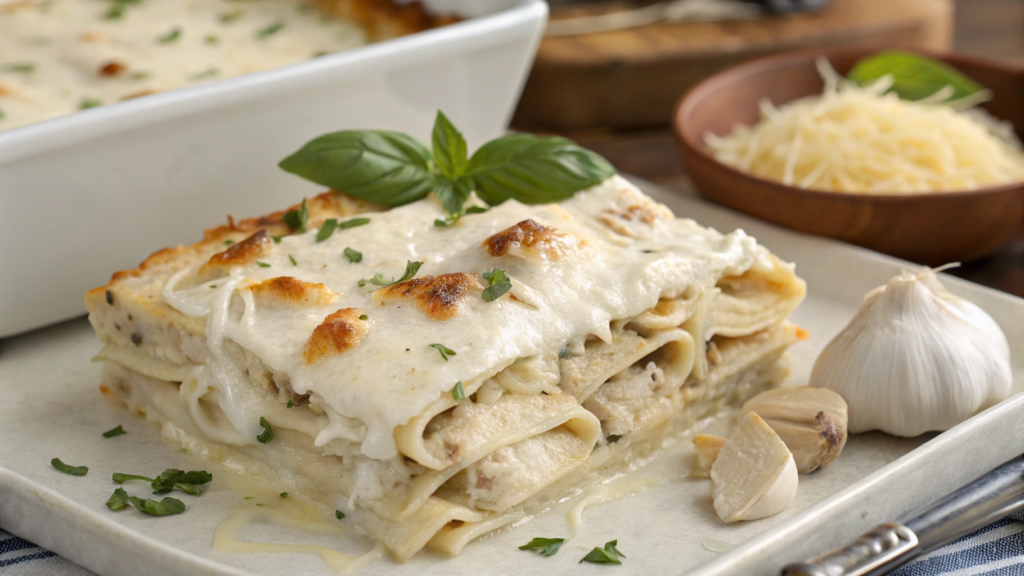
White chicken lasagna with roasted garlic alfredo is built around creaminess, soft chicken, and the depth of roasted garlic. The garlic step is the most important here. When it’s not fried but roasted, the flavor becomes slightly sweet, without sharpness.
When garlic is roasted, it becomes softer and loses its sharpness — the flavor shifts into a more sweet and mellow direction. This is связано with changes in sulfur compounds during heating, and it’s described in research from Journal of Agricultural and Food Chemistry. In the finished dish, the difference is noticeable right away.
What you’ll need
- 2 tbsp olive oil
- 2 cups cooked chicken, shredded (300–350 g)
- 1 whole head garlic
- 3 tbsp butter
- 3 tbsp all-purpose flour
- 2 1/2 cups milk (600 ml)
- 1 cup heavy cream (240 ml)
- 1/2 tsp nutmeg (optional)
- 2 cups shredded mozzarella (450 g)
- 1/2 cup grated parmesan (50 g)
- 1 1/2 cups ricotta cheese (360 g)
- 1 egg
- 9–12 lasagna noodles
- salt and black pepper to taste
For sauces like this, it’s convenient to use a heavy-bottomed pot so nothing burns. It’s easier to control heat and texture in it.
How to make
- Start with the garlic. Cut off the top of the head, drizzle with olive oil, wrap in foil, and bake at 400°F (200°C) for about 30–35 minutes. It should become soft, almost paste-like. After that, just squeeze out the pulp — it will go into the sauce.
- In a pot, melt butter, add flour, and stir for about a minute to make a light roux (the base for the sauce). Gradually pour in the milk and cream, stirring constantly so there are no lumps. The sauce will start to thicken after a few minutes.
- Add the roasted garlic to the sauce, a bit of salt, pepper, and a pinch of nutmeg. Mix until smooth. The sauce should be thick but still pourable — it will thicken more in the oven.
- In a separate bowl, mix ricotta with the egg and a pinch of salt. Boil the lasagna sheets to al dente if you’re using dry ones. It’s better to shred the chicken into fibers заранее — this way it spreads more evenly across the layers.
Tip. If the sauce turns out too thick before assembling, it’s fine — just add a bit of warm milk and mix. It’s much worse when it’s too liquid — then the lasagna may not hold together and will start to fall apart when sliced.
Assembly and baking
Spread some alfredo sauce on the bottom of the dish, then a layer of lasagna sheets. On top — ricotta, some chicken, and more sauce. Add some mozzarella and repeat the layers 3–4 times. Don’t overload it — here softness and balance matter more than height.
The final layer is sauce, mozzarella, and some parmesan. Parmesan will give a light crust, and mozzarella gives that stretchy texture.
Bake at 375°F (190°C) for about 35–40 minutes. At the end, you can turn on top heat for a couple of minutes to lightly brown the top, but don’t dry it out.
Serving
This lasagna turns out very soft in flavor, so the serving should support that. It’s better to keep everything as simple as possible.
- add some fresh herbs (parsley or thyme)
- lightly sprinkle parmesan before serving
- serve with a light green salad without heavy dressings
- you can add a bit of black pepper right before serving
Let it sit for 10–15 minutes before cutting — the layers will become neater, and the pieces will hold their shape. Sometimes we eat it just like that, without anything else. And it doesn’t feel heavy, even with the cream — because the flavor stays soft and balanced.
6. Lasagna Roll Ups With Pesto Ricotta and Cherry Tomatoes
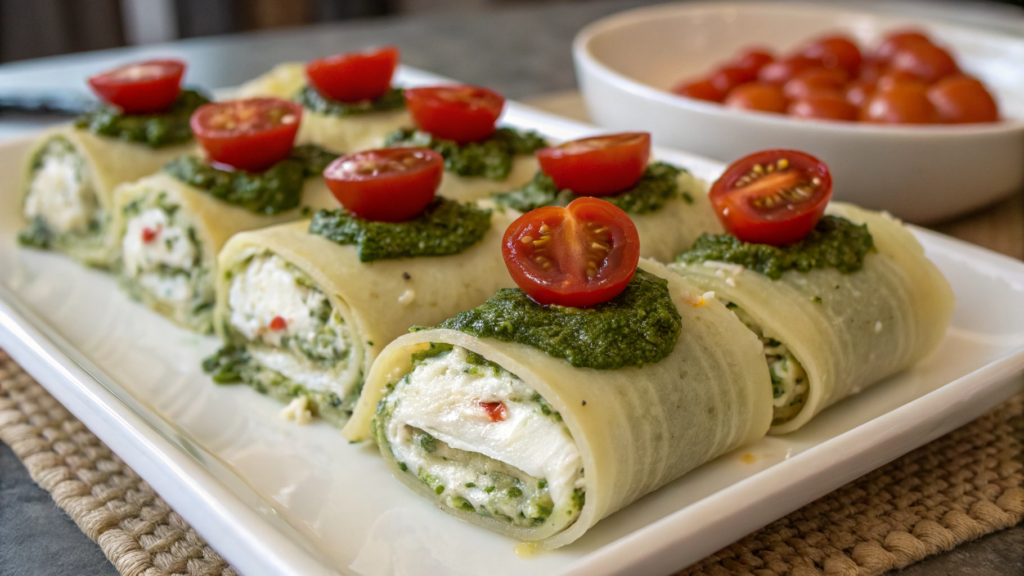
Lasagna roll ups with pesto ricotta and cherry tomatoes are simple to assemble, feel lighter, and at the same time look neat and clean on the plate.
For us, these rolls turned out to be unexpectedly convenient — each piece is already portioned, no need to cut, no need to worry about layers. And plus — pesto and tomatoes add freshness that classic versions sometimes miss.
What you’ll need
- 9–12 lasagna noodles
- 1 1/2 cups ricotta cheese (360 g)
- 1/2 cup pesto (120 ml)
- 1 egg
- 2 cups shredded mozzarella (450 g)
- 1/2 cup grated parmesan (50 g)
- 1 pint cherry tomatoes (250–300 g)
- 2 tbsp olive oil
- salt and black pepper to taste
- some fresh basil for serving
It’s better to use pesto with a clean ingredient list or make it yourself. If you’re buying it, a solid option is Barilla Traditional Basil Pesto — it’s balanced and doesn’t overpower everything else.
How to make
- Boil the lasagna sheets to al dente if you’re using dry ones. After cooking, carefully lay them out so they don’t stick together. You can lightly drizzle them with oil — it makes them easier to work with.
- In a bowl, mix ricotta, egg, and pesto. Taste it — sometimes pesto is already salty enough, so add salt carefully. The consistency should be creamy but dense enough so the filling doesn’t leak when rolling.
- Prepare the cherry tomatoes: cut them in half, lightly salt, and drizzle with olive oil. Let them sit for a couple of minutes — they’ll release some juice, and the flavor becomes brighter.
- Take one lasagna sheet, spread a layer of ricotta with pesto evenly, then add some mozzarella and a few tomato pieces. Roll it carefully, not too tight, so the filling doesn’t get pushed out.
Assembly and baking
Spread a thin layer of sauce or just a bit of olive oil on the bottom of the dish so the rolls don’t stick. Place the roll ups seam side down, close to each other but without pressing.
On top, add some mozzarella, a bit of parmesan, and the remaining cherry tomatoes. During baking, they slightly caramelize and add a light sweetness.
Bake at 375°F (190°C) for about 25–30 minutes. At the end, you can turn on top heat for 2–3 minutes so the cheese gets slightly golden.
Note
Don’t make the filling layer too thick. There’s a temptation to add more ricotta, but then the rolls start to fall apart and don’t hold shape well. It’s better to use less but spread it evenly — this way each roll up stays neat and balanced in flavor.
Serving and presentation
These rolls are easy to serve portion-wise — each one already looks like a separate dish. And that’s very convenient.
- add some fresh basil on top before serving
- drizzle lightly with olive oil
- serve with a simple green salad
- you can lightly sprinkle parmesan прямо on the plate
When taking them out of the dish, it’s better to let them sit for 5–10 minutes. They will become firmer, and it will be easier to move them neatly without breaking.
7. Skillet Lasagna With Ravioli Shortcut and Basil Finish
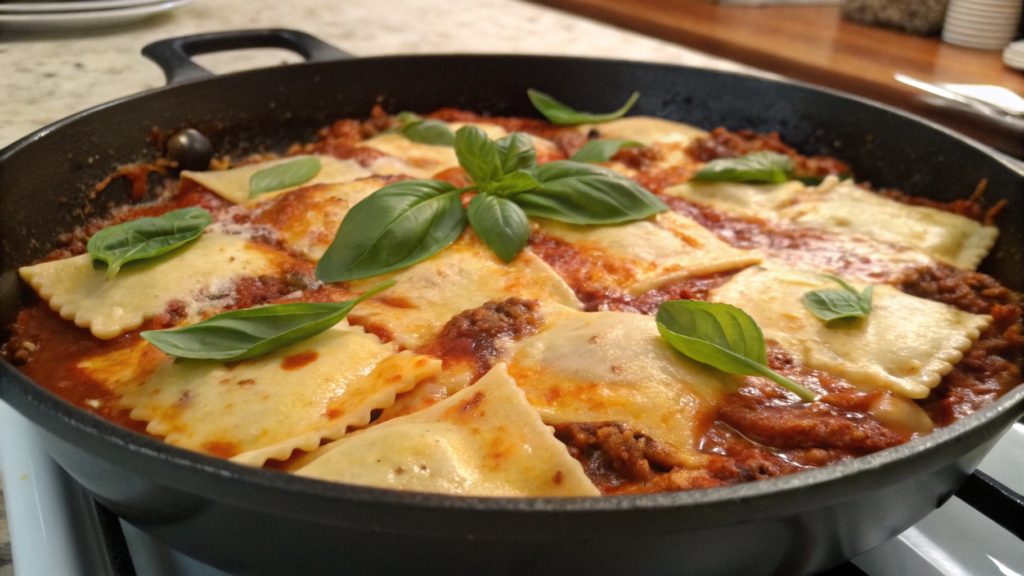
If you want lasagna and don’t want to spend a lot of time, ravioli come to the rescue. The dough is already there, the filling is already there — all that’s left is to put everything together in one pan.
When it all comes together, bakes, and you finish it with fresh basil on top — no one thinks about it as a shortcut anymore. It’s just good.
What you’ll need
- 2 tbsp olive oil
- 1/2 lb ground beef or sausage (225 g)
- 3 cloves garlic, minced
- 1 jar marinara sauce (24 oz / ~680 g)
- 1 package cheese ravioli (20 oz / ~560 g)
- 1 1/2 cups shredded mozzarella (360 g)
- 1/2 cup grated parmesan (50 g)
- salt and black pepper to taste
- fresh basil for serving
For this recipe, a deep oven-safe skillet works really well. It holds heat and gives a nice texture along the edges.
How to make
- Heat olive oil in the skillet and add the ground meat. Break it into small pieces with a spatula and cook until it fully changes color. Here you can let it brown a bit — it adds more flavor depth.
- Add garlic and cook for about a minute until it becomes aromatic. Then pour in marinara sauce, mix, and let it heat for 5–7 minutes. It should get slightly thicker, but not too dense.
- Add the ravioli to the skillet. Mix gently so they get coated with sauce but don’t break. It’s important that the ravioli are evenly distributed — this way everything cooks evenly.
- Sprinkle mozzarella and parmesan on top. Don’t go too light on cheese — it creates that top texture, but don’t overload it either so the dish doesn’t feel heavy.
From personal experience
If you’re using frozen ravioli, you don’t need to fully thaw them. Just let them sit at room temperature for 10–15 minutes. This way they heat through faster in the oven and won’t release extra water into the sauce.
Assembly and baking
Place the skillet into the oven preheated to 375°F (190°C) and bake for about 20–25 minutes. The cheese should fully melt, and the sauce should start to bubble around the edges.
At the end, you can turn on top heat for 2–3 minutes to get a light golden crust. Don’t overdo it — ravioli cook faster than lasagna sheets and can dry out easily.
How to serve
This version of lasagna works best when served straight from the skillet. It stays hot longer, and it creates a more home-style feel.
- add fresh basil on top right before serving
- lightly sprinkle parmesan
- serve with a simple green salad
- you can add a bit of olive oil for a softer taste
Let the dish sit for 5–10 minutes before serving — the sauce will thicken a bit, and the texture becomes more cohesive.
8. Smokehouse Lasagna With BBQ Brisket and Pickled Onions
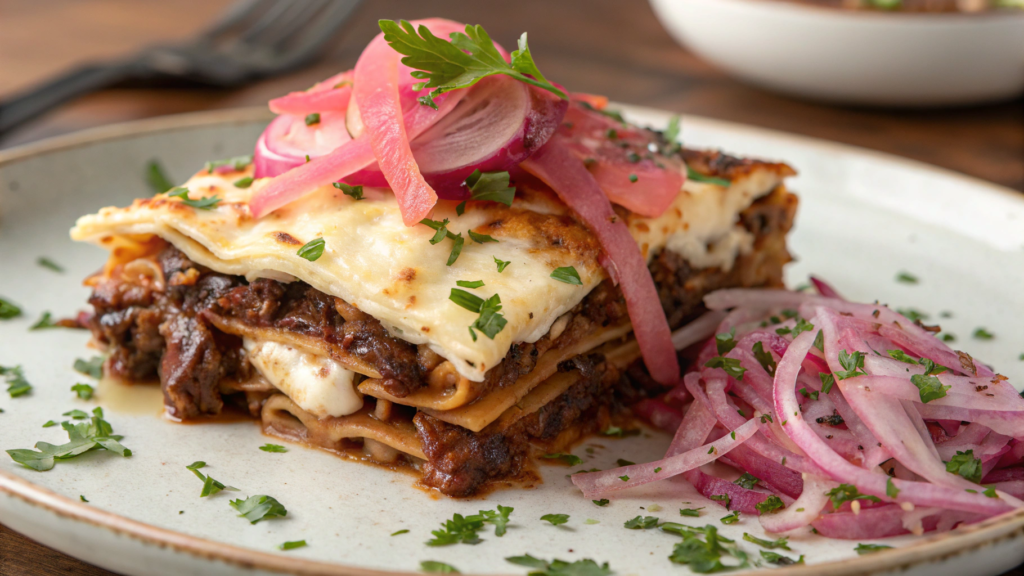
We tried this version after a barbecue, when there was a good piece of brisket left. Just reheating it felt boring. That’s when the idea came up to layer it into lasagna. And without pickled onions, the dish would be too heavy, but with them you get contrast and it becomes easier to eat.
What you’ll need
- 2 cups cooked BBQ brisket, shredded (400–450 g)
- 1 jar BBQ sauce (18 oz / ~510 g)
- 1 tbsp olive oil
- 1 small red onion, thinly sliced
- 1/2 cup apple cider vinegar (120 ml)
- 1 tbsp sugar
- 1 tsp salt
- 9–12 lasagna noodles
- 1 1/2 cups ricotta cheese (360 g)
- 1 egg
- 2 cups shredded mozzarella (450 g)
- 1/2 cup grated cheddar (50 g)
- some fresh herbs for serving
How to make
- Start with the pickled onions. Mix vinegar, sugar, and salt, add thinly sliced red onion, and leave for at least 20–30 minutes. It will become softer, lose its sharpness, and develop the right acidity.
- Prepare the brisket: if it’s in large pieces, pull it apart into fibers. Mix it with part of the BBQ sauce so the meat stays juicy but doesn’t swim in sauce.
- Boil the lasagna sheets to al dente if you’re using dry ones.
- In a separate bowl, mix ricotta with the egg and a pinch of salt — this gives a soft layer that slightly balances the rich meat flavor.
- Prepare the dish: grease it lightly or add a thin layer of sauce. This helps prevent sticking and keeps the bottom layer neat.
Assembly and baking
Spread some BBQ sauce on the bottom of the dish, then a layer of lasagna sheets. On top — ricotta, some brisket, and a few pieces of pickled onion. Add some mozzarella and repeat the layers 3–4 times.
Pay attention here — the onion should add an accent, not dominate. It’s important not to overdo it. Same with the sauce: too much BBQ sauce will make the dish heavy and sticky in texture.
The final layer is a bit of sauce, mozzarella, and cheddar. Cheddar gives a more pronounced flavor and a slightly different crust texture.
Bake at 375°F (190°C) for about 35–40 minutes. At the end, you can turn on top heat for a couple of minutes so the cheese lightly browns.
How to serve
This lasagna turns out rich, so the serving should help lighten the overall feel. Don’t add heavy sides — keep the contrast.
- add some fresh herbs on top
- you can place a few pieces of pickled onion right before serving
- serve with a simple green salad
- cut the pieces slightly smaller than usual — it’s a filling dish
Let the lasagna sit for 10–15 minutes before cutting — the layers will firm up, and the pieces will hold their shape.
9. Seafood Lasagna With Old Bay Cream Sauce and Parmesan Crumb
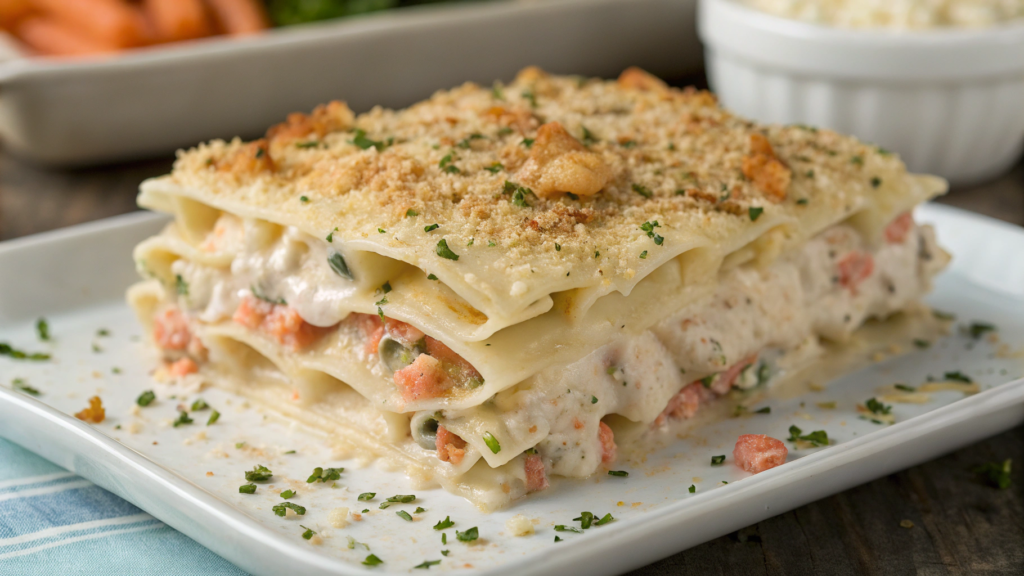
Seafood lasagna with Old Bay cream sauce and parmesan crumb — here you need to handle seafood carefully. If you overcook it, the dish falls apart in flavor. If done right, it turns out soft, creamy, and with a light seafood note.
What you’ll need
- 2 tbsp butter
- 2 tbsp all-purpose flour
- 2 cups milk (480 ml)
- 1 cup heavy cream (240 ml)
- 1–2 tsp Old Bay seasoning
- 1 lb mixed seafood (450 г: shrimp, white fish, you can add some scallops)
- 2 cloves garlic, minced
- 1 tbsp olive oil
- 1 1/2 cups ricotta cheese (360 g)
- 1 egg
- 9–12 lasagna noodles
- 1 1/2 cups shredded mozzarella (360 g)
- 1/2 cup grated parmesan (50 g)
- 1/2 cup breadcrumbs (60 g)
- salt and black pepper to taste
- some fresh parsley for serving
Old Bay seasoning is a key part of the flavor. If you don’t have it, you can use OLD BAY Seasoning, 6 oz — it gives the right balance of salt, spices, and a light seafood-style note.
How to make
- Start with the seafood. If you’re using frozen, fully thaw and pat it dry. This is important: extra moisture will ruin the texture of the sauce. Heat a bit of olive oil in a pan, add garlic, then after a minute add the seafood and cook for just 2–3 minutes. Shrimp should only turn pink, fish slightly opaque. Don’t cook it through — it will finish in the oven.
- In a separate pot, melt butter, add flour, and stir for about a minute to make a roux. Gradually pour in milk and cream, stirring constantly. The sauce will start to thicken after a few minutes — don’t make it too dense, it should stay pourable.
- Add Old Bay seasoning, salt, and pepper to the sauce. Mix and taste — the flavor should be мягким, with a light spiced note, not too salty. If you want more depth, you can add a couple of drops of lemon juice, but it’s optional.
- In a bowl, mix ricotta with the egg and a pinch of salt. Boil the lasagna sheets to al dente if you’re using dry ones. It’s important not to overcook them — in this recipe, the sauce is soft, and overly soft sheets will just get lost.
- Prepare the parmesan crumb: mix breadcrumbs with part of the parmesan and a drop of olive oil. The crumb should be slightly moist but still loose — it will give a textural contrast on top.
Tip. Don’t overload the lasagna with seafood. There’s a temptation to add more, but then the dish becomes heavy and loses balance. It’s better to use less but spread it evenly — this way the flavor stays clean.
Assembly and baking
Spread some cream sauce on the bottom of the dish, then a layer of lasagna sheets. On top — ricotta, some seafood, and more sauce. Add a bit of mozzarella and repeat the layers 3–4 times.
The final layer is sauce, some mozzarella, and evenly spread parmesan crumb on top. This is what gives the contrast — a soft center and a slightly crispy topping.
Bake at 375°F (190°C) for about 30–35 minutes. The crumb should become golden, and the sauce should start to bubble at the edges.
How to serve
This lasagna works best with a simple serving. No need to add anything heavy — it already has enough flavor on its own.
- add some fresh parsley before serving
- you can lightly drizzle lemon juice directly on the plate
- serve with a light salad without heavy dressings
- cut into neat pieces, letting the dish cool slightly
Let it sit for 10–15 minutes before serving — the sauce will thicken a bit, and the layers will hold together better.
10. Spicy Calabrian Chili Lasagna With Honey in the Sauce
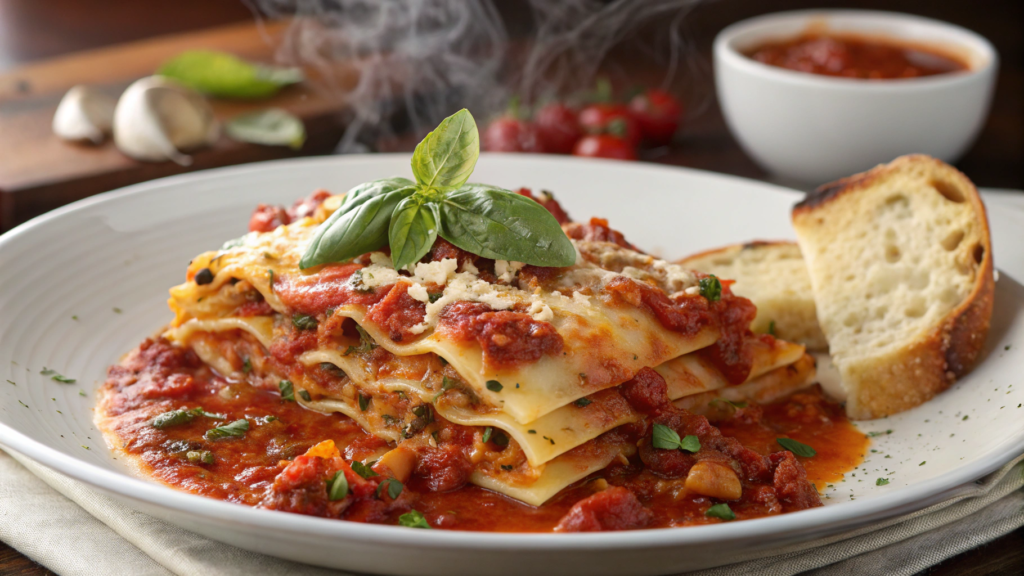
Spicy Calabrian chili lasagna with honey in the sauce — here you get heat from chili, sweetness from honey, and a rich tomato sauce that ties everything together. It’s a very clear combination — we got to it when we had a sauce with Calabrian chili that felt too sharp. We added a bit of honey — and the flavor shifted in a better direction.
What you’ll need
- 2 tbsp olive oil
- 1 medium onion, finely diced
- 4 cloves garlic, minced
- 1 lb ground beef or sausage (450 g)
- 1 jar crushed tomatoes (28 oz / ~800 g)
- 2 tbsp tomato paste
- 1–2 tbsp Calabrian chili paste
- 1–2 tbsp honey (15–30 ml)
- 1 tsp dried oregano
- 1/2 tsp dried basil
- 9–12 lasagna noodles
- 1 1/2 cups ricotta cheese (360 g)
- 1 egg
- 2 cups shredded mozzarella (450 g)
- 1/2 cup grated parmesan (50 g)
- salt and black pepper to taste
How to make
- Heat olive oil and add the finely diced onion. Cook it until soft, so the sharpness goes away. Then add garlic and after a minute add the ground meat. Break it into small pieces and cook until it fully changes color.
- Add tomato paste and mix it with the meat — let it heat for about a minute. Then add crushed tomatoes, Calabrian chili paste, oregano, and basil. Mix and lower the heat.
- Add honey and mix. Start with a smaller amount, taste the sauce, and add more if needed. It’s important that honey doesn’t make the sauce sweet — it should only balance the heat.
- Let the sauce cook on low heat for 30–40 minutes. It should gently “bubble” and become thicker. At the end, taste again — the balance between heat and sweetness should feel even.
- Boil the lasagna sheets to al dente if you’re using dry ones. In a separate bowl, mix ricotta with the egg and a pinch of salt.
What to keep in mind
With Calabrian chili, it’s easy to ruin the dish. If you’re not sure about the heat level, start with less and add gradually. It’s much easier to increase flavor than to fix it later.
Assembly and baking
Spread some sauce on the bottom of the dish, then a layer of lasagna sheets. Next — ricotta, more sauce, and some mozzarella. Repeat 3–4 layers without overloading them.
The final layer is sauce, mozzarella, and some parmesan. Parmesan gives a light crust, and mozzarella adds softness.
Bake at 375°F (190°C) for about 35–40 minutes. At the end, you can turn on top heat for a couple of minutes to get a golden surface.
Serving
This lasagna has its own strong flavor, so the serving should support it, not overpower it.
- add some fresh basil or parsley
- you can lightly drizzle olive oil
- serve with a simple green salad
- cut medium-sized portions — it’s a rich dish
Let it sit for 10–15 minutes before serving — the layers will firm up, and the flavor will settle.
Your own recipe
As you already understand, lasagna doesn’t rely on strict rules. What matters here is simple balance.
Sometimes it’s crispy edges, sometimes lemon acidity, sometimes heat with honey, or the softness of a creamy sauce. And each version gives a different result, even if the base idea stays the same.
We usually go back to the versions that are easier to cook in the moment. Sometimes it’s the classic, sometimes a quick skillet version. It all depends on the day, the mood, and how much time you have.If you try something from this list — drop a comment and share what worked best for you. It’s always interesting to see which versions become someone’s go-to favorites and why.