

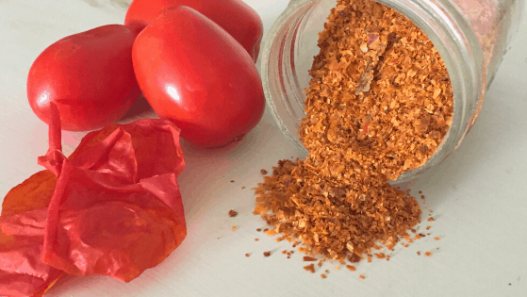
Don’t throw out the tomato skins when you’re canning! You can use them to make a delicious tomato powder to season dishes!
Save your skins… your tomato skins, that is!
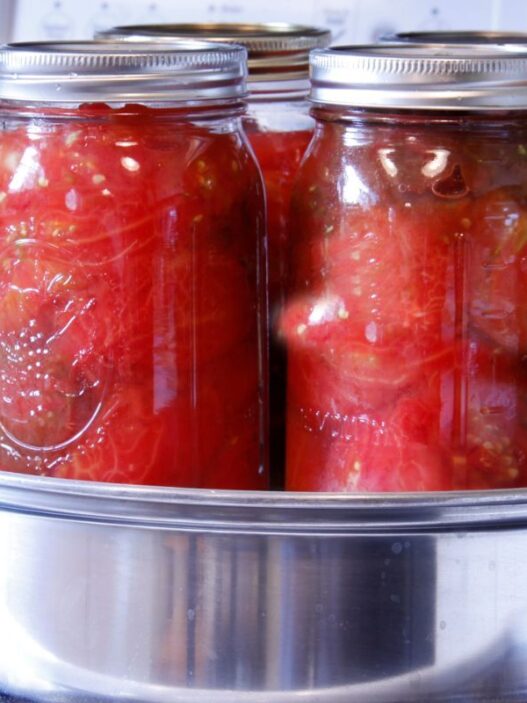
If you are new to canning, I’m gonna tell you something: you gotta skin the tomatoes before you can them. Well, I mean you don’t have to, but you’re gonna want to. Otherwise the skins come off during the canning process and they roll up into little chewy slices in your pasta sauce or salsa. I’m not gonna tell you how I know. But I *may* have made this mistake when I first started canning!
For those of you that have been canning for a while, you know the pain of peeling an entire harvest’s worth of tomatoes. If you can like we do, that’s a looooot of tomatoes to skin!
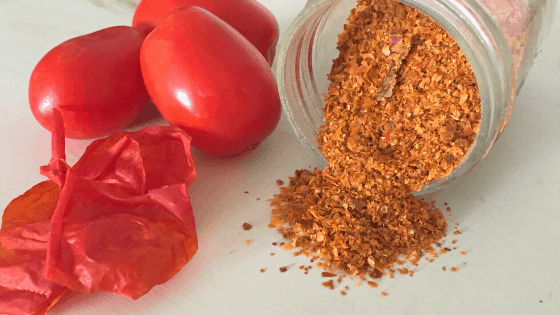
Normally, those skins just get tossed in the garbage – or hopefully the compost at least! But, you don’t need to throw them out! Those slimy tomato skins are actually an awesome resource for another delicious homegrown food product!
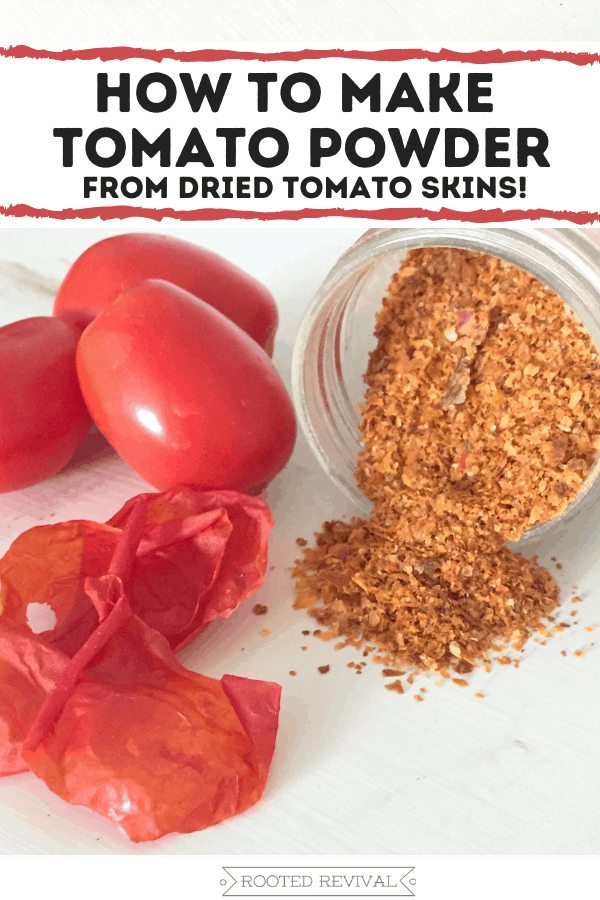
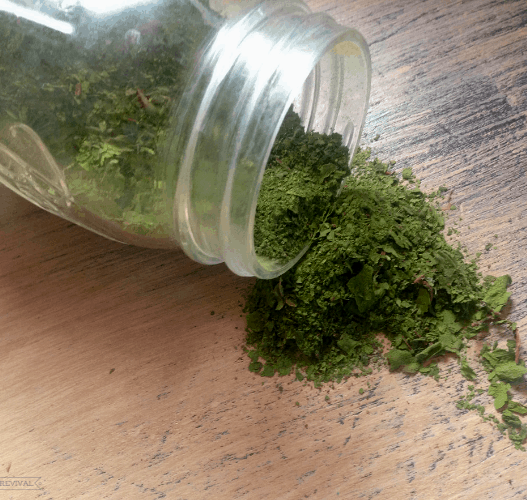
Say hello to tomato powder… made 100% from tomato skins that would otherwise be wasted!
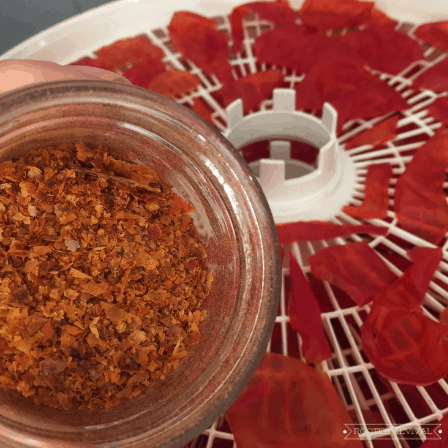
Is your mind blown?! Or are you thinking “Kaylee, why on earth would I want to save the tomato skins?? That seems like a lot of extra work on top of canning tomatoes!”
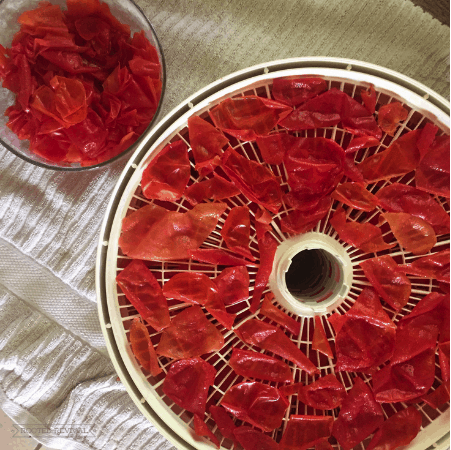
Well, yes, it is some extra work. But not much! Because you already gotta peel those suckers before canning! So you might as well toss the skins into the dehydrator instead of the compost pile! And here’s why!
How to use your tomato skin powder:
To be honest, it took me a while to get on board with this homegrown product. The idea of dried up tomato skins just didn’t sound appetizing to me. But once I did finally try it, I was hooked!
Tomato powder made from dried tomato skins is delicious! It actually packs a really great tomato-ey punch of flavor, so just adding a little bit to dishes can really improve the flavor! Plus, they also add some extra fiber to your diet!
Here are some of my favorite ways to use tomato powder:
- Add the powder to soups, stews and chilis to infuse them with a robust tomato flavor.
- Sprinkle on top of pasta or french bread for some extra flavor. Or, add it to your grilled cheese sandwich before grilling for a punch of flavor.
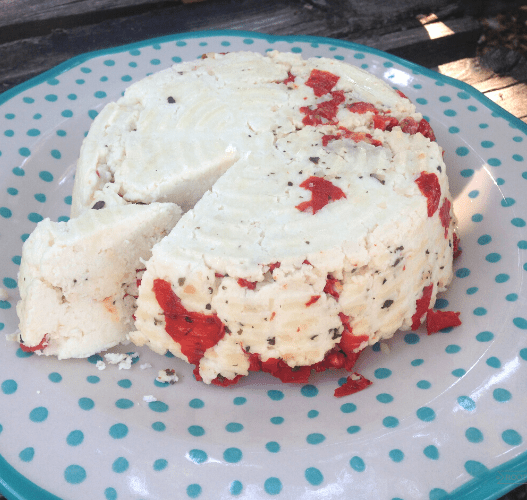
- Mix it into your homemade cheeses (we love it in our chèvre!)
- Make your own custom seasoning blends by adding some sea salt and other dried herbs.
- Mix it with some homegrown garlic powder (here’s how to make your own!) and dried basil for a delish Italian flavor. This is super similar to my sun-dried tomato and garlic seasoning and just as delish!
- Or, go south of the border with some dried chili pepper flakes, cumin and paprika to make a delicious taco seasoning!
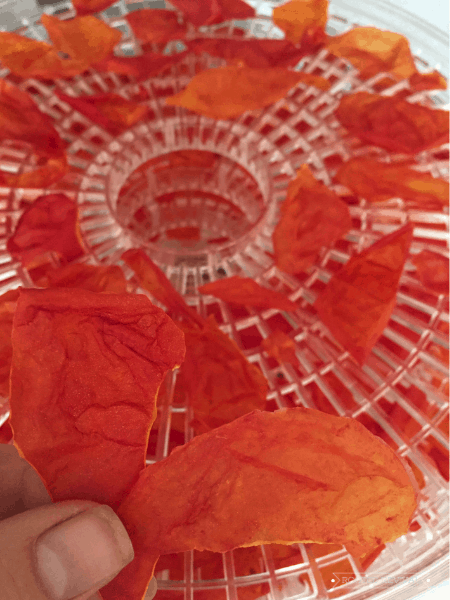
How to dry tomato skins & make tomato powder:
[mv_create key=”2″ thumbnail=”https://rootedrevival.com/wp-content/uploads/2020/09/tomato-skins-powder1.png” title=”Dried Tomato Powder” type=”recipe”]
Pin it for later!


I never thought to use the skins! This would make some tasty spice options- that chili flake one sounds perfect.
Well geez, who knew it was a thing. Now I feel like I need to buy a dehydrator. I feel like tomato powder would be awesome sprinkled over mac and cheese.
Oh my goodness! How have I not put this on mac-n-cheese yet?! Genius! (and, yes, you should definitely get a dehydrator! There is an endless amount of goodies you can make with them!) ?
Very interesting. First time i hear about tomato powder. I will give it a try ! Thnx
Enjoy! 😀
That is really interesting article, I love to use powders, they are the most versatile and convenient form of preservation. Thanks for the tip.
Right?! I love how versatile they are! You can add a fun tomato twist to any dish now! 🙂
I just made some of this powder and it is delicious! My friend tasted it and said, “imagine how much of this we can make after our annual salsa making day”!
We had our salsa day and several of us took skins home and made powder. I used my dehydrator and oven; IMHO I think the oven method is easier. Can’t wait to try this.
I’m always so torn between the oven or boiling water method! LOL! I think I change my mind each season! But I’m so glad you are saving some of the skins! They make such a great seasoning and are packed with flavor! Enjoy!
Hi, does anyone know how long the powder lasts? TIA!
Hi there! Storage conditions can greatly effect how long the dried ingredients last. However, I find that if I keep them in an air-tight container in a cool dark place, they will easily last 6 months or more. I can usually extend this even longer if I vacuum seal the jars (until they are ready to be used) and use an oxygen absorber pouch. You can read more about vacuum sealing jars in this post.