There are soups you can make almost on autopilot. And then there are those where one unexpected step or unusual combination makes you look at a familiar dish a little differently. Those are exactly the 10 Cozy Soup Recipes I’ve put together for this article.
Sometimes, all it takes is to change one familiar ingredient, switch up the cooking method, or add something you’d never thought of putting in soup before.
Of course, not every one of these becomes a regular recipe at our house. But I always write down the ones that turn out well, because a couple of months later, it’s almost impossible to remember exactly what made them so good.
Enjoy!
1. Roasted carrot and ginger coconut soup
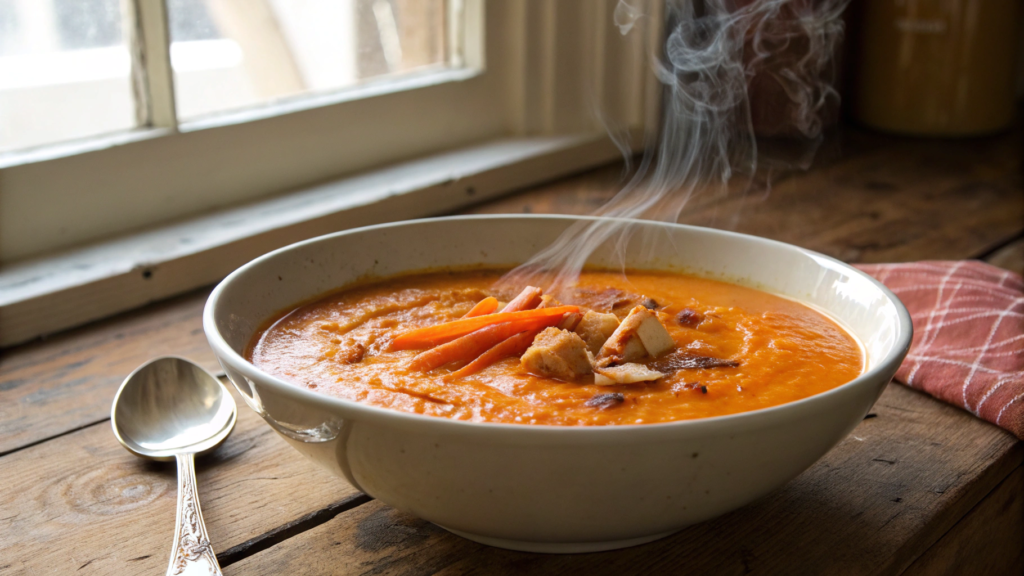
Roasted Carrot and Ginger Coconut Soup turned out to be one of those recipes where the most ordinary vegetables become completely different after some time in the oven. The carrots get sweeter, the edges caramelize a little, and fresh ginger keeps the soup from turning into just a sweet vegetable puree.
I like to roast the carrots before making the soup instead of cooking them straight in the broth. Some of their moisture cooks off in the oven, the flavor gets richer, and you don’t need cream, cheese, or a lot of oil to get a good result. The coconut milk already gives the soup a thick, creamy texture.
Ingredients
For about 4–5 servings, you’ll need
- 2 pounds carrots (about 900 g)
- 1 medium yellow onion
- 1½ tablespoons fresh ginger, finely grated
- 3 garlic cloves
- 2 tablespoons olive oil
- 1 can coconut milk, 13.5 ounces (about 400 ml)
- 3 cups vegetable or chicken broth (about 710 ml)
- ½ teaspoon ground cumin
- ¼ teaspoon red pepper flakes
- ½ teaspoon salt, plus more to taste
- freshly ground black pepper
- 1–2 teaspoons lime juice
For this kind of soup, an immersion blender works best because you can use it right in the pot without transferring hot soup in batches.
How to make roasted carrot and ginger coconut soup
- Preheat the oven to 425°F (220°C). Peel the carrots and cut them into pieces about 1½–2 inches (4–5 cm) long. Cut the onion into large wedges. Spread everything on a baking sheet, drizzle with olive oil, and season lightly with salt. Roast for about 30–35 minutes. Stir the vegetables once around the halfway point.
Don’t take the carrots out as soon as they’re soft. We want those dark roasted edges. They’re what give the soup the flavor that makes turning on the oven worth it. - Transfer the roasted vegetables to a large pot. Add the garlic, ginger, cumin, and red pepper flakes. Heat everything for about a minute over medium heat. The ginger will start smelling much stronger, while the garlic won’t have time to brown.
One and a half tablespoons is plenty for a pot this size. Add too much, and ginger will be the first thing you taste while the carrots almost disappear. - Pour in 3 cups of broth and bring it to a gentle simmer. Cook for about 10 minutes. There’s no need to cook it much longer. The carrots are already fully cooked from the oven, and these few minutes mainly help the flavors come together.
- Take the pot off high heat and blend everything with an immersion blender. Keep blending for another minute after you can no longer see any large pieces. That gives the soup a noticeably smoother texture.
Now pour in the coconut milk and blend again. I leave the coconut milk until almost the end. That makes it easier to judge the thickness of the soup first and then decide whether you need the whole can. - Return the pot to low heat for 2–3 minutes, but don’t let the soup boil for long after adding the coconut milk. Taste it. Add salt, black pepper, and start with 1 teaspoon of lime juice.
Then taste it again. Lime seems like a small detail, but you can really notice the difference. Carrots and coconut milk both bring some sweetness, and a little acidity makes the soup much more flavorful.
Serving. Add roasted pumpkin seeds, a few cilantro leaves, or a little red pepper flakes to each bowl. If you like, you can also add a couple of spoonfuls of coconut milk just before serving.
For us, soups like this have always been a good way to use what we’ve grown on the property or what’s left after harvest. Back in Idaho, where we tried to make the most of our little property of less than an acre, carrots were one of those vegetables that always had a place in our kitchen.
And now, on our farm in the Northwest, I still enjoy turning a few simple ingredients into a full dinner. And as you’ve seen, roasted carrots, ginger, and coconut milk are perfect for that.
2. Slow cooker chicken enchilada soup

Slow Cooker Chicken Enchilada Soup combines chicken, beans, corn, tomatoes, and spices in one thick soup. The flavor gets richer from the enchilada sauce, smoked paprika, and cumin, while the chicken becomes tender enough to pull apart with a fork after several hours of cooking.
We got used to cooking in big batches, especially when we were working on the house and the property at the same time. This soup fits that kind of routine really well. One slow cooker makes about six full servings, and the soup gets even richer the next day because the beans and chicken absorb some of the broth.
Ingredients
For about 6 servings, you’ll need
- 1½ pounds boneless, skinless chicken breasts or thighs (about 680 g)
- 1 can black beans, 15 ounces (about 425 g), rinsed and drained
- 1 can corn, 15 ounces (about 425 g), drained
- 1 can crushed tomatoes, 14.5 ounces (about 410 g)
- 1 can red enchilada sauce, 10 ounces (about 285 g)
- 3 cups chicken broth (about 710 ml)
- 1 small yellow onion
- 3 garlic cloves
- 1 teaspoon ground cumin
- 1 teaspoon smoked paprika
- ½ teaspoon dried oregano
- ½ teaspoon salt
- ¼ teaspoon black pepper
- juice of ½ lime
A slow cooker with a capacity of about 6 quarts (approximately 5.7 liters) is perfect for this recipe—for example, the programmable Crock-Pot 6-Quart Cook & Carry model.
How to make slow cooker chicken enchilada soup
- Place the chicken on the bottom of the slow cooker. Add the finely chopped onion, garlic, beans, corn, and crushed tomatoes.
Be sure to drain and rinse the beans with cold water. This keeps the broth cleaner in flavor and prevents it from getting too thick right at the beginning. - Add the enchilada sauce, chicken broth, cumin, smoked paprika, oregano, salt, and black pepper. You don’t need to stir the chicken from the bottom. Just distribute the other ingredients around it.
- Cover and cook for 6–7 hours on low or 3–4 hours on high. The chicken should be fully cooked and easy to pull apart with a fork.
I prefer using chicken thighs here. They have a little more fat, so they stay juicier after long cooking. Chicken breast works too, but it’s better not to leave it in the slow cooker longer than necessary. - Transfer the chicken to a plate and shred it into small pieces using two forks. Return it to the soup and stir well.
- Add the juice of half a lime and taste the soup. Add a little more salt if needed. If the soup is too thick, pour in another ½ cup of broth and heat for 10–15 minutes.
Serving
Top each bowl with sliced avocado, a little shredded cheese, cilantro, or lime wedges. A few crushed tortilla chips work well for some crunch.
Leftovers keep well in the refrigerator and reheat well the next day.
What I personally value about this recipe is that most of the work can be done ahead of time. Load the ingredients into the slow cooker in the morning, and closer to dinner, all that’s left is to shred the chicken, add the lime, and prepare something for serving.
3. Vegetarian sweet potato and kale broth
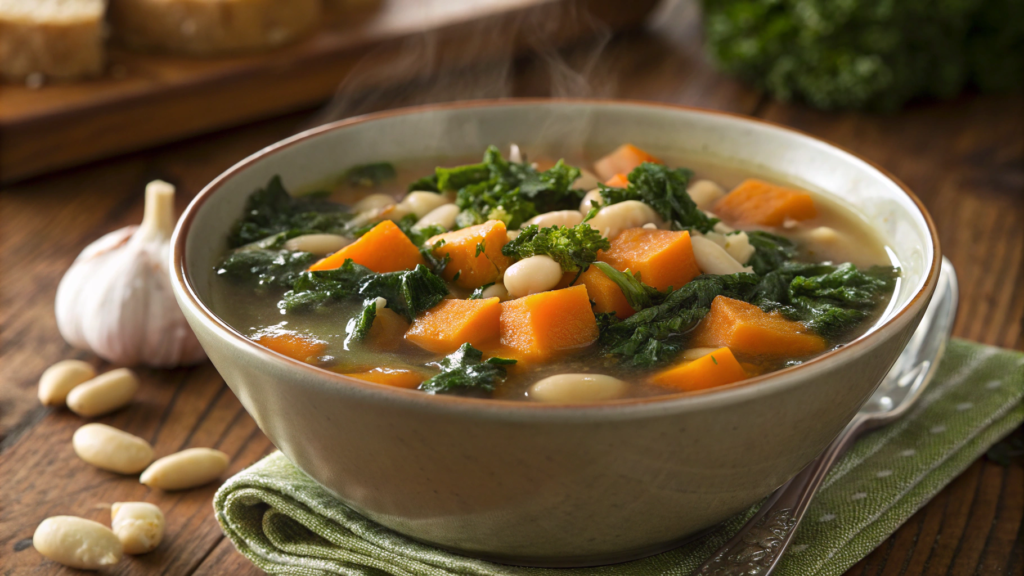
Vegetarian Sweet Potato and Kale Broth has a light base but is still filling thanks to the sweet potato and white beans. There’s no cream or cheese here, so you can really taste the vegetables, garlic, herbs, and broth. The kale goes in almost at the end, so it keeps its color and texture instead of completely cooking down.
We’ve grown and cooked sweet potatoes in plenty of different ways, and soup turned out to be a good option for them. The main thing is not to overcook the sweet potato, or instead of a clear vegetable broth, you’ll end up with a completely different texture.
Ingredients
For about 5–6 servings, you’ll need
- 1½ pounds sweet potatoes (about 680 g)
- 1 small bunch kale, about 5–6 large leaves
- 1 can white beans, 15 ounces (about 425 g), rinsed and drained
- 1 medium yellow onion
- 2 medium carrots
- 2 celery stalks
- 3 garlic cloves
- 6 cups vegetable broth (about 1.4 l)
- 1 tablespoon olive oil
- 1 teaspoon dried thyme
- ½ teaspoon dried rosemary
- ½ teaspoon salt
- ¼ teaspoon black pepper
- 1 tablespoon lemon juice
I cook this soup in a heavy pot with a thick bottom. It holds heat more evenly, so the vegetables brown properly at the beginning, and the soup is less likely to scorch on the bottom while it cooks.
How to make vegetarian sweet potato and kale broth
- Cut all the vegetables into roughly the same size. Peel the sweet potatoes and cut them into about ¾-inch (2 cm) cubes. Slice the carrots into rounds or small pieces, cut the celery into thin slices, and dice the onion.
Remove the thick center ribs from the kale leaves, then cut the leaves into strips. Set them aside for now. The kale will go into the pot much later than the other vegetables. - Start by sautéing the onion, carrots, and celery. Heat the olive oil in a large pot over medium heat. Add the vegetables and cook for about 6–7 minutes, stirring occasionally. The onion should become translucent and the carrots should soften a little.
Add the minced garlic, thyme, and rosemary. Cook for another 30–60 seconds. That’s enough time for the garlic and dried herbs to release their aroma without starting to burn. - Add the sweet potatoes and broth. Put the sweet potato cubes into the pot, pour in the vegetable broth, and add the salt and black pepper. Bring it to a boil, then immediately reduce the heat.
Simmer with the lid slightly open for about 10–12 minutes. Check the potatoes with a fork. They should be tender, but the cubes should still hold their shape. - Add the white beans. Put the rinsed beans into the pot and cook for another 5 minutes. They’re already cooked, so there’s no reason to keep them on the heat for long.
Some of the starch moves into the broth and makes it a little thicker, while it still stays a broth rather than turning into a pureed soup. - Add the kale at the very end. Put the sliced leaves into the hot soup and stir. For the first minute, it may look like there’s too much kale, but it quickly reduces in volume.
Cook for another 3–4 minutes. The leaves should soften but still keep their deep green color. If you cook them with the sweet potatoes from the beginning, the texture will become too soft. - Add the lemon juice. Turn off the heat and add about 1 tablespoon of lemon juice. Taste the broth and add more salt or pepper if needed.
A small amount of lemon helps balance the natural sweetness of the potatoes and makes the vegetable broth taste more pronounced.
Serving. Serve this soup with a slice of toasted bread. You can add a little freshly ground black pepper or chopped parsley on top. The kale, sweet potatoes, and beans already bring enough different textures, so it doesn’t need many extras.
I especially value recipes like this for their simplicity in everyday life. There’s no need to plan anything several days ahead. Buy the vegetables, pick the greens, open a can of beans, and a little while later dinner is ready.
4. Ground beef queso chili style soup
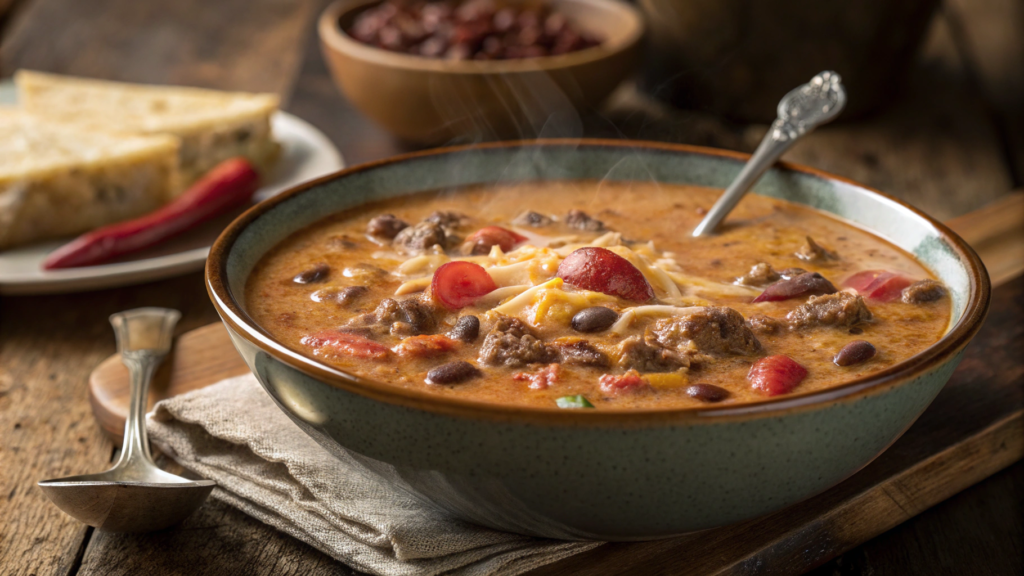
Ground Beef Queso Chili Style Soup became another way for us to use the familiar combination of ground beef, beans, tomatoes, and spices. The ingredients are similar to chili, but this version uses more broth and has a cheesy base.
Ground beef doesn’t need a long simmer, and most of the cooking happens in one pot. That also means noticeably fewer dishes afterward. And that matters too!
Ingredients
For about 6 servings, you’ll need
- 1 pound ground beef (about 450 g)
- 1 can black beans, 15 ounces (about 425 g), rinsed and drained
- 1 can kidney beans, 15 ounces (about 425 g), rinsed and drained
- 1 can crushed tomatoes, 14.5 ounces (about 410 g)
- 1 can tomatoes with green chilies, 10 ounces (about 285 g)
- 3 cups beef broth (about 710 ml)
- 1 medium yellow onion
- 3 garlic cloves
- 1 small jalapeño
- 1 tablespoon tomato paste
- 1½ teaspoons ground cumin
- 1 teaspoon chili powder
- ½ teaspoon smoked paprika
- ½ teaspoon salt
- ¼ teaspoon black pepper
- 4 ounces cream cheese (about 115 g)
- 1½ cups shredded cheddar cheese (about 170 g)
I cook this soup in a heavy pot with a wide bottom because it lets the ground beef brown properly instead of steaming in its own juices.
How to make ground beef queso chili style soup
- Brown the ground beef well. Place a large pot over medium-high heat and add the beef. Break it into small pieces with a spatula and cook for about 6–8 minutes, until the meat has completely changed color and developed some browned spots.
Don’t stir the beef every few seconds. Let it sit against the hot bottom of the pot for a little while. That way, the meat actually browns instead of simply turning gray. If there’s too much fat, leave about 1 tablespoon in the pot and drain the rest. - Add the onion, jalapeño, and garlic. Finely chop the onion and jalapeño. For moderate heat, remove the seeds and pale inner membranes from the pepper. Add everything to the beef and cook for about 4–5 minutes, until the onion softens.
Then add the minced garlic, tomato paste, cumin, chili powder, and smoked paprika. Stir for about 1 more minute. The tomato paste should darken slightly. - Add the tomatoes, beans, and broth. Pour in the crushed tomatoes with their juices, then add the tomatoes with green chilies, both kinds of beans, and the beef broth. Season with salt and black pepper.
Bring the soup to a gentle simmer, then reduce the heat and cook without a strong boil for about 15–20 minutes. During that time, some of the broth will cook down, and the flavor of the spices and tomatoes will become more pronounced. - Make the cheesy base without letting the soup boil hard. Reduce the heat to low. Cut the cream cheese into small pieces and add it to the pot.
Stir until it has completely melted into the broth. Then add the shredded cheddar in small batches, stirring each time. Do not boil the soup after adding the cheese. If the temperature is too high, the cheese can separate from the liquid and leave small grainy bits in the broth. - Check the thickness and heat level. Keep the soup over low heat for another 3–5 minutes, then taste it. If it’s thicker than you want, add ¼–½ cup of broth. If it needs more heat, add a little more chili powder or a few thin slices of fresh jalapeño.
Be careful when adding salt. Cheddar, canned tomatoes, and broth already contain salt, so the flavor can change after the cheese goes in.
Serving. You can add a little shredded cheddar, green onion, fresh jalapeño, or a few crushed tortilla chips to each bowl. Sour cream also works well, especially if the soup turned out hotter than you planned.
After a dinner like this, there isn’t a mountain of dishes left behind. One pot, one cutting board, and a few basic ingredients. That really helps when there’s already plenty to do around the house besides cooking. If a recipe doesn’t require another half hour of cleaning the kitchen afterward, there’s a much better chance we’ll come back to it again.
5. Crockpot thai lemongrass curry soup
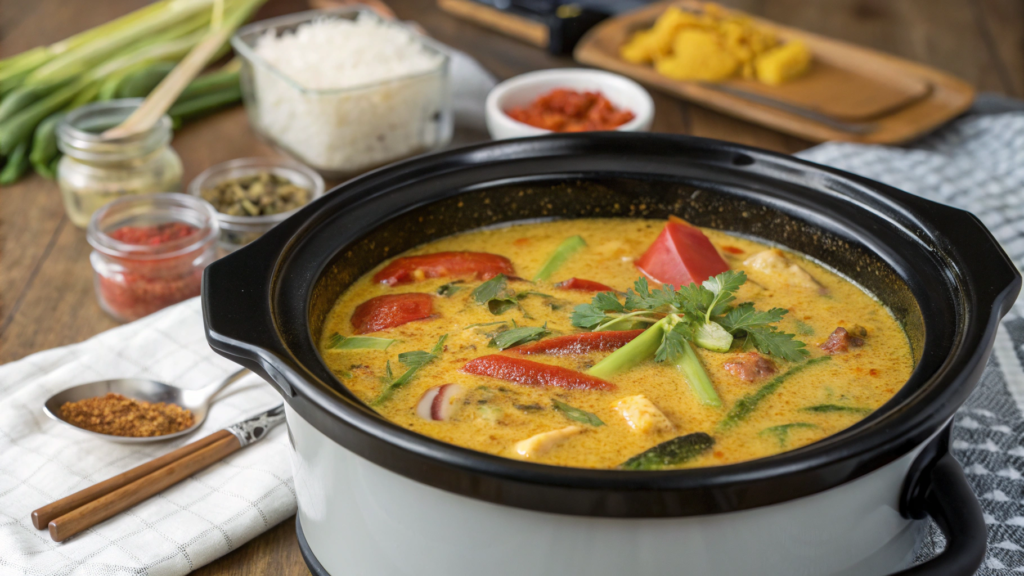
Crockpot Thai Lemongrass Curry Soup came together after a few attempts to make something at home similar to the soups we usually order at Thai restaurants. Of course, this isn’t an attempt to copy a traditional recipe exactly.
It’s more of a homemade version with coconut milk, red curry paste, ginger, and lemongrass that you can make without constantly watching the stove.
Lemongrass confused me a little at first as an ingredient. The stalk looks like something you should just chop up with the rest of the vegetables, but it’s actually much simpler than that. Lightly crush the stalk and add it whole while the soup cooks, then remove it before serving.
Ingredients
For about 6 servings, you’ll need
- 1½ pounds boneless, skinless chicken thighs (about 680 g)
- 2 stalks lemongrass
- 1 can coconut milk, 13.5 ounces (about 400 ml)
- 4 cups chicken broth (about 950 ml)
- 1 red bell pepper
- 8 ounces mushrooms (about 225 g)
- 1 small yellow onion
- 3 garlic cloves
- 1 tablespoon freshly grated ginger
- 2 tablespoons red curry paste
- 1 tablespoon fish sauce
- 1 teaspoon brown sugar
- juice of 1 lime
- ½ teaspoon salt
- fresh cilantro for serving
For this recipe, I use a slow cooker of about 6 quarts.
How to make crockpot thai lemongrass curry soup
- Prepare the lemongrass first. Trim off the dry tops and the bottoms of the stalks, then remove one or two tough outer layers. Lightly crush the remaining pale part with the flat side of a knife in a few places.
There’s no need to cut it. It’s mainly there for aroma, so add the stalk to the soup whole and remove it before serving. - Build the soup base in the slow cooker. Place the chicken thighs on the bottom. Add the chopped onion, minced garlic, ginger, red curry paste, fish sauce, brown sugar, and salt.
Pour in the chicken broth and add the prepared lemongrass stalks. Stir the liquid around the chicken so the curry paste disperses better through the broth. - Cook the chicken until tender. Cover and cook for 5–6 hours on low or about 3 hours on high.
Chicken thighs work better than breast here. After several hours, they become tender without drying out. When the meat pulls apart easily with a fork, transfer it to a plate and break it into large pieces. - Add the mushrooms and bell pepper closer to the end. Slice the mushrooms and cut the red pepper into strips. Add them to the slow cooker about 30–40 minutes before the end of cooking.
Don’t add these vegetables at the beginning. After five or six hours, the mushrooms will shrink too much and the pepper will become too soft. About half an hour is enough for them to cook while still holding their shape. - Add the coconut milk. Once the vegetables are tender but still have some texture, return the chicken to the slow cooker and pour in the can of coconut milk.
Stir and leave it for another 10–15 minutes so the coconut milk warms through and blends into the broth. - Remove the lemongrass and add the lime. Find both stalks and discard them. After several hours of cooking, they’ve already given their aroma to the broth.
Turn off the slow cooker and add the lime juice. Taste the soup. If it needs more salt, start by adding a little more fish sauce, about half a teaspoon at a time. It’s already quite salty, so it’s better to add it gradually.
Serving. Add fresh cilantro and a few lime wedges to each bowl. If your family likes more heat, serve thinly sliced fresh chili on the side so everyone can add it to their own bowl.
Lemongrass now shows up in our kitchen from time to time because of recipes like this. I used to have no idea what to do with those tough stalks. It turned out that one simple trick with a crushed stalk was enough. I usually freeze any leftover lemongrass whole so I don’t have to go looking for it again next time.
6. Fall pumpkin and apple bisque
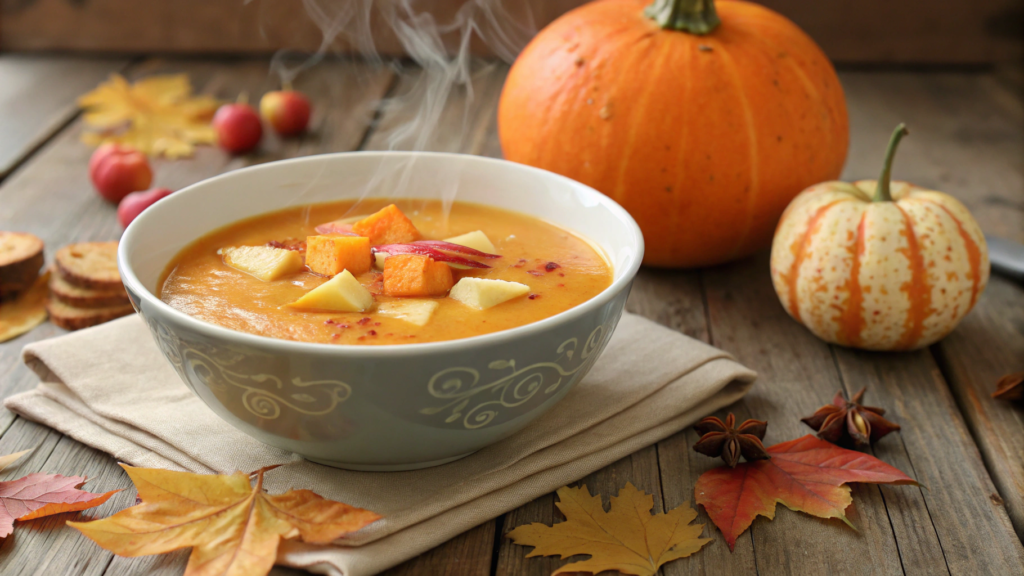
Pumpkin and apple bisque is something I make in the fall, when pumpkins and apples start piling up in the kitchen after harvest. And in this soup, the combination works surprisingly well. The apple doesn’t make it taste like dessert. It simply adds a little natural sweetness and a light tartness.
For this recipe, sugar pumpkin or butternut squash both work well. For the apples, I choose more tart varieties so they balance the natural sweetness of the pumpkin.
Ingredients
For about 5–6 servings, you’ll need
- 2 pounds pumpkin, peeled and cut into cubes (about 900 g)
- 2 medium apples, preferably tart varieties
- 1 medium yellow onion
- 2 garlic cloves
- 4 cups vegetable or chicken broth (about 950 ml)
- 1 cup heavy cream (about 240 ml)
- 2 tablespoons butter
- 1 tablespoon olive oil
- ½ teaspoon ground ginger
- ¼ teaspoon ground nutmeg
- ½ teaspoon salt
- ¼ teaspoon black pepper
- 1 teaspoon apple cider vinegar
For this soup, I use an immersion blender, for example, KitchenAid Variable Speed Corded Hand Blender, so I can blend everything right in the pot.
How to make pumpkin and apple bisque
- Prepare the pumpkin and apples. Peel and seed the pumpkin, then cut it into roughly 1-inch (2.5 cm) cubes. Peel the apples, remove the cores, and cut them into large pieces.
- Sauté the onion until soft. Heat the butter and olive oil in a large pot over medium heat. Add the finely chopped onion and cook for about 5–6 minutes, until it becomes soft and translucent.
Then add the garlic, ginger, and nutmeg. Stir for about 30 seconds so the spices warm up without letting the garlic start to brown. - Add the pumpkin and apples. Transfer them to the pot and stir them together with the onion and spices. Cook for another 3–4 minutes, stirring occasionally.
There’s no need to brown them heavily at this stage. The goal is simply to warm the pumpkin and apples a little before adding the liquid. - Pour in the broth and cook the vegetables until tender. Add 4 cups of broth, the salt, and black pepper. Bring to a boil, then reduce the heat and simmer with the lid slightly open for about 20–25 minutes.
Check the pumpkin with a fork. It should pierce easily without any resistance. The apples will become completely soft during that time. - Blend the soup until smooth. Take the pot off high heat and blend everything thoroughly with an immersion blender.
Don’t stop as soon as the large pieces disappear. Another 30–60 seconds of blending will give the soup a more even consistency. - Add the cream and apple cider vinegar. Pour in the cream and stir. Return the pot to low heat for another 3–5 minutes, until the soup is heated through.
At the very end, add 1 teaspoon of apple cider vinegar and taste. You only need a small amount to help balance the sweetness of the pumpkin and apples. Add more salt or black pepper if needed.
Serving. Pour the soup into bowls. Top with roasted pumpkin seeds, a little freshly ground black pepper, or a few drops of cream. A thick slice of toasted bread or a few small croutons won’t hurt either.
Lindy and I love pumpkin, and in the fall we often cook with what we’ve grown ourselves. Some gets roasted, some goes into baking, and some is stored for later. This soup uses a good piece of pumpkin along with a couple of apples from the garden. I always enjoy watching our harvest gradually turn into everyday homemade food.
7. Easy italian sausage tortellini soup
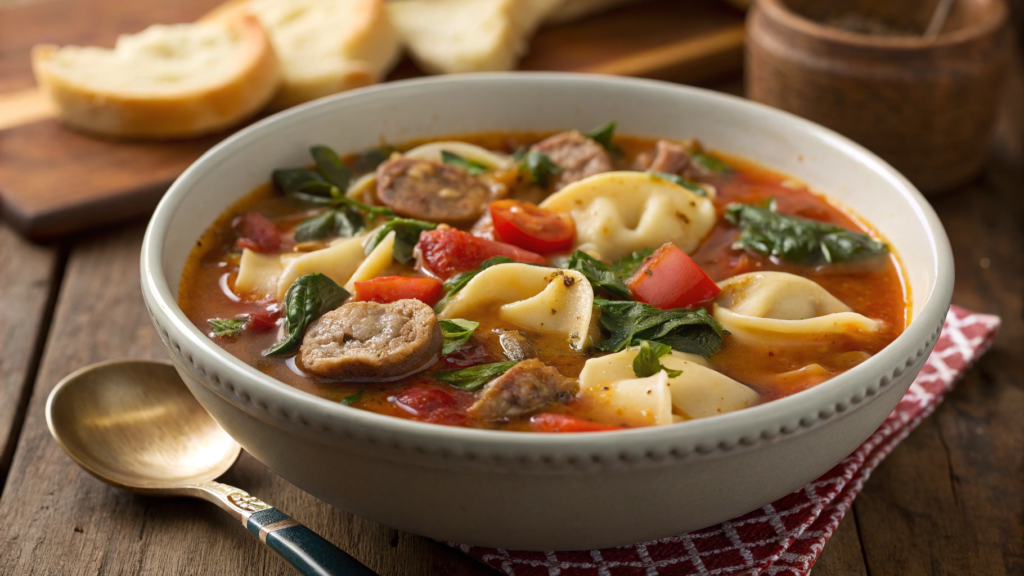
Italian sausage tortellini soup is made with a pretty simple set of ingredients you can easily find at a regular grocery store. Tortellini, Italian sausage, tomatoes, and a little greens all cook in one pot in about half an hour.
Ingredients
For about 6 servings, you’ll need
- 1 pound Italian sausage, casings removed (about 450 g)
- 9 ounces cheese tortellini (about 255 g)
- 1 can crushed tomatoes, 14.5 ounces (about 410 g)
- 5 cups chicken broth (about 1.2 l)
- 1 small yellow onion
- 2 medium carrots
- 2 celery stalks
- 3 garlic cloves
- 2 cups fresh spinach
- 1 tablespoon olive oil
- 1 teaspoon dried oregano
- ½ teaspoon dried basil
- ¼ teaspoon red pepper flakes
- ½ teaspoon salt
- ¼ teaspoon black pepper
- ¼ cup grated Parmesan for serving
For soups with meat and pasta, I use a heavy pot with a wide bottom. It lets me brown the sausage well first and then keep cooking the soup without transferring anything to another pot.
How to make italian sausage tortellini soup
- Brown the sausage. Heat the pot over medium heat, add the olive oil and the sausage meat. Break it into small pieces with a wooden spoon and cook for about 6–8 minutes.
Don’t break the meat up too finely. Small pieces hold up better in the soup and don’t turn into tiny crumbles. Once the sausage is browned, you can drain off the extra fat, leaving about a tablespoon in the pot. - Add the onion, carrots, and celery. Dice the onion, slice the carrots into thin rounds, and cut the celery into slices. Add the vegetables to the meat and cook for about 5–6 minutes, stirring occasionally.
Then add the minced garlic, oregano, basil, and red pepper flakes. Cook for about 30 more seconds, until the garlic starts to smell noticeably fragrant. - Pour in the tomatoes and broth. Add the crushed tomatoes with their juices, chicken broth, salt, and black pepper. Stir well and bring to a boil.
Reduce the heat and simmer for about 12–15 minutes. The carrots should soften but not completely fall apart. - Add the tortellini. Bring the soup back to a gentle simmer and add the tortellini directly to the pot. Cook for as long as the package says. Fresh tortellini usually need about 3–5 minutes, while frozen tortellini may need a little longer.
Check the pasta toward the end of the suggested cooking time. The tortellini will keep softening a little after the heat is turned off while they sit in the hot broth. - Add the spinach at the very end. When the tortellini are almost done, add the fresh spinach and stir. After 1–2 minutes, the leaves will wilt and soften.
Taste the broth after that. The sausage, Parmesan, and prepared broth already contain salt, so it’s better to add more only now rather than earlier.
Serving. Ladle the soup into bowls and top with a little grated Parmesan, freshly ground black pepper, and, if you like, some fresh basil or parsley.
Tortellini never stay in our refrigerator for long. Sometimes we simply boil them and add sauce, and sometimes they end up in a soup like this one. Basically, they’re one of those things that always find a use pretty quickly.
8. Healthy cauliflower chowder
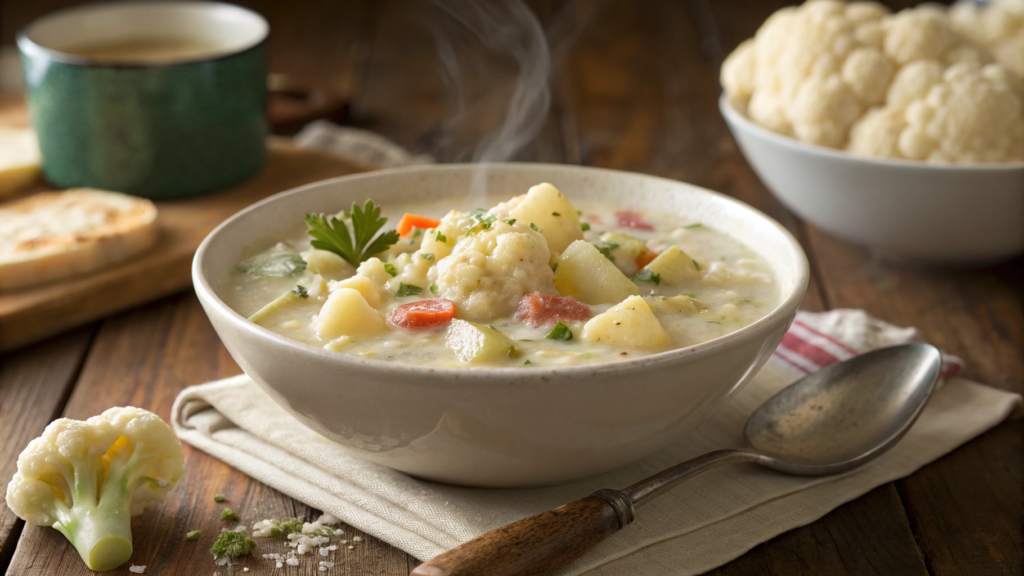
Healthy Cauliflower Chowder became our alternative to heavier soups made with cream and a lot of cheese. Cauliflower gives the soup plenty of body on its own, especially when you blend some of the vegetables and leave the rest in pieces.
Lindy really loves cauliflower, and most of the time we keep it simple, roasting it or adding it to other vegetables. For this soup, I blend some of the cauliflower and potatoes and leave the rest in pieces. That way, the soup stays thick while still keeping the texture of the vegetables.
Ingredients
For about 5–6 servings, you’ll need
- 1 large head cauliflower, about 2 pounds (900 g)
- 1 medium yellow onion
- 2 medium carrots
- 2 celery stalks
- 2 small potatoes, about 12 ounces (340 g)
- 3 garlic cloves
- 4 cups vegetable or chicken broth (about 950 ml)
- 1 cup milk (about 240 ml)
- 2 tablespoons butter
- 1 tablespoon olive oil
- ½ teaspoon dried thyme
- ½ teaspoon salt
- ¼ teaspoon black pepper
- ½ cup shredded cheddar (about 55 g)
- 2 tablespoons chopped green onion for serving
I blend part of the soup right in the pot using an immersion blender.
How to make healthy cauliflower chowder
- Break the cauliflower into small florets. Remove the tough bottom part of the core, then chop the softer parts of the stem and add them to the soup too. Cut the carrots into small cubes, slice the celery, cut the potatoes into roughly ½-inch (1.3 cm) cubes, and finely chop the onion.
Don’t make the florets too large. Some of them will stay whole in the bowl, so the pieces should fit easily on a spoon. - Sauté the onion, carrots, and celery. Heat the butter and olive oil in a large pot over medium heat. Add the vegetables and cook for about 6–7 minutes, stirring occasionally.
Once the onion becomes translucent, add the garlic and thyme. Cook for another 30 seconds, without letting the garlic brown. - Add the potatoes, cauliflower, and broth. Put everything into the pot, season with salt and black pepper, and pour in 4 cups of broth.
Bring to a boil, then reduce the heat and simmer for about 15–18 minutes. The potatoes should pierce easily with a fork, and the cauliflower should be tender without completely falling apart. - Blend only part of the soup. Take the pot off the heat and place the blender into one side of the pot. Use a few short pulses to blend about one-third of the soup.
Then stir. The blended potatoes and cauliflower will thicken the broth, while the remaining vegetables keep their shape. If you accidentally blend too much, you can’t really get that texture back, so it’s better to stop a little early. - Add the milk and cheese. Return the pot to low heat, pour in the milk, and stir. Then add the shredded cheddar in small batches.
Keep the soup on the heat for another 3–5 minutes, until the cheese has completely melted. After adding the milk and cheese, don’t bring the soup to a hard boil. - Check the thickness before serving. Let the soup sit for about 5 minutes after turning off the heat. It will thicken a little as it rests.
If the consistency is too thick, add a little warm broth, starting with ¼ cup. Then taste again and adjust the salt and pepper.
Serving. I usually ladle the soup into bowls and add a little green onion, black pepper, and a pinch of shredded cheddar. And that’s really enough.
As you’ve seen, this recipe doesn’t need a long list of ingredients or complicated prep. I used to make even the simplest dishes more complicated, but these days I’m much more likely to keep only what’s actually needed. And that matters in everyday life, especially when you don’t want to spend the whole evening cooking.
9. Spicy ramen with peanut butter twist

Spicy ramen with peanut butter sounds a little strange until you try adding a spoonful of peanut butter straight into the hot broth. It melts in and makes the broth thicker, while the combination of soy sauce, garlic, ginger, and chili actually makes perfect sense.
Ingredients
For about 2 large servings, you’ll need
- 2 packages ramen noodles, about 3 ounces each (85 g each)
- 4 cups chicken or vegetable broth (about 950 ml)
- 2 tablespoons smooth peanut butter
- 1 tablespoon soy sauce
- 1 teaspoon sesame oil
- 2 garlic cloves
- 1 teaspoon freshly grated ginger
- 1–2 teaspoons hot sauce
- 1 teaspoon brown sugar
- juice of ½ lime
- 4 ounces mushrooms (about 115 g)
- 2 small heads bok choy
- 2 eggs
- 2 green onions
- 1 teaspoon sesame seeds for serving
For this recipe, you need smooth peanut butter, for example, Once Again Organic Creamy Peanut Butter, which dissolves easily in hot broth.
How to make spicy ramen with peanut butter
- Cook the eggs first. Bring a small pot of water to a boil and carefully lower in the eggs. Cook for about 6½–7 minutes if you want the yolks to stay soft. Then transfer the eggs straight into cold water, peel them, and cut them in half.
- Prepare the vegetables. Slice the mushrooms. Cut the bok choy lengthwise in half, or into quarters if the heads are large. Finely chop the garlic and grate the ginger.
Set the green onions aside for now. They’ll go into the bowls right before serving. - Make the broth base. Heat the sesame oil in a pot over medium heat. Add the garlic and ginger and cook for about 30 seconds.
Pour in the broth, then add the soy sauce, hot sauce, and brown sugar. Bring to a gentle simmer. - Add the peanut butter. Pour about ½ cup of the hot broth into a small bowl and mix it with 2 tablespoons of peanut butter until smooth.
Only then pour the mixture back into the pot. This helps the peanut butter blend into the liquid faster without leaving thick lumps in the soup. - Cook the mushrooms and bok choy. Add the mushrooms to the broth and cook for about 3 minutes. Then add the bok choy and cook for another 2 minutes.
Bok choy doesn’t need much time in the pot. The stems should soften slightly, while the leaves only need to wilt in the hot broth. - Add the noodles at the very end. Put the ramen into the pot and cook according to the package directions, usually about 2–3 minutes.
Separate the noodles with tongs as they soften. Turn off the heat as soon as they’re done so they don’t keep overcooking. - Add the lime and check the flavor. Pour in the juice of half a lime and stir. Taste the broth. Add a little soy sauce if it needs more salt, or a few more drops of hot sauce if you want more heat.
Serving. Divide the noodles and vegetables between deep bowls and pour the hot broth over them. Add the egg halves to each serving, then top with green onions and a little sesame.
When Lindy saw me adding peanut butter to ramen, she looked at me with obvious doubt. There are no questions now. And I get it, because for a long time I thought of peanut butter only as something for toast and baking. That’s how one familiar ingredient can change a recipe much more than a long list of spices.
10. Smoky tomato soup with crispy chickpeas
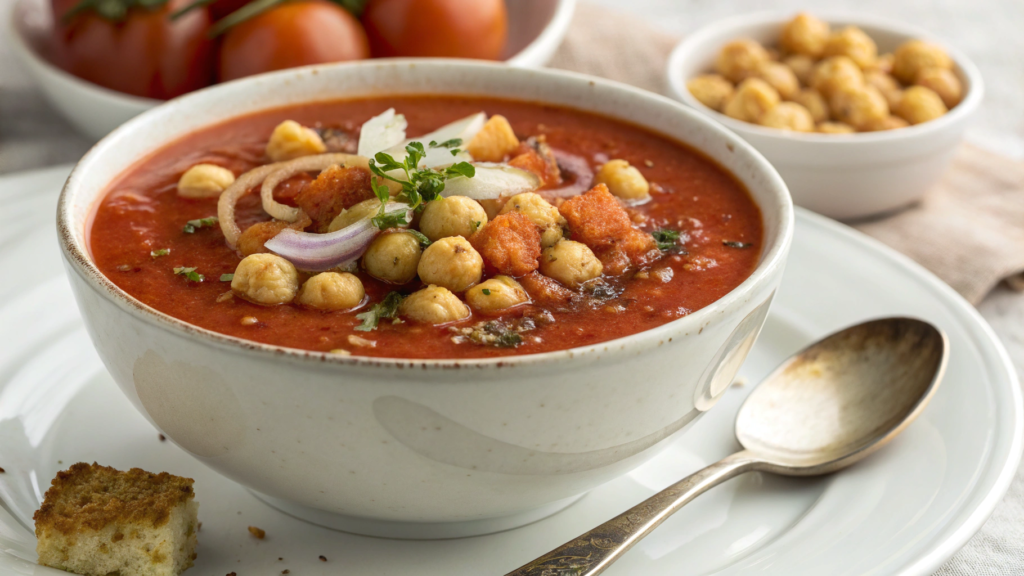
Smoky Tomato Soup with Crispy Chickpeas is something I make without cream or a long list of extra vegetables. Good tomatoes, garlic, and smoked paprika do most of the work here, while the chickpeas are roasted separately and added straight to the bowl.
Ingredients
For about 4–5 servings, you’ll need
- 2 cans whole peeled tomatoes, 28 ounces each (about 800 g each)
- 1 can chickpeas, 15 ounces (about 425 g)
- 1 medium yellow onion
- 4 garlic cloves
- 2 cups vegetable broth (about 475 ml)
- 2 tablespoons olive oil for the soup
- 1 tablespoon olive oil for the chickpeas
- 1½ teaspoons smoked paprika
- ½ teaspoon dried oregano
- ½ teaspoon salt
- ¼ teaspoon black pepper
- ½ teaspoon sugar, only if the tomatoes are too acidic
For blending, I use an immersion blender. It lets you get the texture you want right in the pot without transferring hot liquid into a blender jar.
How to make smoky tomato soup with crispy chickpeas
- Prepare the chickpeas first. Preheat the oven to 425°F (220°C). Drain the can, rinse the chickpeas well, and spread them out on a clean towel.
Dry the chickpeas thoroughly. The less moisture left on the surface, the better they’ll brown. Remove any skins that come off easily, but there’s no need to peel every chickpea. - Roast the chickpeas until crispy. Transfer them to a baking sheet, add 1 tablespoon of olive oil, ½ teaspoon smoked paprika, and a small pinch of salt. Toss everything together and spread the chickpeas out in a single layer.
Roast for 25–30 minutes, shaking the pan once or twice. Check them more often toward the end. The chickpeas should be dry on the outside and nicely browned without starting to burn. - Sauté the onion and garlic. While the chickpeas are in the oven, heat 2 tablespoons of olive oil in a pot. Add the finely chopped onion and cook over medium heat for about 6 minutes.
Once the onion is soft, add the minced garlic, the remaining smoked paprika, and oregano. Stir for about 30 more seconds. - Add the tomatoes and broth. Pour the tomatoes into the pot with their juices and lightly crush them with a spoon. Add the vegetable broth, salt, and black pepper.
Bring the soup to a gentle simmer, then reduce the heat and cook uncovered for about 20 minutes. During that time, the tomatoes will soften and some of the extra liquid will cook off. - Blend the soup. Take the pot off the heat and blend with an immersion blender until smooth. If you prefer a slightly rougher texture, stop earlier and leave a few small pieces of tomato.
Taste the soup after blending. If the tomatoes are really acidic, add ½ teaspoon of sugar. There’s no need to add sugar right away. Different canned tomatoes can vary quite a bit in acidity. - Heat it through once more and check the flavor. Return the pot to low heat for 3–5 minutes. Add more salt or black pepper if needed.
Don’t add the crispy chickpeas to the pot. Leave them on the baking sheet or transfer them to a separate bowl and add them only when serving.
Serving. Ladle the soup into bowls and add a generous amount of crispy chickpeas. You can finish it with a few drops of olive oil and a little freshly ground black pepper.
When we started growing more of our own tomatoes, I realized just how easy it is to find uses for them in the kitchen. Some go into sauces, some get canned, and some we eat straight from the garden. And every now and then, another new way to use tomatoes in the kitchen comes along.
Unexpected soups
When Lindy and I started taking our property more seriously and cooking more with what we grew ourselves, I started paying much more attention to everyday home cooking. Not in the sense of making it more complicated, but actually the opposite. Some of the most memorable things come from completely familiar ingredients when you try doing something just a little differently with them.
Soups give you a lot of freedom in that sense. You can follow a recipe exactly once, then change it a little the next time depending on what ingredients you have at home. That’s how a lot of dishes gradually become “ours.”
If even one of these 10 Cozy Soup Recipes makes you pull out a pot and try a combination that used to sound strange, tell me about it in the comments. Then I’ll know this list was worth putting together.