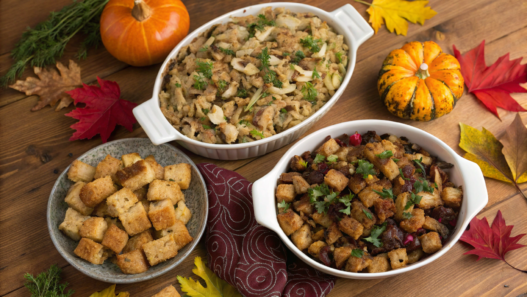

For Thanksgiving, we usually cook so much food that we have leftovers for several days. And I don’t mind one bit! Especially when there’s some delicious turkey stuffing left that we can reheat the next day and serve with homemade gravy.
We don’t go for complicated Thanksgiving recipes. Familiar ingredients, good bread, and fresh herbs are enough. And you can make stuffing separately from the turkey, in the oven, in a skillet, or even in a slow cooker.
Here are 10 easy stuffing recipes for you, including traditional versions and a few unusual combinations. They’re all great for a homemade holiday dinner, and some can be made ahead of time so you have more time for family on Thanksgiving.
1. Cornbread and Sage Stuffing with a Crispy Top

Cornbread and sage stuffing is one of the traditional Thanksgiving side dishes, especially in the Southern United States. Instead of regular bread, it uses cornbread, which turns golden on top when baked while staying soft and soaked with broth inside.
This recipe has a wonderful combination of cornbread, butter, and fresh sage. It’s best to bake the stuffing in a wide baking dish and leave it uncovered toward the end of cooking. That way, you’ll get a delicious crispy top.
Ingredients
Serves 6–8.
- 8 cups cornbread, cut into cubes (about 800 g, depending on the density of the bread)
- ½ cup butter (115 g)
- 1 medium onion, finely chopped
- 2 celery stalks, diced
- 2 tbsp fresh sage, finely chopped, or 2 tsp dried sage
- 2 cups chicken broth (480 ml), plus another ½ cup if needed
- 2 large eggs
- ½ tsp salt
- ¼ tsp black pepper
How to make cornbread and sage stuffing
- Dry out the cornbread. Preheat the oven to 300°F (150°C). Cut the bread into cubes about 1 inch (2.5 cm) in size, spread them on a baking sheet, and dry them in the oven for 15–20 minutes, stirring once. The pieces should be dry on the outside but not burnt. Transfer them to a large bowl and let them cool.
- Sauté the vegetables. Melt 6 tablespoons of butter in a skillet over medium heat. Add the onion and celery and cook for 7–8 minutes, stirring occasionally. Once the vegetables have softened, add the sage and black pepper. Stir and cook for about another minute.
- Combine the ingredients. Add the vegetables and butter to the cornbread. In a separate bowl, whisk the eggs with 2 cups of broth. Gradually pour the mixture over the bread, stirring gently. Make sure the bread is well moistened but doesn’t turn mushy. If there are still dry pieces, add a little more broth. Add salt, keeping in mind how salty the bread and broth already are.
- Prepare the baking dish. Increase the oven temperature to 375°F (190°C). Grease a baking dish, such as a 9×13 Inch Ceramic Baking Dish, with a little of the remaining butter. Transfer the stuffing to the dish and spread it into an even layer without packing it down. Cut the remaining butter into small pieces and arrange them on top.
- Bake until crispy on top. Cover the dish with foil and bake for 20 minutes. Then remove the foil and cook for another 20–25 minutes, until the top turns golden brown and the edges are slightly crispy. Since the stuffing contains raw eggs, the temperature in the center should reach 165°F (74°C). Let the stuffing rest for 5–10 minutes before serving.
Keep in mind that the bread needs to be dried out first. Fresh cornbread gets soggy too easily after you add the broth, especially if it has a soft crumb. For stuffing with sage, onion, and celery, it’s better to use unsweetened cornbread to keep the traditional savory flavor.
On Thanksgiving, I usually serve cornbread and sage stuffing straight from the oven with turkey and homemade gravy, and Lindy asks me to save a little for the next day so she can reheat it in a skillet with a bit of butter. And I get it — those toasted pieces of cornbread are really good!
2. Sausage and apple skillet stuffing for busy nights

A traditional Thanksgiving side dish is, without a doubt, sausage and apple skillet stuffing, made without a baking dish. Everything cooks in one large skillet, and the whole process takes about 35–40 minutes, if the bread is already dried out.
For this recipe, it’s best to use mildly seasoned pork sausage and firm, sweet-tart apples, such as Granny Smith or Honeycrisp. The apples balance out some of the salty flavor of the meat, while the bread cubes soak up the juices released during cooking.
Ingredients
Serves 6.
- ½ lb (225 g) raw pork sausage, casings removed
- 6 cups dried white bread, cut into cubes (about 180–240 g)
- 2 medium apples, diced
- 1 small onion, finely chopped
- 2 celery stalks, chopped
- 3 tbsp butter (42 g)
- 1½ cups chicken broth (360 ml), added gradually
- 1 tsp dried sage
- ½ tsp dried thyme
- ¼ tsp black pepper
- Salt to taste
- 2 tbsp fresh parsley, finely chopped
How to make sausage and apple skillet stuffing
- Prepare the bread. If the bread is still fresh, cut it into cubes about ¾ inch (2 cm) in size and dry them in the oven at 300°F (150°C) for 15–20 minutes. Then let them cool. Dried bread absorbs broth better and holds its shape when stirred.
- Brown the sausage. Get a large, deep 12-inch (30 cm) skillet with a lid. A cast iron skillet, such as a 12 Inch Cast Iron Skillet, will also work. Remove the sausage meat from its casings and cook over medium heat for about 7–9 minutes, breaking it into small pieces with a spatula. The meat should be fully cooked and lightly browned. Transfer it to a plate, leaving about a tablespoon of rendered fat in the skillet.
- Cook the vegetables and apples. Add the butter, chopped onion, and celery. Cook for about 5 minutes, until the vegetables start to soften. Then add the apples, sage, and thyme. Continue cooking for another 3–4 minutes. The apples should soften a little but still hold their shape.
- Add the bread and broth. Return the meat to the skillet, add the bread cubes, and stir gently. Gradually pour in about 1 cup of warm broth. Wait for the bread to absorb the liquid, then add a little more if the mixture seems dry. Season with salt to taste and add the black pepper.
- Finish cooking the stuffing. Reduce the heat to low, cover the skillet with a lid, and cook for 8–10 minutes. If the stuffing starts to burn on the bottom, add a couple of tablespoons of broth. For food safety, check that the temperature in the center of the stuffing reaches 165°F (74°C) before serving. Remove the lid, sprinkle with parsley, and let it rest for a few minutes.
A few tips. You can leave the skins on the apples in this recipe if they’re thin. This helps the pieces hold their shape instead of turning mushy. And if the sausage already contains salt, sage, or other seasonings, taste the cooked meat first before adding more seasoning.
In the fall, we always have plenty of apples at home, and we use some of them not just in pies but in meat dishes too. The combination of pork, apples, and fragrant herbs fits right into a holiday dinner menu. And just as importantly, the oven stays free for the turkey.
3. Vegetarian mushroom and herb stuffing made simple

On Thanksgiving, people with different food preferences often gather around the same table, and some of your guests may be vegetarians. For them, you can make vegetarian mushroom and herb stuffing without meat. The mushrooms give the dish a rich flavor, while thyme, rosemary, and parsley make it fragrant.
Regular button mushrooms or cremini mushrooms work well for this recipe. They’re easy to find at the grocery store and don’t require much preparation. The main thing is to sauté the mushrooms well before baking so the excess moisture evaporates and the bread doesn’t get too soggy.
Ingredients
Serves 6–8.
- 8 cups white bread, cut into cubes (about 250–300 g)
- 1 lb button mushrooms or cremini mushrooms (450 g), sliced
- 1 medium onion, finely chopped
- 2 celery stalks, diced
- 3 garlic cloves, minced
- 4 tbsp butter (56 g)
- 2 tbsp olive oil
- 2 cups vegetable broth (480 ml), added gradually
- 1 tbsp fresh thyme, finely chopped
- 1 tsp fresh rosemary, chopped
- ¼ cup fresh parsley, chopped
- ½ tsp salt
- ¼ tsp black pepper
How to make vegetarian mushroom stuffing
- Dry out the bread. Preheat the oven to 300°F (150°C). Cut the bread into cubes about 1 inch (2.5 cm) in size and spread them on a baking sheet. Dry them in the oven for 15–20 minutes, stirring once. The bread should be dry but not too dark. Transfer it to a large bowl.
- Sauté the mushrooms. Heat the olive oil in a large skillet over medium to medium-high heat. Add the sliced mushrooms and cook for 8–10 minutes, stirring occasionally. The mushrooms will release liquid at first, then it will gradually evaporate, and the pieces will start to brown. Transfer the cooked mushrooms to the bowl with the bread.
- Cook the vegetables and herbs. Reduce the heat to medium and melt 3 tablespoons of butter in the same skillet. Add the onion and celery and sauté for 5–7 minutes until softened. Then add the garlic, thyme, and rosemary. Stir and cook for about another minute. Transfer everything to the bowl with the bread and mushrooms, then add the parsley.
- Mix the stuffing. Gradually pour in 1½ cups of vegetable broth, gently stirring the ingredients. The bread should absorb the liquid without falling apart. If the mixture still seems dry, add the remaining broth in small amounts. Season with salt and pepper.
- Bake in the oven. Increase the temperature to 375°F (190°C). Grease a 9 × 13-inch (23 × 33 cm) baking dish with the remaining butter and add the stuffing. Cover with foil and bake for 20 minutes, then remove the foil and continue baking for another 15–20 minutes until golden brown on top. Check that the stuffing is heated through to 165°F (74°C) in the center. Let it rest for about 5 minutes before serving.
Tip. It’s better to sauté the mushrooms in small batches if your skillet isn’t wide enough. When there are too many mushrooms in the pan, they start steaming in their own juices instead of browning. That’s why it’s better to use a wide skillet for this recipe.
In our homemade recipes, mushrooms often replace meat, and they do a great job here too, especially when there are vegetarians at the holiday table. This stuffing can easily sit alongside traditional meat dishes, and any leftovers can be reheated in the oven the next day to get the bread slightly browned again.
4. Crockpot sausage and cornbread stuffing for easy hosting

When you need to prepare several dishes for Thanksgiving, a slow cooker can be a huge help. Especially when the oven is constantly busy with other dishes. You can also make sausage and cornbread stuffing in a slow cooker. It turns out soft, moist, and soaks up the meat broth really well.
This recipe uses pork sausage, cornbread, celery, and sage. Prep takes about 20–25 minutes, and after that, the stuffing cooks with hardly any work on your part. Just don’t expect a crispy top like you’d get from baking it in the oven. In a slow cooker, the bread stays softer.
Ingredients
Serves 8.
- 8 cups unsweetened cornbread, dried out and cut into cubes (about 700–800 g)
- 1 lb (450 g) raw pork sausage, casings removed
- 1 medium onion, finely chopped
- 2 celery stalks, diced
- 4 tbsp butter (56 g)
- 2–2½ cups chicken broth (480–600 ml)
- 1 tbsp fresh sage, finely chopped
- 1 tsp dried thyme
- 2 tbsp fresh parsley, chopped
- ½ tsp black pepper
- Salt to taste
How to make sausage and cornbread stuffing in a slow cooker
- Prepare the cornbread. Cut it into cubes about 1 inch (2.5 cm) in size. If the bread is fresh, dry the pieces in the oven at 300°F (150°C) for about 15–20 minutes. I usually check the bread with my hands. It should feel dry on the outside, but not so hard that it crumbles every time you touch it.
- Brown the sausage. Remove the casings and put the sausage meat in a large skillet. Cook over medium heat for 8–10 minutes, breaking the meat into pieces with a spatula. The meat should be fully cooked and lightly browned. If there’s a lot of fat in the skillet, drain off the excess, leaving about one tablespoon.
- Add the vegetables and herbs. Add 3 tablespoons of butter, the onion, and celery to the skillet. Sauté for 5–7 minutes, until the vegetables soften. Then add the sage, thyme, and black pepper, stir, and cook for another minute. I try to chop fresh sage right before cooking so it doesn’t lose its aroma.
- Mix the stuffing. Transfer the bread and sausage with vegetables to a large bowl. Add the parsley and gradually pour in 2 cups of warm chicken broth. Stir gently. If the bread is still dry, add a little more broth. The mixture should be well moistened, but there shouldn’t be any liquid pooling at the bottom of the bowl. Taste the cooked sausage and vegetables before mixing everything together, and keep their saltiness in mind.
- Cook the stuffing. Grease the insert of a 6 Quart Programmable Slow Cooker (about 5.7 L) with the remaining butter. Transfer the stuffing to the insert without packing it down, filling it no more than two-thirds full. Cover and cook on HIGH for 1 hour, then switch to LOW for another 2–3 hours. Avoid opening the lid unless necessary.
- Check for doneness. The stuffing should be heated through to 165°F (74°C) in the center. Cooking time may vary slightly depending on your slow cooker and the density of the bread. Before serving, gently fluff the top layer with a fork and sprinkle with fresh parsley.
Tip. Don’t add all the broth at once. Cornbread can vary in density and absorb liquid differently. Plus, very little moisture evaporates in a covered slow cooker, so too much broth can make the stuffing overly wet and mushy.
For Thanksgiving, I try to plan ahead and divide the dishes between the oven, stovetop, and slow cooker. Otherwise, by lunchtime, there’s simply not enough room for all the pots and baking dishes.
Sausage and cornbread stuffing is especially convenient to make this way. While the stuffing cooks in the slow cooker, you can take care of the other holiday dishes without rushing.
5. Parmesan Garlic Stuffing with Fresh Thyme

This Parmesan garlic stuffing with fresh thyme has no meat or fruit, but it does have a generous amount of grated cheese that forms a delicious golden crust when baked, while the garlic and fresh thyme give the bread a lovely aroma.
For this recipe, it’s best to use a French baguette or Italian white bread with a firm crumb. This kind of bread absorbs broth well and holds its shape during baking. I recommend grating the Parmesan yourself, since pre-grated cheese from a package may contain additives that keep it from melting evenly.
Ingredients
Serves 6–8.
- 8 cups white bread, cut into cubes (about 250–300 g)
- ¾ cup grated Parmesan cheese (about 75 g)
- 4 garlic cloves, minced
- 1 medium onion, finely chopped
- 2 celery stalks, diced
- 5 tbsp butter (70 g)
- 1½–2 cups chicken broth (360–480 ml)
- 1½ tbsp fresh thyme, finely chopped
- 2 tbsp fresh parsley, chopped
- ¼ tsp black pepper
- Salt to taste
How to make Parmesan garlic stuffing with fresh thyme
- Prepare the bread. Preheat the oven to 300°F (150°C). Cut the bread into cubes about 1 inch (2.5 cm) in size, spread them on a baking sheet, and dry them in the oven for 15–20 minutes, stirring once. The pieces should dry out but not brown too much. Transfer them to a large bowl.
- Sauté the vegetables. Melt 4 tablespoons of butter in a skillet over medium heat. Add the onion and celery and cook for 6–8 minutes until softened. Then add the minced garlic and fresh thyme. Stir and sauté for about another minute. I try not to cook the garlic for too long, since it can turn bitter and overpower the aroma of the thyme.
- Add the Parmesan and broth. Transfer the vegetables to the bowl with the dried bread. Add ½ cup of Parmesan, parsley, and black pepper. Gradually pour in 1½ cups of warm chicken broth, stirring gently. If the bread still seems a little dry, add some more liquid. Taste the mixture and add salt if needed. Keep in mind that the Parmesan and broth already contain salt.
- Prepare the baking dish. Increase the oven temperature to 375°F (190°C). Grease a 9 × 13-inch (23 × 33 cm) baking dish with the remaining butter. Add the bread mixture and spread it evenly. Sprinkle the remaining ¼ cup of Parmesan on top.
- Bake until golden brown. Cover the dish with foil and bake for 20 minutes. Then remove the foil and bake for another 15–20 minutes, until the cheese on top is golden brown and the edges of the bread are slightly crispy. Check that the stuffing reaches 165°F (74°C) in the center. Let it rest for 5 minutes before serving.
Tip. Don’t replace fresh thyme with a large amount of dried thyme. Dried herbs have a more concentrated flavor, so instead of 1½ tablespoons of fresh thyme, about 1½ teaspoons of dried thyme will be enough.
I usually serve Parmesan garlic stuffing with roasted vegetables or a simple green salad, since it’s pretty filling on its own. And there’s no need to transfer it to a separate serving dish. You can bring it to the table right in a nice baking dish, placed on a trivet. That way, everyone can help themselves, and I’ll have fewer dishes to wash after Thanksgiving dinner.
6. Apple Pecan Stuffing with Sweet and Savory Balance

Apples and pecans often show up in American holiday recipes, and you can easily combine them in one bread stuffing. The apples add a little sweetness and moisture, while the toasted nuts give it a nice crunch. Together with onion, celery, and sage, you get an interesting balance of sweet and savory flavors.
Honeycrisp or Granny Smith apples work best for this recipe. They’re firm enough to hold their shape and won’t turn mushy during baking. It’s best to use unsalted pecans. We often buy them whole and chop them right before cooking so the pieces don’t end up too small.
Ingredients
Serves 6–8.
- 8 cups white bread, cut into cubes (about 250–300 g)
- 2 medium apples (about 350 g), diced
- ¾ cup pecans (about 80 g), roughly chopped
- 1 medium onion, finely chopped
- 2 celery stalks, diced
- 5 tbsp butter (70 g)
- 1½–2 cups chicken broth (360–480 ml)
- 1 tsp dried sage
- 1 tsp fresh thyme, finely chopped
- 2 tbsp fresh parsley
- ½ tsp salt
- ¼ tsp black pepper
How to make apple pecan stuffing
- Dry out the bread. Preheat the oven to 300°F (150°C). Cut the bread into cubes about 1 inch (2.5 cm) in size, spread them on a baking sheet, and dry them in the oven for 15–20 minutes, stirring once. The bread should dry out but not get too dark. Transfer it to a large bowl.
- Toast the pecans. Add the pecans to a dry skillet and toast over medium-low heat for 3–5 minutes, stirring occasionally. Once they start to smell nutty, remove the skillet from the heat. Don’t leave the nuts unattended, since they can burn quickly. Let them cool a little.
- Cook the vegetables and apples. Melt 4 tablespoons of butter over medium heat. Add the onion and celery and sauté for 5–6 minutes until softened. Then add the diced apples, sage, and thyme. Cook for another 3–4 minutes, stirring gently. I usually leave the thin skins on the apples to help the pieces hold their shape. But that’s a matter of preference.
- Combine the ingredients. Add the vegetables and apples to the bread, along with the toasted pecans and parsley. Gradually pour in 1½ cups of warm chicken broth and stir gently. If the bread is still dry, add a little of the remaining broth. Season with salt and pepper, but remember that the broth is already salty.
- Bake the stuffing. Increase the oven temperature to 375°F (190°C). Grease a 9 × 13-inch (23 × 33 cm) baking dish with the remaining butter. Transfer the mixture to the dish, cover with foil, and bake for 20 minutes. Then remove the foil and cook for another 15–20 minutes, until the top is golden brown. The stuffing should reach 165°F (74°C) in the center. Let it rest for 5 minutes before serving.
Tip. Don’t cut the apples too small. Cubes about ½ inch (1.3 cm) in size will hold their shape and still be noticeable in the finished stuffing. You can use a regular knife to chop the nuts, but a manual food chopper will work too. Just don’t chop the pecans into fine crumbs.
We often use our fall apple harvest for more than just pies and preserves. In this stuffing, the apples go really well with toasted pecans, while the sage and celery keep the dish from getting too sweet. Served with turkey and traditional gravy, this stuffing adds a little variety to the usual Thanksgiving menu.
7. Classic Thanksgiving Stuffing with a Twist of Rosemary Butter

Most families have their own favorite recipe for classic Thanksgiving stuffing. It usually includes white bread, onion, celery, butter, and fragrant herbs. I suggest changing up the usual version a little and making stuffing with rosemary butter. To make it, fresh rosemary is gently heated in melted butter, which is then used to sauté the vegetables and soak into the bread.
I think this method is much more interesting than simply adding dried herbs at the end of cooking. You only need a little rosemary, though. It has quite a strong aroma that shouldn’t overpower the other ingredients.
Ingredients
Serves 6–8.
- 8 cups white bread, cut into cubes (about 250–300 g)
- ½ cup butter (115 g)
- 2 sprigs fresh rosemary
- 1 medium onion, finely chopped
- 3 celery stalks, diced
- 2 garlic cloves, minced
- 1½–2 cups chicken broth (360–480 ml)
- 1 tsp dried sage
- 2 tbsp fresh parsley, finely chopped
- 2 large eggs
- ½ tsp salt
- ¼ tsp black pepper
How to make classic Thanksgiving stuffing with rosemary butter
- Dry out the bread. Preheat the oven to 300°F (150°C). Cut the bread into cubes about 1 inch (2.5 cm) in size, spread them on a baking sheet, and dry them in the oven for 15–20 minutes, stirring once. The bread should be dry on the outside but not too browned. Transfer it to a large bowl.
- Make the rosemary butter. Melt the butter in a small saucepan over low heat. Add two sprigs of fresh rosemary and gently heat for 3–4 minutes, without letting the butter boil vigorously. Then remove the saucepan from the heat and let it sit for another 5 minutes. Remove the sprigs. I usually press the rosemary gently against the side of the saucepan with a spoon before taking it out to give the butter more flavor. Just don’t overheat it, or the butter may start to burn.
- Sauté the vegetables. Pour about ⅔ of the rosemary butter into a skillet, then add the onion and celery. Cook over medium heat for 6–8 minutes, stirring occasionally. Once the vegetables have softened, add the garlic and sage. Sauté for about another minute and remove from the heat.
- Combine the ingredients. Add the vegetables and butter to the dried bread, along with the parsley and black pepper. In a separate bowl, whisk the eggs with 1½ cups of chicken broth. Gradually pour the mixture over the bread, stirring gently. If there are still dry pieces, add a little of the remaining broth. Season with salt, keeping in mind how salty the broth already is.
- Prepare the baking dish and bake. Increase the oven temperature to 375°F (190°C). Grease a 9 × 13-inch (23 × 33 cm) baking dish with a little of the remaining rosemary butter. Transfer the stuffing to the dish, spread it into an even layer, and drizzle the rest of the butter over the top.
Cover with foil and bake for 25 minutes, then remove the foil and bake for another 15–20 minutes, until the top is golden brown. Since the stuffing contains raw eggs, check that it reaches 165°F (74°C) in the center. Let it rest for 5–10 minutes before serving.
Tip. For rosemary butter, it’s better to use whole fresh sprigs rather than finely chopped leaves. That way, the butter picks up the rosemary flavor without leaving tough little pieces of herbs in the finished stuffing.
As you’ve probably noticed, you don’t need to change much in the usual classic Thanksgiving stuffing recipe. But the rosemary butter gives it a slightly different flavor. I sometimes use the same method for roasted potatoes and vegetables, too. And I serve the stuffing with turkey, mashed potatoes, and homemade gravy.
8. Easy Stove Top Upgrade Using Fresh Celery and Onions

There isn’t always time to make everything from scratch, especially before Thanksgiving. I’ll admit, I sometimes use boxed mixes, but I try to add fresh ingredients to them. For example, you can make a regular boxed stuffing mix taste much better by adding sautéed onion, celery, and a little butter.
Ingredients
Serves 6.
- 1 package boxed stuffing mix (6 oz / 170 g), such as Stove Top Stuffing Mix for Turkey
- 1 medium onion, finely chopped
- 2 stalks fresh celery, diced
- 4 tbsp butter (56 g)
- 1½ cups water or chicken broth (360 ml)
- 1 tbsp fresh parsley, chopped
- ¼ tsp black pepper
How to make Stove Top stuffing with fresh celery and onions
- Prepare the vegetables. Peel the onion and cut it into small cubes. Wash the celery and cut it into pieces about ¼ inch (0.6 cm) in size. Try not to leave the pieces too large, since the stuffing cooks pretty quickly.
- Sauté the onion and celery. Melt the butter in a heavy-bottomed saucepan over medium heat. Add the vegetables and cook for 6–8 minutes, stirring occasionally, until the onion becomes translucent and the celery softens a little. I sometimes like to leave the celery slightly crunchy, so I don’t cook it for too long.
- Add the liquid. Pour 1½ cups of water or chicken broth into the saucepan, add the black pepper, and bring to a boil. If you’re using a seasoned stuffing mix, there’s no need to add extra salt just yet. These mixes usually already contain enough salt.
- Make the stuffing. Remove the saucepan from the heat, pour in the contents of the package, and stir gently so the bread absorbs the liquid evenly. Cover with a lid and let it sit for 5 minutes. During this time, the dried bread pieces will absorb the broth and become soft.
- Finish the stuffing. Remove the lid and gently fluff the stuffing with a fork. Add the fresh parsley and stir again. I usually add a little more pepper.
Tip. If you’re using chicken broth instead of water, choose a low-sodium version, since the stuffing mix already contains seasonings. Check the package instructions for the amount of liquid to use.
Lindy likes the celery in her stuffing really soft, while I prefer it with a little crunch. So we have to find a compromise. But there’s one thing we definitely agree on — Stove Top stuffing with fresh celery and onions is best served hot, with turkey, mashed potatoes, and homemade gravy.
9. Sourdough Walnut Stuffing That Feels Gourmet

For this stuffing, it’s best to use sourdough bread with a firm crust and a slightly tangy flavor. It’s noticeably different from regular white bread, and when combined with toasted walnuts, butter, and fresh herbs, it makes a wonderful holiday side dish.
It’s best not to chop the walnuts too finely for this recipe. Leave some small pieces that will add a nice crunch to the soft bread. As for herbs, I prefer fresh thyme and parsley. They don’t overpower the flavor of the sourdough bread.
Ingredients
Serves 6–8.
- 8 cups sourdough bread, cut into cubes (about 300–350 g)
- ¾ cup walnuts (about 85 g), roughly chopped
- 1 medium onion, finely chopped
- 2 celery stalks, diced
- 2 garlic cloves, minced
- 5 tbsp butter (70 g)
- 1½–2 cups chicken broth (360–480 ml)
- 1 tbsp fresh thyme, finely chopped
- ¼ cup fresh parsley, chopped
- 1 tsp dried sage
- 2 large eggs
- ½ tsp salt
- ¼ tsp black pepper
How to make sourdough walnut stuffing
- Dry out the bread. Preheat the oven to 300°F (150°C). Cut the bread into cubes about 1 inch (2.5 cm) in size, spread them on a baking sheet, and dry them in the oven for 15–20 minutes, stirring once. Sourdough bread often has a pretty firm crust, so check not only the edges but also the centers of the cubes. They should be dry enough to absorb the broth later. Transfer the bread to a large bowl.
- Toast the walnuts. Add the walnuts to a dry skillet and toast over medium-low heat for 3–5 minutes, stirring occasionally. As soon as they start to smell nutty, remove the skillet from the heat. I usually transfer them straight to a plate, since nuts continue to toast in a hot skillet and can burn.
- Cook the vegetables and herbs. Melt 4 tablespoons of butter in a large skillet. Add the onion and celery and sauté for 6–8 minutes, until softened. Then add the garlic, thyme, and sage. Cook for about another minute, stirring, and remove from the heat.
- Mix the stuffing. Add the sautéed vegetables, walnuts, and parsley to the bread. In a separate bowl, whisk the eggs with 1½ cups of chicken broth. Gradually pour the mixture over the bread, stirring gently. If some pieces are still dry, add a little more broth. Season with salt and pepper. Sourdough bread can vary in density, so the amount of liquid needed may be slightly different.
- Bake until golden brown. Increase the oven temperature to 375°F (190°C). Grease a 9 × 13-inch (23 × 33 cm) baking dish with the remaining butter. Add the stuffing, spread it evenly, and cover with foil.
Bake for 25 minutes, then remove the foil and cook for another 15–20 minutes, until the top is golden brown. Since the stuffing contains raw eggs, check that the temperature in the center reaches 165°F (74°C). Let the stuffing rest for 5–10 minutes before serving.
Tip. For this dish, choose sourdough bread without added seeds, dried fruit, or other mix-ins. That way, the flavors of the walnuts and herbs will stand out more.
When we bake sourdough bread, we often don’t manage to finish the whole loaf while it’s still fresh. The leftover bread can be dried out and turned into a great holiday stuffing. I think its slight tanginess goes really well with walnuts and fresh herbs.
The result is a lovely side dish you can serve with turkey and mushroom gravy, although it’s also really good with roasted vegetables.
10. Simple Cranberry Stuffing with a Hint of Orange Peel

Cranberries and orange zest often show up in holiday dishes for Thanksgiving. Sweet and tart cranberries pair wonderfully with soft bread, butter, and sage, while a little orange zest gives the stuffing a fresh citrus aroma.
I use dried cranberries because they don’t release much juice during baking and add a nice sweetness. You only need a little orange zest, though, or its flavor will be too strong.
Ingredients
Serves 6–8.
- 8 cups white bread, cut into cubes (about 250–300 g)
- ¾ cup dried cranberries (about 90 g)
- 1 tsp fresh orange zest, finely grated
- 1 medium onion, finely chopped
- 2 celery stalks, diced
- 5 tbsp butter (70 g)
- 1½–2 cups chicken broth (360–480 ml)
- 1 tsp dried sage
- 1 tsp fresh thyme, finely chopped
- 2 tbsp fresh parsley, chopped
- 2 large eggs
- ¼ tsp black pepper
- Salt to taste
How to make cranberry stuffing with orange zest
- Dry out the bread. Preheat the oven to 300°F (150°C). Cut the bread into cubes about 1 inch (2.5 cm) in size, spread them on a baking sheet, and dry them in the oven for 15–20 minutes, stirring once. The pieces should be dry on the outside but not burnt. Transfer them to a large bowl and let them cool a little.
- Prepare the cranberries and orange. Wash the orange and finely grate about 1 teaspoon of zest, removing only the orange outer layer of the peel. Try to avoid the white part, since it’s bitter. I zest the orange right before cooking to preserve its aroma. Sort through the dried cranberries and cut any particularly large ones in half.
- Sauté the vegetables. Melt 4 tablespoons of butter in a skillet over medium heat. Add the onion and celery and cook for 6–8 minutes, stirring occasionally. Once the vegetables are soft, add the sage and thyme. Stir, cook for about another minute, and remove from the heat.
- Mix the stuffing. Add the sautéed vegetables, cranberries, orange zest, and parsley to the bread. In a separate bowl, whisk the eggs with 1½ cups of chicken broth. Gradually pour the mixture over the bread, stirring gently so all the pieces absorb the liquid. If needed, I add the remaining broth a little at a time. Season with salt and black pepper.
- Bake until golden brown. Increase the oven temperature to 375°F (190°C). Grease a 9 × 13-inch (23 × 33 cm) baking dish with the remaining butter. Spread the stuffing in an even layer, cover with foil, and bake for 25 minutes. Then remove the foil and cook for another 15–20 minutes, until the top is golden brown. Check that the stuffing reaches 165°F (74°C) in the center. Let it rest for 5–10 minutes before serving.
Tip. Don’t replace dried cranberries with the same amount of fresh ones. Fresh cranberries are much more tart and release juice when heated, so the flavor and texture of the stuffing will change.
At our house, cranberries usually appear on the holiday table as a sauce for turkey. But as you can see, you can also use them in the bread stuffing itself. This recipe doesn’t require much preparation, and most of the ingredients are usually already in the kitchen before Thanksgiving.
Your special stuffing
No matter how many new recipes come along for Thanksgiving, some dishes still find their way back to the table year after year. I think many of us have family traditions like that.
I hope you found something for your holiday menu among these 10 stuffing recipes. You don’t have to make the same thing every year, although there’s no reason to give up your favorite family recipes either!
What Thanksgiving stuffing traditionally appears on your table? Do you cook it inside the turkey or bake it separately? Maybe your family has a special ingredient you’ve been adding for years? Share it in the comments! I’d love to hear about your recipes and little family secrets.