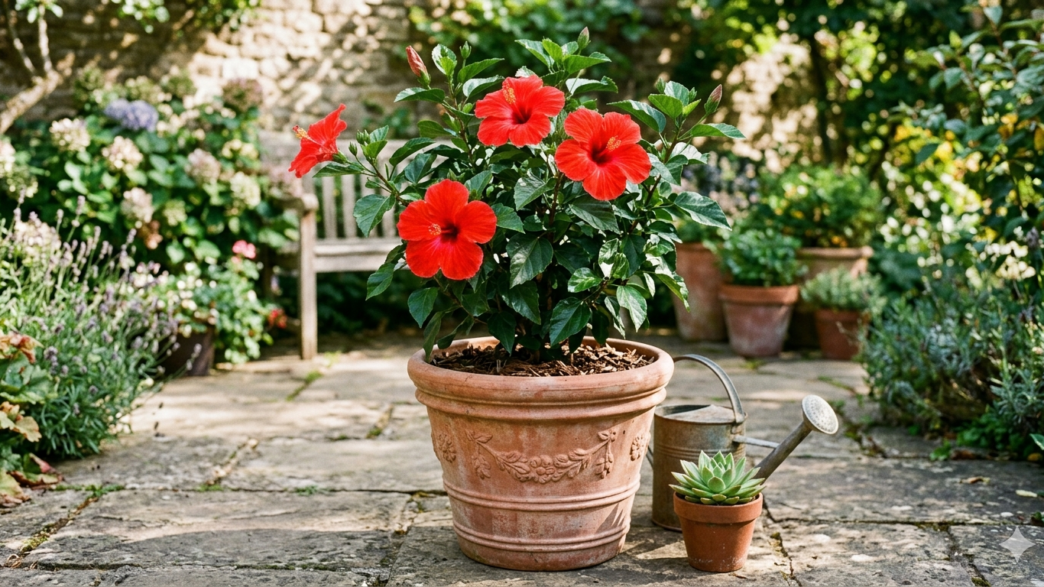
Hibiscus can look perfect — dense leaves, active growth, everything alive — but still not give a single flower. And this state is what confuses the most. It feels like you’re doing everything right, but there’s no result.
Here we’ll try to figure out, without unnecessary complexity, what exactly is stopping hibiscus from blooming. We’ll go through the key reasons that most often go unnoticed: from light and temperature to roots and fertilizers. Most of the time, the problem is not one thing, but several small ones that just added up together. And when you start seeing this whole picture, everything becomes much easier.
And I hope you’ll understand where the problem is exactly in your case, so you don’t waste time on random attempts.
1. Understanding Why Hibiscus Stop Blooming
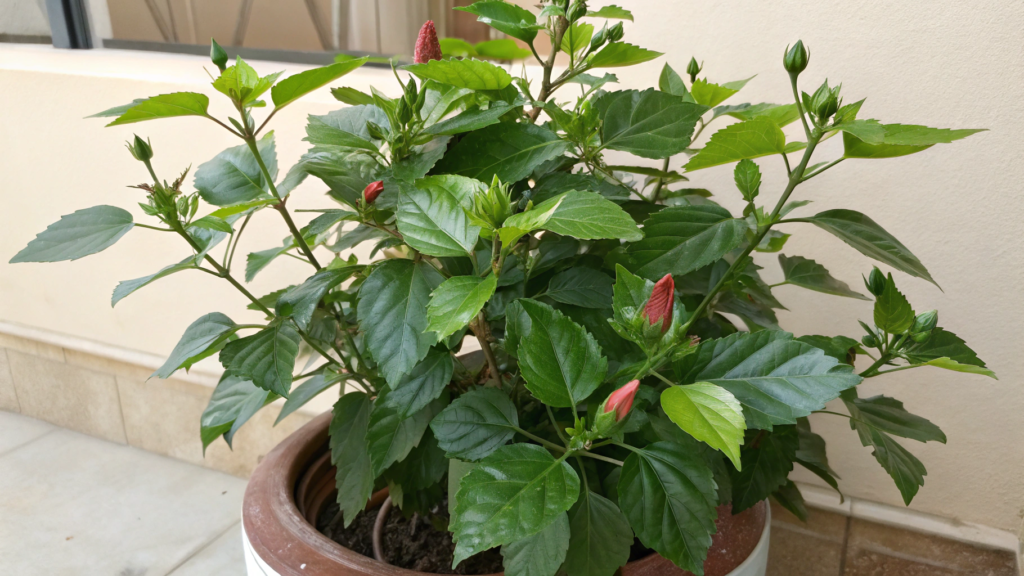
Hibiscus doesn’t bloom — leaves are there, the bush looks healthy, but no buds at all. How do you understand where exactly the issue is?
Blooming is a serious load for a plant. It spends a lot of energy on it, and if it feels like conditions are not enough, it simply switches to survival or growth.
Most often, the reason is in one of three directions: either the plant lacks resources, or it goes into active growth instead of blooming, or it doesn’t get the right signal from outside — light, temperature, season.
How It Looks in Real Life
The most misleading thing — the plant can look absolutely normal. Here’s what usually raises concern:
- the bush grows actively, but without buds
- leaves are dense, насыщенные, but everything “goes into green”
- buds appear and quickly fall off
- the feeling that the plant is “stuck” in one state
You start adding fertilizers, watering more often… and it only gets worse.
What You’ll Need
To not act blindly, it’s better to gather a basic minimum:
- Soil Moisture Meter for Plants — helps actually understand how much moisture is in the soil, instead of guessing
- regular pruners — if you need to slightly adjust the shape
- notes in your phone or a notebook — to track changes (this really helps not get confused)
How to Figure Out the Cause (Step by Step)
- First, just look at the growth pattern.
If hibiscus is actively stretching upward, giving new shoots, leaves are large and rich — this is often a sign that it went into vegetative growth. This happens when there is too much nitrogen. The plant literally “decides” it’s more beneficial to grow mass instead of blooming. From the outside everything looks normal… but there will be no flowers. - Then remember if there was any stress.
Sometimes the reason is not in the current state, but in what happened earlier. You moved the pot, weather changed резко, you dried it out, then overwatered — and that’s it. Hibiscus remembers this. It doesn’t react immediately, but after a week or two it can completely stop blooming. And you no longer connect that event with the result. - Next — light. Not “kind of bright”, but real light.
Hibiscus is not the type that is okay with diffused lighting. If it doesn’t get at least 6–8 hours of direct sun, it simply doesn’t set buds. It can live, grow, look normal — but without the right light, blooming doesn’t start at all. - Now pay attention to the roots.
If the plant is in a pot, there is a chance it has already “hit the limit.” Roots filled all the space, it’s cramped, and the plant stops developing normally. Sometimes you can even see it from watering — water goes through too fast or наоборот stays. In these conditions, hibiscus will not spend energy on flowers. - And only after that — nutrition.
It’s very tempting to fertilize right away, especially when there are no flowers. But if the reason is not deficiency, but for example excess nitrogen, fertilizer will only make it worse. The plant will become even greener… and even further from blooming. Here it’s important to first understand what’s happening, and only then intervene.
From Our Experience
We once decided that hibiscus was “hungry.” Bought fertilizer, applied it — everything by the instructions. After a couple of weeks the bush became dense, powerful, leaves — like a tropical tree. And not a single flower. I’m standing, looking at it… and realizing that we pushed it there ourselves. Beautiful, yes. But that wasn’t the goal.
We had to roll back: less feeding, more attention to light and watering. And only then the plant gradually returned to blooming.
Important to Remember
Hibiscus doesn’t bloom not because something is “wrong” with it, but because conditions don’t match its tasks. You need to understand that blooming is a reaction, not an obligation of the plant.
If it goes into growth — it means right now it’s more important for it to build mass. If there was stress, it will recover, not bloom. And if there is no light or space for roots, buds simply won’t appear.
2. How Temperature Stress Affects Flowering
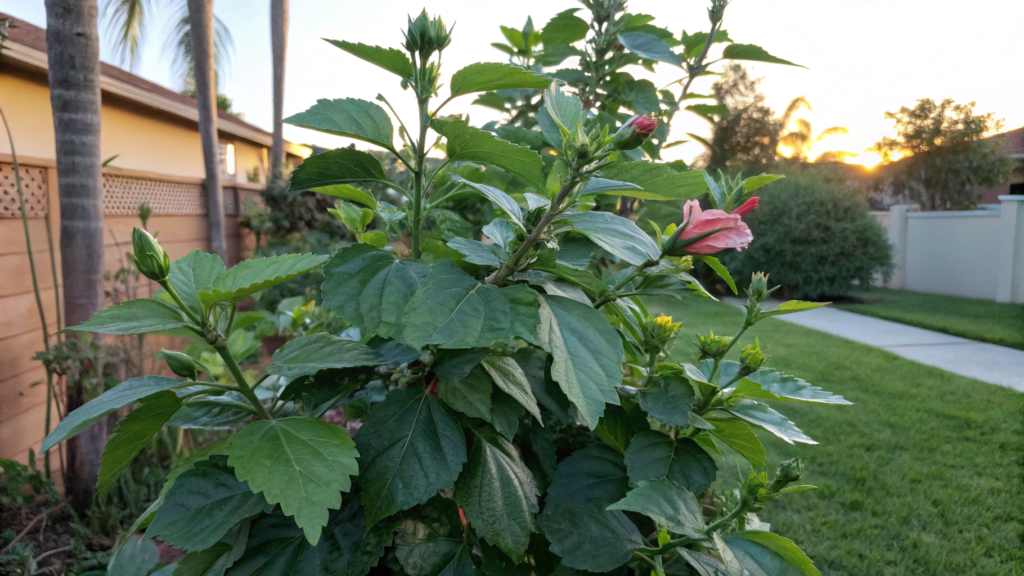
Temperature is very important for hibiscus. If conditions go beyond the range — blooming stops first.
This happened to us in the very first season in a new place. During the day it was hot, really hot. And at night — a sharp drop in temperature. It feels like summer, everything should grow… but hibiscus just stopped setting buds. And at the same time it looked quite normal. That’s what makes it confusing.
Hibiscus is a tropical plant. It needs a stable temperature range to start blooming. It feels best примерно at 65–85°F (18–29°C) during the day and not lower than 55°F (≈13°C) at night
When temperature goes beyond these limits:
- buds disappear first
- then the plant doesn’t form new flower buds for a long time
- leaves look normal, but overall development slows down
- after a sharp cold drop, blooming doesn’t return
What You’ll Need
To keep the situation under control, it’s better not to rely on feelings:
- digital outdoor/indoor thermometer with hygrometer — helps see real temperature swings, especially at night
- light covering material or fabric — for cold nights
- shading net — if the area overheats during the day
How to Fix It
- Track real temperature swings
Very often the problem is not the average value, but the fluctuations. During the day it can be comfortable, but at night temperature drops below the acceptable level. Without a thermometer it’s easy to miss. Especially if hibiscus stands near a wall or in an open area where cold “hits” faster. - Protect the plant from night cold
If at night temperature drops below 55°F (≈13°C), hibiscus starts slowing down blooming. Even temporarily. During these periods, simple covering at night helps. Sometimes a light fabric or agro-fabric is enough to smooth out the drop. - Reduce overheating during the day
Strong heat is also stress. If temperature consistently rises above 90°F (≈32°C), the plant starts protecting itself from overheating. Buds at this moment often don’t form or fall off. In such cases, shading during the hottest hours works. Not full cover, but soft light diffusion. - Avoid sudden moves
Moving hibiscus from outside to indoors or vice versa — this is almost always stress. Especially if the temperature difference is noticeable. It’s better to do it gradually, giving the plant time to adapt over several days. - Give the plant time to recover
Even if you fixed the issue, hibiscus won’t start blooming instantly. It needs time to restart the process of forming buds. Sometimes it takes a couple of weeks. And this is normal.
Important!
Hibiscus is sensitive to temperature fluctuations, not just extreme values. Too cold nights or too hot days can equally stop blooming. Even short-term stress can affect bud formation. And after conditions are restored, the plant needs time to return to normal mode.
Sometimes it feels like the weather is something we can’t control. But even simple things like covering at night or light shade during the day can change the situation more than it seems.
3. The Role of Proper Pruning Timing
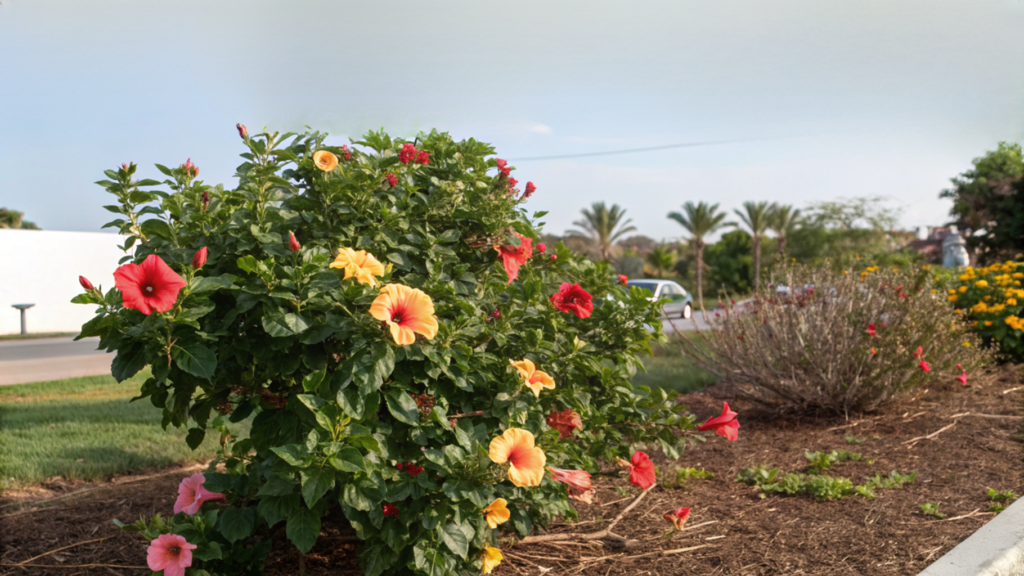
With pruning, hibiscus often gets messed up not because of the pruning itself, but because of the timing when you do it. Hibiscus воспринимает pruning as a signal to act. Just not to bloom, but to recover. It starts redistributing energy, and priority shifts into growth.
Here’s how it usually shows up:
- a lot of new shoots appear, but without buds
- the bush becomes denser, but “green, without events”
- blooming is delayed for several weeks
- with heavy pruning, the plant can “pause” and just build mass
And it’s not always noticeable right away. Sometimes you already forgot that you pruned the bush, and it’s only now reacting.
What You’ll Need
Before you jump in with pruners, it’s better to slow down a bit and prepare. This really saves time later.
- pruners
- gloves (if the bush is dense and uncomfortable)
- a note in your phone — to record when exactly you pruned
- a garden bench for sitting and a knee pad if you work for a long time — your back will thank you
Sometimes even at this stage you realize that pruning is not needed right now. And that’s also a good result.
How to Do It Right
- Figure out what state the bush is in now
If hibiscus is already actively growing and looks like it’s preparing to bloom, it’s better not to touch it. At this moment, any вмешательство will be perceived as a disruption. But if it just started coming out of dormancy and is giving first shoots — this is exactly the right moment. - Don’t chase a perfect shape
It’s very tempting to make a perfectly even bush. But with this kind of trimming, you often cut off exactly those young shoots where flowers could appear. Hibiscus looks better alive, with a natural shape, than perfectly “lined up” but without buds. - Work precisely, not massively
Sometimes it’s enough to remove one or two weak branches that ruin the structure. And that’s already enough for the bush to start branching better. No need for a big pruning. Especially if you’re not sure what phase the plant is in now. - After pruning, don’t change anything suddenly
After using pruners, you often want to “help more” — add fertilizer, water more often. But the best thing you can do is give the plant stability. Light, normal watering, no swings. Then it returns to normal mode faster. - Give the plant time
Hibiscus doesn’t switch instantly. Even with proper pruning, it needs time to form new growth points and move into blooming. This is not a matter of a couple of days. Sometimes it takes several weeks — and that’s also normal.
When Pruning Helps, and When It Hurts
When you gain experience, your intuition tells you that sometimes it’s better not to interfere. And this means you understand the plant’s rhythm.
Pruning helps when:
- the bush just started active growth
- you need to remove weak or damaged branches
- you want to slightly stimulate branching
And almost always hurts when:
- the plant is already moving toward blooming
- pruning is done “for looks” in the middle of the season
- too much green mass is removed
If you’re not sure — it’s better to do less than more.
Sometimes the strongest move is to stop and not touch the bush one more time. Hibiscus itself shows when it’s ready. And the less rush there is, the easier it is to catch its rhythm.
5. Choosing the Right Container Size
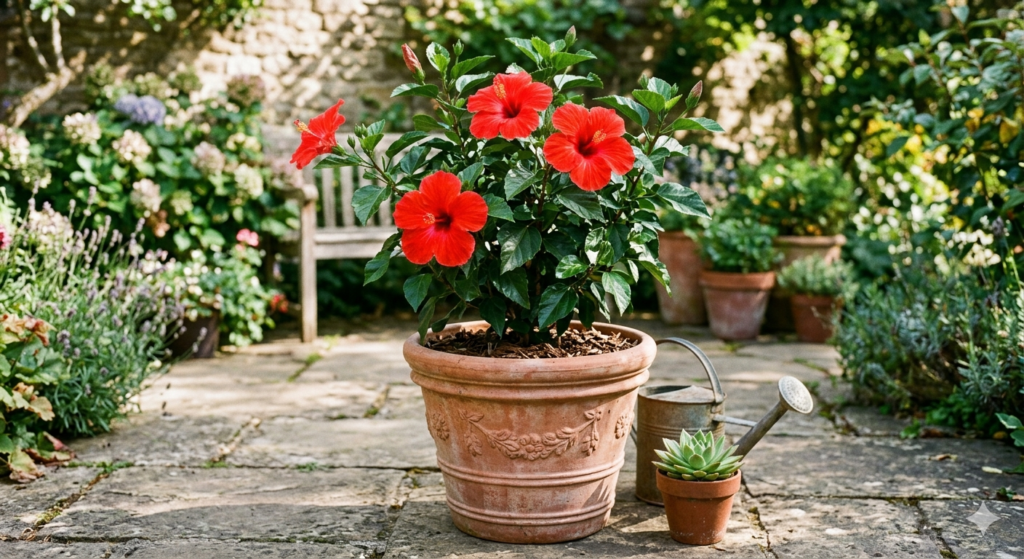
Hibiscus doesn’t rush to bloom until roots feel stable and comfortable. If they’re cramped — all energy goes into survival. If there’s too much space — the plant focuses on освоение it.
Here are situations that most often lead to problems:
- small pot — roots are tangled, pressed against the walls, the plant is limited in resources
- too large pot — soil holds moisture longer, roots grow, but blooming is delayed
- unsuitable shape (too deep or too shallow) — balance of moisture and air is disrupted
And in both cases, hibiscus can look “alive”, but without buds.
What You’ll Need
Before repotting, it’s better not to improvise, but prepare everything in advance.
- 10-inch plant pot with drainage holes — a good base option for most medium hibiscus
- quality loose soil (not heavy, not “clay-like”)
- drainage layer (expanded clay or similar)
- gloves and a bit of patience — hibiscus roots can be dense
Sometimes already at the stage of choosing a pot it becomes clear that the old one was either too tight or too spacious.
How to Choose the Right Size
- Assess the current pot and plant condition
If hibiscus dries out quickly, requires frequent watering, and at the same time growth has slowed — most likely it’s already cramped. In these conditions, roots occupy almost all the volume, and the plant can’t develop normally. Blooming in this state often stops first. - Don’t jump straight to a large volume
A very common mistake is to take a pot “with запас”. But if you transplant the plant into a container much larger than the previous one, it will actively grow roots, not bloom. The size difference should be moderate. Usually increasing the diameter by about 2–3 inches (5–7 cm) is enough. This gives space for growth without overloading the plant. - Pay attention to depth and shape
Hibiscus likes when roots have both space and access to air. A pot that’s too deep can hold moisture at the bottom, and one that’s too shallow can limit development. A universal option is a medium-depth container with good drainage holes. This helps avoid water stagnation and root problems. - Check how water behaves after watering
After repotting, it’s important to observe. If water passes through the soil quickly — everything is fine. If it stagnates or soil stays wet too long — the container might be too large or the soil too dense. And this directly affects blooming. - Give the plant time to adapt
After repotting, hibiscus almost always pauses. It explores the new space, grows roots, adapts to conditions. During this period, blooming can stop — and this is normal. The main thing is not to start “speeding up” the process with extra actions. After some time, the plant returns to its rhythm.
How to Understand the Pot No Longer Fits
Sometimes repotting is needed not because “it’s time”, but because the plant clearly shows discomfort. Here are signs to pay attention to:
- roots visible through drainage holes
- soil dries out too quickly after watering
- growth has slowed despite normal care
- the plant looks healthy, but doesn’t bloom
And here it’s important not to delay. If roots are cramped, no fertilizers will fix it.
Container size directly affects root behavior, and through that — blooming. The best approach is gradual size increase without sharp jumps. Sometimes everything is solved by a simple repotting. You just give roots нормальные conditions — and the plant starts working as it should.
6. The Importance of Balanced Fertilization
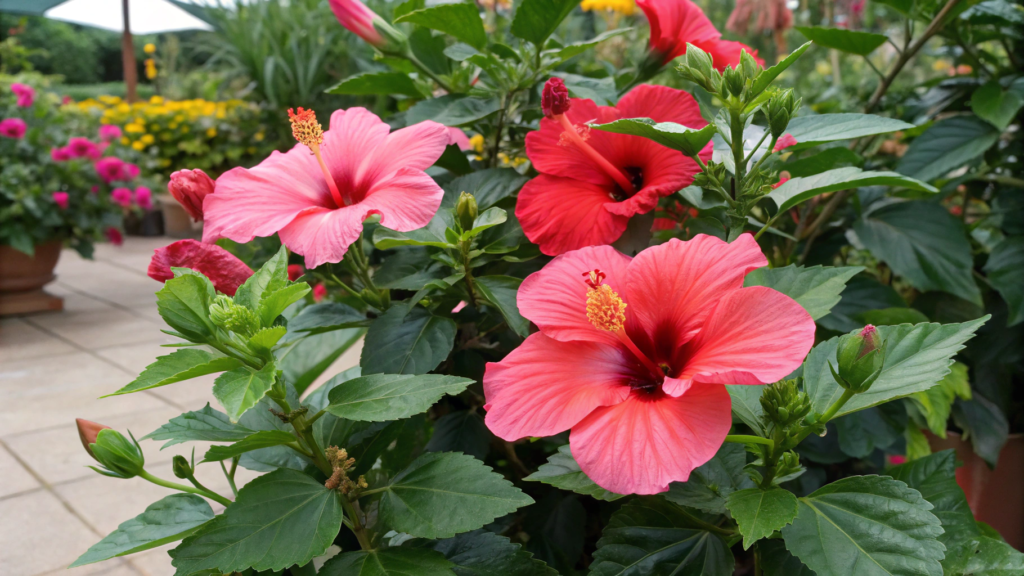
With fertilizers, hibiscus is not as obvious as it seems. It reacts not to the fact of feeding itself, but to the balance of nutrients. Three are especially important: nitrogen (N), phosphorus (P), and potassium (K).
In short:
- nitrogen (N) is responsible for leaf and shoot growth
- phosphorus (P) is involved in bud formation
- potassium (K) supports overall health and stability
When there is too much nitrogen, hibiscus starts to “push greenery” instead of flowers. Even in recommendations by Royal Horticultural Society, it is directly noted that excess nitrogen interferes with normal blooming.
How Fertilizer Imbalance Looks
It’s not always obvious right away that the issue is in feeding. But there are characteristic signals. Pay attention to these moments:
- leaves become very large and dark green
- the bush grows actively, but without any sign of buds
- after feeding, the plant “explodes” in growth, but not in blooming
- flowers exist, but there are fewer of them and they are weaker than before
After this list, it’s worth stopping and honestly evaluating: are you feeding too often and with what exactly.
What You’ll Need
To keep nutrition under control, you don’t need much, but quality matters.
- Espoma Organic Bloom Plant Food (3-4-5) — a fertilizer with a balance shifted toward blooming
- measuring spoon or cup — so you don’t add “by eye”
- regular water for dilution (if it’s a liquid fertilizer)
- a note where you track when and how much you applied
Often the problem is not in the fertilizer itself, but in giving too much or too often.
How to Fix the Feeding
- First, remember what and how often you already fed
Very often we simply don’t track this. Added once, then again, then “just in case”. As a result, the plant gets more than it needs. If you don’t remember the exact schedule — this is already a signal that feeding might be chaotic. And hibiscus feels it. - Reduce nitrogen if the bush went into greenery
If leaves are large, dark, and the bush grows actively, it’s better to temporarily remove fertilizers high in nitrogen. Not completely stop feeding, but adjust the balance. - Use fertilizer focused on blooming
When you want to bring back buds, it’s better to choose formulas with more phosphorus and potassium. They don’t push leaf growth, but help start processes related to blooming. But even such fertilizers should be applied moderately, without overload. - Don’t feed on a schedule without considering plant condition
Watering by schedule can sometimes work. Feeding — no. If hibiscus is under stress now, after repotting or pruning, adding fertilizer is not always a good idea. At such moments, it needs stability more than extra load. - Give the plant time after adjustment
After changing the feeding approach, hibiscus won’t start blooming the next day. It needs time to adjust. Sometimes it takes a couple of weeks. And during this period, it’s important not to start “adding something else again” just because it feels like nothing is happening.
When Fertilizers Start to Interfere
Sometimes the best move is not to add, but to remove excess. You don’t feel it right away, but when you see how the plant “calms down” and starts working normally, everything becomes clear.
Most often problems appear when:
- feeding happens too often
- fertilizer with high nitrogen content is used
- dosage is taken “by eye”
- after every change in conditions, more feeding is added
In these conditions, hibiscus simply doesn’t have time to stabilize. And blooming becomes a secondary process.
Sometimes, to see buds, you don’t need to add more. You need to pause a bit. Let the plant rebalance and stop “pushing” it. And when the balance returns, hibiscus shows it very quickly.
7. Signs of Root-Bound Hibiscus Plants
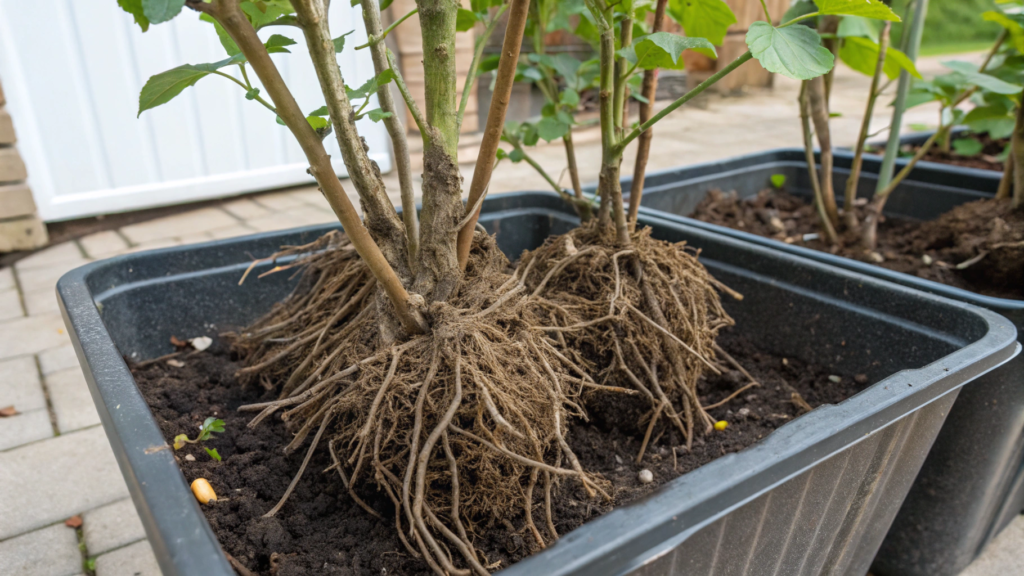
When roots fill the entire container, they start competing with each other for water, nutrients, and air. There is no space, no sideways growth, and the plant goes into restriction mode. Here’s what happens:
- roots become compacted and lose normal access to air
- water either passes too quickly or is poorly distributed
- nutrients are absorbed worse
- the plant stops developing fully
And in this situation, blooming almost always shuts down first, because it’s the most energy-consuming process.
How to Recognize a Root-Bound Hibiscus
Sometimes you don’t even need to take the plant out of the pot — the signs are visible from the outside. Pay attention to these signals:
- roots coming out of drainage holes
- soil dries out too quickly after watering
- or наоборот water is poorly absorbed and runs along the edges
- growth slows down despite normal care
- the bush looks “frozen”, without development and without buds
One sign may mean nothing, but if several match — it’s almost certainly about the roots.
What You’ll Need
Repotting in this case is not optional, but necessary. And it’s better to do it carefully.
- plant pot with drainage holes — the next size, but without a sharp jump
- loose, breathable soil
- expanded clay or other drainage
- gloves (roots can be dense and tangled)
- a knife for root pruning or a garden knife
Preparation here greatly simplifies the process. Especially if the roots are already in a neglected state.
How to Check and Fix It
- Carefully remove the plant from the pot
If hibiscus hasn’t been repotted for a long time, it can sit very tightly. Sometimes you need to слегка squeeze the pot walls or tap them to release the root ball. When you take it out — it becomes clear what condition it’s in. If roots go in a circle and soil is barely visible, the space has been gone for a long time. - Assess root density
If the root ball is very compact, roots are intertwined and hold the shape of the pot, this is a classic root-bound condition. In this state, water and nutrients are distributed unevenly. The plant may get moisture only on the edges, while inside everything stays dry or наоборот stagnates. - Loosen or slightly untangle the roots
This is an important step. If you just transfer this root ball into a new pot, the situation will barely change. Roots will continue growing in the same circle. It’s better to gently loosen the bottom part, you can slightly break it up or even trim the most compact areas. This gives a signal for new growth. - Repot into a slightly larger pot, not “with запас”
Here it’s important not to overdo it. A pot that’s too large will create a new problem — overwatering. It’s better to increase size gradually so roots can освоить the new space without stress. - After repotting, don’t overload the plant
It’s tempting to immediately “support” hibiscus — feed it, water more often. But it’s better to give it time to adapt. Normal light, moderate watering, and a bit of patience work better than active вмешательство.
When Repotting Actually Changes Everything
When hibiscus gets enough space, it literally “comes back to life”. Movement appears, new shoots, and after some time — buds. Most often repotting is needed if:
- the plant stands for a long time without changes
- care is normal, but there is no result
- soil behaves strangely after watering
- roots have clearly gone beyond the container
And in these cases, this is not an extra step, but a key one.
If roots are cramped, the plant won’t spend energy on blooming. The root-bound state limits access to water, air, and nutrients. Simply adding fertilizer won’t help here — you need to give roots space. And proper repotting often brings hibiscus back to normal growth and buds.
8. How Light Exposure Influences Bud Formation
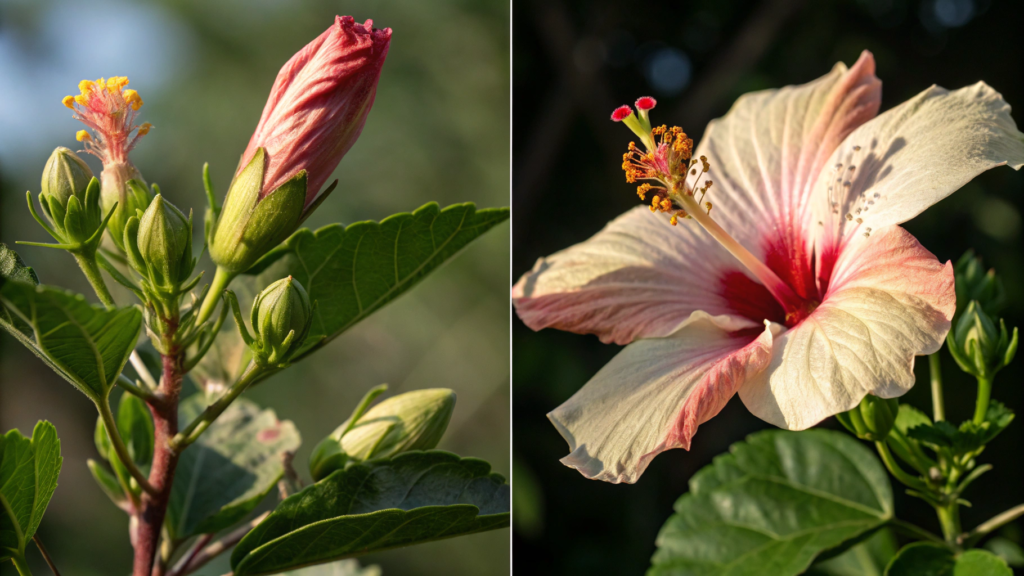
Hibiscus can be perfectly watered, properly fed, repotted on time… but if there’s not enough light, buds won’t appear. Hibiscus is a plant that needs not just light, but intense direct sunlight. This is what triggers the processes responsible for bud formation.
If light is insufficient, the following happens:
- the plant continues to grow, but doesn’t set flower buds
- energy goes into leaves and stretching shoots
- blooming becomes rare or disappears completely
Light directly affects whether the plant will form buds. Even materials from University of California Agriculture and Natural Resources note: the better the lighting, the higher the chance of normal blooming.
How to Tell Your Hibiscus Lacks Light
The hardest part — the plant doesn’t look “sick”. It just doesn’t bloom. And it’s easy to blame anything else.
Here are signs that usually point to insufficient light exposure:
- shoots become long and stretched
- leaves may be slightly larger and lighter than usual
- the bush leans toward the light source
- buds either don’t appear or are very weak
Don’t rush to conclusions. Sometimes it’s not about complete lack of light, but its quality and total amount during the day.
What You’ll Need
To really understand the light situation, it’s better not to rely only on visual feeling.
- light meter (lux meter) — helps measure how much light the plant actually gets
- ability to move the pot (if it’s in a container)
- shading net — if the sun is too aggressive in the middle of the day
Even a simple move to a brighter spot can completely solve the problem.
How to Fix It
- Assess how much direct sun the plant gets
Not “kind of bright”, but actual direct sun. Hibiscus needs about 6–8 hours of sunlight per day. If it’s near a window, it has to be a sunny window, not just a bright room. The difference is huge, and the plant feels it immediately. - Check if something blocks the light
Sometimes hibiscus stands in a good place, but part of the day it’s in shade — from a wall, tree, curtain, or even other plants. And these few hours without light are enough to reduce blooming intensity. What matters is the total amount of light per day. - Move the plant gradually
If you decide to move hibiscus to a sunnier place, don’t do it abruptly. After shade, direct sun can cause stress. It’s better to give a few hours of sun per day and gradually increase the time. This way the plant adapts without shock. - Watch the reaction for a couple of weeks
Hibiscus doesn’t show results instantly. After improving light conditions, it needs time to start forming buds. It’s important not to change conditions every couple of days, but give stable light and just observe. - Consider seasonal changes
Light changes throughout the year. In summer there’s more, in winter less. And hibiscus reacts to this. Sometimes the problem appears not because of care, but simply because of day length changes. In such cases, it’s important to adjust the plant’s position, not look for issues in watering or fertilizing.
When There Is Too Much Light
Yes, this also happens. Especially in hot regions or near south-facing walls. Sometimes you may notice:
- leaves become wilted in the middle of the day
- edges may dry out
- buds don’t hold and fall off
In such cases, light shading during the hottest hours helps. Not full shade, but soft light reduction.
Hibiscus doesn’t just like light — it depends on intense light for blooming. Without enough sun, buds don’t form, even if everything else is right. Sometimes the whole problem is solved by simply moving the pot half a meter to the side.
9. Dealing with Insect Damage and Disease
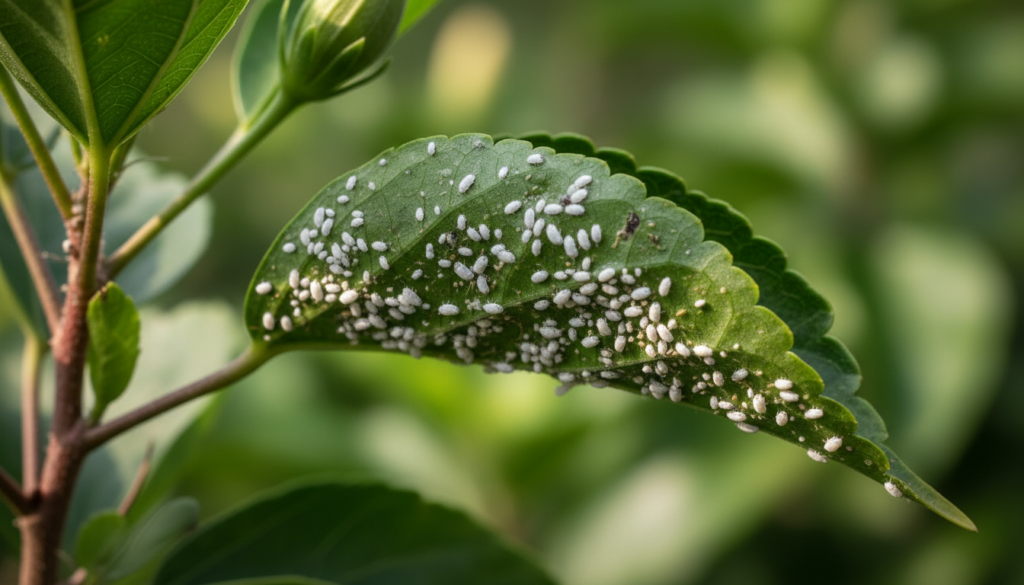
When a plant is attacked by insects or infections, it switches into defense mode. All resources go into tissue recovery, damage control, adaptation. And at this moment, blooming stops being a priority.
Here’s what usually happens:
- leaves get damaged → photosynthesis ухудшается
- metabolism is disrupted → growth slows down
- buds either don’t form or fall off
- the plant spends energy on recovery, not flowers
Even a small number of pests already affects the plant. In materials by University of California Integrated Pest Management Program, it is noted that this can reduce blooming.
Common Hibiscus Pests
Not all of them are visible right away, so it’s important to know what to look for. Here are the main common hibiscus pests:
- spider mites — tiny dots, webbing, leaves become dull
- aphids — stickiness, clusters on young shoots
- whiteflies — small white insects that fly up when touched
- thrips — silvery traces on leaves, bud deformation
After this list, just calmly inspect the plant. No rush. Often the issue is literally on the underside of a leaf.
What You’ll Need
In most cases, simple and gentle solutions work better than heavy chemicals.
- neem oil spray for plants — a base solution against most pests
- soft sponge or cloth for wiping leaves
- spray bottle with water
- gloves
If the situation is advanced, you can move to stronger treatments, but it’s better to start with a gentle approach.
How to Fix the Problem
- Inspect the plant carefully, especially under leaves
This is where pests usually hide. Take your time, go over the bush visually. Sometimes a couple of minutes is enough to spot the issue. Tiny dots, stickiness, webbing — all signals that the plant is not clean. - Remove heavily damaged parts
If there are leaves or shoots that are clearly affected, it’s better to remove them. This reduces stress on the plant and lowers the number of pests. The key is not to overdo it — remove only what won’t recover. - Treat the plant with a gentle solution
Neem oil or similar solutions work well in early stages. Apply evenly, including the underside of leaves. And not just once — repeat after a few days, because pest eggs may survive the first treatment. - Maintain stable conditions after treatment
A weakened plant is easier to attack again. So after treatment, it’s important to restore stable conditions: normal light, moderate watering, no sudden changes. This helps hibiscus recover faster. - Give the plant time to recover
Even after pests are gone, blooming doesn’t return immediately. The plant needs time to rebuild strength. And at this moment, it’s important not to overload it with extra actions.
When It’s Not Pests, but Disease
Sometimes the issue is not insects, but fungal or bacterial problems. They are less common, but still affect blooming. Pay attention to these signs:
- leaf spots with clear edges
- gradual wilting without visible pests
- soft areas on stems
- unpleasant smell from the soil
In such cases, it’s important not only to treat the plant, but also to rethink conditions — especially watering and ventilation.
Even a small infection can stop blooming. Pests often hide where they are not immediately visible — especially under leaves. The earlier you notice the problem, the easier it is to solve it without heavy treatments. And after treatment, the plant needs time to return to its normal rhythm.
10. Simple Fixes to Restart Blooming Fast
It feels like you did everything right, checked everything, fixed everything… but you want a fast result. And that’s a normal desire. We went through this ourselves, especially in the early years when every plant felt like a small project.
The right combination of simple actions helps the plant recover faster after stress. There are a few things that give a noticeable effect if done calmly and without overload:
- remove obvious mistakes (overwatering, shade, overfeeding)
- stabilize conditions — no sudden changes
- give the plant some space (if roots are cramped)
- reduce “extra care” if there was too much
Here, it’s not about quantity, but precision of actions.
What You’ll Need
To keep things simple, a basic set is enough:
- Espoma Organic Bloom Plant Food (3-4-5) — if you need to gently shift feeding toward blooming
- Soil Moisture Meter for Plants — so you don’t guess watering
- pruners — if there are weak or interfering shoots
- some time and observation
Sometimes this alone is enough to start the process.
How to Restart Blooming
- Remove excess, don’t add new things
If you’ve been actively caring for hibiscus — feeding, watering, moving — there’s a chance the issue is too many actions. In this case, it’s better to stop. Remove fertilizers for a while, stabilize watering, don’t touch the plant unnecessarily. Often именно after this hibiscus starts to “recover.” - Fix the light conditions
If there are doubts about light, it’s better to remove them right away. Move the plant where there are stable 6–8 hours of sun per day. Even a small improvement in lighting can make a difference. The main thing — don’t change conditions every couple of days. Let the plant settle. - Check roots and container
If hibiscus hasn’t been repotted for a long time, this can be a key factor. A tight pot is one of the most common reasons blooming stops. But a container that’s too large can also slow things down. The goal here is balance, not just “more space.” - Adjust feeding if there is a clear imbalance
If the bush went into greenery, it’s better to temporarily reduce nitrogen and use a more balanced fertilizer. But don’t do it aggressively. A gentle adjustment works better than a sharp change. - Give the plant stability for a couple of weeks
After all changes, it’s important to stop and not interfere. This is the moment when you want to speed things up, but patience works best here. Hibiscus doesn’t react instantly, but if conditions are stable, it starts returning to blooming.
When Changes Start Working
There is a moment that’s hard to describe, but you feel it. The bush starts to look “more alive”. New growth points appear, the structure becomes denser, and then — the first buds. Most often this happens when:
- conditions became stable
- main mistakes were removed
- the plant stopped “fighting” and returned to normal mode
And at this point, you don’t want to change anything anymore. You just observe.
Hibiscus responds faster to fixing mistakes than to adding new actions. Sometimes the best way to speed up results is to stop rushing. Stability matters more than constant changes. Remove excess, balance conditions, and give the plant some time. Not instantly, not dramatically, but steadily.
Hibiscus Blooming
When it feels like something complicated is happening with the plant, just look at it more closely. It’s simply reacting to conditions. Somewhere there is not enough light, somewhere too much water, somewhere roots are cramped — and blooming pauses. But as soon as conditions are balanced, it returns to its rhythm quite quickly.If your hibiscus is not blooming right now — write in the comments what it looks like. What’s happening with the leaves, how you water it, where it stands. It’s interesting to see different situations and what worked.