In winter, flowers feel more special. When everything outside turns gray, even a small bouquet can completely change the mood at home. These arrangements don’t need fancy materials or professional skills — you can easily make them yourself. Lindy and I often put them together using whatever we have: a few evergreen branches, a couple of blooms, a simple vase — and that’s it.
In this collection, you’ll find 10 easy winter flower arrangements you can create at home. No florist tricks, no glitter. Just combinations that truly work — natural, calm, and warm in tone.
1. White Rose and Pinecone Mix

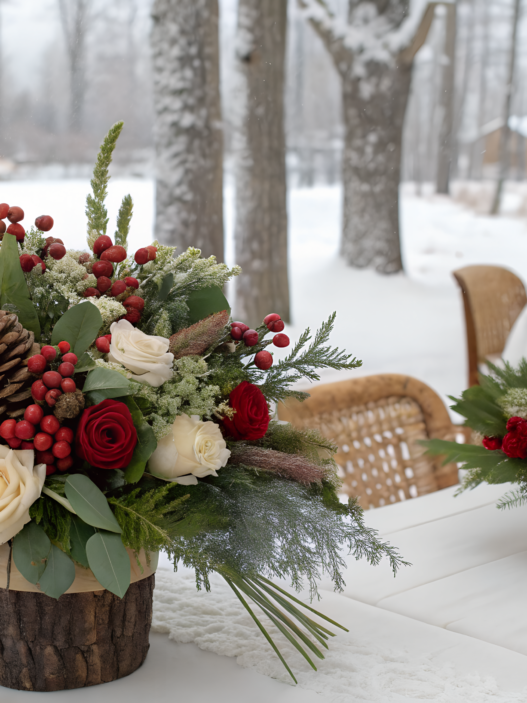
White roses and pinecones — a simple pairing that feels incredibly fresh and seasonal. This bouquet fits easily into both a classic interior and a cozy rustic space. The cool white of the roses and the natural texture of the cones create that perfect balance between elegance and nature.
What You’ll Need
- 6–8 white roses (about 12–16 inches long / 30–40 cm)
- 4–5 pinecones (natural or decorative)
- 3–4 branches of fir or spruce
- 1 eucalyptus stem for softness
- 1 cup (240 ml) of water
- 1 clear glass vase about 8–10 inches tall (20–25 cm)
How to Arrange It
- Prepare the base. Start with the evergreen branches — this will form the structure. Trim or shorten them so they don’t cover the vase edge. Place the first branch at a slight angle, the second across from it, and the third a bit higher. This creates depth and a natural “fork” to hold the flowers later. Make sure the branches don’t touch the water — they’ll spoil it quickly if they do.
- Add the white roses. Remove the lower leaves so they don’t rot in water, and cut the stems at a 45° angle — this helps the roses absorb water better. Place them one by one, alternating directions: some upright, others tilted slightly. The top blooms should rise just above the greens, forming a light dome. If the roses are fresh and firm, you can gently open the outer petals with your fingers to make them fuller.
- Add the pinecones. Natural cones are heavy, so secure them first: attach each to a wooden skewer or floral wire and fix with a bit of hot glue. Place the cones between the roses, closer to the base — they’ll add stability and a natural accent. It looks best when a few cones peek out from the sides, adding depth to the bouquet.
- Add the eucalyptus. Its soft gray-green leaves create a smooth transition between the white roses and brown cones. Insert the stems at different heights so they appear naturally spaced. Eucalyptus also gives the bouquet a light, minty scent that pairs beautifully with the evergreens.
- Check proportions and balance. If the center looks too dense, gently space out the roses. If there’s an empty spot, add another fir branch or a small cone. It’s better when the bouquet looks a bit casual than overly symmetrical — that makes it feel alive.
This winter bouquet of white roses and pinecones looks great in the living room on a wooden table or by the fireplace, where warm light highlights the gentle tones of the flowers and evergreens.
You can also put it on a windowsill or kitchen island — it will catch natural light and stay fresh longer.
Little Tip. To keep the water clear, add a pinch of citric acid or a few drops of bleach — it’ll extend the life of the roses. Don’t forget to refresh the cuts every two days and change the water at least twice a week.
This white rose and pinecone winter arrangement takes just 15 minutes to make but looks like a full seasonal centerpiece. It brightens the room, smells clean, and keeps its shape for up to two weeks. Simple, natural, and stunning.
2. Red Carnations with Evergreen Greenery

Red carnations combined with evergreen branches and light touches of greenery instantly bring a festive feeling. This bouquet works well both for a holiday table and to add a bit of life to the quiet winter days.
What You’ll Need
- 8–10 red carnations (stems 12–14 inches / 30–35 cm)
- 3–4 branches of fir or spruce
- 2–3 sprigs of cedar, arborvitae, or rosemary for texture contrast
- 1 stem of baby’s breath or white snowberries
- 1 glass or ceramic vase (about 8 inches / 20 cm tall)
- 1–2 teaspoons of sugar and a pinch of salt — to keep carnations fresh longer
How to Arrange It
- Start with the evergreen base. Begin with fir or spruce. Trim the branches so they fit loosely in the vase and place them at different angles. They’ll create a dark green background that makes the red carnations stand out. You can lightly trim the lower needles so they don’t touch the water — this keeps it fresh and odor-free.
- Add the carnations. Remove any lower leaves and cut the stems at an angle. Arrange the flowers at different heights — some slightly above the evergreens, others below. If the blooms are large, place them toward the center, and the smaller ones around the edges. Carnations are hardy but sensitive to heat, so keep the vase away from radiators.
- Bring in green accents. Add sprigs of cedar, rosemary, or arborvitae — they’ll introduce fragrance and a textured layer. The greenery shouldn’t overpower the flowers but should emphasize their shape and give rhythm to the bouquet.
- Add light details. A bit of baby’s breath or snowberries will soften the contrast and make the arrangement feel airy. You can even use artificial berries if needed — just make sure they’re matte, not glossy.
- Final touch. Fill the vase with water and add the sugar-salt mix — an old florist’s trick that helps flowers last longer. Check that all stems are in the water, and trim them every two or three days to keep them fresh.
This winter bouquet of red carnations and evergreens looks especially good in white or neutral vases, where the red color becomes richer.
Place it in the living room or on the dining table, and if you light a candle nearby, the warm glow will highlight the petals and make the whole room feel cozier.
Simple, bright, and without holiday glitter — just a touch of color and the scent of fresh evergreens. Sometimes that’s all a room needs to feel alive again.
3. Amaryllis and Holly Centerpiece

Large, almost sculptural amaryllis blooms paired with glossy holly leaves and berries instantly draw the eye. Lindy and I love placing this one on the table in December — it looks festive but doesn’t need garlands or candles to shine.
What You’ll Need
- 2–3 stems of amaryllis (white, red, or bicolor; 18–20 inches / 45–50 cm long)
- 5–6 sprigs of holly with berries
- 1–2 branches of fir or arborvitae
- 1–2 decorative candles or small lanterns
- 1 low vase or bowl for the centerpiece (about 10–12 inches / 25–30 cm wide)
- Floral foam (oasis) to secure the stems
- A bit of decorative snow or moss (optional)
If you don’t have floral foam, try floral foam blocks from Amazon — they hold moisture well and keep even heavy amaryllis stems in place.
How to Arrange It
- Prepare the base. Place the floral foam in the bowl and fill it with water until the foam is fully soaked. Amaryllis drinks a lot, so the foam must stay wet. Set the soaked foam in the center of your vase or dish, slightly below the rim.
- Add the greenery. Start with fir or arborvitae branches — they’ll create a full base and structure. Lindy and I often use short-needled fir because it adds texture without making the arrangement look too heavy. Spread the branches outward like a fan, leaving the center open for the flowers.
- Insert the amaryllis. Trim the stems at an angle and gently push them into the foam. Three stems are usually enough — two on the sides and one slightly taller in the center for balance. Amaryllis flowers are large, so leave some space between them for air and light.
- Add the holly. Place the holly branches between the amaryllis stems, tilting them slightly outward. The berries add depth, and the shiny leaves bring brightness. You can lightly dry the leaf edges to help them hold shape longer.
- Final touches. Add a couple of small candles or lanterns between the branches for a soft glow. A bit of moss or decorative snow can be tucked around the base for a finished look.
This amaryllis and holly centerpiece looks best in the center of the dining table or on a sideboard near the window, where natural light highlights the colors.
It also works beautifully on a buffet or coffee table — it becomes the focus of the room without feeling overwhelming.
Little Tip. Amaryllis lasts longer if kept away from heating sources and direct sunlight. Lindy and I once left this arrangement on the dining table for a couple of weeks — it still looked as if we had just made it.
This winter centerpiece with amaryllis and holly is perfect for a holiday dinner: bright but not loud, lively, and surprisingly low-maintenance. A bit of greenery, a couple of candles — and suddenly, the table looks like it came straight from a magazine.
4. Frosted Eucalyptus and Ranunculus

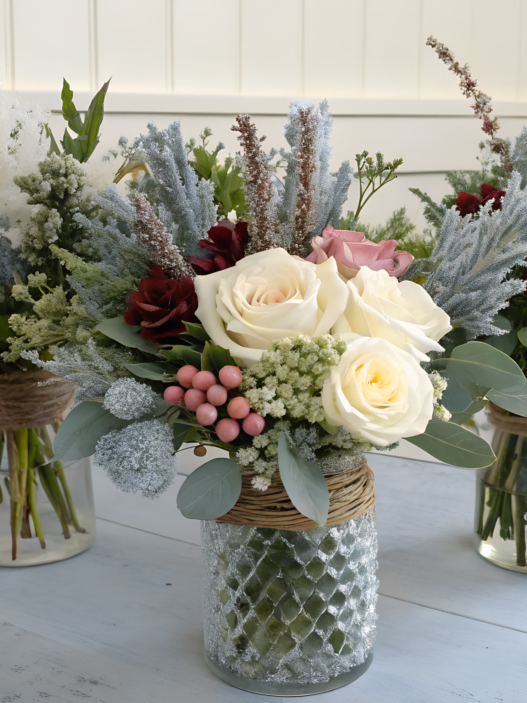
Ranunculus (buttercups) and eucalyptus are the perfect pair for a winter bouquet. Silvery-green leaves, matte petals that catch the light just a little — the whole arrangement feels calm, airy, and natural.
What You’ll Need
- 6–8 white or pale pink ranunculus (stems 10–12 inches / 25–30 cm)
- 4–5 sprigs of silver eucalyptus
- 2–3 sprigs of lavender or dusty yarrow (optional)
- 1 glass cylinder vase (8–10 inches / 20–25 cm tall)
- 1 cup (240 ml) of cold water
- A bit of decorative snow or clear glass beads for the base
How to Arrange It
- Prepare the green base. Trim the eucalyptus stems at an angle and remove the lower leaves so they don’t touch the water. Arrange them in the vase at mixed angles — some upright, some tilted — to create a sense of movement. Don’t skimp on the greenery; it’s what gives the bouquet structure and freshness.
- Add the ranunculus. Keep them cool until arranging — they’re sensitive to heat. Place 2–3 blooms closer to the center and the rest around them at different heights. I like to gently open the outer row of petals with my fingers — it makes the flowers look softer and more natural.
- Add texture. For more depth, tuck in a couple of sprigs of lavender or yarrow. They won’t steal the focus but will add gentle tone variation, especially under soft daylight.
- Create a frosted effect. Lightly spray the eucalyptus tips and the outer petals of the ranunculus with a frosted spray. Hold the can 10–12 inches away so it looks like a morning frost, not glitter.
- Check the shape. Let the bouquet stay a bit loose. One bloom leaning slightly, another turned sideways — that’s what makes it feel alive.
This eucalyptus and ranunculus bouquet works beautifully in a bedroom, a workspace, or a bathroom — anywhere you want a bit of quiet and softness.
It looks lovely on a nightstand or a narrow windowsill, especially in gentle natural light.
Little Tip. To keep ranunculus fresh longer, change the water every two days and trim the stems at an angle. In filtered or rainwater, they last almost twice as long — tested and true.
5. Hydrangeas with Silver Accents

The soft shapes and muted tones of hydrangeas make them perfect for calm, elegant winter arrangements. Combined with silver accents, they create a bouquet that feels refined yet effortless — ideal for both a living room and a workspace.
What You’ll Need
- 3–4 large hydrangea stems (white, gray-blue, or pale lilac; 12–14 inches / 30–35 cm)
- 2–3 sprigs of eucalyptus or asparagus fern for texture
- 1–2 silver branches or dried grasses (like bunny tails or brunia leaves)
- 1 glass or metal vase (8–10 inches / 20–25 cm tall)
- 1 tablespoon of glycerin — helps the flowers last longer
If you want a soft metallic touch, try silver floral spray paint from Amazon — it creates a matte, frosted finish without the plastic shine, keeping the bouquet natural.
How to Arrange It
- Prepare the hydrangeas. Remove lower leaves, trim the stems at an angle, and place them in warm water for 10–15 minutes to rehydrate. If the blooms look tired, dip the whole flower head into water for 30 seconds — they’ll quickly recover.
- Create the greenery base. Add eucalyptus or asparagus stems around the edge of the vase — they’ll give structure and airiness. Leave the center open for the hydrangeas.
- Add the hydrangeas. Place the blooms close together in the center to form a rounded shape. Hydrangeas have full clusters, so the bouquet should feel dense but not heavy.
- Add silver accents. Use one or two sprigs dusted with silver spray, or a few dried stems with a metallic tone. Keep it subtle — silver should act as a hint, not the theme. If using spray paint, apply it from 12–15 inches away for a soft frosted look instead of a shiny finish.
- Check balance and height. The central hydrangeas should stand slightly taller, forming a gentle dome. If it feels too heavy visually, add another eucalyptus stem to soften the arrangement.
This hydrangea and silver-accent arrangement looks beautiful in the living room or dining area, where light reflections enhance the metallic details.
It also fits well on a mantel or near a mirror in the hallway, creating a sense of calm depth.
Little Tip.Hydrangeas lose moisture quickly, so keep the stems fully submerged in water at all times. Trim the ends every three days and add a bit of glycerin — it helps preserve the color and prevents the petals from browning.
6. Velvety Poinsettia Bouquet in Glass Vase

Poinsettias have a presence. Their velvety leaves and deep red tones make any space feel composed — a little festive, but never overdone. Lindy and I often place a few stems in a clear glass vase, and honestly, that’s all it needs. No ribbons, no ornaments — just color and shape doing all the work.
What You’ll Need
- 2–3 large poinsettia stems (if using a potted plant, carefully cut branches about 10–12 inches / 25–30 cm long)
- 3–4 sprigs of greenery — fir, eucalyptus, or myrtle
- 1–2 stems of white snowberries or baby’s breath for contrast
- 1 medium glass vase (around 8 inches / 20 cm tall)
- 1–2 teaspoons of sugar and a pinch of citric acid for the water
If you want to help the blooms last longer, add a bit of floral stem extender from Amazon — it keeps even thick-stemmed flowers fresh for days.
How to Arrange It
- Prepare the poinsettia. After cutting, dip the stem ends into hot water for 20 seconds, then immediately into cold water — this seals the sap and prevents early wilting. You can gently spread the leaves, but avoid touching the petals directly; they bruise easily.
- Add the greenery. Fir or eucalyptus enhances the structure of the bouquet. Arrange the branches in a circle to frame the flowers. If you use eucalyptus, pick one with larger leaves — it gives body and highlights the red.
- Insert the poinsettia. Place the main bloom closer to the center and the others slightly to the sides. The dense leaves add natural volume, so you don’t need extra fillers. Make sure the flowers don’t press against the vase walls — leave some air around them.
- Add white accents. A few stems of snowberries or baby’s breath will brighten the arrangement. Lindy and I usually go with berries — they keep their shape better and don’t compete with the poinsettia’s texture.
- Check the height. The poinsettia should stand above the greenery but not overpower it. When you look at the bouquet, the shape should come first, not just the color.
This poinsettia bouquet works beautifully where you need a statement piece. On the dining table, it easily replaces a full garland or candle centerpiece.
It also looks great on a console or dresser, especially against a light wall. And in an office or workspace, it adds a sense of structure and focus without feeling heavy.
Little Tip. If using cut stems, change the water every two days. Poinsettias last longer in cool rooms, away from direct heat sources or sunlight.
7. Winter Tulips with Cedar Branches

Winter tulips, especially white or cream ones, paired with cedar branches, create an arrangement that feels fresh and balanced — every element seems to breathe. It comes together in just a few minutes but looks thoughtful and refined.
What You’ll Need
- 10–12 white or cream tulips (stems 12–14 inches / 30–35 cm)
- 3–4 cedar branches (can be replaced with cypress or juniper)
- 1 eucalyptus stem — optional, for a softer shape
- 1 glass or ceramic vase (8–10 inches / 20–25 cm tall)
- 1 teaspoon of sugar and a few drops of lemon juice — to extend the flowers’ life
How to Arrange It
- Prepare the tulips. Remove lower leaves and trim stems at an angle. If they’ve been stored in a cool place, let them sit in water for about 30 minutes so the stems rehydrate and become flexible.
- Add the cedar branches. Start by placing the cedar first — it sets the direction. Cedar gives structure and depth but shouldn’t overshadow the flowers. Let a few branches hang slightly over the vase edge for a more natural, relaxed look.
- Add the tulips. Arrange them loosely, not too tight. Some should lean slightly to the side, others stay upright. If the buds are still closed — even better. They’ll open gradually in the vase, giving the bouquet a natural sense of life over several days.
- Add eucalyptus (optional). Its soft gray-green tone helps bridge the color contrast between the white tulips and dark cedar. A couple of stems are enough to tie everything together visually.
- Check the balance. The tulips should remain the main focus, while the greenery supports the shape. If the arrangement feels too tall or stiff, trim a few stems — a touch of asymmetry always makes it more natural.
This winter tulip and cedar bouquet looks beautiful in bright, cool spots like a kitchen counter — especially in a light and minimal interior.
It also works in the living room on a low table, where it stays visible but unobtrusive.
And in the bedroom, placed on a dresser or windowsill, the faint cedar scent adds calmness and freshness to the air.
Little Tip. Change the water daily — cedar releases resin that can cloud it faster than usual. To make tulips last longer, drop a couple of ice cubes into the vase — the cooler water keeps them fresh and crisp for days.
8. Orchid Arrangement with Frosted Twigs

An orchid arrangement doesn’t need extra decor or complicated shapes — it’s all about the lines. The orchid itself works like a living sculpture, elegant and self-sufficient.
What You’ll Need
- 2–3 orchid stems (phalaenopsis or dendrobium, 18–24 inches / 45–60 cm)
- 3–4 thin dry twigs (decorative ones work well)
- 1–2 sprigs of eucalyptus or myrtle — for a soft background
- 1 tall cylindrical vase (10–12 inches / 25–30 cm)
- A bit of decorative snow or glass pebbles for the base
- 1 teaspoon of sugar and 1 drop of lemon juice per cup of water
To create the frosted effect, use frosted branch spray from Amazon — it gives a matte texture without shine and doesn’t harm the plants.
How to Arrange It
- Prepare the orchids. Remove any lower leaves touching the water. Cut the stems at an angle and place them in cool water for 15 minutes to rehydrate. Handle gently — orchid stems are fragile.
- Create the twig base. Cross the dry branches inside the vase to form a loose grid. This will help support the orchid stems without floral foam. Lightly spray the twigs for a frosted look — you can coat just the tips for a subtle, natural effect.
- Insert the orchids. Position the main stem near the center, and the others slightly angled. Let one curve to the left, another to the right — orchids are most beautiful in asymmetry, when their stems move like air currents.
- Add a touch of greenery. A few sprigs of eucalyptus or myrtle soften the transition from twigs to flowers. Use sparingly — orchids don’t like competition. A couple of light strokes are better than dense foliage.
- Finish the arrangement. Add some decorative snow or glass pebbles at the bottom to hide the twig ends and create transparency. The water should cover the stems by about 2–3 inches.
This orchid and frosted twig arrangement looks best in bright, open spaces with plenty of air and light. It’s perfect for a windowsill with soft daylight, the center of a long table, or a surface near a mirror — the reflection doubles the sense of depth and lightness.
Little Tip. Orchids don’t like cold water. Change the water every three days and make sure no leaves are submerged. If the air is dry, lightly mist around the bouquet (not directly on the flowers). It keeps them fresh and radiant longer.
9. Paperwhite Bulbs Styled Indoors

Paperwhite narcissus grow fast, bloom generously, and fill the home with a light, fresh scent. They’re simple to care for and look striking even in the most minimal setting.
What You’ll Need
- 5–7 paperwhite bulbs (Narcissus papyraceus)
- 1–2 glass vases or bowls without drainage (about 5 inches / 12 cm deep)
- Pebbles, decorative sand, or glass marbles
- Filtered water (about 1 cup / 240 ml per vase)
- A warm but not hot spot — around 65–70°F (18–21°C)
If you need to restock, try paperwhite bulbs from Amazon — they’re high quality and pre-chilled for winter forcing.
How to Grow and Style
- Prepare the base. Add a 2-inch (5 cm) layer of pebbles to your vase. The bulbs should sit firmly on top but not be fully buried. Leave some space between them so the air can circulate.
- Add water. Pour in water until it reaches just below the base of the bulbs — it should never touch them directly, or they might rot.
- Position the bulbs. Set them root-side down, gently pressing them into the pebbles. If you prefer a denser look, tuck a bit of moss or sand between the bulbs.
- Create support. Once the shoots reach about 4–5 inches tall, add a couple of decorative twigs or frosted stems to help hold them upright. You can use thin sticks, dried grasses, or frosted branches for a natural look.
- Monitor the growth. In 10–14 days, you’ll see the first buds. Keep the bulbs away from direct heat or sunlight. If the shoots stretch too quickly, move them to a slightly cooler spot.
These paperwhite bulbs are perfect where you want light and greenery — on a windowsill in the kitchen or living room, where you can watch them grow every day.
They also look beautiful on a desk or in the entryway — the clear vase and white blooms give a clean, structured feel.
Little Tip. To prevent the stems from growing too tall, add a splash of alcohol to the water — about 1 part vodka to 10 parts water. This old florist trick keeps the growth compact and the flowers perfectly upright.
10. Winter Peonies with Dusty Miller

If you manage to find fresh-cut peonies, pairing them with the silvery-gray leaves of Dusty Miller creates a quiet, balanced composition built entirely on the contrast of textures.
What You’ll Need
- 3–5 peonies (preferably white, cream, or blush pink; stems 12–14 inches / 30–35 cm)
- 4–5 sprigs of Dusty Miller
- 2–3 sprigs of eucalyptus or silver asparagus fern
- 1 clear or ceramic vase (around 8 inches / 20 cm tall)
- 1 teaspoon of sugar and a pinch of citric acid for the water
- Optional — a touch of decorative snow or silver spray for the leaves
How to Arrange It
- Prepare the peonies. Remove the lower leaves and trim the stems at an angle. If the buds are tight, wrap them in damp paper for 15–20 minutes — this helps them open more evenly.
- Add Dusty Miller. Its soft, velvety leaves are the foundation of this bouquet. Arrange them so they frame the peonies without hiding them. Let some leaves tilt slightly outward — this gives a feeling of air and a soft “halo” around the flowers.
- Insert the peonies. Start with the central bloom, then add the rest in a gentle circle, slightly angled. The bouquet should look like one continuous motion, not rigid symmetry.
- Add eucalyptus or asparagus. These stems bring rhythm and break up the density of the flowers. Just a few touches are enough to add height and texture.
- Final touch. Lightly mist Dusty Miller with frosted spray — just one or two short bursts from a distance. The leaves will take on a softer, matte tone, as if lightly touched by frost.
This winter bouquet with peonies and Dusty Miller looks especially good on a dining table or in the center of a coffee table — the textures and shapes draw attention right away.
It also works beautifully in the bedroom, where it softens the space visually, especially against a neutral background.
Little Tip. To make peonies last longer, change the water daily and trim the stems by about ½ inch (1–1.5 cm) each time. If they start to wilt, dip the flower heads in cool water for a couple of minutes — they’ll perk up quickly.
Waiting for Your Ideas
I’ve shared some of my favorite winter flower arrangements — now I’d love to hear yours.
Do you make bouquets yourself or prefer ready-made ones? Have you ever mixed flowers with evergreen or cedar branches?
Tell me in the comments — do you lean toward cool, minimal combinations like eucalyptus and orchids, or warm, festive ones like red carnations and pine?
I’m genuinely curious what kind of bouquets brighten your windowsills or mantels this winter.