There are a lot of little secrets when it comes to making homemade cinnamon rolls. Sometimes one small detail makes all the difference, even something you never thought about before.
Over the years, I’ve collected quite a few of these little discoveries. Some change the dough, some change the filling, and some simply make the whole process easier. Lindy and I have also made small changes to our usual recipe more than once, and then kept the ones that worked in our regular version of the rolls.
In this article, I’ve gathered 10 Homemade Cinnamon Roll Secrets that are definitely worth trying at least once. Join me!
1. Classic buttermilk cinnamon rolls
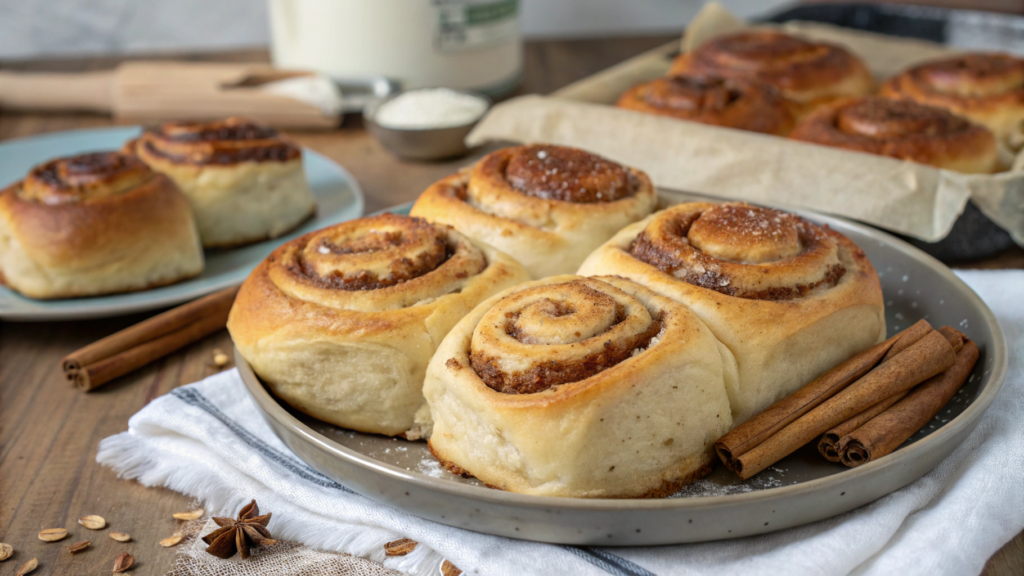
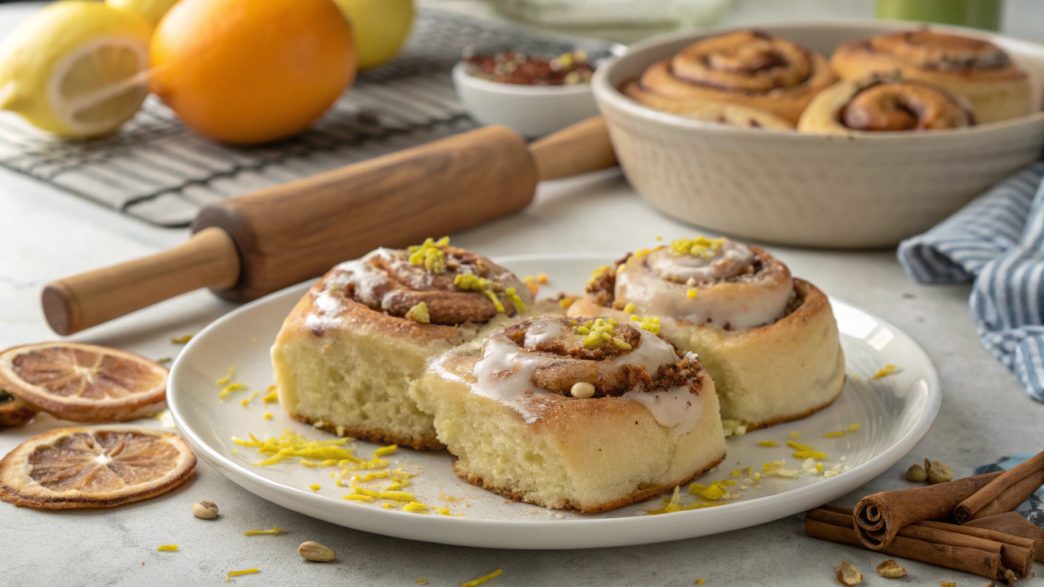
Classic cinnamon rolls have a pretty simple ingredient list, and that’s exactly why the quality of the dough really stands out. I bake them with buttermilk because it helps keep the crumb soft and tender even the next day. And that matters, because Lindy and I definitely don’t eat a dozen fresh rolls in one evening.
For mixing the dough, it’s convenient to use a regular stand mixer with a dough hook, like the KitchenAid Artisan Series 5 Quart Tilt-Head Stand Mixer. But the dough can also be mixed perfectly well by hand.
Ingredients
For 10–12 rolls:
The dough
- ¾ cup warm buttermilk (about 180 ml)
- 2¼ tsp instant dry yeast
- ¼ cup sugar (about 50 g)
- 1 large egg
- 1 egg yolk
- ¼ cup melted butter (about 55 g)
- 3 cups all-purpose flour (about 360 g), plus a little extra for rolling
- ½ tsp salt
The filling
- ½ cup softened butter (about 115 g)
- ⅔ cup brown sugar (about 135 g)
- 1½ tbsp ground cinnamon
- a small pinch of salt
How to make classic buttermilk cinnamon rolls
- Prepare the dough. Mix the warm buttermilk, yeast, and sugar. The buttermilk should be warm, not hot. Add the egg, egg yolk, and melted butter. Then gradually mix in the flour and salt.
- Knead it well. In a mixer, this will take about 6–8 minutes on medium speed. By hand, it will take a little longer. The dough should become smooth and elastic while still staying slightly sticky. Don’t add a lot of extra flour just to stop it from sticking to your fingers. Dough that is too firm will give you drier rolls.
- Let the dough rise. Transfer it to a lightly greased bowl, cover it with a towel, and leave it for about 60–90 minutes. It should noticeably increase in volume. In a cooler kitchen, this may take a little longer.
- Roll out the dough. Place the dough on a lightly floured surface and roll it into a rectangle about 14 × 18 inches (about 35 × 45 cm). The edges absolutely do not need to be perfect.
- Add the filling. Spread the softened butter almost all the way to the edges. Mix the brown sugar, cinnamon, and salt, then sprinkle the mixture evenly over the top. I lightly press the sugar down with my palm so less of it falls out while rolling.
- Shape the rolls. Roll the dough tightly from the long side and cut it into 10–12 pieces. The easiest way to do this is with thread or a very sharp knife.
- Let them rise again. Arrange the rolls in a greased baking dish, leaving a little space between them. Cover and leave them for another 30–45 minutes. By then, they should look noticeably puffier and almost touch each other.
- Bake. Place the dish in a preheated 350°F (175°C) oven for about 22–27 minutes. The tops should be lightly browned, and the centers should be fully baked. I try not to leave them in the oven until they get a dark crust. An extra five minutes can make a pretty big difference in the texture of cinnamon rolls.
We love homemade baking. And really, who doesn’t? Not for some special occasion, but simply because there’s a little free time, everyone’s in a good mood, and there are people you want to bake delicious cinnamon rolls for. And treating yourself isn’t a bad idea either.
2. Swedish cardamom cinnamon buns
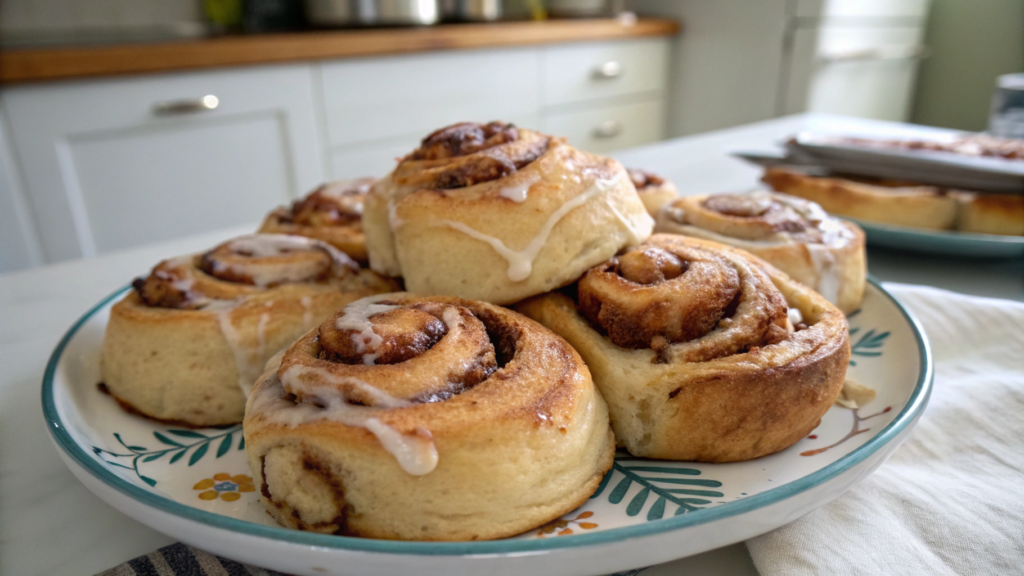
Swedish cardamom buns are usually less sweet, without a thick layer of glaze, and the cardamom is used in both the dough and the filling. You can still taste the cinnamon, but the cardamom makes the aroma much stronger.
Lindy and I usually make these buns together. While I roll out the dough, she mixes the filling and then helps twist the strips. The first couple of buns may not look very even, but after that they get much easier to shape.
Ingredients
For about 10–12 buns:
The dough
- ¾ cup whole milk (about 180 ml)
- 2¼ tsp dry yeast
- ¼ cup sugar (about 50 g)
- 1 large egg
- ¼ cup melted butter (about 55 g)
- 3 cups all-purpose flour (about 360 g)
- 1 tsp ground cardamom
- ½ tsp salt
The filling
- 5 tbsp softened butter (about 70 g)
- ½ cup brown sugar (about 100 g)
- 1½ tsp ground cinnamon
- 1 tsp ground cardamom
The top
- 1 egg
- 1 tbsp milk
- 2–3 tbsp coarse pearl sugar
For these buns, I prefer grinding cardamom seeds in a mortar right before baking. The aroma is much stronger than ground cardamom that may have been sitting in the cabinet for a few months.
How to make Swedish cardamom cinnamon buns
- Make the dough. Warm the milk and mix it with the yeast and sugar. Add the egg and melted butter. In a separate bowl, combine the flour, cardamom, and salt, then gradually mix the dry ingredients into the wet mixture.
- Knead until smooth. The dough will need about 7–10 minutes. It should become soft and elastic. Don’t work in extra flour just to remove all the stickiness because a little stickiness at this stage is completely normal.
- Let the dough rise. Cover the bowl and leave it in a warm place for about 60–90 minutes. Don’t rely only on the clock. The dough should roughly double in size.
- Make the filling. Mix the softened butter with the brown sugar, cinnamon, and cardamom until you get a thick paste. This helps the filling spread more evenly and keeps more of it inside while shaping the buns.
- Roll out the dough. Make a rectangle about 16 × 20 inches (40 × 50 cm). Spread the filling over the whole surface, leaving just a small edge.
- Fold and cut. Fold the dough into thirds like a letter, roll it lightly with a rolling pin, and cut it lengthwise into strips about 1 inch (2.5 cm) wide.
- Shape the buns. Hold a strip by both ends, twist it a few times, then wrap it around two fingers and tuck the end underneath. The first one may look a little strange. That’s fine. By the third or fourth, you’ll usually get a much neater knot.
- Let the buns rise again. Arrange them on a baking sheet with a little space between each one, cover with a towel, and leave for about 30–45 minutes.
- Prepare the tops. Beat the egg with a tablespoon of milk, brush the buns, and sprinkle with pearl sugar. It doesn’t fully melt during baking and gives the buns that typical Scandinavian finish.
- Bake. Put the baking sheet into an oven preheated to 375°F (190°C) and bake for about 15–18 minutes. The buns should brown nicely without drying out.
I like that these buns have to be shaped by hand, one by one. Lindy and I usually do that part together, and it makes the whole job a lot more fun. Maybe that’s part of why homemade baking has become much more to me than just another way to make food.
3. Cream cheese glazed overnight rolls
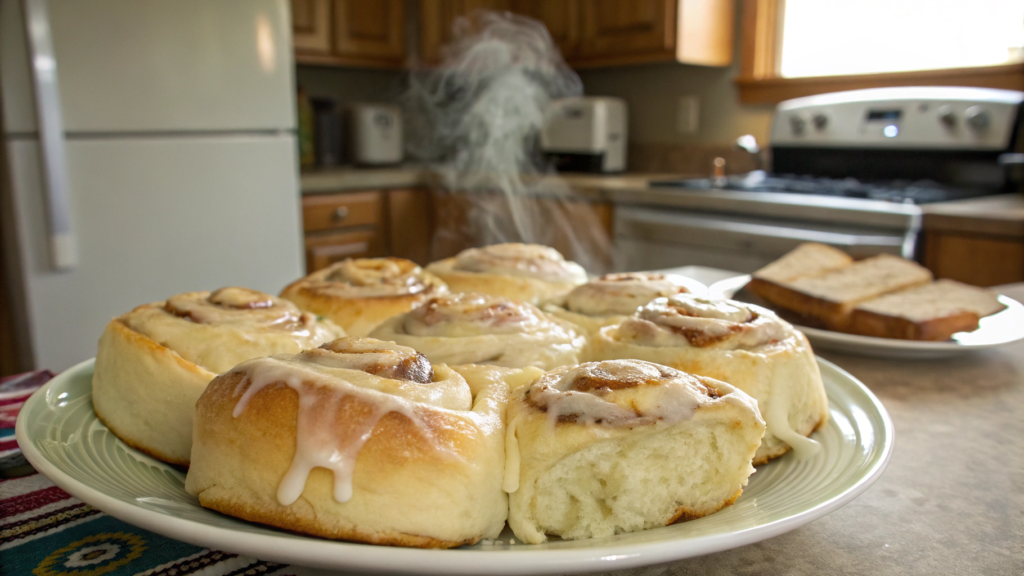
The best thing about cream cheese-glazed overnight rolls is that you can do most of the work in the evening, and in the morning all that’s left is to take the pan out of the fridge, let the dough warm up a little, and put it in the oven. It’s a great option for a weekend breakfast.
That’s exactly what Lindy and I do before the weekend. Then we just put the pan in the fridge, and the kitchen is closed until morning. Such a nice feeling.
Ingredients
For about 10–12 rolls:
The dough
- ¾ cup whole milk (about 180 ml)
- 2¼ tsp dry yeast
- ¼ cup sugar (about 50 g)
- 1 large egg
- 1 egg yolk
- ¼ cup melted butter (about 55 g)
- 3 cups all-purpose flour (about 360 g)
- ½ tsp salt
The filling
- ½ cup softened butter (about 115 g)
- ⅔ cup brown sugar (about 135 g)
- 1½ tbsp ground cinnamon
- a pinch of salt
The glaze
- 4 oz cream cheese (about 115 g)
- 2 tbsp softened butter
- ¾ cup powdered sugar (about 90 g)
- ½ tsp vanilla extract
- 1–2 tbsp milk
For the glaze, it’s best to use plain, soft cream cheese with no added flavors.
How to make overnight rolls with cream cheese glaze
- Prepare the yeast mixture. Warm the milk slightly. It should be warm, not hot. Add the sugar and yeast, stir, and leave for about 5–10 minutes. Then add the egg, egg yolk, and melted butter. The butter shouldn’t be hot either, or it can warm the mixture too much.
- Make the dough. Gradually add the flour and salt, mixing after each addition. Once the dough comes together into a soft ball, knead it for about 7–10 minutes. The finished dough should be smooth, elastic, and a little sticky. Don’t try to get rid of all that stickiness by adding extra flour because dough that’s too firm will bake up drier.
- Let it rise for the first time. Transfer the dough to a lightly greased bowl, cover it, and leave it in a warm place for about 60–90 minutes. It should roughly double in size. In a cooler kitchen, it may take a little longer, so I usually pay more attention to the dough itself than the clock.
- Prepare the filling. Mix the brown sugar, cinnamon, and a pinch of salt. Roll the dough out on a lightly floured surface into a rectangle about 14 × 18 inches (35 × 45 cm). Spread the softened butter almost all the way to the edges, then evenly sprinkle the cinnamon sugar over the top.
- Roll it up. Start from the long side and roll the dough fairly tightly without squeezing it. Lightly pinch the edge closed at the end. Cut the roll into 10–12 roughly equal pieces. I mark the cuts first and then slice, so the last roll doesn’t end up twice as small as the others.
- Put the rolls in the fridge overnight. Grease a baking dish and arrange the rolls with a little space between them. Cover the dish tightly so the dough doesn’t dry out, then refrigerate for 8–12 hours. The rolls will slowly rise during that time.
- Take the pan out ahead of time in the morning. Don’t put the rolls straight from the fridge into the oven. Leave them at room temperature for about 45–60 minutes. They should rise a little more, soften, and look noticeably puffier. If your house is cool, they may need another 15–20 minutes.
- Bake. Preheat the oven to 350°F (175°C). Place the dish on the middle rack and bake for about 24–28 minutes. The edges and tops should turn golden, and the dough in the center should be fully baked. I wouldn’t wait for a deep brown crust because by then the inner layers can dry out pretty easily.
- Make the glaze. While the rolls cool a little, beat the softened cream cheese and butter until smooth. Add the powdered sugar and vanilla extract. Then slowly add the milk, mixing each time. Usually 1–2 tablespoons is enough to make the glaze easy to spread without turning it runny.
- Spread the glaze over the warm rolls. Let them sit for about 10 minutes after baking, then spread the glaze over the top. It will soften slightly on the warm surface and sink a little between the layers without melting away completely.
Coffee with milk, cappuccino, or strong black tea go really well with these rolls. If breakfast ends up being a little later, I might also add berries, sliced apple, or orange.
I love the evening prep itself. Everything is already done, the pan is in the fridge, the table is wiped down, and you know you won’t have to rush anywhere in the morning. Trust me, I’m not lazy, I just really like staying in a warm bed a little longer on the weekend!
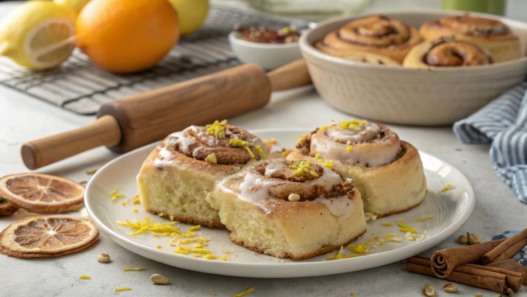
4. Secret ingredient orange zest rolls
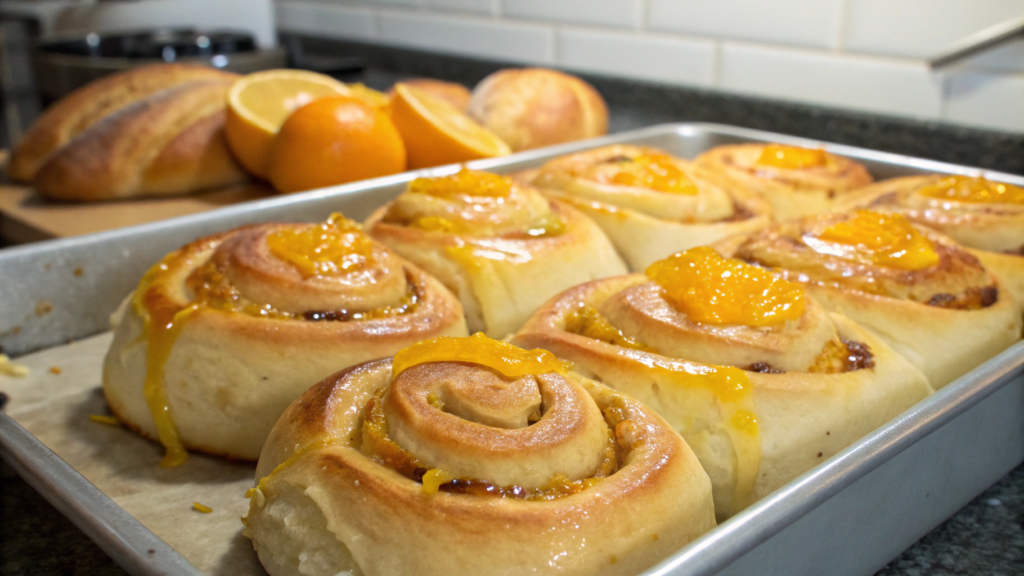
For this recipe, I usually use one large orange. The zest goes into the filling, and the juice goes into the glaze. Nothing goes to waste!
It’s best to zest the orange right before making the rolls. You only need the bright outer layer of the peel, without the white part underneath, which can taste bitter.
Ingredients
For about 10–12 rolls:
The dough
- ¾ cup whole milk (about 180 ml)
- 2¼ tsp dry yeast
- ¼ cup sugar (about 50 g)
- 1 large egg
- 1 egg yolk
- ¼ cup melted butter (about 55 g)
- 3 cups all-purpose flour (about 360 g)
- ½ tsp salt
The filling
- ½ cup softened butter (about 115 g)
- ⅔ cup brown sugar (about 135 g)
- 1½ tbsp ground cinnamon
- finely grated zest of 1 large orange
- a pinch of salt
The simple orange glaze
- 1 cup powdered sugar (about 120 g)
- 2–3 tbsp fresh orange juice
- ½ tsp vanilla extract
How to make cinnamon rolls with orange zest
- Prepare the dough. Warm the milk slightly, add the yeast and sugar, and leave it for about 5–10 minutes. Then mix in the egg, egg yolk, and melted butter. Let the butter cool a little first.
- Add the flour. Gradually mix in the flour and salt. Once the dough comes together, knead it for about 7–10 minutes. It should become smooth and elastic while still staying soft. Slightly sticky dough is much better than dough that is too firm.
- Let the dough rise. Transfer it to a greased bowl, cover it, and leave it for about 60–90 minutes. During that time, it should roughly double in size.
- Prepare the orange filling. First, zest the orange. Mix the zest with the brown sugar, cinnamon, and a pinch of salt. I also rub the zest and sugar together with my fingers for about 20–30 seconds. The sugar gets slightly moist, and the orange aroma becomes stronger.
- Roll out the dough. Make a rectangle about 14 × 18 inches (35 × 45 cm). Spread the softened butter over the surface, leaving a small edge on one side.
- Add the filling. Sprinkle the sugar, cinnamon, and orange zest mixture evenly over the dough. Lightly press the filling down with your palm. This helps keep more of it inside when you roll up the dough.
- Roll and cut. Starting from the long side, roll the dough into a log. Lightly pinch the edge closed, then cut it into 10–12 pieces. Arrange the rolls in a greased baking dish with a little space between them.
- Let them rise a second time. Cover the dish and leave it for about 30–45 minutes. The rolls will get bigger and noticeably puffier. By the end of the rise, some of them may already be touching at the edges.
- Bake. Preheat the oven to 350°F (175°C) and bake for about 23–27 minutes. I start checking them around the 22-minute mark because the edges can brown earlier than expected.
- Make the orange glaze. Mix the powdered sugar with two tablespoons of fresh orange juice and the vanilla. If the mixture is too thick, add a little more juice. Let the rolls sit for about 10 minutes after baking, then drizzle the glaze over the top.
I make coffee or tea, grab a roll, and that’s it. Nothing else needed!
I love these small changes in a recipe. You don’t need to completely change the dough or buy ten new ingredients. One orange that’s already sitting in the kitchen is enough to make familiar baking feel unexpectedly different. That’s the whole secret!
5. Heavy cream rise method rolls
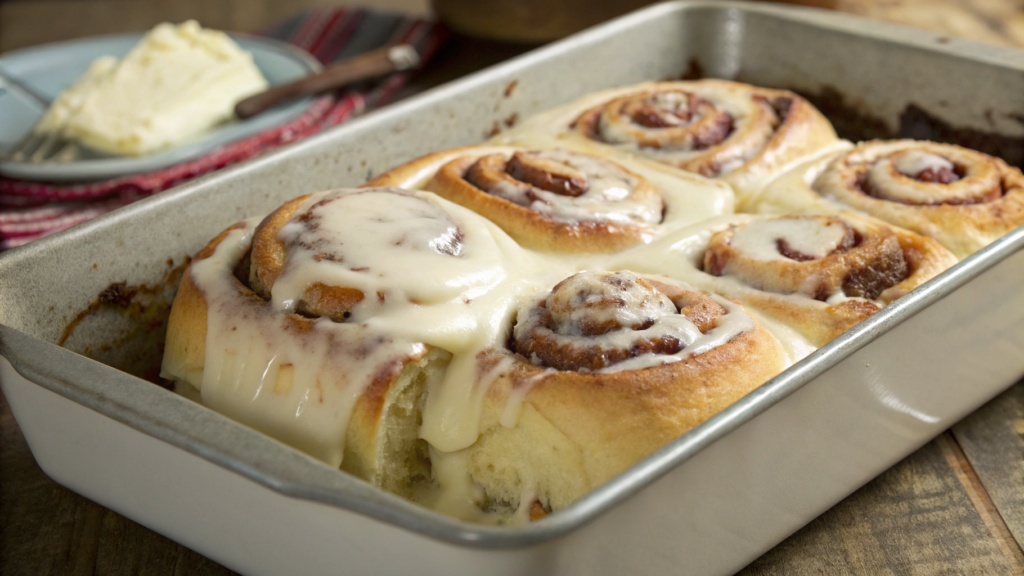
When making these cinnamon rolls, heavy cream is poured into the baking dish right before they go into the oven. As they bake, the cream mixes with the sugar and butter from the filling, and some of it soaks into the dough. This makes the rolls softer and more moist inside.
You need heavy cream with about 36–40% fat. Lower-fat cream contains much more water and behaves differently in the pan.
Ingredients
For about 10–12 rolls:
The dough
- ¾ cup whole milk (about 180 ml)
- 2¼ tsp dry yeast
- ¼ cup sugar (about 50 g)
- 1 large egg
- 1 egg yolk
- ¼ cup melted butter (about 55 g)
- 3 cups all-purpose flour (about 360 g)
- ½ tsp salt
The filling
- ½ cup softened butter (about 115 g)
- ⅔ cup brown sugar (about 135 g)
- 1½ tbsp ground cinnamon
- a pinch of salt
Before baking
- ½ cup heavy cream (about 120 ml)
For the glaze
- 1 cup powdered sugar (about 120 g)
- 2 tbsp melted butter
- 2–3 tbsp milk
- ½ tsp vanilla extract
How to make cinnamon rolls with heavy cream
- Start with the dough. Warm the milk slightly and mix it with the sugar and yeast. Leave it for 5–10 minutes. Add the egg, egg yolk, and melted butter that has cooled a little.
- Add the flour and salt. It’s better to add the flour gradually. Once the dough gets firm enough, start kneading it by hand or with a mixer. After 7–10 minutes, it should become smooth and soft. A little stickiness is fine, and there’s definitely no need to add another half cup of flour just to get rid of it.
- Let the dough rise. Transfer it to a greased bowl and cover it. The first rise usually takes 60–90 minutes. I wait until the dough has roughly doubled in size.
- Make the filling. Mix the brown sugar, cinnamon, and salt. Roll the dough into a rectangle about 14 × 18 inches (35 × 45 cm), spread it with softened butter, and sprinkle the cinnamon mixture over the top.
- Roll and cut the dough. Roll it up from the long side. Then cut it into 10–12 pieces and transfer them to a greased baking dish. Leave a little space between the rolls because they still need a second rise.
- Let the rolls rise for another 30–45 minutes. They should get noticeably bigger and start touching around the edges. At this point, you can preheat the oven to 350°F (175°C).
- Now add the cream. It’s best to take the cream out of the fridge at least 15–20 minutes ahead of time. You don’t want to pour it ice-cold over warm dough. Slowly pour ½ cup of cream into the dish, aiming between the rolls as well as over the top.
Don’t worry if it looks like there’s too much liquid at first. During baking, most of it will settle between the layers and mix with the filling.
- Bake the rolls. Place the dish on the middle rack and bake for about 25–30 minutes. The tops should brown, and the rolls in the center should be fully baked. If the tops get dark too quickly, loosely cover the dish with foil for the last few minutes.
- Make the glaze. Combine the powdered sugar, butter, and vanilla, then gradually add the milk. I keep it fairly thick because it will melt a little on the warm rolls anyway.
- Let the rolls sit for a few minutes after baking. After about 10 minutes, you can add the glaze. There will be a little thick mixture of cream, sugar, and butter left at the bottom of the dish. Don’t throw it away. I usually scoop some up with a spoon and add it on top of the roll along with the glaze.
The first time you pour cream straight into the baking dish, it looks like the rolls are about to turn soggy. Then you pull the dish out of the oven, and what’s left at the bottom isn’t cream anymore but a thick, sweet mixture that tastes so good you end up scraping up every last bit with a spoon.
You don’t need any special skill to make these. It’s just one small extra step in the recipe, but the result is noticeably different from regular rolls. Little kitchen tricks like this are easy to remember and easy to repeat later without having the recipe in front of you.
6. Mini cinnamon rolls in a skillet
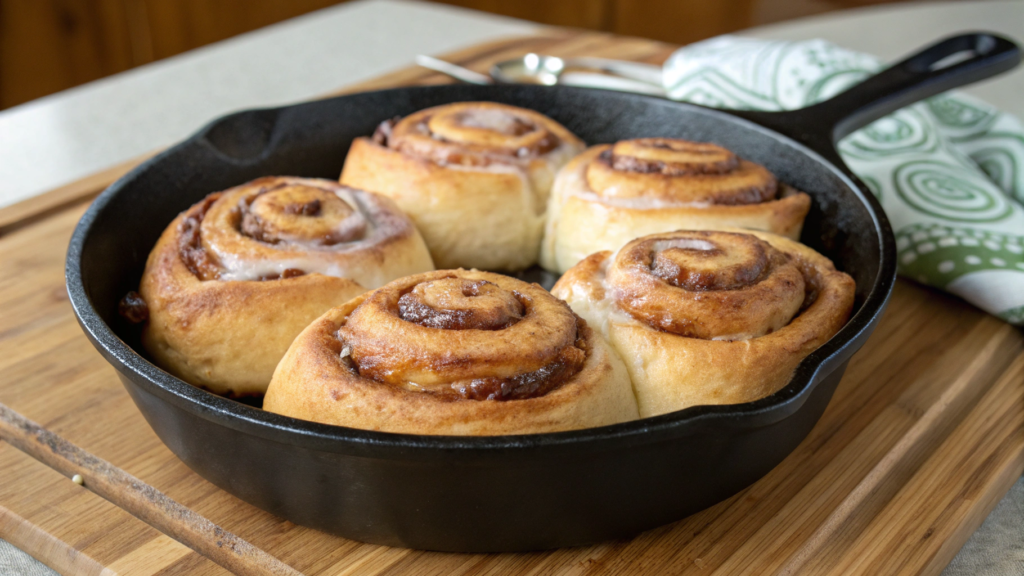
I like baking mini cinnamon rolls in a skillet when I don’t need a big batch. They come out neat and small, and one skillet holds just about enough for Lindy and me.
For this recipe, a 10-inch cast iron skillet works best.
Ingredients
For about 14–16 mini rolls:
The dough
- ¾ cup whole milk (about 180 ml)
- 2¼ tsp dry yeast
- ¼ cup sugar (about 50 g)
- 1 large egg
- ¼ cup melted butter (about 55 g)
- 2¾–3 cups all-purpose flour (about 330–360 g)
- ½ tsp salt
The filling
- ⅓ cup softened butter (about 75 g)
- ½ cup brown sugar (about 100 g)
- 1 tbsp ground cinnamon
- a pinch of salt
The glaze
- ¾ cup powdered sugar (about 90 g)
- 1½–2 tbsp milk
- ½ tsp vanilla extract
How to make mini cinnamon rolls in a skillet
- Start with the dough. Warm the milk slightly and mix it with the sugar and yeast. Leave it for 5–10 minutes, then add the egg and melted butter.
- Add the flour. Add it gradually along with the salt. Once the dough comes together, knead it for about 7–8 minutes. It should become soft and elastic. I wouldn’t make it too firm because smaller rolls dry out faster than larger ones.
- Let it rise for the first time. Transfer the dough to a bowl, cover it, and leave it for about 60–90 minutes. It should increase nicely in volume.
- Prepare the filling. Mix the brown sugar with the cinnamon and salt. Roll the dough into a rectangle about 12 × 18 inches (30 × 45 cm) and spread it with softened butter.
- Add the cinnamon sugar. Spread the mixture evenly over the surface and lightly press it down with your palm. This way, less of the filling ends up on the table when you cut the rolls.
- Roll and cut. Start rolling the dough from the long side. Then cut the log into about 14–16 pieces, each around 1 inch (2.5 cm) thick. Cutting them thinner is what gives you the smaller rolls.
- Arrange them in the skillet. Grease the cast iron skillet with butter and place the rolls inside with a little space between them. Don’t pack them in too tightly. After the second rise, there won’t be much empty space left.
- Let them rise again. Cover the skillet and leave it for about 30–40 minutes. The rolls will get puffier and start touching each other.
- Bake. Preheat the oven to 350°F (175°C). For rolls this size, 18–22 minutes is usually enough. Start checking them earlier than regular large rolls. Cast iron holds heat well, so the edges can brown pretty quickly.
- Add the glaze. Mix the powdered sugar, vanilla, and milk until you get the consistency you want. Wait about 10 minutes after baking, then spread the glaze over the top.
Lindy says two small rolls can totally count as one regular roll. I don’t argue with that, especially when I’m reaching for a third. The size really does make them convenient, so give them a try!
7. Nashville hot honey cinnamon rolls
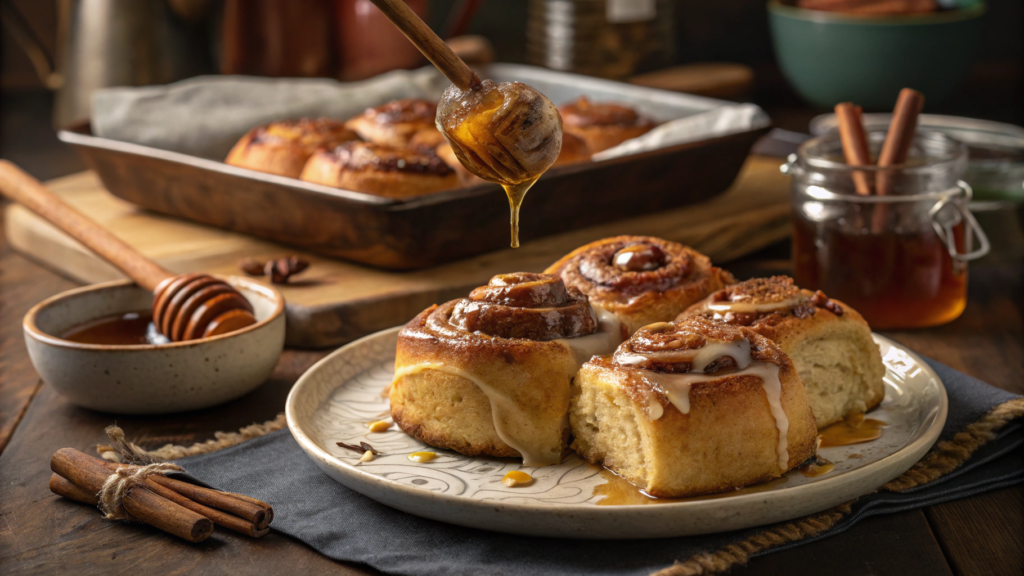
I don’t love the combination of sweet and spicy in every dish, but honey with chili works surprisingly well with cinnamon rolls.
For the first batch, I recommend making just a small amount of hot honey and tasting it on its own. Different types of cayenne pepper can vary quite a bit in heat, and it’s always easier to add more than to try to fix a glaze that turned out way too spicy.
You can use ready-made hot honey like Mike’s Hot Honey Original Hot Honey on Amazon, but it’s also easy to make at home with just a few ingredients.
Ingredients
For about 10–12 rolls:
The dough
- ¾ cup whole milk (about 180 ml)
- 2¼ tsp dry yeast
- ¼ cup sugar (about 50 g)
- 1 large egg
- 1 egg yolk
- ¼ cup melted butter (about 55 g)
- 3 cups all-purpose flour (about 360 g)
- ½ tsp salt
The filling
- ½ cup softened butter (about 115 g)
- ⅔ cup brown sugar (about 135 g)
- 1½ tbsp ground cinnamon
- ¼ tsp cayenne pepper
- a pinch of salt
The hot honey
- ⅓ cup liquid honey (about 110 g)
- ¼ tsp cayenne pepper
- ¼ tsp red pepper flakes
- 1 tsp apple cider vinegar
For the glaze
- ¾ cup powdered sugar (about 90 g)
- 2 tbsp milk
- ½ tsp vanilla extract
How to make cinnamon rolls with hot honey
- Prepare the dough. Warm the milk and mix it with the sugar and yeast. After 5–10 minutes, add the egg, egg yolk, and melted butter. Let the butter cool a little first.
- Knead the dough. Gradually add the flour and salt. Knead for about 7–10 minutes until the dough becomes smooth and elastic. It should stay soft and may still feel slightly sticky.
- Let the dough rise. Transfer it to a greased bowl, cover it, and leave it for about 60–90 minutes. Wait until it has roughly doubled in size.
- Mix the filling. Combine the brown sugar, cinnamon, cayenne pepper, and salt. I start with ¼ tsp cayenne pepper. That’s enough to bring in some heat while still keeping the cinnamon as the main flavor.
- Roll out the dough. Make a rectangle about 14 × 18 inches (35 × 45 cm). Spread the softened butter over the surface, then sprinkle the sugar mixture on top.
- Roll and cut. Roll the dough up from the long side and cut it into about 10–12 equal pieces. Transfer them to a greased baking dish.
- Let the rolls rise again. Cover the dish for about 30–45 minutes. During that time, the rolls should get noticeably bigger and fill most of the space between them.
- Make the hot honey. While the rolls are rising, combine the honey, cayenne pepper, red pepper flakes, and apple cider vinegar in a small saucepan. Heat over low heat for about 2–3 minutes without letting it boil. Remove from the heat and let it sit.
Lindy usually tastes the honey first at this point because we have slightly different ideas of what “spicy” means. It’s better to figure out the pepper level before you pour it over the whole pan.
- Bake the rolls. Place the dish in an oven preheated to 350°F (175°C) and bake for about 23–27 minutes. The tops should brown, and the centers should be fully baked.
- Add the glaze and honey. Mix the powdered sugar, milk, and vanilla. Let the baked rolls sit for about 10 minutes, then spread on a little glaze. Drizzle the hot honey over the top in a thin stream. I don’t cover the rolls completely because a few lines of honey are usually enough.
I’d recommend trying the first roll with just a little honey. Then you can decide if you want more. We usually have one person adding another spoonful and another who only wants a few drops. The nice thing about this recipe is that everyone can adjust the heat on their own plate.
Any leftover hot honey can go on roasted carrots, chicken, pizza, or even cheese. I like ingredients that can be used in more than one dish.
8. World-famous bakery clone roll
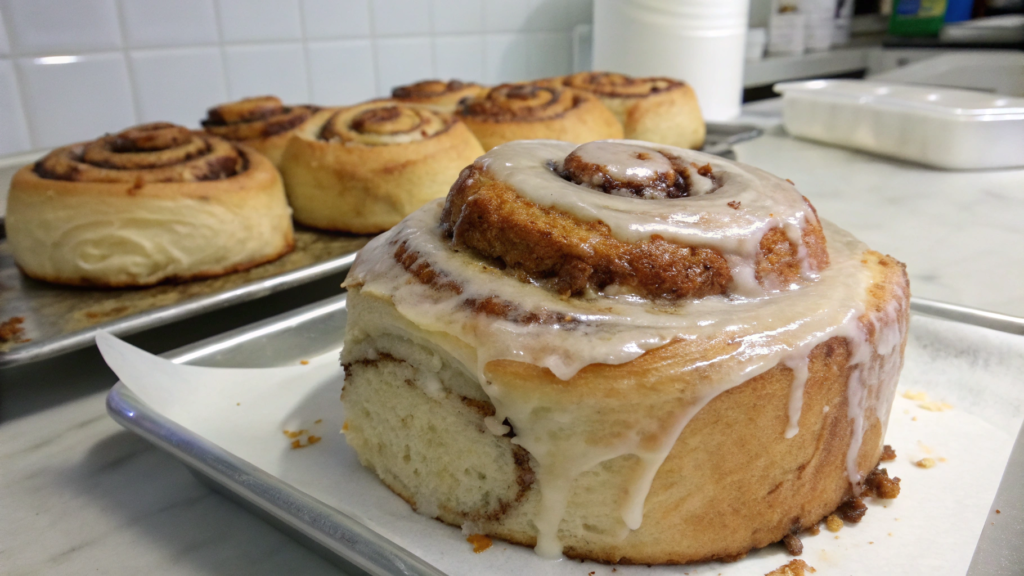
Many famous bakeries have their own signature cinnamon roll. It’s usually big, very soft, with a generous layer of cinnamon filling and thick glaze on top.
I’m not trying to copy the recipe from one specific bakery down to the last gram. I’m taking the details that usually make these rolls so recognizable. The dough should stay soft, there should be plenty of filling, and I make the rolls noticeably larger than usual.
Ingredients
For about 8 large rolls:
The dough
- 1 cup whole milk (about 240 ml)
- 2¼ tsp dry yeast
- ⅓ cup sugar (about 65 g)
- 2 large eggs
- ⅓ cup melted butter (about 75 g)
- 3½ cups all-purpose flour (about 420 g)
- ¾ tsp salt
The filling
- ½ cup softened butter (about 115 g)
- ¾ cup brown sugar (about 150 g)
- 2 tbsp ground cinnamon
- 1 tsp vanilla extract
- a pinch of salt
The glaze
- 6 oz cream cheese (about 170 g)
- 3 tbsp softened butter
- 1¼ cups powdered sugar (about 150 g)
- 1 tsp vanilla extract
- 1–2 tbsp milk
If you want to portion the large rolls evenly, a regular metal bench scraper comes in handy. I first mark where I want to cut, then slice the roll.
How to make large bakery-style cinnamon rolls
- Warm the milk. It should be warm, not hot. Add the yeast and sugar, stir, and leave for about 5–10 minutes. Then add the eggs and melted butter.
- Knead the dough. Gradually add the flour along with the salt. Knead for about 8–10 minutes. The dough should stay soft and stretch well. Don’t add too much flour, even if it feels a little sticky at first.
- Let the dough rise well. Transfer it to a greased bowl, cover it, and leave for about 60–90 minutes. It should roughly double in size.
- Make the filling. Mix the softened butter with the brown sugar, cinnamon, vanilla, and a pinch of salt. For this recipe, I make it into a paste instead of sprinkling the sugar on separately. This helps the filling stay between the layers of the larger rolls.
- Roll out the dough. Make a large rectangle about 16 × 20 inches (40 × 50 cm). Spread the filling almost all the way to the edges.
- Roll it up. Start from the long side and roll the dough fairly tightly. Then divide it into 8 large pieces. Each one will be noticeably thicker than the rolls in the previous recipes.
- Transfer them to the pan. Arrange the rolls with a little space between them and cover. Leave them for another 35–45 minutes. After rising, they should almost fill the pan.
- Bake. Preheat the oven to 350°F (175°C). Large rolls will need about 27–32 minutes. Pay close attention to the center of the pan. The edges may already look done while the middle is still baking.
If the tops start getting too dark, cover the pan loosely with foil and leave the rolls in for a few more minutes.
- Make the thick glaze. Beat the cream cheese with the softened butter, then add the powdered sugar and vanilla. Add the milk a little at a time. The glaze should stay fairly thick because that’s the kind of layer I associate with big bakery cinnamon rolls.
- Cover the rolls with glaze. Let them sit for about 10 minutes after baking. Spread a generous layer of glaze over the warm rolls. Some of it will melt slightly, but there should still be a noticeable white layer on top.
These rolls work well for a group or a big family breakfast. Eight large rolls are a bit much for Lindy and me, but when there are several people at the table, the size makes much more sense. And if a couple of rolls are left, they’re easy to reheat the next day. I cover one with a damp paper towel and microwave it for about 15–20 seconds. The dough gets soft again, and the glaze melts slightly.
9. Maple bacon cinnamon rolls
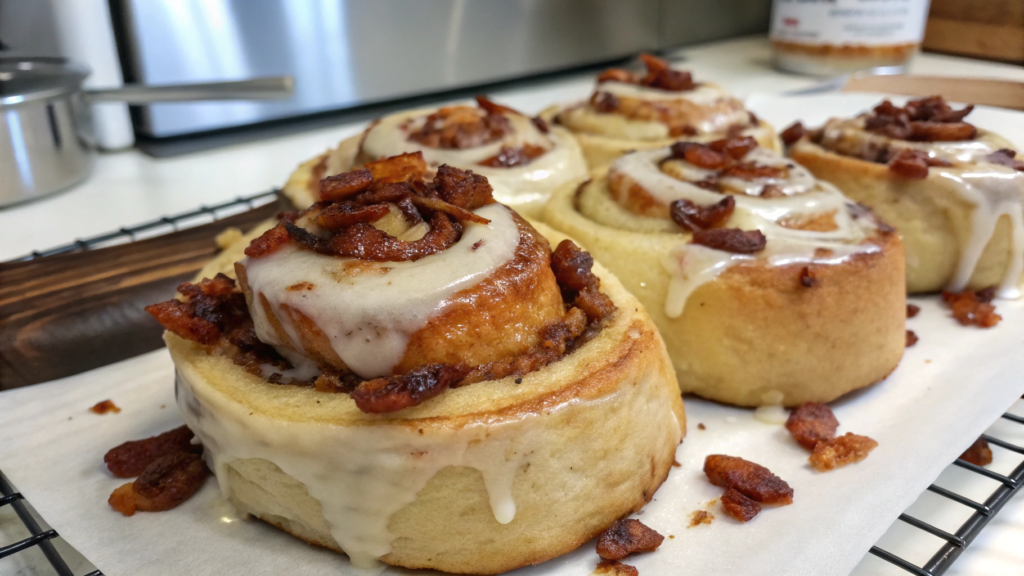
I definitely wouldn’t call Maple Bacon Cinnamon Rolls regular tea-time rolls. This is a full sweet-and-salty combination. The cinnamon and brown sugar stay in the filling, while maple glaze and crispy bacon go on top.
I don’t think the bacon needs to go inside the roll. It gets soft faster and loses its texture. It’s much better to bake the rolls as usual, then add the bacon on top with the glaze.
I use real 100% Pure Maple Syrup on Amazon, not flavored pancake syrup.
Ingredients
For about 10–12 rolls:
The dough
- ¾ cup whole milk (about 180 ml)
- 2¼ tsp dry yeast
- ¼ cup sugar (about 50 g)
- 1 large egg
- 1 egg yolk
- ¼ cup melted butter (about 55 g)
- 3 cups all-purpose flour (about 360 g)
- ½ tsp salt
The filling
- ½ cup softened butter (about 115 g)
- ⅔ cup brown sugar (about 135 g)
- 1½ tbsp ground cinnamon
- a pinch of salt
The maple glaze
- 1 cup powdered sugar (about 120 g)
- 2 tbsp maple syrup
- 1–2 tbsp milk
- ½ tsp vanilla extract
The top
- 5–6 strips of bacon
- 1–2 tbsp extra maple syrup
How to make cinnamon rolls with maple syrup and bacon
- Prepare the dough. Warm the milk slightly and mix it with the sugar and yeast. Leave it for about 5–10 minutes, then add the egg, egg yolk, and melted butter that has cooled a little.
- Knead the dough. Gradually add the flour and salt. Knead for about 7–10 minutes until the dough becomes soft and elastic. It can stay slightly sticky, and there’s no need to add extra flour just to get rid of that.
- Let it rise. Transfer the dough to a greased bowl, cover it, and leave it for about 60–90 minutes. It should roughly double in size.
- Cook the bacon. While the dough is rising, fry the bacon until crispy. Transfer it to a paper towel and let the extra fat drain off. Once it cools, cut it into small pieces.
- Prepare the filling. Mix the brown sugar, cinnamon, and salt. Roll the dough into a rectangle about 14 × 18 inches (35 × 45 cm) and spread it with softened butter.
- Add the cinnamon sugar. Spread the filling evenly over the dough and lightly press it down with your palm.
- Roll and cut. Roll the dough up from the long side, then divide it into about 10–12 pieces. Transfer the rolls to a greased baking dish.
- Let them rise again. Cover the dish and leave it for about 30–45 minutes. The rolls should get noticeably bigger.
- Bake. Preheat the oven to 350°F (175°C) and bake for about 23–27 minutes. Keep an eye on the center of the pan. The tops may already be browned while the middle is still underbaked.
- Make the maple glaze. Mix the powdered sugar with the maple syrup and vanilla. Then gradually add the milk until the glaze is thick enough but still easy to spread with a spoon.
- Add the bacon. Let the rolls sit for about 10 minutes after baking. Spread on the maple glaze, sprinkle the bacon pieces over the top, and add a little more maple syrup if you want.
A sweet roll with salty bacon fits perfectly into a breakfast menu. If we’re adding bacon, I want enough of it to actually taste it and keep that crispy texture. Lindy usually adds a few extra pieces to hers right on the plate, while I add a little more maple syrup.
10. Lazy Sunday no-knead rolls
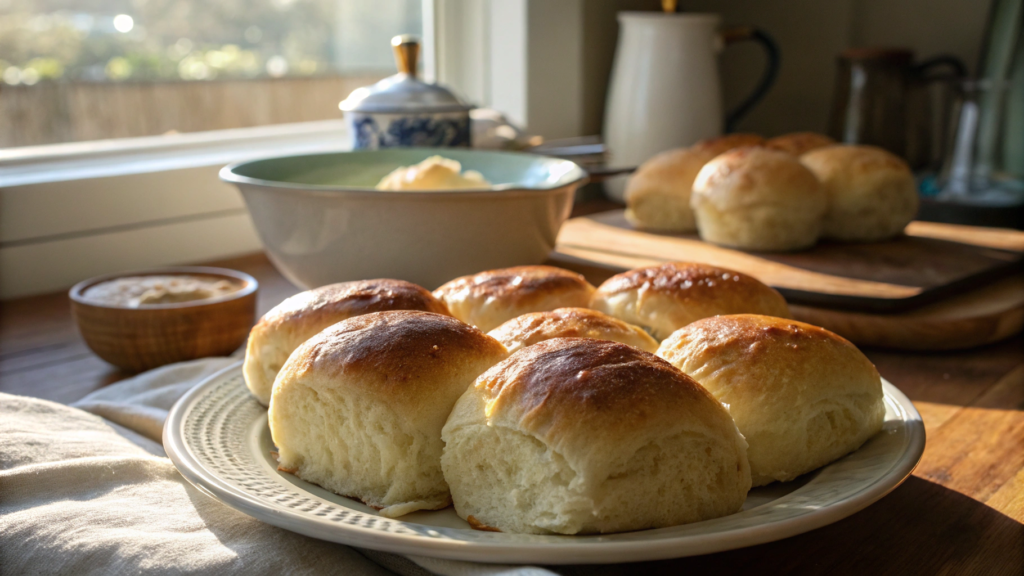
Lazy Sunday No-Knead Rolls are different from the previous rolls not so much because of the ingredients, but because of the way the dough is made.
We simply mix the ingredients with a spoon, leave the dough alone, and come back to it later when it has already softened and risen. For a Sunday, that’s a pretty good setup.
I sometimes mix this dough in the morning and then just go about my day. Lindy only asks when it’s finally time to roll it out. The active part really is pretty short.
Ingredients
For about 10–12 rolls:
The dough
- 1 cup warm whole milk (about 240 ml)
- 2¼ tsp dry yeast
- ¼ cup sugar (about 50 g)
- 1 large egg
- ¼ cup melted butter (about 55 g)
- 3 cups all-purpose flour (about 360 g)
- ½ tsp salt
The filling
- ½ cup softened butter (about 115 g)
- ⅔ cup brown sugar (about 135 g)
- 1½ tbsp ground cinnamon
- a pinch of salt
The simple glaze
- 1 cup powdered sugar (about 120 g)
- 2–3 tbsp milk
- ½ tsp vanilla extract
How to make no-knead cinnamon rolls
- Mix the wet ingredients. Pour the warm milk into a large bowl, add the sugar and yeast, and leave it for about 5–10 minutes. Then mix in the egg and melted butter.
- Add the flour. Add the flour and salt and mix with a wooden spoon or spatula. You don’t need perfectly smooth dough. It’s enough when there’s no dry flour left in the bowl.
- Let the dough rest. Cover the bowl and leave it for about 20 minutes. During that time, the flour absorbs the moisture and the dough becomes noticeably softer even without kneading.
- Fold the dough a few times. Wet your hand, grab one edge of the dough, stretch it upward, and fold it toward the center. Turn the bowl and repeat another 3–4 times. The whole thing takes less than a minute. This replaces the long traditional kneading step.
- Let the dough rise. Cover the bowl again and leave it for about 60–90 minutes. It should noticeably increase in volume.
- Prepare the filling. Mix the brown sugar, cinnamon, and salt. Place the dough on a lightly floured surface and roll it into a rectangle about 14 × 18 inches (35 × 45 cm). Spread the softened butter over the top.
- Add the cinnamon and sugar. Sprinkle the prepared mixture evenly over the dough. I usually leave a very small edge uncovered so it’s easier to seal the roll later.
- Roll and cut. Roll the dough up from the long side and divide it into 10–12 pieces. Place the rolls in a greased baking dish.
- Let them rise a second time. Cover the dish for about 30–40 minutes. The rolls will get puffier and fill most of the empty space.
- Bake. Preheat the oven to 350°F (175°C) and bake for about 23–27 minutes. Check not only the edges but the center too.
- Add the glaze. Mix the powdered sugar, vanilla, and milk. Wait about 10 minutes after baking, then spread the glaze over the top.
Sundays with Lindy rarely follow any strict plan, so this recipe fits right in. If breakfast slowly turns into a late lunch, nobody really minds. The rolls can wait.
Your own secret
As you’ve probably noticed, small details can really change homemade cinnamon rolls. Some stay in my recipe for a long time, while others I try once and never come back to.
Little by little, you develop your own way of baking, and a few months later you’re doing everything automatically without even remembering where that little trick came from.
I hope you’ve already tried baking something from these 10 recipes. Be sure to tell me in the comments which of these cinnamon roll secrets turns out to be the best one in your kitchen.