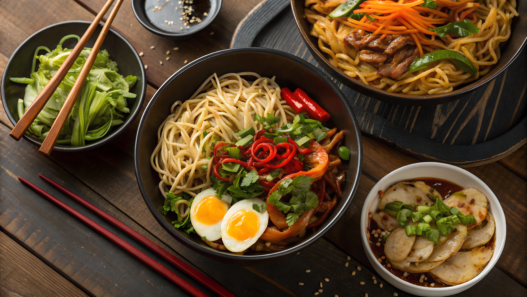
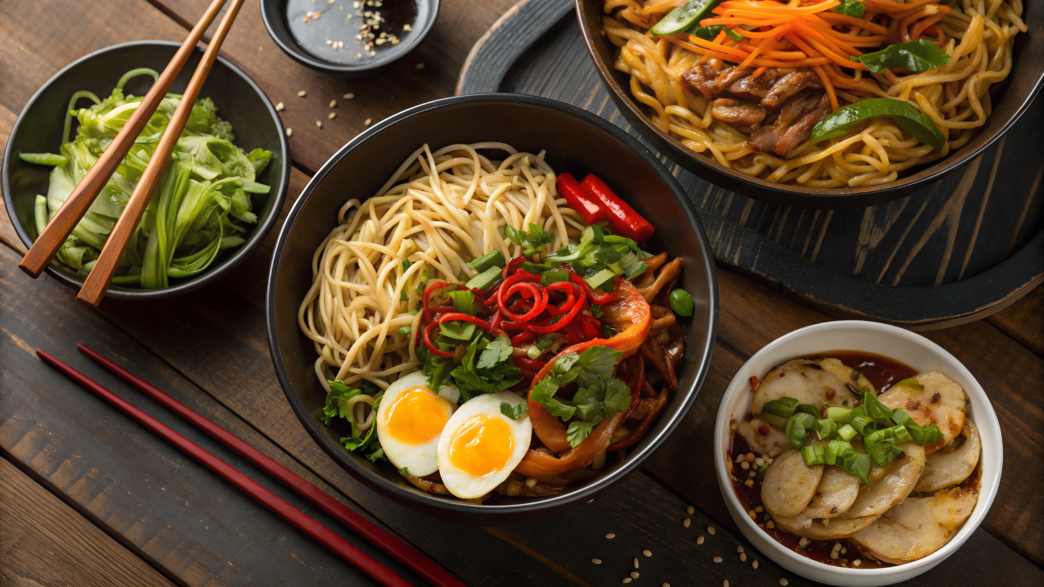
Umami makes noodles taste richer, even with just a few ingredients. It comes from fermented pastes, soy-based seasonings, broths, and other ingredients that are often already sitting in your refrigerator or pantry.
Some of these jars used to feel too specialized to me. You buy one for a single dish, use one spoonful, and then the rest sits in the refrigerator for ages. Over time, Lindy and I started adding these seasonings to noodles, vegetables, rice, and homemade sauces. Even a small amount makes a noticeable difference to dinner without making it more complicated.
Here, I’ve put together 10 Asian noodle recipes with bold umami that you can make in a regular home kitchen. They’ll help you get comfortable with unfamiliar seasonings and finally use those open jars that have been waiting in the refrigerator for far too long.
1. Scallion oil noodles with crispy garlic and soy butter
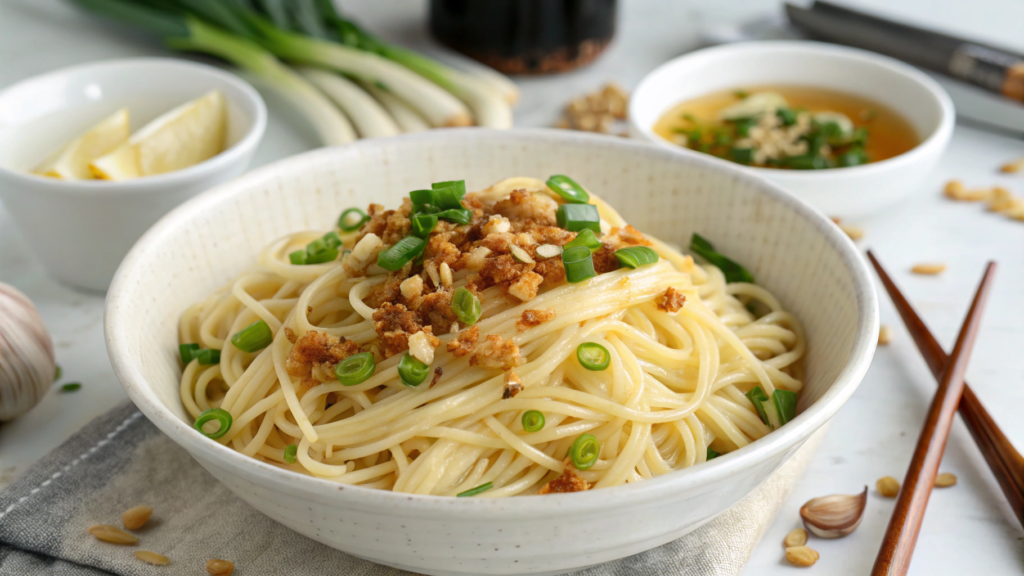
The simplest ingredients do most of the work in this recipe: scallions, garlic, soy sauce, and butter.
Our scallions grow faster than we can add them to salads. A few years ago, Lindy planted a whole row of them along the edge of one of our garden beds. We thought we’d snip a little for dinner now and then. But we ended up with a lot of scallions. Now part of the harvest regularly goes into fragrant scallion oil, and that’s much more interesting than trying to squeeze another bunch into an omelet.
What you’ll need
Makes 2 large servings:
- 8 oz wheat or egg noodles
- 8–10 scallions
- 5 large garlic cloves
- ⅓ cup neutral cooking oil
- 2 tbsp light soy sauce
- 1 tsp dark soy sauce
- 1 tbsp butter
- 1 tsp brown sugar
- ½ tsp rice vinegar
- 1 tsp sesame oil
- 2–3 tbsp reserved noodle cooking water
- Crushed red pepper flakes, optional
It’s best to use light soy sauce without added sweeteners. It gives the sauce the right level of saltiness without turning it into a thick, sticky glaze.
The dark soy sauce is mainly there for color. You only need one teaspoon. If you don’t have it, just add another teaspoon of light soy sauce instead. The noodles will be a little lighter in color, but the recipe will still work.
How to make it
- Slice the scallions and garlic. Separate the white parts of the scallions from the green parts. Cut the white sections into pieces about 2 inches long. Leave the green parts a little longer if you’d like. Slice the garlic into thin pieces. Don’t run it through a garlic press because finely minced garlic burns very quickly in hot oil.
- Make the scallion oil. Pour the oil into a wide skillet and add the white scallion pieces. Cook over low heat for about 5 minutes, turning them occasionally. Add the green parts and continue cooking for another 7–10 minutes. The scallions should become noticeably darker around the edges and slightly dry, but not black.
Don’t rush this step. If the heat is too high, the scallions will brown quickly while the oil won’t absorb much of their flavor. - Make the crispy garlic. Transfer the cooked scallions to a plate lined with paper towels. Add the sliced garlic to the same oil and cook for 1–2 minutes, stirring constantly. Remove it as soon as it turns light golden.
The garlic keeps browning even after it’s on the plate. It’s much better to take it out a few seconds early than end up picking bitter brown pieces out later. - Cook the noodles. Follow the package directions, but remove them from the heat about 1 minute before they’re fully done. Before draining, reserve about ½ cup of the cooking water. You’ll need it to help the sauce coat the noodles more evenly.
- Mix the sauce. Leave about 3 tablespoons of the scallion oil in the skillet. Add the light soy sauce, dark soy sauce, brown sugar, and rice vinegar. Warm everything for about 30 seconds, then reduce the heat and stir in the butter.
Don’t let the mixture boil for long. The butter should blend into the soy sauce instead of separating into fat and dark liquid. - Add the noodles. Transfer them to the skillet and pour in 2 tablespoons of the reserved cooking water. Toss with tongs for about 1 minute. If the noodles are still sticking together, add another tablespoon of water.
Stir in the sesame oil at the very end. Heating it for too long will make its aroma much weaker. - Add the crispy toppings back. Toss the noodles with half of the fried scallions and half of the garlic. Scatter the rest over the top after dividing the noodles into bowls. That way, the garlic stays crisp instead of softening in the hot sauce. Add crushed red pepper flakes if you’d like.
Tip. Pour the leftover scallion oil into a clean jar and keep it in the refrigerator. You can use it later for rice, eggs, or roasted vegetables.
These scallion oil noodles show that you don’t need a long list of hard-to-find ingredients for great umami. It’s much more important to let the scallions slowly flavor the oil, remove the garlic at the right moment, and save a little of the noodle cooking water. Make it this way once, and you’ll be able to repeat it with almost any noodles you have at home.
2. Dan dan style sesame noodles with a peanut miso shortcut
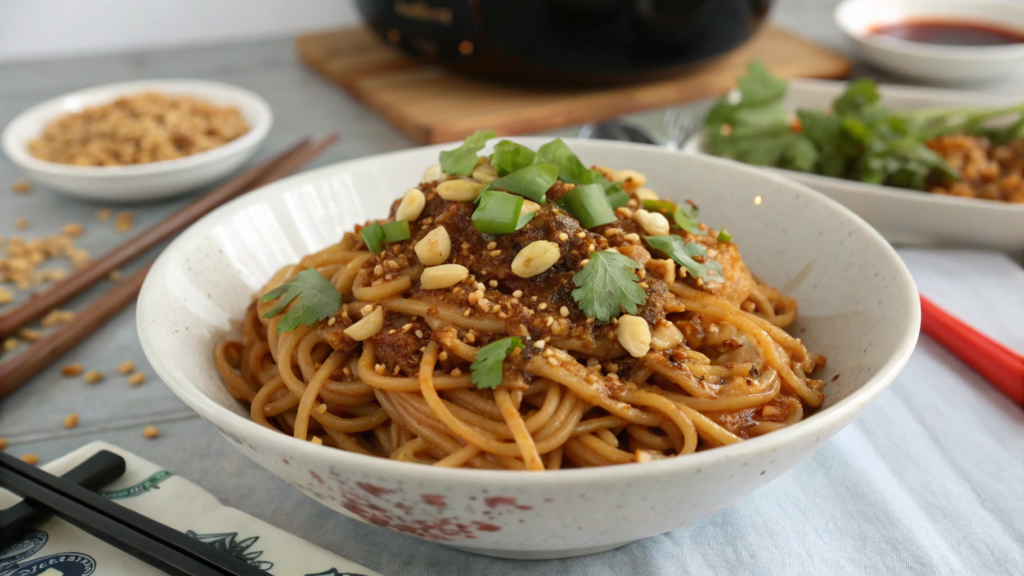
Classic dan dan noodles usually call for several Chinese seasonings that aren’t always easy to find at a regular grocery store. In this version, the sesame noodle sauce comes together with peanut butter, miso, and soy sauce. You get a convenient homemade version with plenty of umami without having to buy a bunch of new ingredients for one dinner.
We often buy miso for soups, marinades, and dressings. Peanut butter is almost always in the pantry too, although Lindy somehow manages to leave exactly one spoonful in the jar before putting it back on the shelf. That happens to be just enough for this sauce, so there’s really no point arguing about it.
What you’ll need
Makes 2 large servings:
- 8 oz wheat noodles
- 3 tbsp natural peanut butter
- 1 tbsp white or light miso paste
- 2 tbsp light soy sauce
- 1 tbsp rice vinegar
- 1–2 tsp chili crisp or chili oil
- 1 tsp sesame oil
- 1 tsp brown sugar
- 1 small garlic clove
- ½ tsp freshly grated ginger
- 3–5 tbsp hot reserved noodle cooking water
- 1 small cucumber
- 2 scallions
- 2 tbsp roasted peanuts
- Sesame seeds, optional
Choose natural peanut butter without added sugar or flavorings. Sweetened peanut butter will work too, but you can skip the brown sugar if you use it.
For a milder sauce, it’s best to use white miso paste, such as White Miso Paste. Dark miso also adds plenty of umami, but you’ll only need about half as much.
How to make it
- Prepare the fresh toppings. Cut the cucumber into thin matchsticks, slice the scallions into small rings, and roughly chop the roasted peanuts. Grate or finely mince the garlic.
- Mix the sauce base. Add the peanut butter, miso, soy sauce, rice vinegar, chili crisp, sesame oil, brown sugar, garlic, and ginger to a large bowl. At first, the mixture will look thick and slightly uneven. That’s completely normal.
- Cook the noodles. Follow the package directions, being careful not to overcook them. Before draining, reserve about ½ cup of the cooking water.
- Thin the sauce with the hot cooking water. Add 3 tablespoons of the reserved noodle water to the bowl and whisk well with a fork or whisk. Keep stirring, adding a little more water if needed. The sauce should pour easily from a spoon without becoming watery.
The noodle cooking water contains starch. Adding it a little at a time helps the peanut butter and miso come together into a smooth sauce. - Toss the noodles with the sauce. Transfer the hot noodles directly to the bowl and mix well. Lift them several times with tongs so the sauce coats every strand. If the sauce becomes too thick after a minute, add another spoonful of the hot cooking water.
- Add the vegetables and peanuts. Divide the noodles between bowls and top with the cucumber, scallions, and chopped peanuts. Sprinkle with sesame seeds and add a little more chili crisp if you’d like.
Tip. If the sauce tastes too salty, don’t add more peanut butter. Stir in 1–2 tablespoons of hot cooking water and a little more rice vinegar instead.
These dan dan style sesame noodles prove that a rich sauce doesn’t have to rely on hard-to-find ingredients. Once you remember the balance of peanut butter, miso, and soy sauce, you can use it with almost any noodles and finish the bowl with cucumber, carrots, tofu, or leftover roasted vegetables.
3. Hokkien style stir-fried noodles with a shrimp paste trick
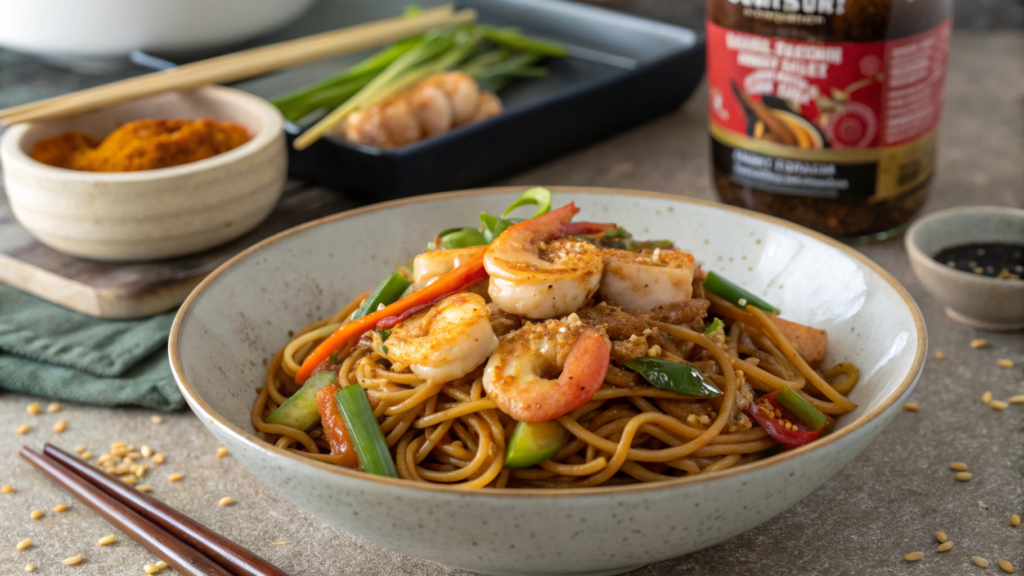
This recipe introduces an ingredient that deserves a little extra care. Shrimp paste has a very strong smell straight from the jar, but once it’s fried, it transforms completely and gives the sauce a rich umami flavor. For two servings, you’ll only need ½ teaspoon. More definitely isn’t better here.
One time, Lindy and I opened a jar of shrimp paste just before guests arrived. Oh… the kitchen instantly smelled like a seafood market. Once it hit the hot pan, the sharp smell mellowed out quite a bit, but ever since then we always turn on the range hood first. Lesson learned.
What you’ll need
Makes 2 large servings:
- 8 oz thick wheat noodles
- 6 oz raw shrimp, peeled
- ½ tsp shrimp paste
- 2 tbsp light soy sauce
- 1 tbsp dark soy sauce
- 1 tbsp oyster sauce
- 1 tsp brown sugar
- ½ tsp sesame oil
- 2 tbsp neutral cooking oil
- 2 garlic cloves
- 1 tsp finely grated fresh ginger
- 1 small carrot
- 2 cups shredded cabbage
- 3 scallions
- ¼ cup water or unsalted broth
- Lime wedges, for serving
Choose fermented shrimp paste without added seasonings. Some varieties are firm and almost dry, while others are softer and closer to a thick sauce. Use ½ teaspoon of the softer paste or about ¼ teaspoon if it’s the firmer kind.
Thick wheat noodles work best in this recipe. If you’re using fresh vacuum-packed noodles, there’s no need to boil them for long. Just cover them with hot water for about a minute, then gently separate them with your hands or tongs.
How to make it
- Prepare the noodles and vegetables. Cut the carrot into thin matchsticks, shred the cabbage, and separate the scallions into white and green parts. Mince the garlic and pat the shrimp dry with paper towels. Removing the extra moisture helps them brown much faster.
- Mix the sauce. Combine the light soy sauce, dark soy sauce, oyster sauce, brown sugar, sesame oil, and water. Stir until the sugar is almost completely dissolved.
The oyster sauce gives the sauce a thicker texture and adds even more umami. - Fry the shrimp paste. Heat a wide skillet well, add 1 tablespoon of the cooking oil, then add the shrimp paste. Cook for 20–30 seconds, pressing it against the bottom of the pan with a spatula.
Don’t stir the shrimp paste directly into the finished sauce. Frying it briefly softens its strong aroma and helps it coat the noodles more evenly. - Cook the shrimp. Add the garlic, ginger, and the white parts of the scallions. Stir for about 20 seconds, then add the shrimp. Cook for 1–2 minutes, until they’re pink on the outside. They don’t need to be fully cooked yet. Transfer them to a plate.
- Cook the vegetables. Add the remaining oil, then the carrot and cabbage. Stir-fry over high heat for about 2 minutes, stirring constantly. The vegetables should soften slightly while still holding their shape.
- Add the noodles. Transfer them to the skillet and spread them out in an even layer. Leave them untouched for 30–40 seconds. The bottom will brown slightly, giving the noodles more texture instead of tasting simply boiled.
- Pour in the sauce. Toss the noodles with the vegetables, then add the prepared sauce. Lift the noodles with tongs to distribute the liquid throughout the pan. Cook for another 1–2 minutes, until most of the sauce has been absorbed.
- Return the shrimp. Add them back to the skillet along with the green parts of the scallions. Toss everything together for about 1 minute, just until the shrimp are fully cooked. Serve with lime wedges.
Tip. If you’re cooking with shrimp paste for the first time, start with ¼ teaspoon. You can always add a little more next time once you know how strong you like it.
These Hokkien-style stir-fried noodles don’t need much shrimp paste to make a difference. Even a small amount changes the sauce once it’s been briefly fried. After you’ve tried this technique, it’s easy to use it with different vegetables, including cabbage, mushrooms, carrots, or bell peppers.
4. Thai drunken noodles with basil and the one-sauce method
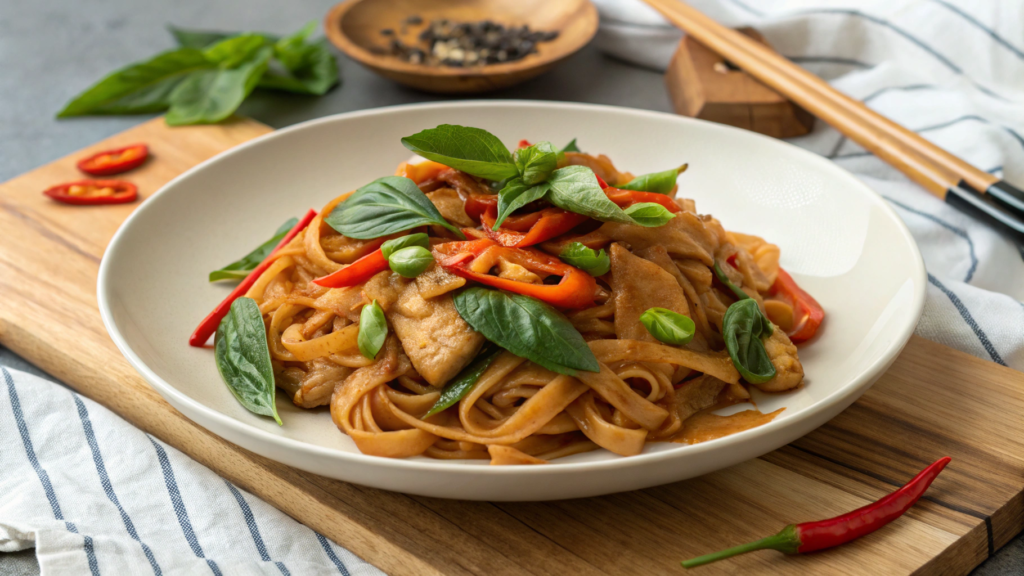
It’s easy to get lost in stir-fried noodle recipes when every step tells you to mix a different sauce. This version keeps things much simpler. For these Thai drunken noodles, you mix one sauce ahead of time and add it to the skillet all at once. Soy sauce, fish sauce, and oyster sauce bring plenty of umami, so the flavor turns out rich without a long list of seasonings. And you don’t have to scramble for the right bottle while the garlic is already starting to burn.
Despite the name, there’s no alcohol in this recipe. One popular story says these noodles were served late at night to people heading home after drinking. Another links the name to the generous amount of hot chilies. Either way, when you’re making them at home, you can adjust the heat however you like.
What you’ll need
Makes 2 large servings:
- 8 oz wide rice noodles
- 8 oz chicken breast or boneless chicken thighs
- 1 small red bell pepper
- 1 small onion
- 1 cup Thai basil leaves
- 3 garlic cloves
- 1 small hot chili
- 2 tbsp neutral cooking oil
- Lime wedges, for serving
For the sauce:
- 2 tbsp oyster sauce
- 1½ tbsp light soy sauce
- 1 tbsp fish sauce
- 1 tsp dark soy sauce
- 1 tsp brown sugar
- 2 tbsp water
Wide rice noodles work best for this recipe. Thin noodles will work too, but they soften faster and are more likely to break while tossing.
Fish sauce adds saltiness and a deep umami flavor. It may smell strong straight from the bottle, but it becomes much milder once cooked.
If you can’t find Thai basil, regular basil is a good substitute. I’d recommend stirring it in after turning off the heat so it keeps more of its aroma.
How to make it
- Prepare the noodles. Soak them in hot water according to the package directions. They should become flexible while still staying slightly firm in the center. Drain and rinse under cool water so the noodles don’t stick together.
- Mix one sauce. Combine the oyster sauce, light soy sauce, dark soy sauce, fish sauce, brown sugar, and water. Stir until most of the sugar has dissolved.
Taste a small drop before cooking. It should seem a little saltier than you’d expect because the flavor will spread through the noodles, chicken, and vegetables. - Slice everything. Cut the chicken into thin strips across the grain. Slice the onion into half-moons, the bell pepper into thin strips, and finely chop the garlic and hot chili.
Cutting the chicken into smaller pieces helps it cook quickly over high heat without drying out. - Cook the chicken. Heat a wide skillet well and add 1 tablespoon of the oil. Arrange the chicken in a single layer and leave it alone for about 40 seconds. Stir, then cook for another 1–2 minutes. Transfer it to a plate.
- Cook the vegetables. Add the remaining oil, then the onion and bell pepper. Stir-fry for about 2 minutes, stirring often. Add the garlic and chili, then cook for another 20 seconds.
- Return the chicken and add the noodles. Put the chicken back into the skillet, then add the prepared noodles. Gently lift and toss them with tongs to combine everything. Avoid pressing down with a spatula because the wide noodles can tear easily.
- Pour in the sauce. Give the sauce one more stir, then pour it around the edges of the skillet. This helps it heat up quickly. Cook for 1–2 minutes, tossing the noodles continuously with tongs.
If the sauce has been absorbed but the noodles still seem a little firm, add 1 tablespoon of water. Don’t pour in too much at once because rice noodles soften very quickly. - Add the basil. Remove the skillet from the heat and stir in the basil leaves. Toss for about 20 seconds, just until they begin to wilt. Divide the noodles between plates and serve with lime wedges.
Tip. You can mix the sauce up to 3 days in advance and keep it in a sealed jar in the refrigerator. Just give it a good shake before using it because the sugar may settle at the bottom.
With this version of Thai drunken noodles, the entire sauce is mixed ahead of time. That means you don’t have to add the soy sauce, fish sauce, and oyster sauce one by one while hoping the noodles don’t overcook. It’s a simple trick that works just as well for other quick stir-fries cooked over high heat.
5. Korean gochujang butter udon with a jammy egg
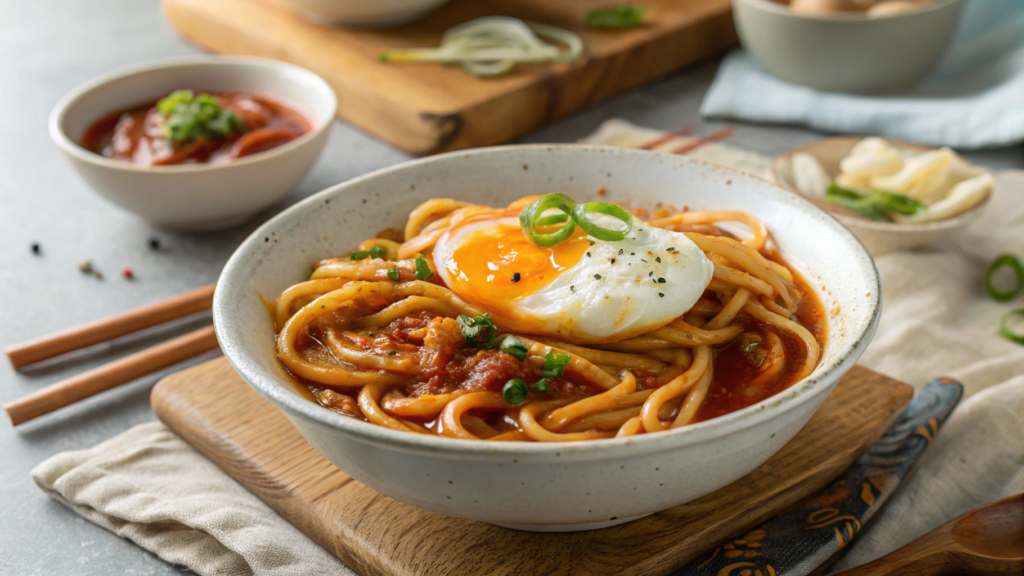
Many people buy gochujang for one recipe, then leave the open tub sitting in the refrigerator for months. But this fermented chili paste is useful for much more than marinades. It adds gentle heat and rich umami to noodles, and you only need a small amount for two servings.
The same thing happened in our kitchen. Lindy used a little gochujang for chicken, then we both forgot about it for quite a while. Later it started finding its way into fried rice, salad dressings, and roasted vegetables. This gochujang butter udon became another easy way to use something that was already open instead of letting it wait on the shelf again.
What you’ll need
Makes 2 large servings:
- 16 oz fresh or frozen udon noodles
- 2 large eggs
- 1½ tbsp gochujang
- 2 tbsp butter
- 1½ tbsp light soy sauce
- 1 tsp rice vinegar
- 1 tsp honey or brown sugar
- 1 tsp sesame oil
- 2 garlic cloves
- 3–4 tbsp reserved noodle cooking water
- 2 scallions
- 1 tsp sesame seeds
- Dried seaweed flakes, optional
Gochujang is a thick paste made from red chili peppers, fermented soybeans, and rice. The heat level varies quite a bit from one brand to another, so it’s worth tasting a small amount before cooking. One good option is Korean Gochujang Chili Paste.
Fresh or frozen udon is easier to work with than the dried version. It’s thicker, cooks faster, and keeps its chewy texture better after it’s tossed with the sauce.
How to make it
- Cook the eggs. Bring a small pot of water to a gentle boil. Carefully lower in the eggs and cook for 7 minutes. Transfer them immediately to a bowl of very cold water and let them cool for at least 5 minutes. Peel the eggs and cut them in half just before serving.
- Mix the sauce base. Combine the gochujang, soy sauce, rice vinegar, honey, and sesame oil. Stir until smooth. If the paste is very thick, add 1 tablespoon of warm water.
- Cook the udon. Prepare the noodles according to the package directions. Frozen udon usually takes only a few minutes in boiling water. Separate the strands gently with tongs and avoid cooking them longer than necessary. Before draining, reserve about ½ cup of the cooking water.
- Cook the garlic in the butter. Melt the butter in a wide skillet over medium heat. Add the finely chopped garlic and cook for about 30 seconds, stirring constantly. The garlic should become fragrant without browning.
- Add the gochujang. Stir the prepared sauce mixture into the skillet and cook for 30–40 seconds. Mix it well with the butter until you have a smooth red sauce.
Don’t leave the gochujang on a dry hot pan. The sugar in the paste can burn quickly and give the sauce a bitter taste. - Toss the udon with the sauce. Add the noodles along with 2 tablespoons of the reserved cooking water. Toss with tongs for about 1 minute, coating every strand. If the sauce still seems too thick, add another tablespoon or two of the cooking water.
- Finish with the egg and toppings. Divide the udon between bowls. Top with the halved eggs, sliced scallions, sesame seeds, and a little dried seaweed if using. Slice into the egg over the noodles so the soft yolk blends into part of the sauce.
Tip. Serve the udon as soon as it’s ready. While the noodles are still hot, the sauce coats them much more evenly.
You can easily adjust the amount of gochujang to suit your taste. Start with 1 tablespoon the first time, then add a little more next time if you’d like extra heat. Since every brand is different, it’s best to let the paste guide you as much as the recipe does.
6. Vietnamese lemongrass vermicelli bowls with a store-bought shortcut
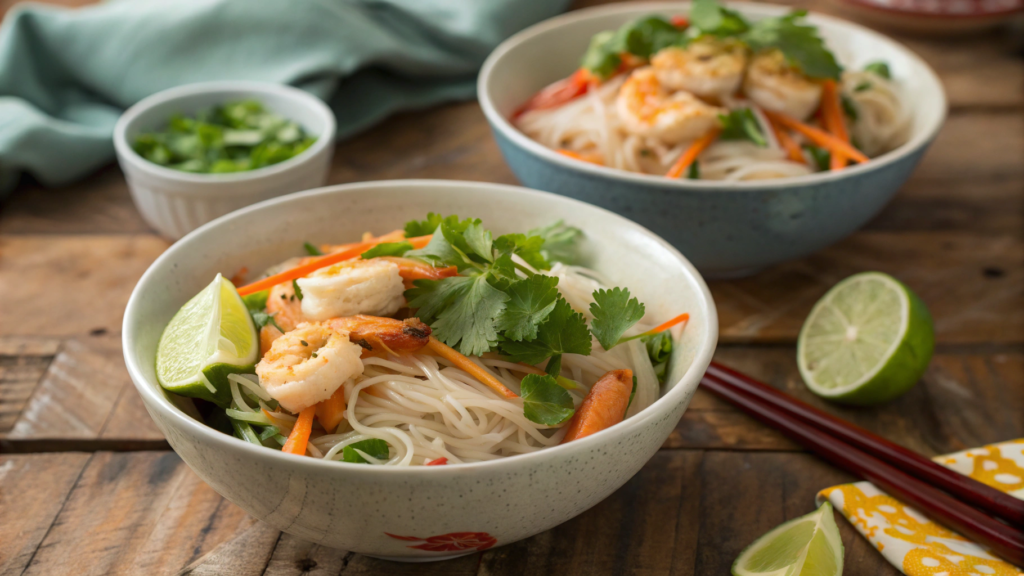
Fresh lemongrass isn’t always easy to find. And even when you do find it, part of the stalk is too tough to use, part needs peeling, and then there’s still plenty of chopping left to do. For an ordinary weeknight dinner, that’s often more effort than I want.
That’s why I happily use prepared lemongrass paste for these Vietnamese vermicelli bowls. Fresh stalks have a brighter aroma, but a good paste lets you make the marinade in just a few minutes. Fish sauce and soy sauce bring the umami, while the lemongrass keeps everything fresh and citrusy.
We used to grow fresh lemongrass in large pots outside the house. But every winter it needed much more attention than we wanted to give it. Now I buy fresh stalks when I really need them, and for quick noodle bowls I always keep a tube of lemongrass paste in the refrigerator.
What you’ll need
Makes 2 large servings:
- 6 oz thin rice vermicelli
- 10 oz boneless, skinless chicken thighs
- 1½ tbsp prepared lemongrass paste
- 1 tbsp fish sauce
- 1 tbsp light soy sauce
- 1 tbsp brown sugar
- 1 tbsp neutral cooking oil
- 1 garlic clove
- 1 tsp lime juice
- 1 small carrot
- ½ English cucumber
- 1 cup shredded lettuce
- ½ cup fresh mint and cilantro
- 2 tbsp chopped peanuts
- Lime wedges, for serving
For the quick dressing:
- 2 tbsp fish sauce
- 2 tbsp lime juice
- 2 tbsp warm water
- 1 tbsp sugar
- 1 small garlic clove
- Finely sliced hot chili, optional
Choose lemongrass paste without a lot of added sugar. Both the tube version and the thicker paste sold in jars work well.
For the noodles, use thin rice vermicelli, not clear bean thread noodles made from starch.
How to make it
- Marinate the chicken. Slice the chicken into thin bite-sized pieces. Mix together the lemongrass paste, fish sauce, soy sauce, brown sugar, cooking oil, minced garlic, and lime juice. Add the chicken, toss well, and let it marinate for at least 20 minutes.
If you have extra time, you can marinate the chicken for up to 4 hours in the refrigerator. Any longer isn’t recommended because the lime juice gradually changes the texture of the meat. - Make the dressing. Stir the warm water and sugar together until the sugar dissolves. Add the fish sauce, lime juice, minced garlic, and sliced chili. Taste and adjust with a little more water or lime juice if needed.
- Prepare the vegetables. Cut the carrot into thin matchsticks or grate it using the large holes of a box grater. Slice the cucumber into thin strips. Wash and dry the lettuce, mint, and cilantro well.
- Cook the vermicelli. Prepare it according to the package directions. Thin rice vermicelli usually needs only a few minutes in hot water. Drain and rinse under cold water, separating the noodles gently with your fingers or tongs.
Don’t leave the cooked vermicelli sitting in hot water. Even after the heat is off, it continues to soften and can become sticky. - Cook the chicken. Heat a wide skillet well. Shake off the excess marinade and arrange the chicken in a single layer. Cook over medium-high or high heat for about 3 minutes, then turn and cook for another 2–3 minutes, until fully cooked.
If your skillet is small, cook the chicken in two batches. You’ll get nicely browned edges instead of a pan full of liquid. - Build the bowls. Divide the vermicelli between two bowls. Add the lettuce, cucumber, carrot, herbs, and hot chicken. Spoon over the dressing, sprinkle with chopped peanuts, and serve with lime wedges.
Tip. You can prepare the vegetables and the dressing ahead of time, but wait until serving to combine them with the vermicelli. That way, the noodles won’t soak up all the liquid and become too soft.
Prepared lemongrass paste won’t completely replace fresh lemongrass, but it saves a surprising amount of time. Thanks to that shortcut, these Vietnamese vermicelli bowls are easy enough to make even on a busy weeknight without peeling and finely chopping fresh stalks.
7. Sichuan cold noodles with chili crisp and black vinegar
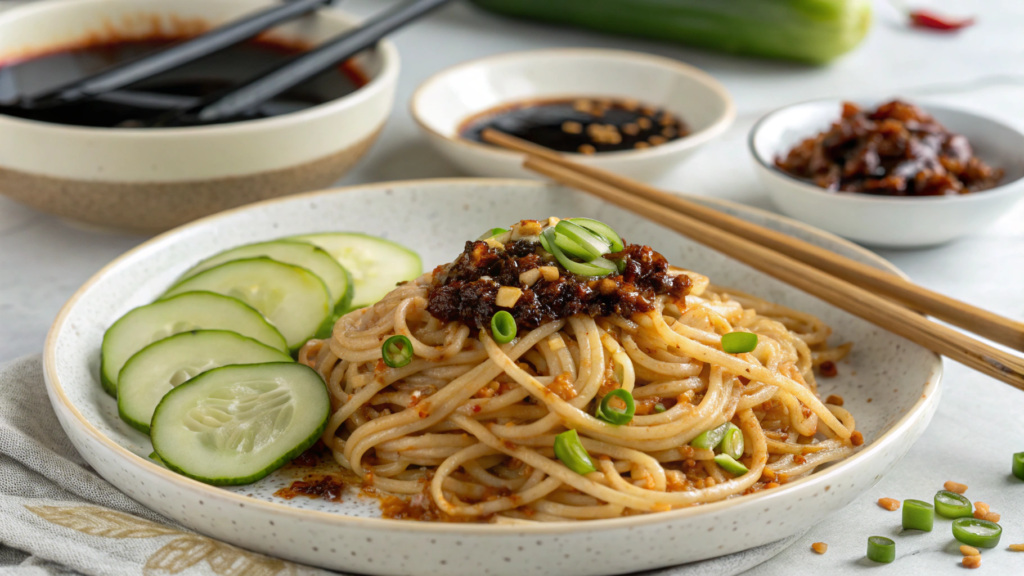
These Sichuan cold noodles don’t need a complicated sauce or a dozen different spices. Soy sauce and chili crisp bring plenty of umami, Chinese black vinegar adds a pleasant tang, and fresh cucumber keeps the dish light.
During the summer, we often cook the noodles ahead of time before the kitchen gets too warm. Later, all that’s left is to take them out of the refrigerator and toss them with the sauce. Lindy usually slices the cucumber into long, thin strips, while I always end up adding way too many scallions. At least this is one dish where they really belong.
What you’ll need
Makes 2 large servings:
- 8 oz wheat noodles
- 1 small cucumber
- 2 scallions
- 2 tbsp roasted peanuts
- 1 tbsp sesame seeds, optional
- Fresh cilantro, optional
For the sauce:
- 2 tbsp chili crisp
- 1½ tbsp Chinese black vinegar
- 1½ tbsp light soy sauce
- 1 tbsp sesame oil
- 1 tsp sugar
- 1 small garlic clove
- ½ tsp grated fresh ginger
- 1–2 tbsp cold water
Chinese black vinegar is quite different from regular rice vinegar. It’s darker, milder, and has a much deeper flavor.
How to make it
- Prepare the vegetables. Cut the cucumber into thin matchsticks, slice the scallions into small rings, and roughly chop the roasted peanuts. Grate or finely mince the garlic.
- Mix the sauce. Combine the chili crisp, black vinegar, soy sauce, sesame oil, sugar, garlic, and ginger. Add 1 tablespoon of cold water and stir well.
Taste the sauce before adding the noodles. If the vinegar seems too strong, stir in a little more water or a pinch of sugar. - Cook the noodles. Prepare them according to the package directions, being careful not to overcook them. For a cold noodle dish, it’s better to leave them slightly firm because they’ll soften a little more after rinsing and mixing with the sauce.
- Cool the noodles quickly. Drain them immediately and rinse well under cold running water. Gently separate the noodles with your fingers or tongs while washing away the excess starch. Continue until they’re completely cool.
Shake off as much water as possible. If the noodles stay too wet, the sauce will become diluted and collect at the bottom of the bowl. - Toss the noodles with the sauce. Transfer the noodles to a large bowl, add the prepared sauce, and mix well with tongs. If the sauce doesn’t coat the noodles evenly, add another 1 tablespoon of water.
- Add the fresh toppings. Toss in half of the cucumber and scallions. Divide the noodles between bowls, then top with the remaining cucumber, scallions, chopped peanuts, sesame seeds, and cilantro.
Tip. If you’re making the noodles several hours ahead, don’t mix them with the sauce yet. Keep the noodles and sauce separate, then combine them just before serving so the noodles don’t absorb too much liquid.
One of the nicest things about these Sichuan cold noodles is how easy they are to adjust at the table. Some people will want extra cucumber, others will reach for more peanuts, and Lindy will almost certainly add another spoonful of chili crisp. The base stays the same, but every bowl ends up a little different.
8. Japanese curry udon using instant roux and extra dashi
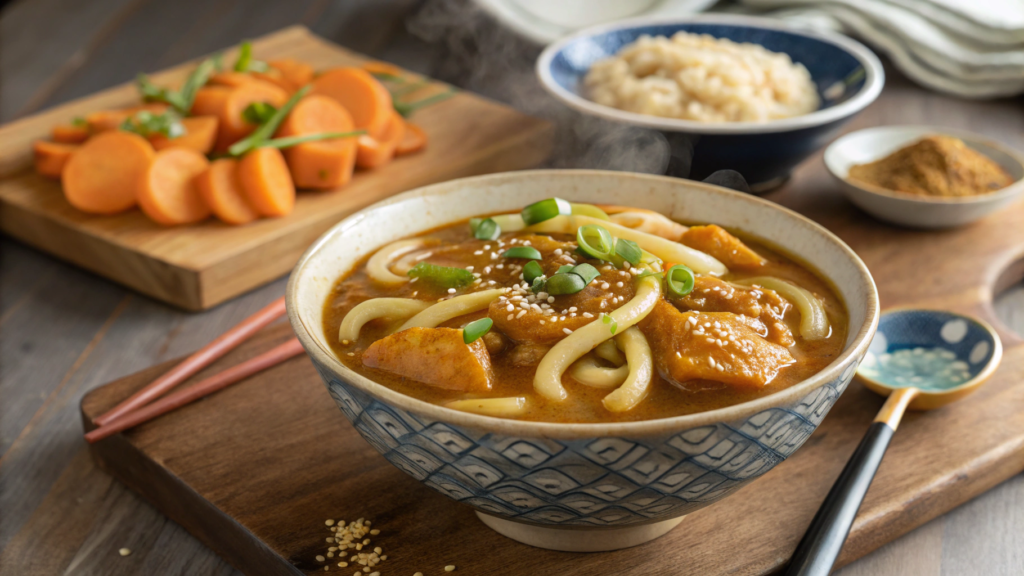
Japanese curry often sounds like something that takes hours because the sauce has to be made from scratch. In reality, many home versions start with curry roux, and there’s nothing unusual about that. These ready-made blocks create a thick, flavorful base without having to toast flour and spices separately.
In this version of curry udon, we add dashi to the prepared curry base. It boosts the umami and keeps the sauce from tasting like ordinary thick gravy. As a result, the curry pairs much better with udon and feels less heavy.
What you’ll need
Makes 2 large servings:
- 16 oz fresh or frozen udon noodles
- 2 Japanese curry roux blocks (about 2 oz / 55–60 g)
- 2 cups dashi broth
- 6 oz thinly sliced beef or boneless chicken thighs
- 1 small onion
- 1 small carrot
- 1 tbsp neutral cooking oil
- 1 tbsp light soy sauce
- 1 tsp mirin
- 2 scallions
- Red pepper flakes, optional
For a quick dashi, use instant dashi granules prepared according to the package directions. It’s much faster than making dashi from kombu and dried fish every time.
Japanese curry roux comes in different spice levels. If this is your first time making it, choose a mild or medium version.
How to make it
- Prepare the ingredients. Slice the onion into thin half-moons, cut the carrot into thin slices, and slice the meat into short strips. Save the scallions for serving.
- Cook the meat and onion. Heat the oil in a pot or deep skillet. Add the meat and cook for about 2 minutes, until it changes color. Stir in the onion and continue cooking for another 3–4 minutes, stirring occasionally.
- Add the carrot and dashi. Add the carrot, pour in the dashi broth, and bring everything to a gentle simmer. Reduce the heat and cook for about 8 minutes, until the carrot begins to soften.
- Dissolve the curry roux. Remove the pot from the heat for about a minute. Add the curry roux blocks and stir until they dissolve completely.
Don’t add the roux while the broth is boiling hard. The outside softens quickly while the center can stay lumpy. - Finish the sauce. Return the pot to low heat. Add the soy sauce and mirin, then cook for another 3–5 minutes, stirring occasionally. The sauce should become thick but still pour easily from a spoon.
If it becomes too thick, stir in a little hot water or extra dashi. Avoid thinning it with cold water right before serving. - Cook the udon. Prepare the noodles according to the package directions. Fresh or frozen udon usually needs only a few minutes. Drain well and shake off any excess water.
- Serve. Divide the udon between deep bowls and ladle the hot curry over the top. Finish with sliced scallions and red pepper flakes if you’d like.
Tip. The curry sauce will thicken as it cools. When reheating leftovers the next day, stir in a little dashi or hot water until it reaches the right consistency again.
Using curry roux saves a surprising amount of time, while the extra dashi keeps the sauce lighter and more balanced. It’s a simple trick that’s worth remembering for other quick Japanese noodle soups, especially when you already have an open box of curry roux in the pantry.
9. Filipino pancit canton with citrus soy finish
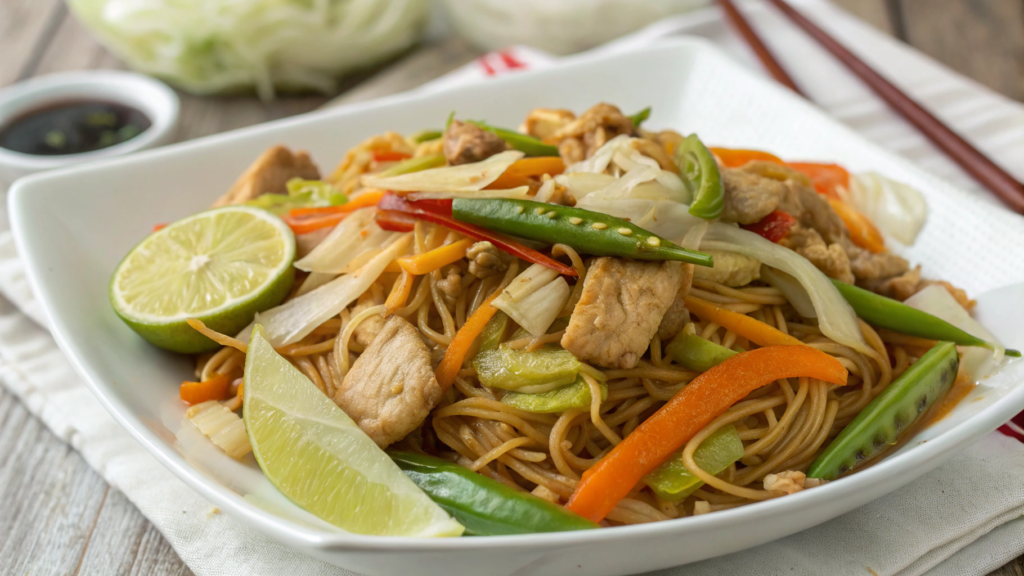
Pancit canton is often made for big family gatherings, but at home there’s no need to fill a giant skillet to feed ten people. A smaller batch turns out just as satisfying, especially when you use vegetables you already have on hand.
Cabbage, carrots, green beans, bell peppers, or leftover cooked chicken all work well in the same pan. We usually make this toward the end of the week, when the refrigerator isn’t empty, but every container has just a little left in it.
Soy sauce and oyster sauce bring plenty of umami, while calamansi or regular lime adds a bright finishing touch.
What you’ll need
Makes 2 large servings:
- 8 oz dried pancit canton egg noodles
- 6 oz chicken breast or boneless chicken thighs
- 1 cup thinly shredded cabbage
- 1 small carrot
- ½ small bell pepper
- ½ small onion
- 2 garlic cloves
- 2 scallions
- 2 tbsp neutral cooking oil
- 1¼ cups chicken broth
- 2 tbsp light soy sauce
- 1 tbsp oyster sauce
- ½ tsp sugar
- Black pepper, to taste
For the citrus finish:
- 1½ tbsp calamansi juice or lime juice
- 1 tsp light soy sauce
For this recipe, it’s best to use dried pancit canton egg noodles. They finish cooking right in the skillet and absorb part of the broth as they soften.
How to make it
- Prepare the ingredients. Slice the chicken into thin strips. Cut the carrot and bell pepper into matchsticks, slice the onion into thin half-moons, and shred the cabbage. Finely chop the garlic and slice the scallions.
- Mix the citrus finish. Stir together the calamansi or lime juice with 1 teaspoon of soy sauce. Set it aside for now. You’ll add it after the noodles are cooked.
- Cook the chicken. Heat 1 tablespoon of oil in a large skillet. Arrange the chicken in a single layer and cook for 2–3 minutes, turning once. Transfer it to a plate, even if it’s not fully cooked in the center yet.
- Cook the vegetables. Add the remaining oil, then cook the onion and carrot for about 2 minutes. Stir in the garlic, bell pepper, and cabbage, and cook for another minute, stirring often.
Don’t cook the vegetables until they’re completely soft. They’ll spend a few more minutes in the hot broth with the noodles. - Add the broth and seasonings. Pour in the chicken broth, light soy sauce, and oyster sauce. Add the sugar and a little black pepper, then bring everything to a gentle simmer.
- Cook the noodles in the skillet. Add the dry noodles directly to the broth. Leave them undisturbed for about 1 minute so the bottom softens, then gently turn them with tongs.
Continue cooking for 3–5 minutes, gradually separating the noodles. They should absorb most of the liquid without becoming too soft. If the broth cooks away too quickly, add a few spoonfuls of hot water. - Return the chicken. Add the chicken back to the skillet and toss everything together. Cook for another 1–2 minutes, making sure the chicken is fully cooked.
- Finish with the citrus mixture. Remove the skillet from the heat, pour in the prepared citrus-soy mixture, and toss quickly. Taste the noodles and add a little more juice if you’d like. Finish with the sliced scallions.
Tip. Add the citrus juice only after turning off the heat. If it cooks too long, the fresh citrus aroma fades and the acidity becomes sharper.
One of the best things about pancit canton is how easily it adapts to whatever is already in your refrigerator. You can swap the vegetables, replace the chicken with shrimp, or even make it meatless. The broth, soy sauce, and citrus finish still bring everything together.
10. Hong Kong style soy sauce chow mein with wokless crisp hack
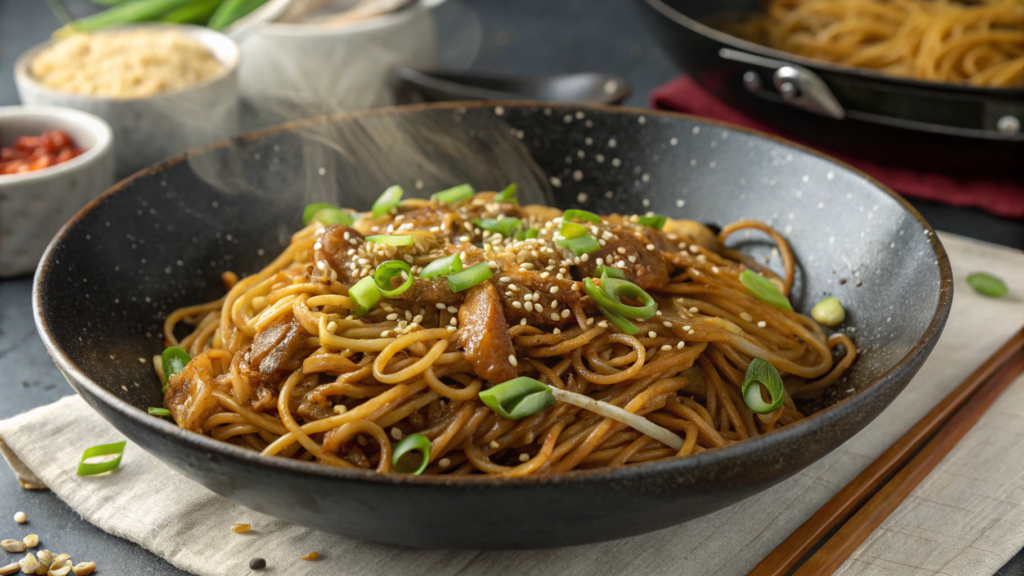
You don’t need to buy a wok or try to copy restaurant techniques on a regular home stove to make Hong Kong-style chow mein. A wide skillet works just as well if you don’t overcrowd it and resist the urge to stir the noodles every few seconds.
I used to keep the noodles moving almost constantly because I was afraid they’d stick. They always heated through nicely but stayed soft. One day Lindy distracted me with a conversation, and I completely forgot about the pan for almost a minute. That was the moment the crispy golden layer finally appeared underneath. Some kitchen discoveries really do happen by accident.
Light soy sauce, dark soy sauce, and oyster sauce bring plenty of umami, while the browned bits add the crisp texture. You can get the same result without a wok by using a wide skillet and cooking the noodles in smaller batches.
What you’ll need
Makes 2 large servings:
- 8 oz fresh or dried thin egg noodles
- 3 scallions
- 1 cup bean sprouts
- 2 tbsp neutral cooking oil
- 1 tsp sesame oil
- White pepper, to taste
For the sauce:
- 1½ tbsp light soy sauce
- 2 tsp dark soy sauce
- 1 tbsp oyster sauce
- 1 tsp sugar
- 1 tbsp water
Thin egg noodles made for stir-frying work best here. They dry out more quickly in the skillet and absorb the sauce evenly.
Dark soy sauce is used mainly for color. It’s thicker and slightly sweeter than light soy sauce, so it’s better not to substitute one completely for the other.
How to make it
- Prepare the noodles. Separate fresh noodles gently with your hands, trying not to break the long strands. If using dried noodles, cook them according to the package directions but reduce the cooking time by about 1 minute. Drain well and shake off as much water as possible.
Spread the noodles in a thin layer on a large plate or baking sheet and let them sit for 10–15 minutes. Slightly dried noodles brown more easily and release less steam in the skillet. - Mix the sauce. Stir together the light soy sauce, dark soy sauce, oyster sauce, sugar, and water until most of the sugar dissolves.
- Prepare the vegetables. Cut the white parts of the scallions into 2-inch pieces. Leave the green parts a little longer if you like. Rinse the bean sprouts and dry them well.
- Heat the skillet well. Place a wide skillet over high heat for 1–2 minutes. Add 1 tablespoon of oil and coat the bottom of the pan.
The skillet should already be hot before the noodles go in. Otherwise, they’ll absorb the oil instead of browning. - Brown the first side. Add half of the noodles in an even layer. Press them gently against the skillet with a spatula and leave them undisturbed for 60–90 seconds. Check the bottom, and once golden patches appear, flip the noodles in small sections.
- Brown the other side. Drizzle a little more oil around the edges of the skillet and cook for about 1 minute more.
Don’t try to make every strand crispy. It’s enough for part of the noodles to brown while the rest stays pleasantly chewy.
Transfer the first batch to a plate and cook the rest the same way. Working in two batches keeps the noodles from steaming in an overcrowded skillet. - Add the vegetables. Return all the noodles to the skillet. Add the white scallion pieces and bean sprouts. Cook for 30–40 seconds, gently lifting everything with tongs.
- Add the sauce. Stir the sauce once more and pour it around the edges of the skillet. Toss the noodles quickly until they’re evenly coated. Cook for about 1 minute more.
- Finish the dish. Add the green scallion tops, sesame oil, and a little white pepper. Toss a few more times and remove the skillet from the heat.
Tip. Don’t cover the finished noodles with a lid. The trapped steam will quickly soften the crispy edges you worked so hard to create.
For Hong Kong-style soy sauce chow mein, having enough space in the skillet matters more than owning a wok. Cooking the noodles in two batches and stirring less often is enough to create those browned, crispy edges, even on a regular electric stove. It’s a handy technique for many other stir-fried noodle dishes too.
Special seasonings
After making recipes like these a few times, umami stops feeling mysterious or something only restaurant chefs know how to use. You begin to recognize which ingredients add depth, how much to use, and what they pair well with. Before long, the jars in your refrigerator stop looking random and start looking like dinner ideas.
There’s no need to buy everything at once. Start with one new ingredient, or finally use the jar that’s been sitting in the refrigerator for months. And tell me in the comments, which seasoning has been waiting the longest in your fridge, and what dish did you finally use it in?