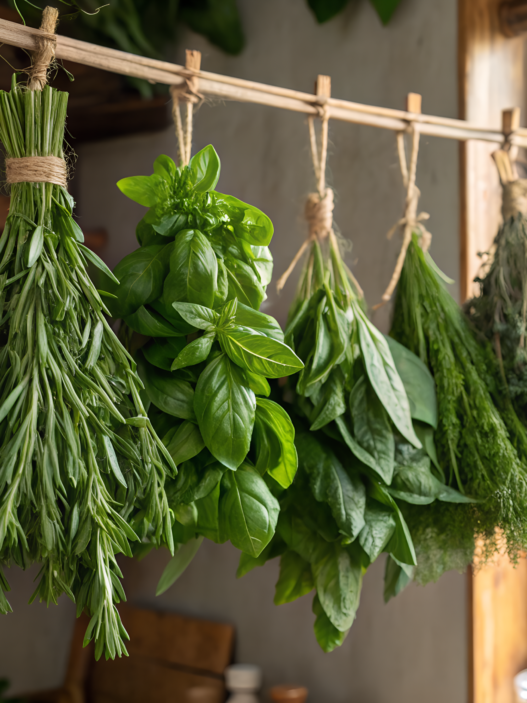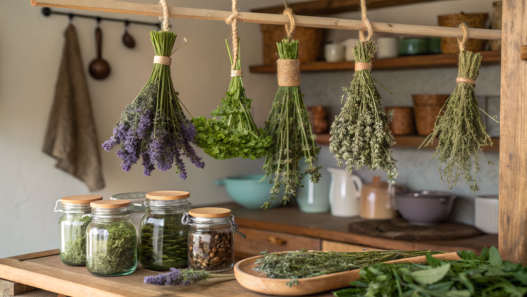

Drying herbs isn’t just a way to save your harvest. It’s a ritual. Every bundle holds not just flavor and aroma, but the summer you spent out in the garden.
But there’s more than one way to dry herbs. And in 2025, we’re finally seeing methods that actually preserve everything we love about our homegrown herbs — the scent, the flavor, the color, the energy.
We’ve gathered 10 methods that are trending across TikTok, Pinterest, and herbalist communities worldwide — and tested every single one at home. Yep, every one of these was tried right here on our micro-homestead, in the shade of the old pantry, with fans buzzing and the smell of July sage in the air.
In this article, we’ll walk through what mistakes ruin your herbs, how to keep those precious essential oils, and why sometimes the key is simply turning your bundle on day three of drying.
1. Drying Lemon Balm Like This Keeps Its Calming Power Intact
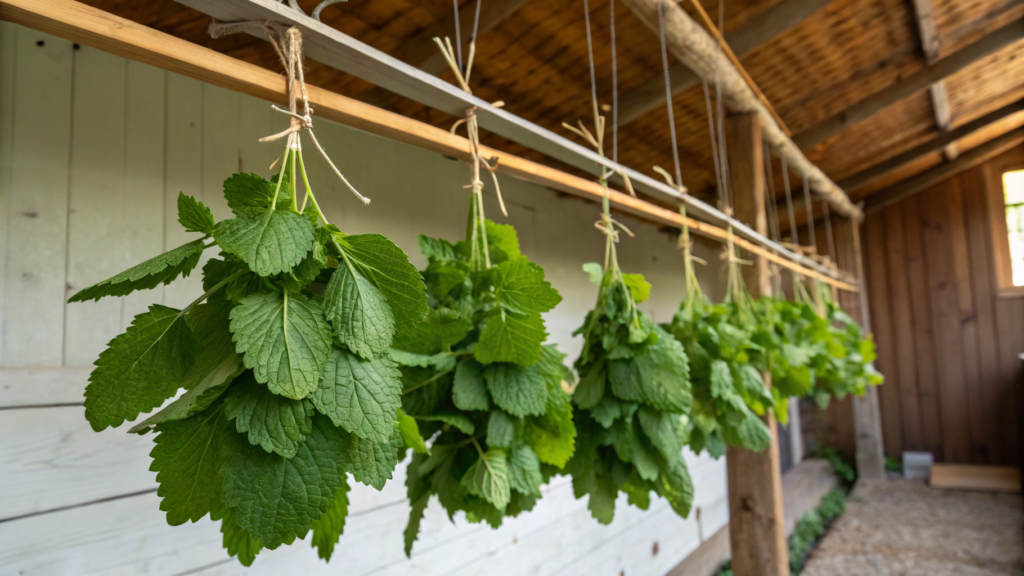
Lemon balm is one of the fussiest herbs when it comes to drying. Just crank the temperature slightly too high — and poof: no flavor, no benefits, no calming effect.
And that calming effect? I live for it. At our place, it’s a sacred part of our evening routine: a mug of lemon balm tea before bed, and your brain stops racing. Just… stop. Lights out.
So here’s the thing. If you want your dried lemon balm to actually keep its soothing properties, the drying process needs to be gentle — really gentle.
According to research, the main compounds in lemon balm — citral and geraniol — start breaking down at temperatures above 95–104°F (35–40°C)
(Journal of Essential Oil Research, 2018)
And guess what? Most folks using dehydrators crank it up to 135°F (57°C). And just like that… the aroma? Gone.
How we dry lemon balm on our homestead
- We harvest in the morning. I clip the lemon balm leaves around 9–10 a.m., once the dew has evaporated but before the sun gets too hot. That’s when the essential oils are at their peak.
- We don’t wash it. If the plant is clean (ours grows in raised beds), we skip rinsing. Extra moisture just slows drying and can cause mold.
- We lay it out in a single layer. We use mesh screens or racks with good airflow. Key thing: the leaves shouldn’t touch — they’ll darken and lose quality if they do.
- We dry in the shade at room temperature.
Best is a ventilated, dark spot. We use our old pantry with an open window. Temperature stays around 70°F (21°C). - We keep the air moving. Sometimes we run a fan nearby to improve circulation. It helps prevent musty smells and speeds up the drying.
- We wait 5–7 days. The leaves are ready when they’re crispy but not crumbling into dust. If they fall apart when touched — they’re overdone.
- We store it in dark glass jars. Away from light and humidity. Airtight lids make a difference. These are the ones we use Amber Glass Herb Jars – Set of 6 on Amazon
How to tell it worked
If you did it right, here’s what you get:
- The color stays bright green, not brown.
- The scent is fresh, lemony, a little oily, not flat or musty like store-bought tea.
- The tea has a soft citrus flavor, and within 10 minutes of drinking it, you feel your shoulders start to relax.
All the magic of lemon balm lives in those essential oils. Without them, it’s just… bagged fluff in disguise.
2. The TikTok Way to Dry Holy Basil (Tulsi) Without Losing Flavor

I’m usually cautious with TikTok advice. But there was this one video that caught my eye — a woman from Southern California showed how she dries tulsi in a plain cardboard box.
No dehydrator. No hanging. And the leaves? So vibrant I watched the video three times.
We gave it a try. And it worked. So well that now this is the only way we dry tulsi.
Why tulsi doesn’t act like other herbs
Tulsi isn’t just another basil. In Ayurvedic tradition, it’s considered an adaptogen, used for reducing stress, improving sleep, and balancing metabolism
(Journal of Ayurveda and Integrative Medicine, 2014).
But! The key active compounds in tulsi — like eugenol and rosmarinic acid — are volatile compounds. That means if you use high heat, they just… vanish.
So when drying tulsi, you’re not just “preserving greens.” You’re protecting its flavor, aroma, and benefits.
Here’s the exact TikTok method that actually works
- I harvest tulsi in the morning.
Always on a dry day. Ideally when the plant is flowering — that’s when the aroma is most intense. - I lay it out in a cardboard box. I use a regular shoebox or cereal box. I poke lots of tiny holes in the sides and bottom with a needle or knife — this lets the air circulate.
- I place parchment paper on the bottom, then a single layer of tulsi leaves on top.
Super thin layer! The leaves shouldn’t overlap. - I keep the box in a warm, dry, shaded spot. We use the top shelf in the kitchen — no direct light, but some air movement. The key is no moisture or the leaves will “suffocate.”
- I leave it for 3–5 days. Every day, I open the box for a couple of hours, flip the leaves, and let them breathe.
- I store the dried leaves in airtight containers or glass jars. Keeps the flavor in and moisture out.
Cardboard naturally regulates moisture. It absorbs extra humidity but still lets air through. This creates a microclimate where the leaves stay green, don’t darken, and hold their flavor.
I compared this to using a dehydrator. The difference? Huge. Even on low settings, the dehydrator dries out the tulsi too fast, and the aroma gets muted.
But with the box method — the moment you open the jar, you’re hit with this warm, spicy, clove-and-honey tulsi scent. The real deal.
3. This Is the Only Way You Should Be Drying Fresh Oregano in 2025
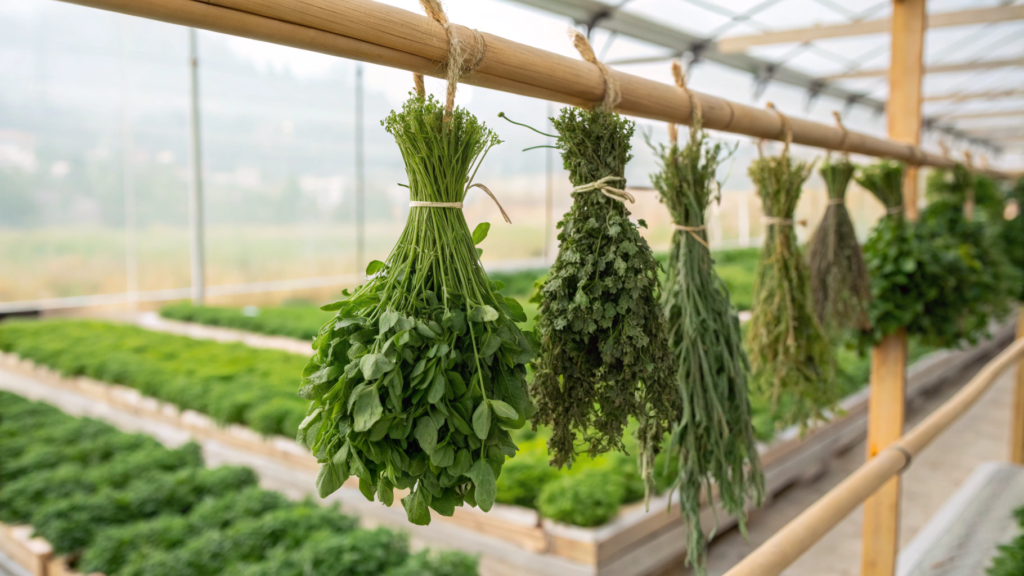
Oregano grows like a weed in our garden. Seriously. Come June, it’s everywhere — even outrunning thyme.
But here’s the thing: store-bought dried oregano vs. ours? Night and day. And the difference isn’t in the variety. It’s in how you dry it.
The science behind the aroma
According to Food Chemistry (2017), the dominant flavor compounds in oregano are carvacrol and thymol — they’re what give it that rich, pizza-parlor warmth we all know.
Researchers found that when oregano is dried at temperatures over 113°F (45°C), the concentration of these compounds drops fast. Especially with forced airflow or dehydrators, losses can reach 40–60%, depending on the method.
So if you want oregano that actually tastes like oregano, skip the oven and dehydrator. Air drying wins. Every time.
The only method we use now
- We harvest flowering stems. Yes — with the flowers. That’s when the aroma is strongest. We cut full stems, about 6–8 inches (15–20 cm) long.
- No washing. If the plant is clean, we leave it alone. Moisture ruins everything. We just gently shake off dust and check for bugs.
- We bundle and tie. I use plain kitchen twine or linen string. 5–6 stems per bundle — more than that and they won’t dry evenly.
- We slip the bundles into paper bags and hang them upside down. Yes, brown kraft bags. We poke a few air holes in the sides — this keeps out dust and bugs, and allows ventilation.(Brown Paper Bags for Herb Drying – Amazon)
- We dry for 7–10 days in a dark, dry space. Air movement is key. We hang the bundles in our old shed — no sunlight, but plenty of air. Temp stays around 70–75°F (21–24°C).
- We strip the leaves by hand when they’re crisp. Never crush or grind during storage — you’ll lose all the aroma. Strip carefully and store whole.
- We store in glass jars — uncrushed. Only crush right before use. That’s how the essential oils stay sealed in the leaf — and the flavor? Like homemade wood-fired pizza.
Why other methods don’t work
- Oven drying. Even at the lowest setting (usually 170°F / 75°C), the oils are toast.
- Dehydrator. It might work on 90°F (32°C), but it takes 24 hours — and still ends up bland.
You miss out on the joy of seeing bundles of oregano hanging like tiny green chandeliers. Especially when they’re next to lavender and sage. It’s like a kitchen apothecary come to life.
4. Why Everyone’s Hanging Thyme in Bundles This Weird New Way
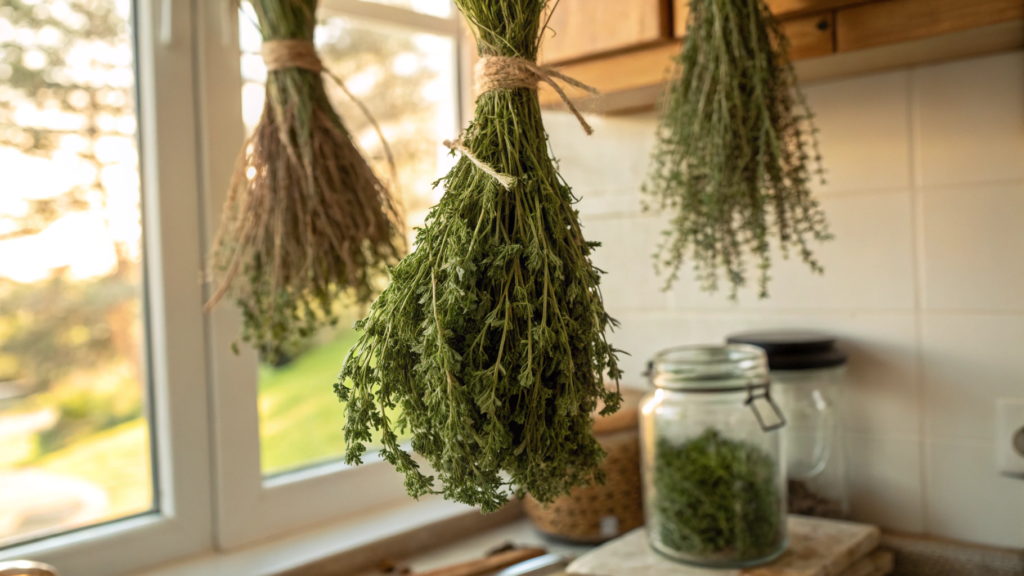
Back when I first started drying thyme, it either turned brown, crumbled into dust, or lost all its scent within a few weeks. And I couldn’t figure it out — I mean, come on. It’s thyme!
It grows bone-dry in the garden. How hard can it be?
Then I got a message from a reader in Arizona. She said: “Try flipping the bundles upside down after 3 days of drying.”
She swore it helped the stems release trapped moisture and kept the essential oils in the leaves.
I tried it. And yep — it works. Way better than the old hang-it-and-leave-it method.
Why thyme is so sneaky
It looks dry even when it’s not. The leaves are tiny, with thick skins, and they trick you — after two days they seem done, but there’s often moisture hiding in the stem.
That’s why a month later, you open a jar and smell… nothing.
The aroma comes from dozens of compounds, but the most important are thymol, carvacrol, linalool, borneol, and p-cymene.
According to Journal of Food Science and Technology (2016), the moisture level and drying time, not heat alone, make the biggest impact on these oils.
Overdry it or don’t dry it enough — either way, the flavor’s gone or just… off.
Here’s that weird little method everyone’s copying now
- We harvest thyme on dry mornings. Never after rain. Best time is when it’s been warm and dry for several days straight.
- We tie bundles with 7–10 stems. You can use linen twine, rubber bands, or clips. Just don’t tie them too tightly — air needs to get in.
- We hang them in a cool, dry, shaded place. For us, it’s the hallway between the kitchen and garage. No drafts, but air still moves. Temp stays around 68–72°F (20–22°C).
- After 3 days, we flip the bundles upside down. So if they were hanging from the stems, now they hang from the leafy ends. Sounds weird — but it lets moisture escape, especially from the stems.
(Shout-out to Susan from Tucson for that tip!) - We flip again after 2 more days. Then we keep drying until they’re fully done — usually takes 7–9 days total.
How to tell it’s ready
- The leaves are dry, but don’t crumble into powder when crushed.
- The aroma is bright, herbal, slightly camphorous.
- When you bend a stem, it snaps, not bends.
Never crush thyme before storing. Keep it whole, in bundles or a jar, and strip the leaves only when you need them. This extends the aroma 2–3 times longer. We store ours in jars like these: Dark Glass Spice Jars – Amazon
5. Drying Stinging Nettle? Here’s the Trick to Keep It Potent (and Safe)

Nettle used to be one of those wild plants we just walked past.
But now? It’s one of the most nutrient-packed herbs in our pantry, especially in spring and early summer.
We dry it in batches: for tea, for soups, and even ground into green powder for capsules (always talk to your doctor first!).
But here’s the thing — if you dry it wrong, you won’t just lose the benefits… you might end up with dusty, allergenic waste.
So if you want your nettle to actually do your body some good — keep reading.
Nettle is rich in vitamin C, calcium, iron, and antioxidants like chlorogenic acid and quercetin (Journal of Food Science and Nutrition, 2013).
When dried at temperatures above 104°F (40°C), up to 50% of antioxidants are lost, and at 122°F (50°C) you lose up to 80% of the vitamin C (Food Chemistry, 2015).
Slow drying or high humidity can also lead to mold spores, which are a real danger for people with allergies (Phytomedicine, 2016).
Our tried-and-true method
- We harvest in gloves. Only the young tops — about 10–12 inches (25–30 cm) tall. We pick in the morning after the dew dries. Always on a dry day!
- We remove thick stems. We only use the leaves and soft upper tips. Thick stems don’t dry well and lose their value fast.
- We rinse and blot with a towel. Nettle is one of the few herbs we always wash — it often has pollen, bugs, or grit under the leaves. But the key is: dry it well before laying out.
- We lay it in a single layer on mesh or cloth. Always in the shade, somewhere breezy. Max temperature: 95°F (35°C).
We use our old attic with an open window — it’s perfect. - We dry for 2–4 days. We check daily. Leaves should be dry and crisp, but not crumbling into powder. The color should stay green — no brown spots.
- We only crush it after it’s fully dry. Then we store it in airtight jars or paper bags with desiccants to keep moisture out.
If you don’t trust the air-dry method, a dehydrator works too — but only under 95°F (35°C). Anything higher and you’re not drying nettle — you’re making hay.
6. Mugwort Drying 101: The Ritual Prep Hack That’s Trending Everywhere
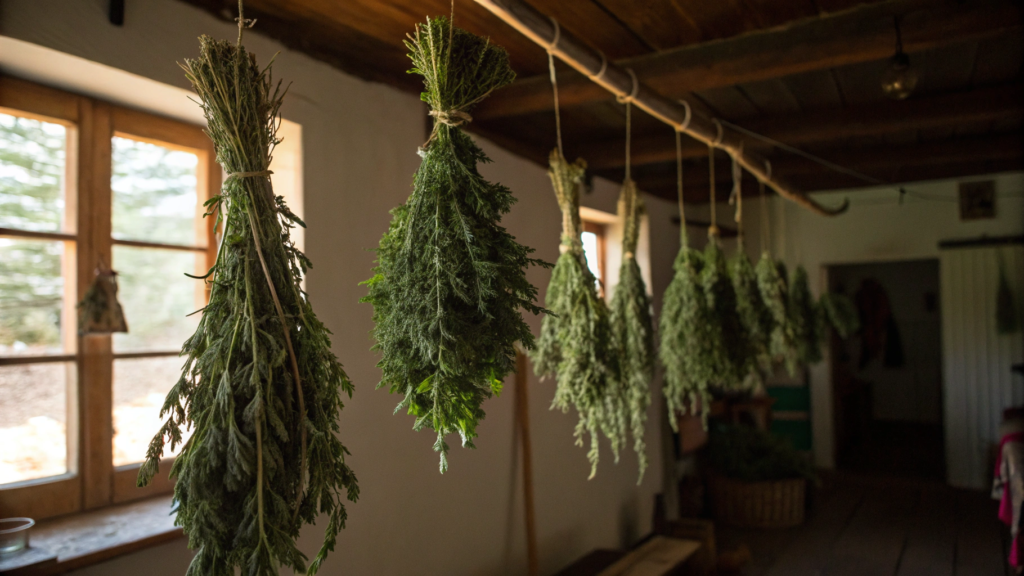
In our home, mugwort isn’t just a herb. It’s almost a sacred plant.
In spring, when it starts reaching for the sun, I cut the first stems and hang them to dry… not in the kitchen, not on the porch — but in the quietest part of the house. And yes, I do it on a specific day.
It might sound like witchy stuff, but TikTok in 2025 turned exactly that way: an obsession with drying mugwort by moon phases, sunlight direction, and space cleansing. And honestly, I think there’s something to it.
But before we go all mystical — let’s talk about the real deal: how to keep the good stuff and not turn mugwort into bitter dust.
Mugwort contains active compounds: artemisinin, thujone, cineole, and camphor — they’re what give it that spicy, slightly bitter scent and light calming effect (Journal of Ethnopharmacology, 2018).
These compounds are volatile, and once temperatures go over 104°F (40°C), their levels drop fast (Industrial Crops & Products, 2020).
And if you store the bundles too long — especially in poor ventilation — there’s a risk of oxidized thujone build-up, which can be harmful when inhaled (Toxicology Reports, 2019).
Our method: mindful and soulful
- I harvest before noon, in dry weather. Best time is when the plant is 18–24 inches (45–60 cm) tall. I pick the top 8–10 inches of the stem — they smell the strongest.
- I don’t wash it. Just shake off the dirt. Any moisture can ruin the drying. But I always check for caterpillars — they love mugwort.
- I tie small bundles and hang them in the shade. No more than 5–6 stems per bunch — to prevent mold. I hang them in a paper bag like I do with oregano, but with a sprig of lavender or sage inside — for a soft scent infusion.
- Airy, dry, cool space only. Temperature stays under 95°F (35°C). For us, it’s a closet upstairs — shaded but slightly ventilated.
- Drying takes 7–9 days. I check for readiness by snapping a stem and smelling the bundle: if the room fills with that bitter, herbal scent — it’s done.
- I store in whole bundles, inside paper envelopes. No jars! Mugwort needs to “breathe.”
And if you’re drying it for smudging or room scenting — keep the leaves on the stems. Large Kraft Herb Storage Envelopes – Amazon
I do dry the first bundle on the new moon. And I hang it near the front door — it’s pretty and… who knows, maybe it does something?
But even without the magic — mugwort clears the air gently, calms the space, and has a soft antiseptic effect.
7. Drying Sage in 2025? You’re Doing It Wrong Without This Step
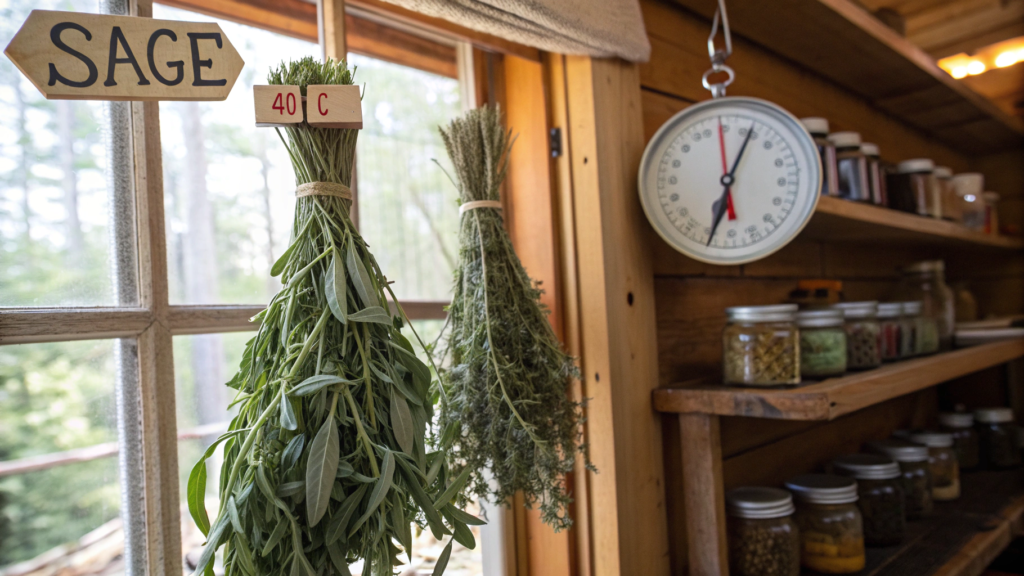
Sage isn’t just that pretty silver herb in the kitchen. It pulls out tension, acts as a mild antiseptic, and gives tea a deep, bright, almost woodsy flavor.
But… only if you don’t mess it up while drying.
The first year, I just tied a bunch, hung it in the kitchen — and a week later it was dry.
But a month later? It smelled like nothing. The leaves crumbled, the tea had no taste, and the jar smelled like cardboard.
Only then did I learn: sage is like lavender — it needs to “sweat,” not suffocate.
And there’s one step that makes or breaks it all.
Sage (Salvia officinalis) is rich in thujone, camphor, cineole, and rosmarinic acid — they give it its scent, antiseptic, and anti-inflammatory properties (Journal of Agricultural and Food Chemistry, 2003).
Drying above 104°F (40°C) leads to up to 55% loss of essential oils, especially cineole and thujone (Industrial Crops and Products, 2016).
To get the full benefits, sage should be dried slowly, in the shade, with airflow, and never above 95°F (35°C).
The one step everyone forgets
Never dry sage with thick stems.
Anything thicker than a toothpick gets cut. Why? Because the moisture inside those stems lingers longer than in the leaves.
And while it looks dry on the outside — rot starts from within. You won’t notice it until you open the jar two weeks later — and that smell hits you.
Our step-by-step method:
- I harvest sage in the morning, when the leaves are dry and cool. Best aroma is early in the bloom. I take only the top 6–8 inches (15–20 cm) of the stem.
- I cut out all thick stems. I keep only the leaves and soft young stalks.
- I lay them out flat on paper or a mesh rack. I don’t hang sage — it needs airflow. Everything dries flat, inside an old box with a fabric liner.
- I store it in a pantry for 4–6 days. Temperature around 70°F (21°C), no direct sunlight. I flip the leaves on day 2 or 3.
- I jar it only when the leaves are crisp — but not crumbly. If they’re too brittle, you’ve overdone it.
- Before jarring, I let it sit out for 12 hours in the storage room. This helps the sage adjust to the room’s humidity so there’s no condensation.
An herbalist friend taught me that trick — and we haven’t had a moldy batch since.
8. How to Perfectly Dry Fresh Dill Without It Turning Brown

I’ll admit it — dill tripped me up more than anything else. It’s so delicate, almost see-through — you’d think it would dry in half a day.
And then you open the jar a couple weeks later, and inside… a brownish-green clump with a weird smell.
I tried hanging it, laying it flat, even using a dehydrator. But every “fast” method turned it into either dust or sad green crumbs with zero dill flavor.
Only after a few seasons did I figure it out: you can dry dill — but only slowly. Carefully. And never in sunlight.
Dill’s aroma comes from its essential oils, including dimethyl benzene ether, carvone, and limonene (Journal of Essential Oil Research, 2008).
These are especially sensitive to light, oxygen, and high heat. Once temperatures pass 104°F (40°C), those oils start to evaporate, and chlorophyll begins to break down — which causes the brown tint (Food Chemistry, 2010).
Here’s how we dry dill so it stays green and fragrant:
- We only harvest the leafy fronds — no stems. I cut it in the morning, after the dew dries but before it gets hot. I only take the leaves — the “umbrella heads” we save separately for seed.
- I don’t wash it. If it’s really dusty, I shake it off and let it sit for a couple hours on a towel.
Dill soaks up moisture like a sponge — and that ruins the drying process. - I lay it out in a single layer on a mesh rack or paper towel. In a ventilated room.
For us, it’s a cool attic with a shaded window.
Temperature stays under 90°F (32°C). And absolutely no direct sunlight. - I cover it with cheesecloth or paper. That keeps out dust, bugs, and sunlight.
Sometimes I just place a perforated sheet of parchment paper on top. - We dry it for 4–6 days. Every day, I flip and gently shake the fronds, so air flows between them.
- It’s ready when the leaves are dry but still green and aromatic. If the scent’s gone — it’s overdone.
If it crumbles into dust — it’s overdone. - We store it in airtight jars — but whole. I only crush it right before using — to keep the flavor fresh. We use light-blocking jars to protect it from sunlight.
Before drying, never press or mash the dill, don’t try to “pack it down” on the rack.
Its biggest strength is its structure. If it sticks together, it’ll dry unevenly — and turn blotchy brown.
So I let it rest freely — like a spiderweb. And the scent afterward? It’s like you just picked it from the garden.
9. The Best Way to Preserve Calendula Petals for Teas and Skin Balms

Drying calendula the right way is practically a science.
Its petals are incredibly delicate and brown easily, and the healing compounds are so sensitive they can vanish with the slightest mistake during drying.
Calendula petals (Calendula officinalis) are rich in flavonoids, carotenoids (especially lutein and lycopene), plus triterpene saponins and essential oils — all of which give calendula its anti-inflammatory, healing, and antiseptic properties (Planta Medica, 2008).
If you dry it above 95°F (35°C), you lose up to 60% of the carotenoids, and the petal color fades (Journal of Food Science and Technology, 2014).
Light and oxygen also degrade both the color and oils — especially if the drying process takes too long.
Our method: keep the color, keep the benefits
- We only pick fully open flowers. Best time: once the morning dew has evaporated, on a sunny morning. I snip off the flower heads, then gently pull the petals by hand once I’m home.
- I don’t wash them. Just shake out any bugs and let the petals rest for a couple hours on a paper towel.
- I spread them out in a thin layer on fabric or paper. No mesh trays — they leave dents. A cotton cloth or parchment paper inside a wooden box works best.
- We dry them in full shade, in a well-ventilated area. Temperature stays around 77°F (25°C). No sun — not even diffused light. Any light fades the color.
- I flip the petals daily with a wooden spoon. Gently — no tearing. After 4–5 days, they’re dry, crisp, and still vibrant — ranging from sunny yellow to bright orange.
How we store them
- Only in glass jars, with a moisture absorber inside.
- Far away from light. I sometimes wrap the jar in fabric or tuck it inside a drawer.
How we use it
- For tea. 1 tsp of dry petals per cup of boiling water. Let steep for 10 minutes.
The flavor is gentle, slightly warming. - For salves and oils. We infuse the petals in warm almond or olive oil for 2–3 weeks, then strain it. The color turns deep amber — all thanks to perfectly dried petals.
10. Drying Eucalyptus Indoors: The Gorgeous Hack That Doubles as Home Decor

When I first brought home eucalyptus branches, I just wanted to make a cute bouquet.
But a week later… my bathroom smelled like the most luxurious spa I’d ever been in.
Fresh, slightly sweet, deep — like a eucalyptus steam room.
That’s when I got hooked. Now every new bundle of eucalyptus isn’t just for flavor — it’s also a home decor piece. But here’s the secret: this isn’t just for looks.
Properly dried eucalyptus keeps its essential oils for months, and you can even “reactivate” the scent after it’s dried — just add a drop of hot water or oil to the leaves.
Eucalyptus leaves contain essential oils like cineole (aka eucalyptol), α-pinene, and other terpenes with antiseptic, anti-inflammatory, and decongestant effects (Journal of Essential Oil Research, 2012).
When dried above 104°F (40°C), up to 70% of cineole can be lost, especially without airflow (Industrial Crops & Products, 2019).
Indoor drying with good ventilation can preserve up to 80% of the oils, as long as there’s no heat or direct light.
Our go-to method: beautiful and functional
- We buy or cut eucalyptus with long stems. (at least 18 inches / 45 cm).
The best types are Eucalyptus cinerea or baby blue — they dry well and look amazing. - Remove the lower leaves. 4–5 inches (10–12 cm) up from the cut.
This helps airflow and prevents moldy stems. - Tie into small bundles of 5–7 branches. Use jute twine or linen string.
Don’t tie too tightly — leave space between the stems for air. - Hang indoors, away from the kitchen. The best spot is a dry bathroom or hallway. No direct sunlight. Keep it below 75°F (24°C).
- Let it dry for 10–14 days. The leaves will feel crisp but not brittle.
Color and scent should stay strong.
If you hang it in the shower, the steam from hot water will re-activate the smell!
How to use it after drying
- In the shower. Hang a bunch near your shower head — the scent kicks in every time the steam hits it.
- In DIY sachets. Crumble dry leaves into a cloth pouch. Tuck it into a drawer or under your pillow.
- For foot or hand soaks. Add a few leaves to hot water — spa vibes guaranteed.
- Not for tea! Some eucalyptus species aren’t safe to ingest. Only use externally unless you’re 100% sure of the variety.
We use these for storage and display: Wall-Mounted Herb Drying Rack for Eucalyptus – Amazon
From Our Herb Cabinet
If you’ve tried any of these tricks — tell me how it went. Did the scent hold up? Did it work as expected?
Maybe you’ve got your own little secret — something your grandma passed down or you figured out yourself?
Please share. Because this isn’t just about drying herbs. It’s about rhythm. Connection. Home.