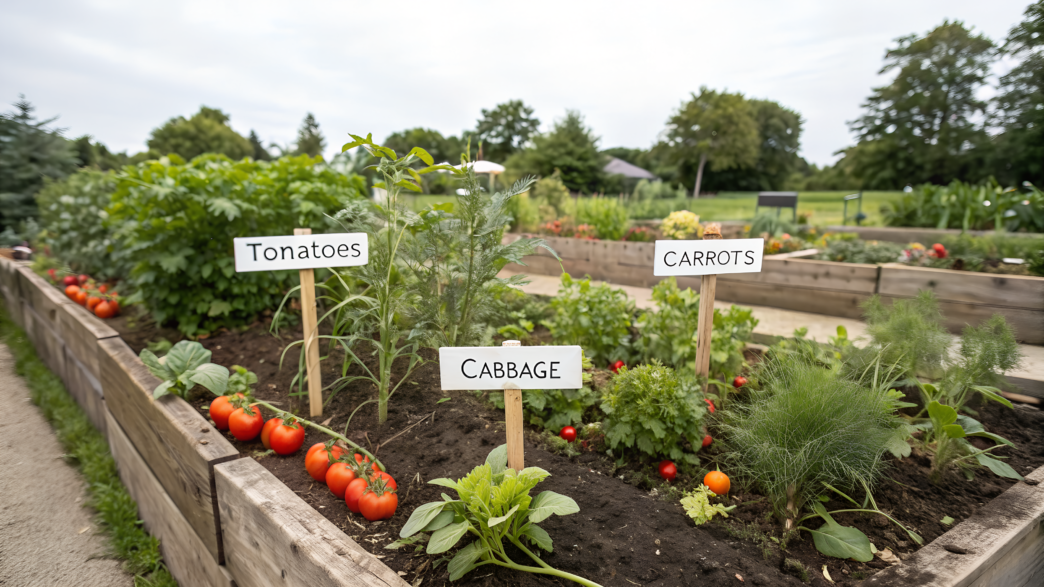
10 vegetables you should never plant together is not a strict list of garden bans. I am generally against rigid rules where one wrong move means the whole harvest is gone. That is not how it works. Plants are alive, soil is alive, and the weather acts differently every year.
But some plant combinations really do create extra work again and again. Plants start competing for nutrients, block each other’s light, attract similar pests, or simply need such different care that one garden bed turns into a small argument between crops.
So there is no panic here. We are simply trying to figure out which vegetables should be planted apart, why they may interfere with each other, and which plants help them grow much better. At the same time, the garden becomes easier and more convenient to care for.
1. Tomatoes and Potatoes
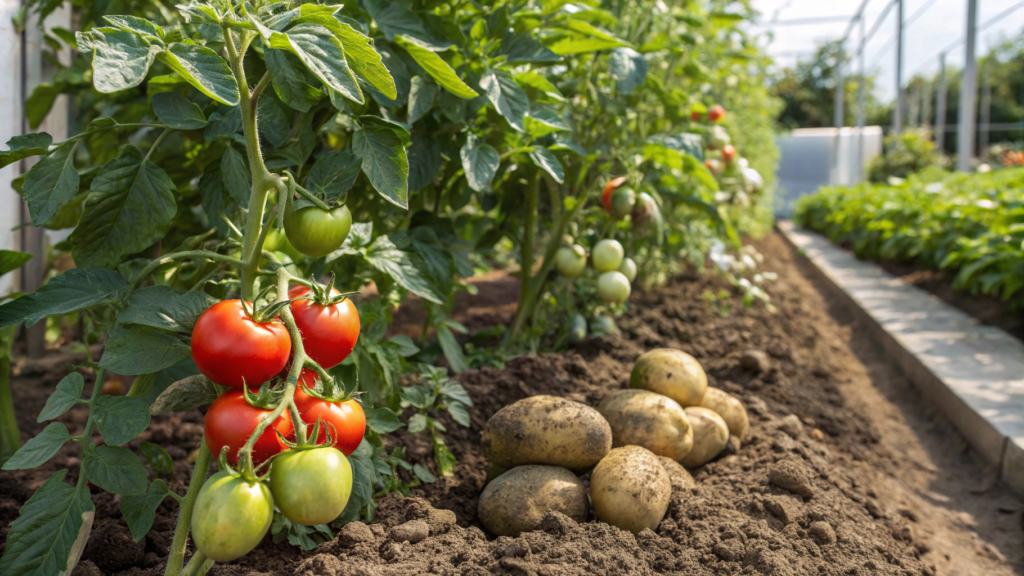
Tomatoes and potatoes look like perfectly normal neighbors. Both love the sun, both grow actively, and both often end up in the same vegetable section of the garden. But I would not plant them next to each other if there is even a little room to move things around.
They both belong to the nightshade family, which means they often share similar diseases and pests. The most unpleasant problem is late blight. It can affect both tomatoes and potatoes, especially during cool, damp weather. (University of Minnesota).
On a small property, you always want to plant everything close together. But you quickly learn that tight planting usually creates more work in real life.
Here is what can happen:
- If the potatoes get sick, nearby tomatoes are exposed much faster.
- If the tomatoes get sick, the potatoes are also sitting too close to the problem.
- Both crops actively pull nutrients from the soil.
- Potatoes need to be dug up, and it is easy to damage nearby tomato roots.
- Dense planting does not dry or ventilate well after rain.
How to Plant Them Better
If you have enough room, leave at least 10–15 ft (about 3–4.5 m) between tomatoes and potatoes. If your garden is small, you can move the potatoes into grow bags (Potato Grow Bags with Flap 10 Gallon) or place them in a separate bed. The main thing is not to put them right beside the tomato cages.
Tomatoes grow best in fertile, loose, well-draining soil. They need nutrients, but they do not need water sitting around their roots.
Potatoes also need loose, well-draining soil so the tubers can form properly. In heavy, wet soil, they have a harder time growing, and the tubers may stay small or begin to rot. Potatoes do not like that.
What to Plant Near Tomatoes
It is better to plant tomatoes beside crops that do not share the same diseases and do not create unnecessary competition.
Good options:
- Basil
- Parsley
- Lettuce
- Calendula
- Marigolds
I often plant marigolds along the edge of the tomato bed. They are commonly used as companion plants, including against certain soil pests such as nematodes. They do not get in the way when you harvest tomatoes, they fill the open space along the edge of the bed, and they help the soil dry out less quickly.
What to Plant Near Potatoes
Potatoes are better planted beside crops that do not interfere with hilling, do not require constant digging around their roots, and do not share the same diseases.
Good neighbors for potatoes:
- Beans
- Peas
- Corn
- Cabbage
- Lettuce
- Radishes
- Marigolds
I prefer beans or peas if there is enough room. Legumes help diversify the planting. They grow differently from potatoes and do not place the same kind of demand on the soil. I just would not plant them too close, so there is still enough room to hill the potatoes and harvest them comfortably.
Radishes and lettuce can be planted along the edge of the bed in spring. They grow quickly and usually produce a harvest before the potatoes become large.
Marigolds can also be planted along the edges of the potato area as companion plants, including because they are associated with reducing certain soil pests.
Tomatoes and potatoes should not be planted together because they share too many of the same weak points. Put them in separate areas, leave enough space for air to move between the plants, and avoid watering the leaves. This will reduce the risk of disease and make both crops easier to care for.
2. Onions and Beans
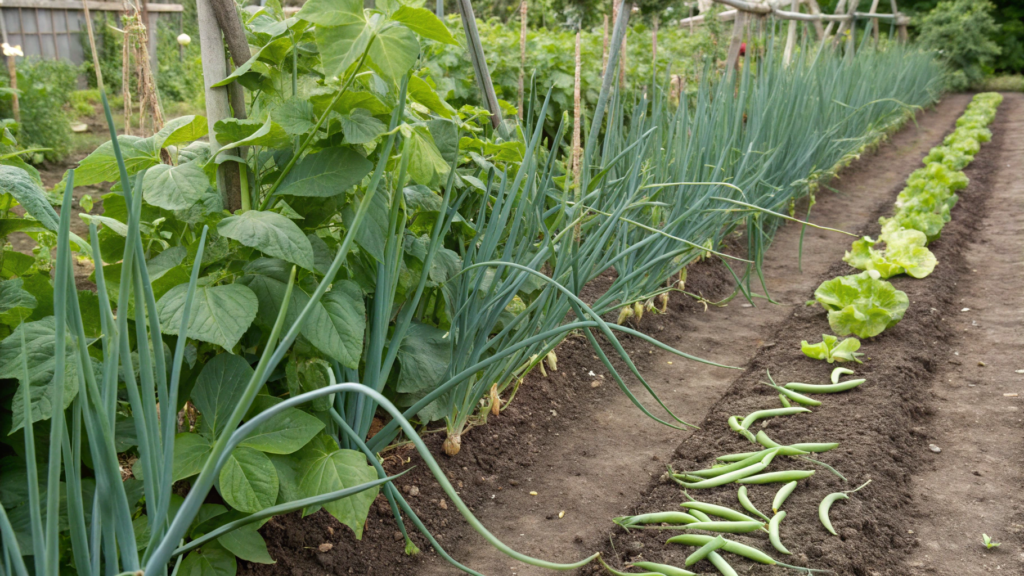
Beans and onions are excellent crops on their own, but when planted together, they can interfere with each other. Onions can slow down the growth of beans, especially if planted too close together (West Virginia University Agricultural Extension Program).
Beans are legumes. They need healthy root development and a good relationship with soil bacteria that help them fix nitrogen. Onions grow differently: they stay more compact, need their own space, and may compete for nutrients and moisture in the upper layer of soil.
If you plant them together, you may end up with something like this:
- Beans grow more slowly than expected.
- The plants produce fewer pods.
- Onions and beans compete for space in the upper layer of soil.
- Dense planting gets less airflow.
- Harvesting becomes awkward, especially when the beans fall over the onions.
I know that situation well. You go outside hoping to quickly pick a few beans for dinner, but instead you end up bent over, untangling stems, bumping into the onions, getting your knees dirty, and feeling much less romantic about the home garden.
Soil
Onions grow best in loose, well-draining soil without standing water. They need sun, steady moisture, and fertile soil, but no fresh manure right before planting. In heavy, wet soil, onion bulbs often grow poorly and may start to rot.
Beans also prefer loose, well-draining soil, but they do not need soil that is too rich. If you overdo the fertilizer, especially nitrogen fertilizer, beans may grow lots of leaves and produce fewer pods. It may look nice, but it is completely useless for dinner.
What to Plant Near Onions
It is better to plant onions beside crops that will not interfere with their roots or climb over them. If space is limited, plant beans on the other side of the garden or beside a separate trellis, and give onions more suitable neighbors.
Good options near onions:
- Carrots
- Beets
- Lettuce
- Cabbage
- Tomatoes
- Strawberries
- Marigolds
I especially like the combination of onions and carrots. They use the garden bed differently: carrots grow deeper into the soil, while onions stay more compact above the ground. Just do not sow everything too densely. Carrots will need regular thinning.
What to Plant Near Beans
Beans need space, airflow, and proper support if you are growing a climbing variety. Do not place them beside crops that may interfere with their roots or suffer from their shade. Climbing beans quickly take over vertical space, so it is better to give them a trellis, netting, or a row beside a taller crop from the start.
Good options near beans:
- Corn
- Cucumbers
- Radishes
- Celery
- Potatoes
- Nasturtiums
- Calendula
A garden trellis for climbing plants is very helpful for climbing beans. Without support, beans quickly turn into a tangled mass of stems, and dealing with it becomes a real headache.
In the end, onions and beans are better kept out of the same garden bed. Onions may slow down bean growth, while beans can quickly turn a neat planting into a tangled green mess if they do not have enough room and support. Simply separate them into different areas, and both crops will behave much better.
3. Carrots and Dill
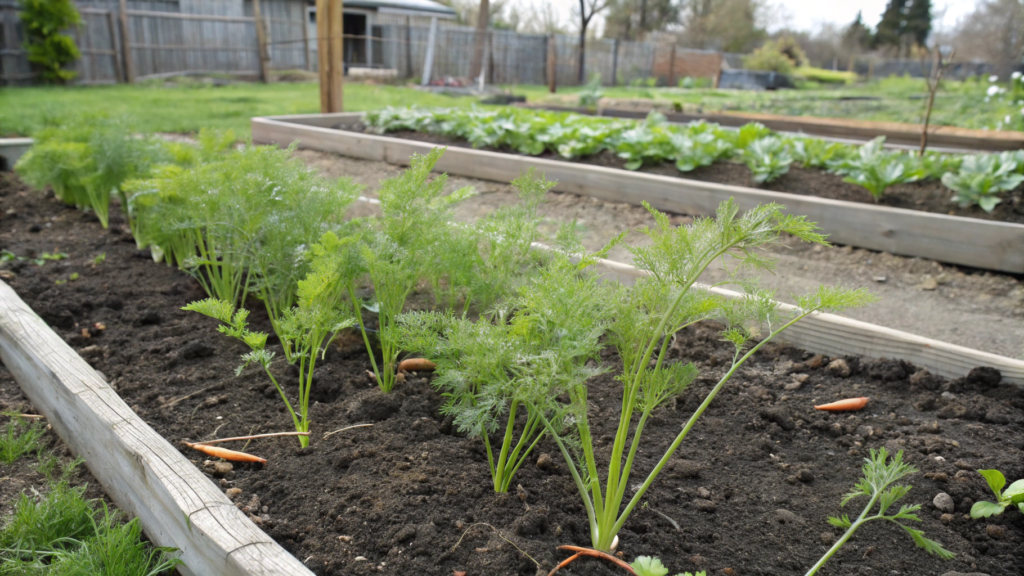
Carrots and dill are both sown in spring, and at first, neither of them takes up much space. On a small property, that can be very tempting. I also like plantings that look neat during the first few weeks.
But carrots need time and a calm place to form proper roots. Dill grows tall quickly, starts flowering, and may begin to interfere, especially if it is sown too close to the carrot rows.
Carrots and dill belong to the same family, the carrot family. Related crops often attract similar pests and may compete in the same part of the garden bed (West Virginia University Extension).
What can happen:
- Carrots may grow more weakly, especially if the dill is planted too close.
- Dill may shade young carrot tops.
- Both crops may attract similar pests because they are related.
- Dill quickly starts flowering and self-seeding wherever it wants.
- Pulling out dill can easily disturb young carrots growing nearby.
Soil
Carrots grow best in deep, loose, well-draining soil without stones or hard clumps. If the soil is heavy or lumpy, the roots may turn out crooked, short, or split. The flavor may still be fine, but peeling carrots like that is a separate challenge.
Dill also needs loose soil and sun, but it is not as demanding about soil depth as carrots. What matters more is that water does not sit around the roots. In overly rich soil, dill may quickly grow a lot of greenery and then suddenly start flowering, especially in hot weather.
What to Plant Near Carrots
It is better to plant carrots beside crops that will not interfere with root development or grow too aggressively in the same upper layer of the bed.
Good options near carrots:
- Onions
- Leeks
- Chives
- Lettuce
- Radishes
- Peas
- Rosemary
A good combination is carrots and onions. Carrots form their roots deeper in the soil, while onions take up less space above ground and do not grow wide tops. Because of this, they do not interfere with each other as much in the garden bed.
Onions are often planted near carrots because their strong smell may confuse certain pests. Of course, they will not remove them completely, but they may significantly reduce their numbers.
What to Plant Near Dill
Dill is better planted where it can grow, flower, and attract beneficial insects without being crowded. It does not need to grow right among root vegetables. Give it the edge of a garden bed, a separate herb corner, or a place near crops that benefit from having more insects in the garden.
Good options near dill:
- Cabbage
- Broccoli
- Cucumbers
- Lettuce
- Onions
- Calendula
- Nasturtiums
Dill grows better near cabbage-family crops if you give it enough room and do not let it completely take over the bed. When dill flowers, its umbels attract small beneficial insects. I usually cut off some of the flower heads before the seeds spread everywhere.
Carrots and dill are wonderful together in the kitchen, but in the garden, dill may interfere with carrot growth, especially if you let it flower and self-seed. So it is better to think about better plant pairings, which can help prevent many problems.
4. Cucumbers and Sage
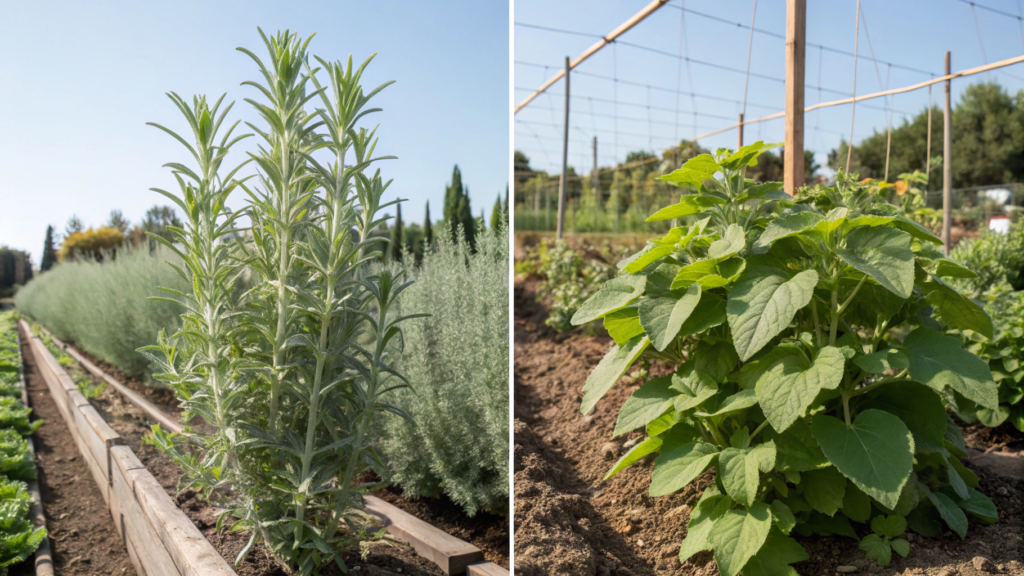
Sage does beautifully in an herb garden, next to rosemary, thyme, and other plants that prefer drier conditions.
Cucumbers, on the other hand, need slightly moist soil, warmth, and plenty of nutrients. The top layer should not dry out completely, especially during flowering and fruit development. But they do not need wet, sticky soil either. Their roots still need air.
West Virginia University Extension lists sage and cucumbers among the combinations that are better kept apart because these plants may limit each other’s growth.
Cucumbers and sage simply do not grow well under the same care routine.
What can happen:
- Cucumbers may not get enough moisture if you keep the bed drier for the sage.
- Sage may suffer from excess moisture if you water the way cucumbers prefer.
- Cucumber vines may quickly cover the sage and reduce airflow.
- Dense planting increases the risk of leaf diseases on cucumbers.
- Sage may compete with young cucumber plants for space if planted too close.
Cucumbers do not like being crowded in a damp area with poor airflow. In that kind of bed, the leaves stay wet longer after watering or rain, which can invite powdery mildew and other problems. We do not need that.
Soil
Cucumbers grow best in fertile, loose, well-draining soil that holds moisture without turning into wet sludge. A good guideline is that the soil should feel slightly moist at a depth of 1–2 in (about 2.5–5 cm), not dusty dry and not sticky with water. Adding compost before planting helps keep the bed healthy and nutrient-rich.
Sage needs lighter, drier soil with good drainage. It does not like wet roots. If you plant sage in the same rich, frequently watered bed as cucumbers, it may become weak, stretched out, or simply start looking unhealthy.
What to Plant Near Cucumbers Instead of Sage
Cucumbers need neighbors that enjoy similar conditions: sun, regular watering, and healthy soil. It is even better if flowers nearby attract pollinators. Cucumbers need good pollination, or you may end up with lots of flowers and very few proper fruits. That is always disappointing.
Good options near cucumbers:
- Nasturtiums
- Calendula
- Dill
- Radishes
- Peas
- Beans
- Corn
- Lettuce
I plant nasturtiums along the edge of the cucumber bed. They cover open soil, flower, attract insects, and sometimes work as a trap crop for aphids. As part of a mixed planting, they can be very useful.
If you grow cucumbers vertically, use a garden trellis for climbing plants. The vines get better airflow, the fruits are easier to find, and there is less chance of stepping on the plant when you go out to pick a cucumber.
What to Plant Near Sage Instead of Cucumbers
Sage is better planted in an herb garden with plants that also do not need constant moisture. This makes it easier to avoid overwatering and forcing it into the same watering routine as cucumbers.
Good options near sage:
- Rosemary
- Thyme
- Oregano
- Lavender
- Marjoram
- Cabbage
- Broccoli
Sage is often planted near cabbage-family crops because of its strong scent. It may help confuse certain pests, although I would not rely on it as the only form of protection. A garden does not work that way. It is better to look at care as a whole: healthy soil, proper spacing, regular leaf checks, flowers for beneficial insects, and then aromatic herbs as extra support.
Cucumbers and sage show how much plant care affects good garden pairings. Cucumbers need richer soil and regular watering, while sage grows better in lighter, drier soil with good drainage. If you keep these differences in mind, your plants will have a much better chance of growing well.
5. Peppers and Beans
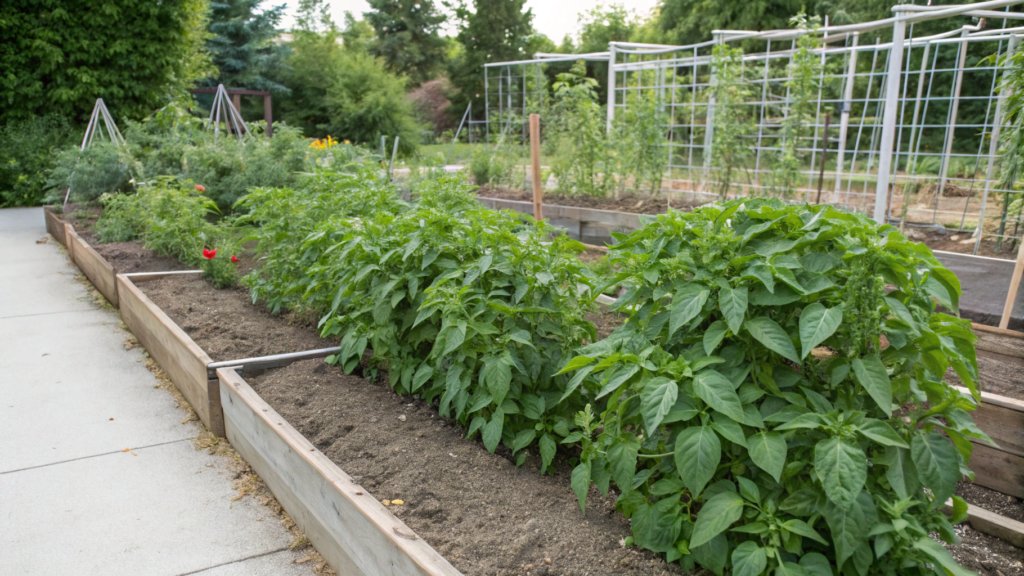
At first glance, it seems convenient: the pepper grows as a bush, the beans are nearby, and the garden bed is not sitting empty. But I would not place them too close together, especially if you are growing climbing beans.
Peppers do not like crowded conditions. They need sun, airflow around the leaves, and a calm space where nearby plants will not wrap around them. Beans, on the other hand, quickly start looking for support if you give them the chance. And if there is no proper trellis nearby, they may decide that the pepper plant is a good option too.
If you plant peppers and beans too close together, you may run into several problems:
- Beans may shade the peppers, especially if you are growing a climbing variety.
- Bean stems may wrap around pepper plants and stop them from growing upright.
- Dense planting reduces airflow.
- Leaves stay wet longer after rain or watering.
- Harvesting becomes more difficult.
- Peppers may not get enough light for proper flowering and fruit development.
Peppers are not the fastest vegetables after they are transplanted into the ground. That is why I try not to place them beside fast-growing neighbors that quickly spread both upward and outward.
Soil
Peppers grow best in fertile, loose, well-draining soil. They like steady moisture, but not water sitting around the roots. The soil should feel slightly moist at a depth of 1–2 in (about 2.5–5 cm), but not sticky. You can add compost before planting and mulch after the soil warms up so moisture does not disappear too quickly.
Beans also prefer loose, well-draining soil, but they should not be overfed with nitrogen fertilizer. If the soil is too rich, beans may produce lots of leaves and fewer pods. What matters more is warmth, sun, and proper support if you are growing a climbing variety.
What to Plant Near Peppers Instead of Beans
It is better to plant peppers beside crops that will not wrap around them, block the sun, or turn the bed into a tangled green mass. Low-growing plants and herbs work especially well because they do not stop air from moving between the pepper bushes.
Good options near peppers:
- Basil
- Parsley
- Onions
- Chives
- Carrots
- Radishes
- Lettuce
- Marigolds
- Nasturtiums
I think basil grows well near peppers. It does not climb upward, does not smother the bushes, and does well with a similar watering routine. You can cut it straight from the garden while making dinner. And that feels really nice, believe me.
Marigolds can also be planted along the edge of the pepper bed. They are often used in plantings against certain soil pests, especially nematodes. Not as the only form of protection, of course. But as part of a living, mixed garden bed, why not?
What to Plant Near Beans Instead of Peppers
Beans need neighbors that will not suffer when they quickly start growing upward. Even better, give them their own support from the start so they do not go looking for one among nearby plants.
Good options near beans:
- Corn
- Cucumbers
- Potatoes
- Radishes
- Lettuce
- Celery
- Calendula
- Nasturtiums
If you are growing climbing beans, I would plant them beside a trellis instead of near peppers. That gives them their own space, and the pepper plant does not become a living support for someone else’s stems. You can also make a simple structure from stakes and twine. We have done that many times. The main thing is to put it up before the beans have already decided to fall over their neighbors.
Peppers and beans show that the way plants grow matters just as much as soil compatibility. Peppers need an open space, plenty of sun, and airflow around the bush. Beans, especially climbing varieties, need support and room for their stems. If you plan for this before planting, the bed will not turn into a tangled green mass, and caring for it will be much easier.
6. Cabbage and Strawberries
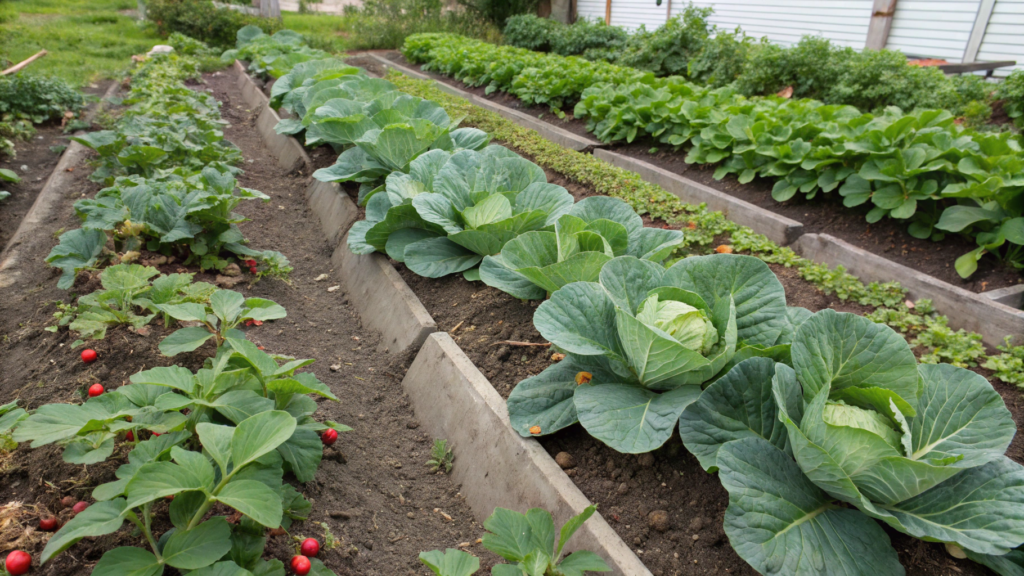
Cabbage and strawberries both love sun and good soil, so on a small property, it is easy to plant them close together: cabbage grows into large heads, while strawberries stay low and cover the soil, so it seems like the space is being used wisely. But in practice, this pair often creates more problems than benefits.
That is because cabbage pulls a lot of nutrients from the soil. It needs plenty of food, room for its leaves, and good airflow. Strawberries do not like crowded conditions either, especially when they spread through runners and cover the soil with a dense layer. If you plant them together, they do not start interfering with each other right away. It happens gradually.
Cabbage and strawberries can easily create several problems.
What can happen:
- Cabbage shades the strawberries with its large leaves.
- The berries dry more slowly after rain or watering.
- Dense planting makes it easier for slugs to appear.
- Strawberry runners spread into the space cabbage needs.
- Cabbage may not get enough airflow around its lower leaves.
- Harvesting strawberries becomes difficult because the large cabbage leaves block access to the berries.
And slugs are not a small detail here. If the bed stays damp, the leaves sit low, and the strawberries are hidden under the cabbage, you have almost done everything needed for slugs to show up.
What to Plant Near Cabbage Instead of Strawberries
Cabbage grows best in fertile, loose, well-draining soil with a good amount of organic matter. It needs steady moisture, especially while the head is forming, but without water sitting around the roots.
It is better to plant cabbage beside crops that will not spread through runners under its leaves or create a dense, damp layer near the soil. I prefer neighbors that help diversify the bed and do not make it harder to reach the cabbage heads.
Good options near cabbage:
- Celery
- Onions
- Dill
- Sage
- Rosemary
- Thyme
- Calendula
- Nasturtiums
Dill can be planted closer to the edge instead of directly in the middle of the cabbage bed. When it flowers, its umbels attract beneficial insects. I just would not let it fully self-seed, or next year the dill will decide where your herb area should be.
Nasturtiums can also be useful along the edge of the planting. They are often used as a trap crop for aphids. This creates an extra layer of protection in a mixed garden bed.
What to Plant Near Strawberries Instead of Cabbage
Strawberries prefer loose, well-draining, slightly acidic soil and do not like having their crowns covered with soil or mulch. They should be planted so the center of the plant stays level with the soil. Too deep is bad. Too high, where the roots start drying out, is also bad. Strawberries can be very picky sometimes.
Strawberries are better planted beside crops that will not shade them with large leaves or make harvesting difficult. It is also important not to place them beside plants that require constant soil loosening or active work close to the roots. Strawberries prefer not to be disturbed too often.
Good options near strawberries:
- Borage
- Thyme
- Chives
- Lettuce
- Spinach
- Calendula
- Marigolds
- Bush beans
I like the idea of planting thyme along the edge of a strawberry bed. It stays low, smells good, does not cover the berries with huge leaves, and helps cover the soil. Just leave enough room for strawberry runners if you plan to propagate the plants instead of keeping the bed perfectly tidy.
Borage is also often planted near strawberries because its flowers attract pollinators. But borage can spread quite a bit. If you plant it directly between strawberry plants, it will quickly take up too much space and make harvesting difficult. Planting it along the edge of the bed makes much more sense.
Straw mulch is useful for strawberries, such as EZ-Straw Seeding Mulch with Tack. It helps keep the berries from sitting directly on damp soil, so they do not get as dirty.
With cabbage and strawberries, it is better not to try to squeeze the most out of one garden bed. Cabbage needs room for its large leaves, while strawberries need light, airflow, and easy access to the berries. When these crops grow separately, care becomes easier, and harvesting is much more enjoyable.
7. Broccoli and Tomatoes
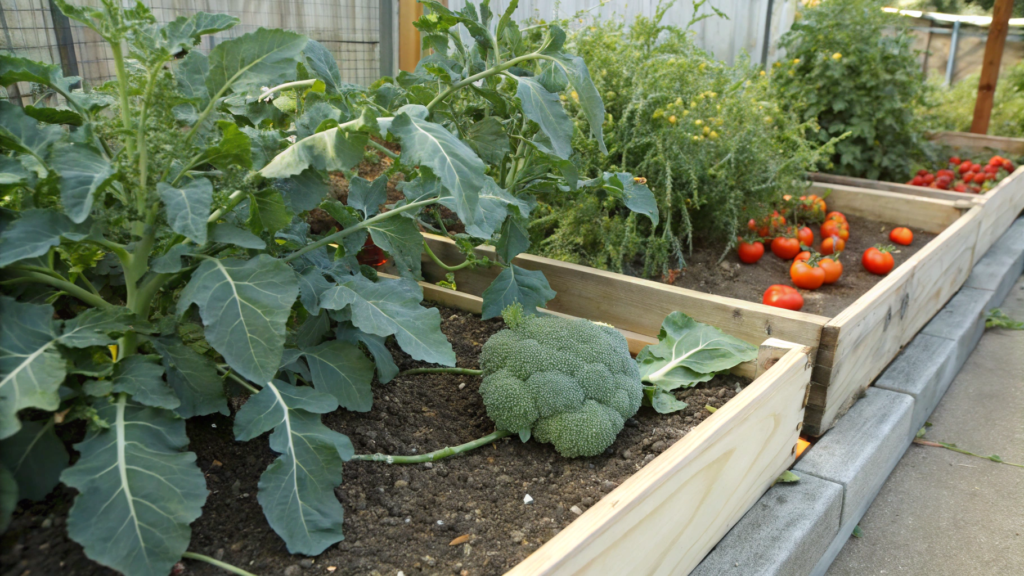
Broccoli pulls a lot of nutrients from the soil, spreads out with broad leaves, and prefers cooler conditions. Tomatoes also like fertile soil, but they need more warmth, sunlight, and airflow around the plant. If they grow too close together, the bed quickly becomes crowded, and the plants start getting in each other’s way.
West Virginia University Extension lists broccoli and tomatoes among the combinations that are better not planted together because these plants may limit each other’s growth.
The problem is that both crops take up a lot of space, but in different ways. Broccoli spreads broad leaves closer to the ground. Tomatoes grow upward, but they also need air around their stems and leaves.
What can happen:
- Broccoli and tomatoes compete for nutrients.
- Large broccoli leaves may shade the lower part of the tomato plants.
- Tomatoes may shade the broccoli if they are planted on the south side.
- Dense planting gets less airflow.
- Leaves stay wet longer after rain or watering.
- Harvesting and checking the plants becomes inconvenient.
- Both crops may grow more weakly than they would in separate beds.
It is frustrating. You planted more, but instead of getting a bigger harvest, you got more work. That is not what I enjoy in the garden.
Tomatoes also need fertile, loose soil with good drainage. Compost usually helps before planting, and mulch can be added after the soil warms up. A good watering guideline is to keep the soil slightly moist at a depth of 1–2 in (about 2.5–5 cm), but not sticky or wet.
What to Plant Near Broccoli Instead of Tomatoes
Broccoli grows best in fertile, loose, well-draining soil with plenty of organic matter. It needs steady moisture, especially while the head is forming. The soil should not dry out completely, but water should not sit around the roots either.
It is better to plant broccoli beside crops that will not compete as strongly for nutrients or crowd the space around it. I like neighbors that help cover the soil, attract beneficial insects, or simply make it easier to reach the broccoli.
Good options near broccoli:
- Onions
- Garlic
- Celery
- Beets
- Lettuce
- Spinach
- Dill
- Calendula
- Chamomile
Lettuce and spinach can be planted nearby while the broccoli has not yet taken over the full width of the bed. They grow faster and may be harvested before the broccoli gets large. Just do not plant them right against the stem. Broccoli will still need room.
I would plant dill closer to the edge. When it flowers, its umbels attract beneficial insects. But if you let it self-seed, it will quickly start acting like the whole area belongs to it.
If caterpillars often appear on your cabbage-family crops, you can use a protective pest barrier netting. It is especially useful when you do not want to check the undersides of the leaves every day like a garden detective.
What to Plant Near Tomatoes Instead of Broccoli
Tomatoes also need fertile, loose soil with good drainage. Compost usually helps before planting, and mulch can be added after the soil warms up. You can water when the soil at a depth of 1–2 in (about 2.5–5 cm) feels slightly moist, but not sticky or wet.
It is better to plant tomatoes beside crops that will not interfere with their growth or create dense greenery around the base of the plant. Good tomato companions are usually shorter, easier to care for, and do not block airflow between the plants.
Good options near tomatoes:
- Basil
- Parsley
- Chives
- Onions
- Lettuce
- Carrots
- Calendula
- Marigolds
- Nasturtiums
Basil near tomatoes is my favorite option. Basil stays compact, likes a similar watering routine, and can be cut right before dinner. And if calendula or marigolds are growing nearby too, the bed becomes not only more useful but also more active with insects.
It is better to give tomatoes proper support right away, not later when the plant has already started leaning and you are trying to slide the support between the roots. I have done that. It is very inconvenient.
Broccoli and tomatoes are not the pair to use when you are trying to save space. Broccoli quickly spreads through its leaves, while tomatoes need sun, support, and good airflow around the plant. If you place them in separate beds, care becomes easier, and the plants do not waste energy competing for space.
8. Fennel and Almost Everything
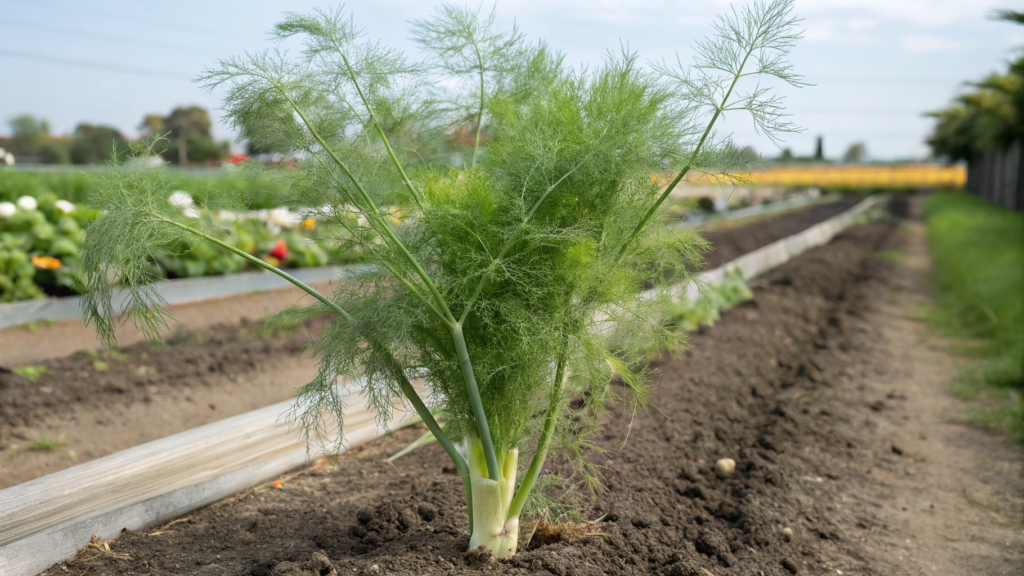
Fennel is beautiful, fragrant, tall, and covered with delicate greenery, but it is better not to plant it near most vegetables.
The reason is that fennel may suppress the growth of nearby plants. It is often described as a poor companion for most of the vegetable garden because it releases substances that may interfere with the germination and development of other crops. West Virginia University Extension also recommends keeping fennel separate from most vegetables.
The main issue is allelopathy. This is when one plant releases natural compounds that may slow the growth of other plants nearby.
What can happen:
- Seeds planted nearby may germinate poorly.
- Young plants may grow more slowly.
- Fennel may compete for light and space.
- A tall fennel plant may shade shorter crops.
- Its roots may interfere with nearby plants in a crowded bed.
- If fennel is allowed to self-seed, it may appear in places where you never planned to grow it.
That last one is something I especially dislike. It can take a while to remove fennel from places where it was never supposed to grow.
Where to Plant Fennel
Fennel grows best in loose, well-draining soil in a sunny location. It does not do well in heavy, wet soil where water sits around the roots. If you are growing bulb fennel, the soil should be soft enough for the base to swell properly instead of pressing against hard clumps.
The simplest option is to plant fennel separately. It really is easier that way.
Good placement options:
- A separate container
- The edge of the property, away from vegetable beds
- A separate herb area
- A spot near flowers rather than vegetables
- A bed where fennel will not shade shorter plants
If you really want to grow something nearby, I would choose calendula, nasturtiums, marigolds, or lavender, but not right against the fennel and not as a dense mixed planting. Think of it as nearby planting with enough space for each plant to grow in its own area.
If your garden is small, I would choose a container. This makes it easier to control the roots, plant size, and self-seeding. Fennel needs a deep container at least 12–14 in (30–36 cm) deep. Make sure it has drainage holes. Fennel likes moisture, but it does not tolerate soil that stays wet for too long.
Fennel can still be useful in the garden. Its flowers may attract beneficial insects, and its delicate foliage looks beautiful among other plants. It simply needs its own space instead of being squeezed into a vegetable bed. This allows fennel to grow well without interfering with the crops you expect to produce a good harvest.
9. Corn and Tomatoes
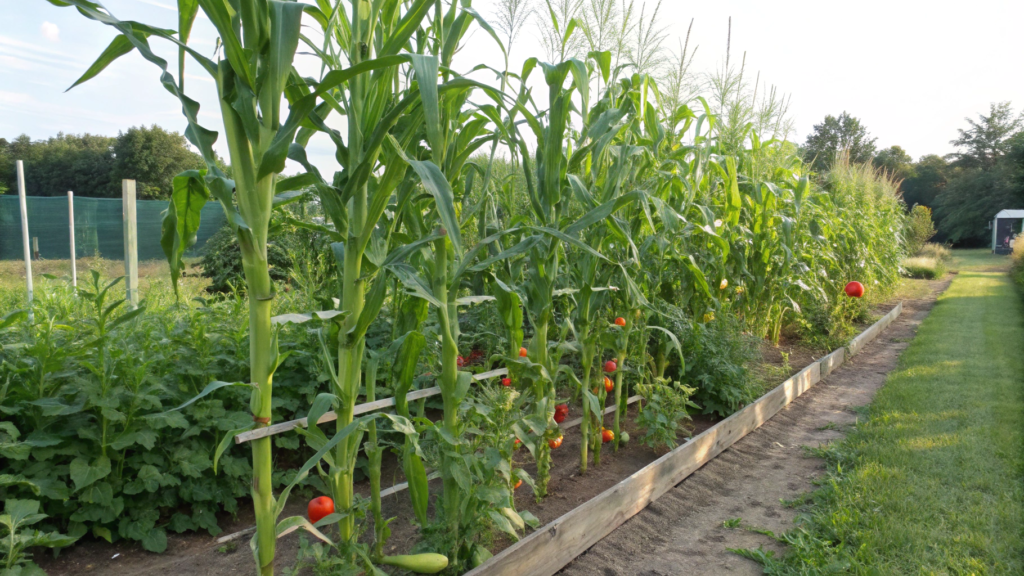
This pair has two main problems: corn may shade tomatoes, and they also share a common pest — the corn earworm, also known as the tomato fruitworm. This does not mean every plant in the bed will die. But why give pests such an easy route?
Corn grows quickly and gets tall. Depending on the variety, it may reach 5–8 ft (about 1.5–2.4 m), and sometimes even more. If you plant it on the south side of the tomatoes, it can easily block part of their sunlight. Tomatoes need plenty of sun, not just for appearance, but for proper flowering, fruit set, and ripening.
If you plant corn and tomatoes too close together, you may run into these problems:
- Corn shades the tomatoes, especially when it grows on the south or west side.
- Tomato plants get less airflow beside a dense wall of corn.
- Both crops prefer fertile soil and may compete for nutrients.
- A shared pest may move from one crop to the other.
- It becomes harder to reach the tomatoes for tying, pruning, and harvesting.
- Leaves stay wet longer after rain or watering in a crowded planting.
What Kind of Soil Do They Need?
Corn grows best in fertile, loose, well-draining soil and needs a steady supply of nutrients. Nitrogen is especially important while it is actively growing leaves and stalks. In poor soil, corn often stays weak and short and produces underdeveloped ears.
Tomatoes also need fertile, loose soil with good drainage, but compost at planting time is not enough on its own. They need room for their roots, proper support, and consistent moisture. The soil at a depth of 1–2 in (about 2.5–5 cm) should feel slightly moist, but not wet or sticky.
What to Plant Near Corn Instead of Tomatoes
Corn grows best in fertile, loose, well-draining soil and needs a steady supply of nutrients. Nitrogen is especially important while it is actively growing leaves and stalks. In poor soil, corn often stays weak and short and produces underdeveloped ears.
It is better to give corn neighbors that will not suffer from light shade or create the same pest problem as tomatoes. A classic option is a Three Sisters planting with corn, beans, and squash. Corn provides height, beans can use it for support, and squash covers the soil with broad leaves.
But moderation matters here. If your property is small, I would not turn the planting into an impassable jungle. Leave paths so you can water, check the ears, and avoid stepping on the vines.
Good options near corn:
- Beans
- Pumpkins
- Summer squash
- Cucumbers
- Melons
- Lettuce
- Dill
- Nasturtiums
Nasturtiums can be planted along the edge of the corn area. They cover the soil, flower, and help attract insects. If you grow beans near corn, choose a variety that is not too aggressive and do not sow it so densely that it turns into a green fence.
On a small property, it is better to plant corn in a block instead of one long, narrow row. For example, plant several short rows next to one another. This helps with wind pollination. You can also use garden markers so you do not forget which variety is growing where.
What to Plant Near Tomatoes Instead of Corn
Tomatoes need fertile, loose soil with good drainage, but compost at planting time is not enough on its own. They need room for their roots, proper support, and consistent moisture. The soil at a depth of 1–2 in (about 2.5–5 cm) should feel slightly moist, but not wet or sticky.
It is better to plant tomatoes beside crops that will not block their sunlight or create a dense wall around the plants. It is especially important not to place tall crops on the south side of the tomatoes.
Good options near tomatoes:
- Basil
- Parsley
- Chives
- Onions
- Carrots
- Lettuce
- Calendula
- Marigolds
- Nasturtiums
I like growing basil and calendula near tomatoes. Basil is easy to cut for cooking, while calendula attracts beneficial insects. Of course, these plants will not solve every pest problem, but they make the garden bed more useful and active.
Tomatoes should have sturdy support from the start, such as a tomato cage, especially if the variety grows tall or produces heavy fruit. Adding support later, after the roots have already spread, is not gardening. It is a quiet battle with your own past decision.
Corn and tomatoes clearly show how plant height affects garden compatibility. Corn quickly grows tall and may block sunlight from the tomatoes, while their shared pest adds another risk.
10. Garlic and Peas
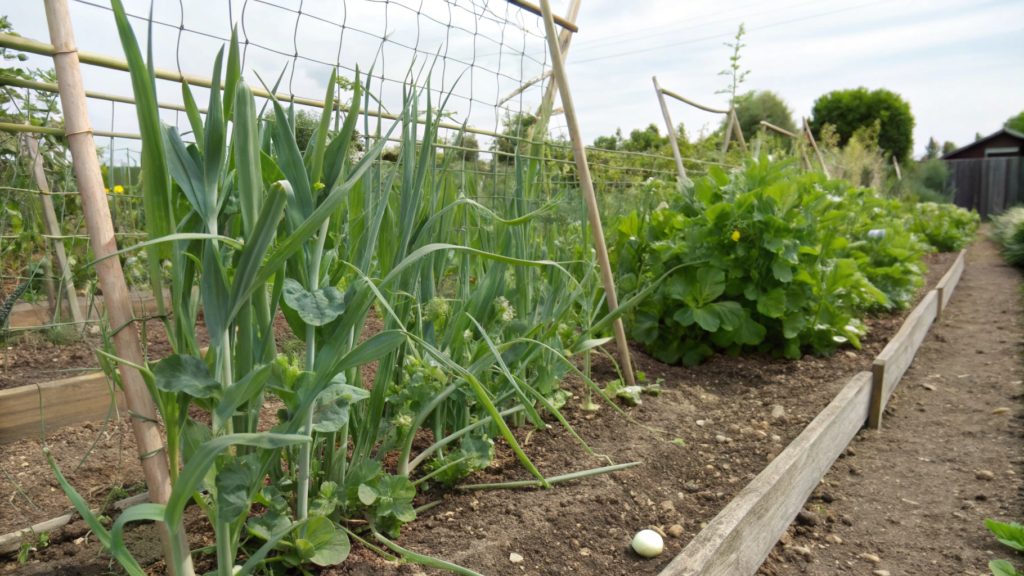
Peas are legumes. They need room for their roots to develop and to work with soil bacteria that help them fix nitrogen. Garlic grows differently: its roots occupy the upper layer of soil, it needs its own space, and it may interfere with normal pea growth.
If you plant garlic and peas too close together, you may run into these problems:
- Peas may grow more weakly.
- The stems may be thinner, with fewer pods.
- Garlic and peas compete for space in the upper layer of soil.
- Pea roots may have a harder time developing beside garlic.
- Harvesting becomes more difficult if the pea support stands too close to the garlic row.
- While caring for one crop, it is easy to damage the other.
Garlic is often planted in fall, while peas are sown in early spring. Before planting peas, check where the garlic is already growing, even if the bed looks half-empty in spring. Young garlic shoots can be easy to miss, especially if you have not labeled the rows.
What to Plant Near Garlic Instead of Peas
Garlic grows best in loose, fertile, well-draining soil. It does not like standing water, especially during winter and early spring. If the soil is heavy and wet, the cloves may begin to rot, and the bulbs may grow poorly.
You can plant it along the edge of a bed beside crops that are not bothered by its strong smell. But I would not plant it near peas, beans, or other legumes.
Good options near garlic:
- Tomatoes
- Peppers
- Carrots
- Beets
- Cabbage
- Broccoli
- Lettuce
- Strawberries
- Marigolds
Garlic is often planted near cabbage, broccoli, tomatoes, and peppers, where its strong smell may confuse certain pests. This does not replace proper care, regular leaf checks, or crop rotation, but it can be a useful addition to a mixed planting.
What to Plant Near Peas Instead of Garlic
Peas also prefer loose, well-draining soil, but they do not need soil that is too rich in nitrogen. If you overdo nitrogen fertilizer, peas may grow lots of greenery and produce fewer pods. They need cool weather, sunlight, and support if you are growing a tall variety.
Peas do better beside plants that will not interfere with their roots or compete too strongly in the upper layer of soil. It is also important to install support in advance if the variety grows tall. Peas quickly grab onto anything nearby. And if there is no support, they will find something on their own. Usually not what you wanted.
Good options near peas:
- Carrots
- Radishes
- Lettuce
- Cucumbers
- Corn
- Potatoes
- Turnips
- Nasturtiums
- Calendula
I like planting radishes and lettuce near peas in early spring. They grow quickly, do not compete for vertical space, and help use the open area while the peas are still getting established. Just do not sow everything too densely. In spring, that always seems like a good idea, and three weeks later you are standing over the bed whispering, “Who planted all of you here?”
For tall pea varieties, it is better to install a pea trellis before the stems have already fallen onto the ground.
Garlic may interfere more than it helps when planted beside legumes. Peas need a cool location, light soil, and their own support, while garlic is better placed where its strong smell may benefit nearby crops. This allows both plants to grow without unnecessary competition around their roots.
Watching Your Plants
If you have already planted something “wrong,” there is no need to grab a shovel and immediately move the plants somewhere else. We are not panicking.
Look at the bed calmly. Is it crowded? Is there enough sunlight? Do the leaves dry quickly after rain, and so on? These simple questions are sometimes more useful than any companion planting chart.
For next year, just make a small note – do not plant these together, leave more airflow, move the beans closer to a support, or place the fennel in a separate container. One small note like that can save you a lot of frustration.
Tell me in the comments – which plant combination once worked badly for you, even though the instructions or companion planting charts made it look like a good match? Real garden stories like these are often more useful than perfect plans because they include soil, weather, mistakes, and normal human life.