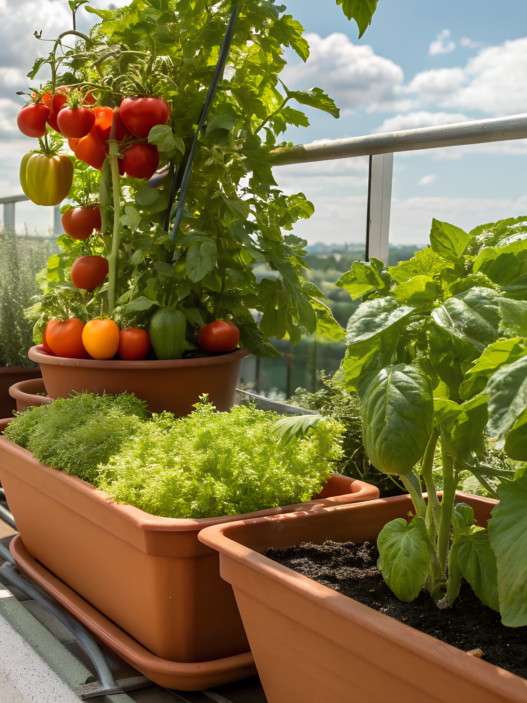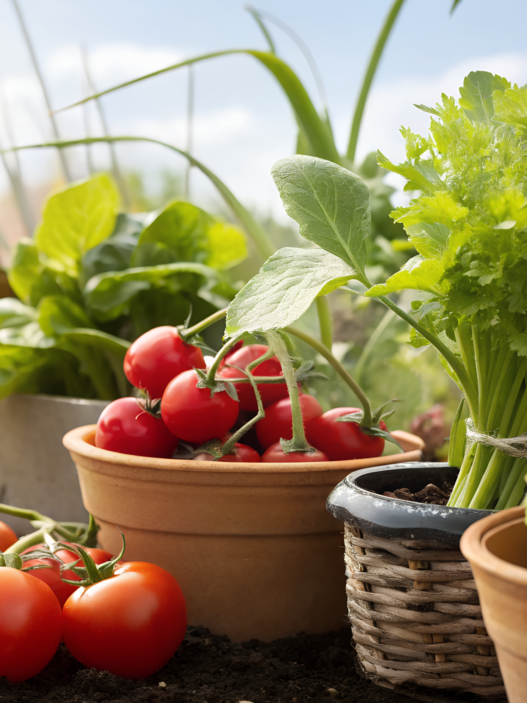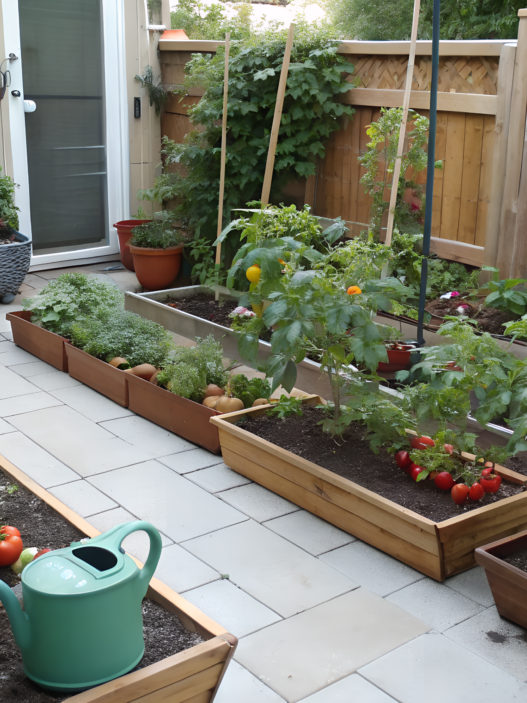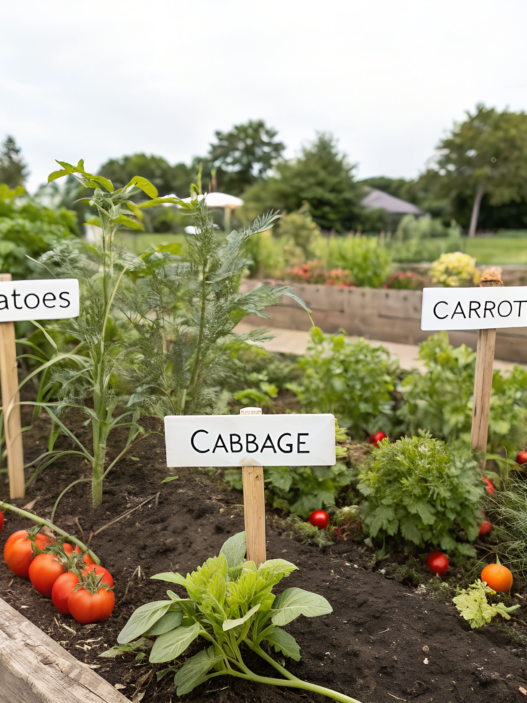
Every vegetable has its own best moment for harvesting, and we need to learn how to tell when that moment has come. We judge tomatoes by color and softness, zucchini by size, cucumbers by firmness and crunch… and every vegetable has its own signs that help you understand when the harvest is ready to pick. Here, we’ll try to define those signs for 10 popular vegetables.
From our own experience, we learned that the biggest vegetable is not always the tastiest. So it’s not worth waiting “just a couple more days” for a zucchini to get bigger, a carrot to get longer, and so on. Sometimes those extra couple of days give you tough beets, pithy radishes, slightly bitter lettuce, or a cucumber with large seeds.
Watch your harvest. Look at the color, feel the fruit, move the leaves aside, check the top of the root crop near the soil. It won’t take much time, but it helps you pick vegetables at the moment when they have better flavor, a nicer texture, and a better chance of storing well.
1. Tomatoes: Full Color, Slight Give, and the Vine Twist Test
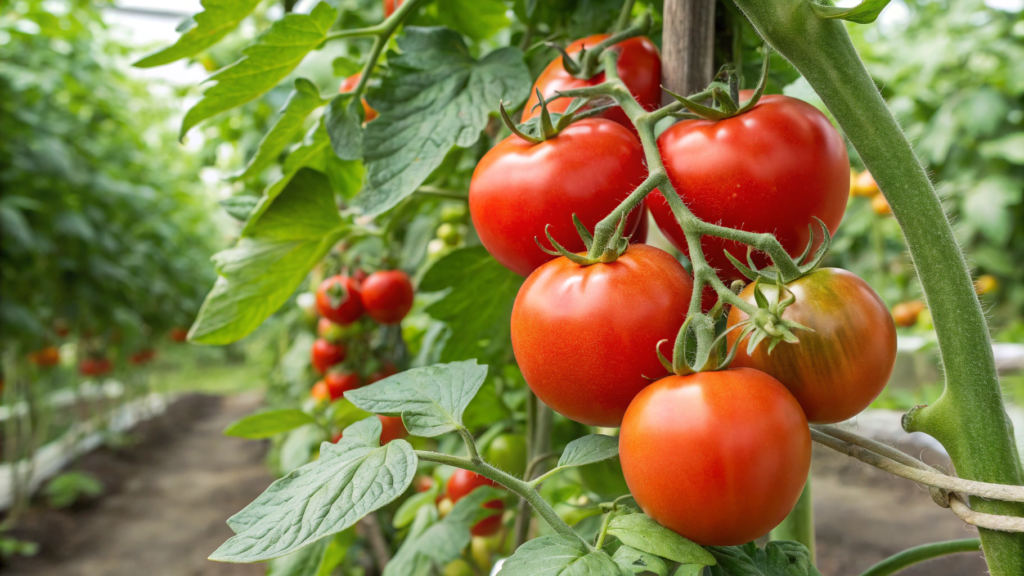
The easiest way to decide when to harvest tomatoes is by three signs: fruit color, slight softness, and how easily the tomato comes off the branch. This makes it easier to understand when the tomato has already developed flavor, when it’s better to pick it a little earlier for storage, and how to avoid damaging the plant during harvesting.
I remember how Lindy and I could stand by a tomato plant and wonder: should we pick it now or wait until tomorrow? Sometimes that “tomorrow” ended with cracked skin after rain. Of course, it wasn’t a disaster, but when you grow vegetables yourself, every good tomato counts.
1. Fruit color
A ripe tomato should have even, rich coloring for its specific variety. Red varieties turn red across almost the whole surface, yellow ones become bright yellow, orange ones turn clearly orange, and dark varieties shift into burgundy, reddish-brown, or an almost black shade near the top of the fruit.
A tomato doesn’t always have to stay on the plant until full ripeness. Tomatoes can be picked once they start changing color, because the fruit will ripen at room temperature and usually keep good flavor and quality (Texas A&M AgriLife Extension).
After learning the hard way, I usually do this:
- For eating today or tomorrow, I wait until the tomato is almost fully colored.
- Before rain or heat, I pick the fruit earlier, once it has already started turning red, yellow, or darker.
- I check large meaty tomatoes every day: they crack faster.
- I pick cherry tomatoes and small plum tomatoes more often, before they start to soften on the plant.
2. Slight softness is a good sign
After I’ve figured out the color, I check the tomato with my fingers. I don’t squeeze it hard. I just hold it in my palm and gently press it with my thumb.
A ripe tomato usually gives slightly under pressure. It’s no longer hard like a green fruit, but it’s not so soft that it leaves a dent. For fresh eating, this is the best moment: the tomato holds its shape, but it no longer feels hard.
If the fruit is firm but has started changing color, you can pick it and let it ripen in the kitchen. If it’s too soft, has a watery side, or thin skin, I use it right away: in sauce, salsa, soup, or just on bread with salt.
3. The vine twist test
When a tomato is ripe, it often comes off the branch with almost no effort. I hold the fruit in my palm, lift it slightly, and gently twist it. If it comes off easily — great. If I have to pull or bend the branch, it’s better to stop.
For large tomatoes or varieties with a strong stem, it’s helpful to use small pruners. They help you remove the fruit carefully and avoid breaking the cluster that still has green tomatoes on it.
I often pick cherry tomatoes in small batches. I think this has happened to you too: you go out “just to look” and come back with a full handful. Especially in late summer, when the plants are still giving sweet little fruits.
The best time to harvest is morning, while the fruit is still cool and hasn’t warmed up in the sun. This way, tomatoes bruise less and handle the trip to the kitchen better.
But if you notice a cracked or fully ripe tomato in the evening, pick it right away. There’s no point waiting until morning. Large fruits are better placed in one layer, or two at most if they are firm.
4. What to do with tomatoes after harvesting
I keep ripe and almost ripe tomatoes at room temperature and spread them out in one layer. I don’t wash them ahead of time: extra moisture speeds up spoilage, especially if the skin has cracks.
After harvesting, I quickly sort the crop:
- soft and fully ripe — eat within 1–2 days;
- firm ripe ones — leave on the counter;
- partially colored ones — leave to ripen;
- cracked ones — use right away;
- damaged ones — set aside.
It’s better not to put underripe tomatoes in the fridge. Cold can hurt their flavor and aroma. But if the fruit is already fully ripe and you can’t eat it today, short fridge storage is better than losing the harvest.
5. Common tomato harvesting mistakes
- The most common mistake is pulling the fruit downward. That can easily damage the branch. It’s better to gently twist the tomato, lift it slightly, or cut it with pruners.
- The second mistake is waiting until every fruit becomes very soft. Those tomatoes may taste good, but they don’t store well.
- The third mistake is putting everything together: cracked, firm, underripe, and overripe tomatoes. I sort the harvest right away. It takes a couple of minutes and helps save more good fruit.
Don’t wash the whole harvest right after picking. For storage, it’s better to keep tomatoes dry and wash them right before eating.
So now we’ve got it: a tomato should have the color typical for its variety, give slightly under pressure, and come off the branch without effort.
Before heavy rain, heat, or cold nights, it’s better to harvest a little earlier. Tomatoes that have already started changing color will ripen calmly in the kitchen. But a cracked tomato after rain won’t go back to normal.
2. Zucchini: Small Picks for Tender Texture and Fewer Seeds
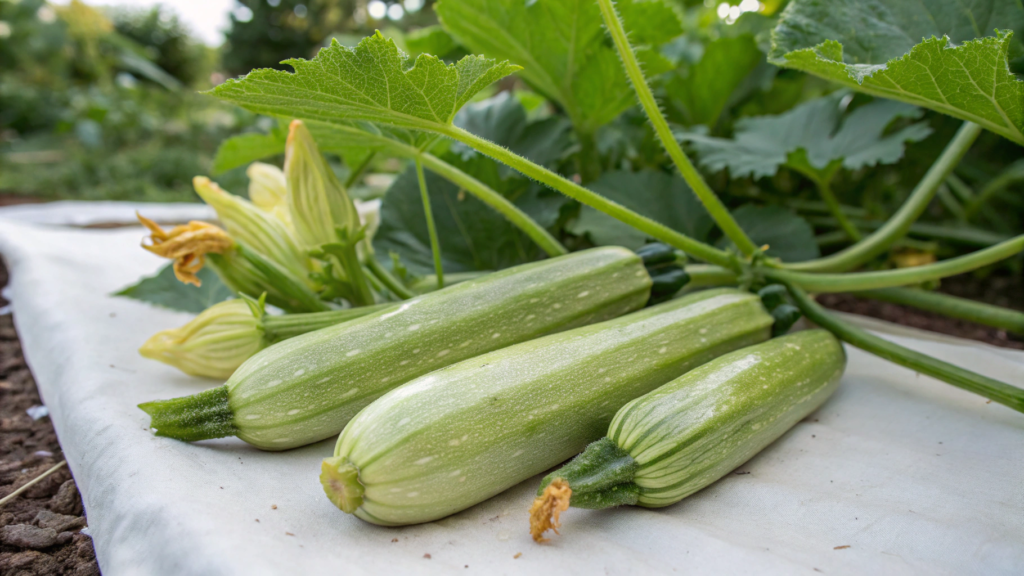
Zucchini is better to harvest not when it has become huge, but while it is still young, firm, and thin-skinned. That is the main secret to good flavor: small zucchini is usually more tender, cooks faster, and does not have time to develop large, tough seeds.
With zucchini, it always goes like this for us — yesterday there seemed to be a small fruit, and today there is already a zucchini under the leaves almost the size of a bat. I honestly have no idea how they do that. So if you want tasty zucchini, check the plants more often.
1. Look at the size
The best size for most zucchini is about 6–8 inches long (15–20 cm). At this point, the flesh is usually still tender, the skin is thin, and the seeds are small and barely get in the way when cooking.
If a zucchini grows to 10–12 inches (25–30 cm), it can still be fine, especially for baking or fritters. But the longer it stays on the plant, the higher the chance that the flesh will turn watery and the seeds will get larger.
On our homestead, it usually works like this:
- For frying, grilling, and quick side dishes, I take zucchini around 6–8 inches (15–20 cm).
- For stuffing, you can leave them a little bigger.
- Very large fruits are better used for fritters, bread, soup, or grated and frozen.
- If the zucchini has become tough and has coarse seeds, I no longer use it as a tender summer vegetable.
2. Skin firmness
A good zucchini should be firm, smooth, and heavy for its size. The skin of a young fruit scratches easily with a fingernail, and that is actually normal. It is a sign that the zucchini is still tender.
If the skin has become tough, dull, or the fruit feels too swollen, it has most likely overgrown. You do not have to throw that zucchini away, but the flavor and texture will be different. I would not slice it into thin ribbons for a salad anymore. But grating it into batter or adding it to a vegetable soup — absolutely.
3. Cut, don’t pull
Zucchini is better cut with a knife or pruners, leaving a small stem. If you pull the fruit by hand, you can damage the stem or even pull part of the plant loose. Zucchini plants look strong, but their stems are pretty brittle.
I suggest harvesting zucchini like this:
- Gently lift the leaf so you can see the base of the fruit.
- Find the spot where the zucchini attaches to the stem.
- Cut the fruit, leaving a short stem.
- Do not pull the zucchini toward you if it does not come off easily.
- Remove damaged or overgrown fruits right away so the plant keeps producing new ones.
4. Harvest more often
In peak season, zucchini is better checked every 1–2 days. In warm weather, it grows very fast, especially after watering or rain. This is not the vegetable you can mindlessly leave for some extra time.
Frequent harvesting also encourages the plant to keep producing. If you leave too many large zucchini on the plant, it starts putting energy into maturing those fruits, and there may be fewer new baby fruits.
5. Storage after harvesting
Young zucchini is better used within a few days. I store it dry, unwashed, in the fridge, usually in an open bag or container. If you wash it ahead of time, the moisture can speed up spoilage.
Small zucchini works well on the grill, in a skillet, in pasta, in casseroles, or as vegetable ribbons. Large fruits are better grated, squeezed to remove extra moisture, and used for fritters, bread, or freezing. For that, an OXO Good Grips Box Grater is handy.
3. Cucumbers: Size Check for Crispness Without Bitterness
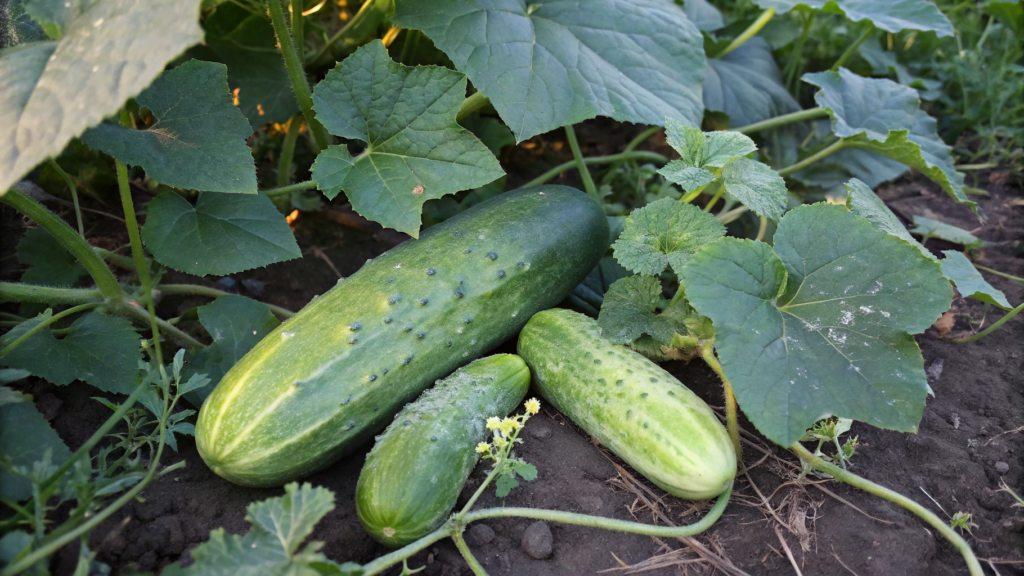
We all love young, firm, and crunchy cucumbers. If you leave them on the plant too long, they quickly overgrow: the skin gets tougher, the seeds get bigger, and the flavor can turn bitter. And that is especially frustrating because, from the outside, a cucumber can still look perfectly fine.
Keep in mind that the leaves hide the fruits well. You can look at the bed and think there is nothing there, then lift a couple of leaves and find four cucumbers at once. One perfect, two normal, and one that I really wish I had found yesterday.
1. Best size
For most slicing cucumbers, the best harvest size is about 6–8 inches long (15–20 cm). At this point, they are usually firm, juicy, and have small seeds. For small pickling cucumbers, the size will be smaller — often around 3–5 inches (7–13 cm), depending on the variety.
The main thing is not to wait until the cucumber gets as big as possible. A big cucumber does not always mean a good cucumber. Often, it is already a fruit with tougher skin, a watery center, and less pleasant flavor.
I usually go by this:
- For fresh salads, I pick cucumbers when they are even, firm, and not too large.
- For pickling and preserving, I pick smaller fruits while the seeds are barely noticeable.
- If a cucumber has started turning yellow, it is already overgrown.
- If the skin has become tough, it is better to peel that fruit and use it right away instead of storing it.
2. Check the color and skin
A good cucumber has an even green color without yellow spots. Small pale areas can be normal for some varieties, but yellowing usually means the fruit stayed on the plant too long.
The skin should be firm, but not hard. Young cucumbers cut easily, and the inside stays crunchy. If the fruit has become thick, dull, and too hard, it has most likely overgrown.
Sometimes bitterness appears not only because of the fruit’s age, but also because of plant stress: heat, irregular watering, or sudden changes. So during hot weeks, I check cucumbers more often and try not to let the bed dry out.
3. Harvest more often
In peak season, cucumbers are better checked every day or every other day. They grow fast, especially after warm nights and good watering. One missed day — and a small crunchy cucumber has already turned into a large fruit with big seeds.
Frequent harvesting helps the plant keep producing. If overgrown cucumbers stay on the vine, the plant starts putting energy into maturing seeds, and there may be fewer new fruits.
4. Cut carefully
Cucumbers are better cut with scissors, pruners, or a small knife, leaving a short stem. If you pull the fruit by hand, you can damage the vine, especially if it is tied up or already loaded with new baby fruits.
- Find the spot where the fruit attaches to the vine.
- Support the cucumber with your hand.
- Cut the stem without pulling the plant.
- Remove overgrown or yellowing fruits right away.
- Check the lower part of the plant: cucumbers often hide there.
5. Using the cucumber harvest
Try to use cucumbers as soon as possible. After harvesting, they gradually lose moisture, and with it — their crunch. I do not wash them ahead of time if I plan to store them for a few days. I just put them in the fridge dry.
If you have a lot of cucumbers, it is helpful to sort them right away: small ones — for pickling, medium ones — for salads, large ones — peel the skin, remove the seeds, and add them to cold soups, sauces, or grate them for cucumber salad.
For storage, you can wrap cucumbers in a dry towel and put them in a container or a bag with a little airflow. This keeps them firm longer than simply tossing them wet into the fridge drawer.
6. Common cucumber harvesting mistakes
- Cucumbers are most often ruined not in the kitchen, but still in the garden — when they are allowed to overgrow. The fruit gets larger, but the flavor gets worse. The skin gets tougher, the center becomes watery, the seeds get bigger, and there is less crunch.
- Rare harvesting. If old cucumbers hang on the vine for a long time, the plant spends energy on them instead of new baby fruits. So in peak season, I would rather pick a few smaller fruits today than wait another couple of days.
- Do not pull cucumbers by hand. The vine is easy to damage, especially if it is tied up or already tangled with nearby plants. It is better to cut — it is faster and better for the plant.
Lindy and I love eating cucumbers fresh: in salads, sandwiches, cold soups, quick pickles, or just sliced with salt and dill. And if a few fruits overgrow, they can still be used: peel the skin, remove the seeds, and add them toWe do not throw anything away. sauce, gazpacho, or grated cucumber salad. In our house, everything gets used.
The most reliable approach to harvesting is to walk through the bed more often, look under the leaves, and pick the fruits while they are still firm, green, and not starting to yellow.
4. Green Beans: Snap Test Timing for Peak Sweetness
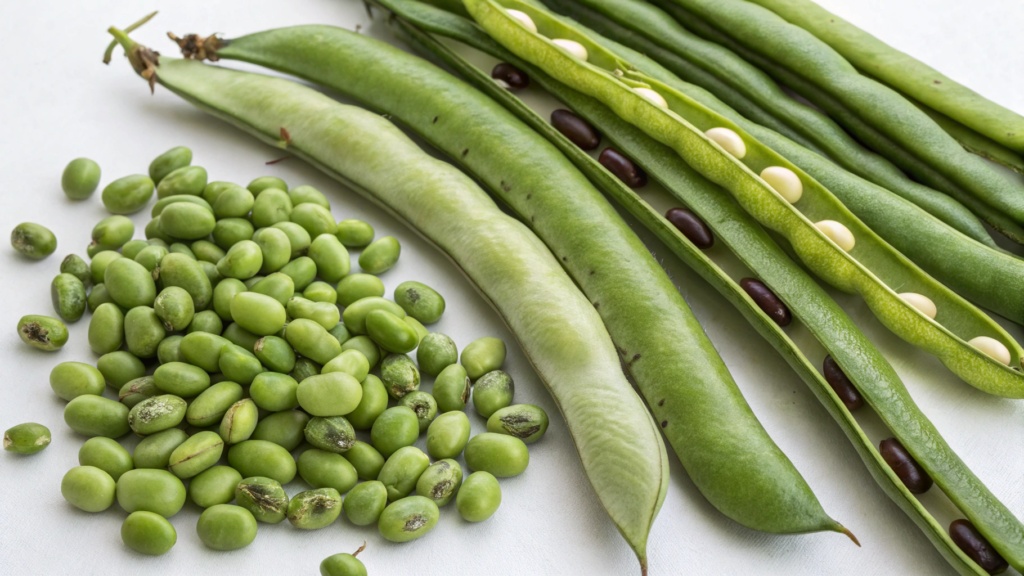
Green beans are best while the pods are still young, smooth, and easy to snap. If you do not harvest them on time, the seeds inside start to swell noticeably, and the pod itself becomes tougher and more fibrous.
1. Look for smooth pods
A good time to harvest is when the pods have reached the length typical for the variety, but are still thin, smooth, and firm. The seeds inside should not bulge too much. If the pod looks bumpy, the beans have already started to overgrow.
I simply run my fingers along the pod: if it feels smooth and firm, it is ready to pick. If you can already feel large beans inside, that pod is better used sooner and not kept for storage.
2. The snap test
The easiest test is to bend one pod. Young green beans usually break with a clear snap. If the pod bends, wrinkles, or pulls into strings, it has already overgrown or lost freshness.
I do not check every single pod this way, of course. One or two from the plant are enough to understand what stage the harvest is in. If the beans snap easily, I pick all the suitable pods right away. If some pods are already a little tough, I remove those too. That helps the beans produce new baby pods faster.
3. Harvest regularly
In peak season, green beans are better checked every 1–2 days. The more often you remove young pods, the more actively the plant keeps producing new ones.
I like picking beans in small batches every day. A handful today, another handful tomorrow — and the bed keeps working steadily and longer. If you wait for one big harvest, some of the pods will almost always have time to overgrow.
4. Harvest carefully
Pods are better picked with two hands: hold the stem with one hand and pinch off or cut the bean with the other. If you pull sharply, you can damage the plant, especially with pole varieties. Do not pull the whole vine toward you. Remove overgrown pods too, so the plant can keep producing.
5. After harvesting
Green beans are best used within a few days. I do not wash them ahead of time if I plan to store them: I put them in the fridge dry, usually in a container or a bag with a little airflow.
If you have a lot of beans, you can quickly blanch and freeze them. After freezing, green beans will not be the same as fresh ones, but for soups, stews, and quick winter side dishes, they have worked really well for us.
6. Bean harvesting mistakes
- The main mistake, as always, is waiting for the pods to get bigger. With beans, the more noticeable the seeds are inside, the tougher the pod can become.
- Another mistake is harvesting too rarely. Old pods stay on the plant, and it puts energy into maturing seeds instead of growing new baby pods.
- And do not yank the pods with a sharp pull. Beans may look sturdy, but the stems and flowers are easy to damage, especially when the plant is actively producing.
If you get used to checking beans every couple of days, you will quickly catch the best harvest window. Young pods stay tender, slightly sweet, and easy to snap, while the plant keeps making new baby pods.
5. Bell Peppers: Green Versus Red Timing and What Changes
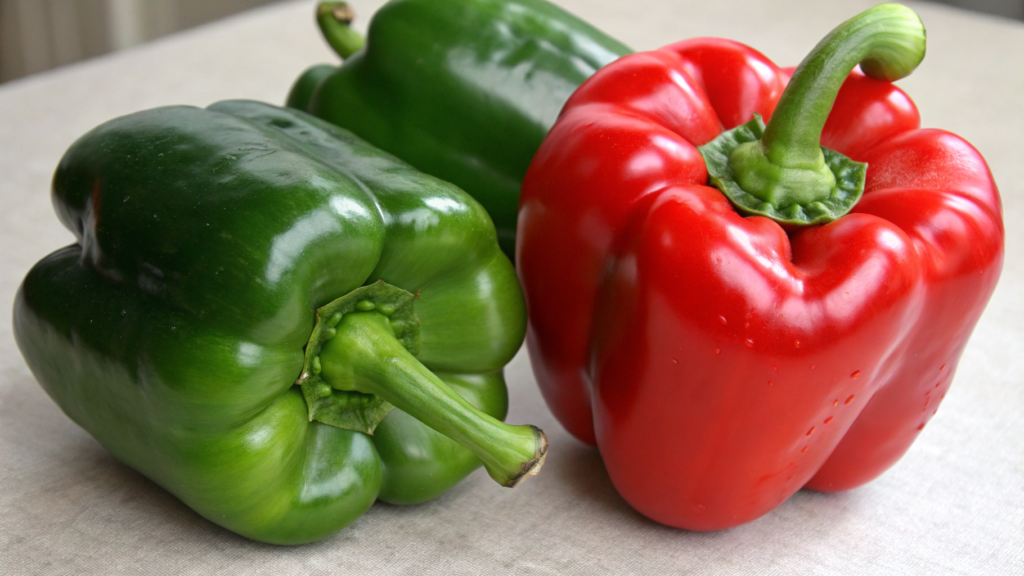
Green peppers are better picked when they have reached the right size, become firm, shiny, and heavy for their size. Red peppers are usually left on the plant longer — until they have even coloring, a sweeter flavor, and full ripeness.
With peppers, I had a different problem for a long time: I wanted to pick everything as soon as the fruits got big. But over time, I started harvesting them based on what I needed: green ones when I want firmness and a fresher flavor, red ones when I want more sweetness and bright color.
1. Green peppers are harvested by size and firmness
Green bell peppers are better picked when the fruit has reached the size typical for the variety and has become firm, smooth, and heavy for its size. The skin should be shiny, without soft spots, wrinkles, or damage near the stem.
If the fruit is still small, thin, and light, it is better to let it grow a little more. If it is already large but has started to wrinkle or turn yellow in spots, it stayed on the plant too long or went through stress.
Green peppers usually have a fresher, grassy flavor and hold their shape well in cooking. I like picking them when the walls are already firm, but the fruit has not started losing its bounce.
2. Red peppers are harvested after full coloring
Red bell peppers are better picked when they have become evenly red, firm, and shiny. Small greenish areas near the stem can still ripen a bit, but for the sweetest flavor, it is better to wait for almost full coloring on the plant.
Red peppers are usually sweeter than green ones because they ripen longer. But that also makes them more vulnerable: the longer the fruit stays on the plant, the higher the risk of sun spots, cracks, insect damage, or softening.
Fully colored peppers usually contain more vitamin C than green ones (University of Maryland Extension). So if the plant is healthy and the weather is normal, I leave some peppers to ripen to full color. But if heat, strong wind, or softening fruit is ahead, it is better to pick it earlier than lose it completely.
3. Check the walls, shine, and weight
A good pepper should be firm before harvesting, with smooth skin and a clear shine. It should not feel hollow, light, or limp. When you hold that kind of fruit in your hand, it feels dense.
I do not wait for a huge size. A big pepper is not always tastier. Sometimes a medium, firm, even fruit is much better than a large one that already has a soft side or dull skin.
Check the peppers inside the plant especially carefully. It is easy to miss a fruit there that is already ready to pick. I just move the leaves aside with my hand and check for soft spots, cracks, or fruits pressing against each other.
4. Harvesting peppers
Peppers are better cut, not pulled by hand. Their branches are pretty brittle, and one sharp movement can damage the plant. If the plant is still flowering or holding new baby fruits, a broken branch means losing part of the future harvest.
The order for harvesting peppers:
- Support the pepper with your hand
- Find the spot above the stem
- Cut the fruit with one clean movement
- Do not pull the pepper downward
- Use fruits with soft spots right away
5. Storing peppers
For storage, choose firm peppers without cracks or soft areas. Green ones usually store a little longer because they are firmer. Red ones are sweeter, but they often need to be used sooner.
After harvesting, I do not wash peppers ahead of time. And it is not worth putting firm, healthy fruits in the same basket with peppers that have soft areas. Damaged ones are better used right away, and for later use, keep only dry, firm, clean peppers. I put them in the fridge dry and check them after a few days.
If you have a lot of peppers, you can slice and freeze them. After freezing, they will not work for a fresh salad, but for soups, omelets, stews, and winter stir-fries — absolutely.
Green and red peppers have their own fans, and I understand both sides. I do not like choosing one “best” option forever. Green peppers are good when you need firmness, and red peppers are good when you want sweetness. The main thing is to harvest both on time: green peppers should not wilt, and red peppers should not get soft on the plant.
6. Carrots: Shoulder Peek Method and When to Pull
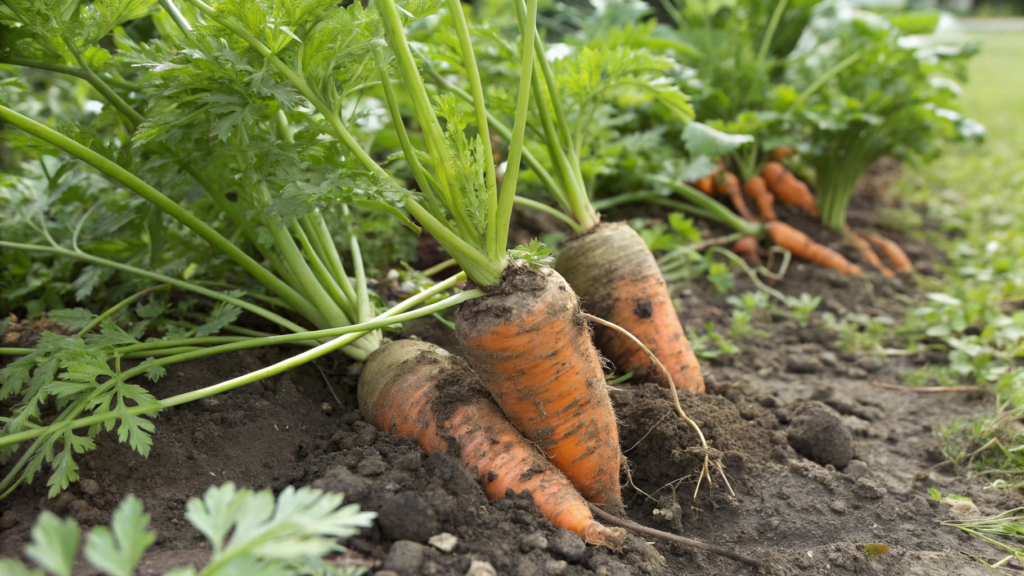
Carrots cannot always be judged by their tops. The leaves may look big and strong, while the root under the soil is still thin. So I look not only at the greens, but also at the carrot shoulders — the top part of the root that is usually just visible at the soil surface.
1. Check the shoulders
The easiest way to check carrots is to gently move the soil aside near the base of the tops and look at the diameter of the top. For many varieties, a good size is about 0.75–1 inch in diameter (2–2.5 cm), but it is better to check the variety description: small finger carrots and large fall carrots will be different.
If the shoulders are already wide enough, you can pull one carrot from the edge of the row and check it. If it is a good size and firm, the others are usually close to harvest too.
Here is how I check:
- if the top is still very thin, I leave the carrots to keep growing;
- if the shoulders are about 0.75–1 inch (2–2.5 cm), I check one root;
- if the carrot has started pushing out of the soil, I lightly cover the top with soil or mulch;
- if the shoulders are turning green, it is better to cut that part off later: it can taste bitter.
2. The tops
Large tops do not always mean a large carrot. Sometimes the greens grow beautifully, but the root has not sized up yet. And sometimes it is the opposite: the tops do not look very fresh, but the carrot under the soil is ready.
I use the tops as an extra sign. If the greens are strong, not yellowing heavily, and the plants stand straight, the carrots can usually stay a little longer. But the final decision is still better made by checking the shoulders and pulling one test carrot.
3. When to harvest carrots
Carrots are better harvested when they have reached the size for their variety, but have not become too old and coarse. Young carrots are usually sweeter and more tender, while overgrown carrots can turn fibrous or crack, especially after changes in soil moisture.
If the soil is loose, you can pull carrots by hand, holding the tops close to the base. If the soil is compact or dry, it is better to loosen the row first with a garden fork or a narrow trowel. This lowers the chance of breaking the tops and leaving half the carrot in the ground.
How to do it step by step:
- Check the shoulders on a few plants.
- Pull one carrot from the edge of the row.
- If the size is right, loosen the soil nearby a little.
- Hold the tops at the base.
- Pull straight up, without a sharp yank.
4. Watering before harvest
If the soil is dry and compact, you can water the bed a little the day before harvesting. The soil will soften, and the carrots will come out more easily. But do not soak the row right before harvesting until it turns muddy: wet carrots are harder to clean, and extra moisture is not helpful for storage.
After heavy rain, I do not always rush to harvest the whole row. If the carrots are already large, they can crack from the sudden rush of water. In those weeks, it is better to check the bed more often and not leave the roots too long.
5. After harvesting
After harvesting, I cut off the tops right away, leaving a short stem of about 0.5 inch (1–1.5 cm). If you leave the leaves on, they will pull moisture from the root, and the carrots will wilt faster.
For storage, it is better not to wash carrots. Just gently shake off the dry soil. Damaged, cracked, or very thin roots get used first. Firm and whole carrots go into storage.
6. What ruins carrots
- Carrots are often ruined by soil that is too compact. Roots can twist, fork, or grow short if they run into stones and heavy clumps of soil.
- Another problem is leaving them too long. Older carrots can become coarser, especially in heat or with uneven watering. And if the top sits above the soil for too long and turns green, that part will not taste as good.
- Do not pull carrots hard from dry soil. It is easy to break off the tops and leave the root in the ground, especially in compact soil. Now I would rather loosen the soil a little first than dig carrots out in pieces later.
Carrots are better harvested by the size of the shoulders and the condition of the soil. When the root has reached the right diameter and the soil is soft enough, harvesting is easier, and the crop comes out more evenly.
Those carrots are great fresh, quickly roasted, added to soups, or sliced into salads. And if I get thin or damaged roots, I use them first — they are still tasty, they just are not good for long storage.
7. Beets: Diameter Targets and How to Avoid Woody Roots
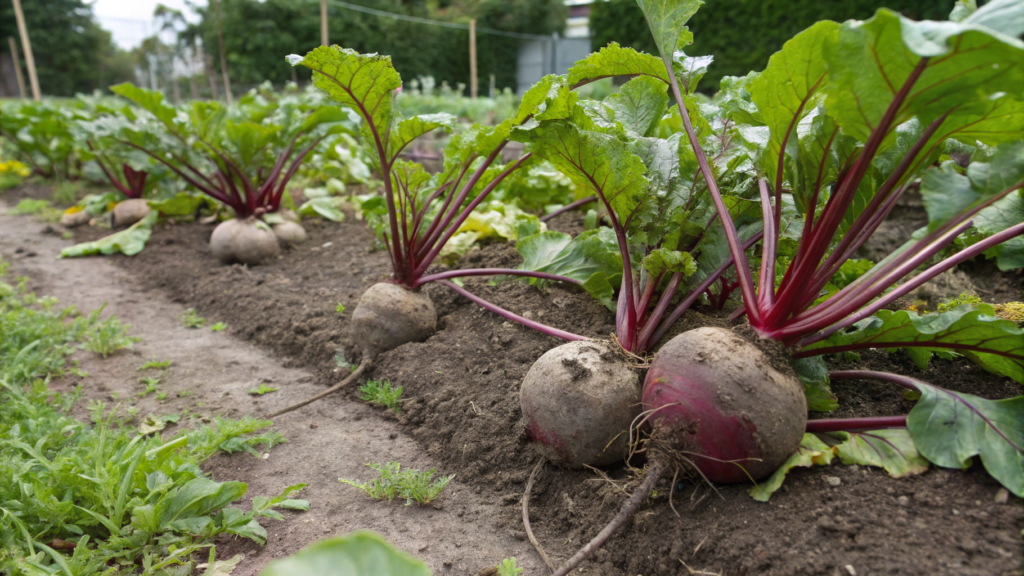
Beets are better harvested by the size of the root, firmness, and the condition of the top part that slightly shows above the soil. If you leave beets in the bed too long, they can become coarse, fibrous, and less pleasant to eat. Especially in heat or with irregular watering.
1. Look at the diameter
The best size for most beet varieties is about 1.5–3 inches in diameter (4–7.5 cm). In this range, the roots are usually already large enough, but have not had time to become coarse.
If a beet grows larger than 3 inches (7.5 cm), you can still use it, but the flavor and texture depend on the variety, the weather, and how long it stayed in the ground. Sometimes a large beet is still fine, and sometimes it becomes tough and fibrous.
I usually go by this:
- small beets around 1.5–2 inches (4–5 cm) get harvested for a tender texture;
- medium beets around 2–3 inches (5–7.5 cm) are good for roasting, salads, and storage;
- very large beets get checked first and used sooner;
- if the tops are already getting coarse and the root is large, it is better not to wait.
2. Check the “shoulders” above the soil
With beets, it is helpful to look at the top of the root — the shoulders that stick slightly above the soil. You do not need to dig up the whole row to understand the size. Just move the leaves aside and look at how wide the top is.
If the shoulders are already about 2 inches (5 cm) in diameter, you can carefully check one root and decide whether it is time to harvest the rest. I often do exactly that: pull one beet from the edge of the row, look at the size and texture, and then decide whether to wait or start harvesting.
Just do not use the tops as the main sign. Big leaves do not always mean a big root. Sometimes the greens look beautiful, but the beet under the soil is still small. That happens too.
3. Heat and watering
Beets like steady growth. When the soil dries out and then suddenly gets a lot of water again, the root can become coarser or crack. Heat also speeds up root aging, especially if the beet has already reached a good size.
So in warm weather, I check beets more often. If the roots are already in the right size range, it is better to harvest them on time than wait a little longer and get a tough center.
To grow tender beets, even watering and mulch around the plants help. A thin layer of straw, grass clippings without seeds, or shredded leaves helps the soil stay moist longer. To check moisture, you can use a simple, XLUX Soil Moisture Meter especially if you are still learning to understand your soil.
4. Careful harvesting
Beets can be pulled by hand if the soil is loose. But if the ground is compact, it is better to loosen the root first with a garden fork or a narrow trowel. The main thing is not to pierce the beet or scrape the skin if you want to store it.
From my own experience, it is better to do it this way:
- I water the bed the day before harvest if the soil is dry.
- I move the leaves aside and check the shoulder size.
- I gently loosen the soil next to the root.
- I pull the beet by the base of the tops, not by one leaf.
- I remove the soil by hand, but do not wash the beet if it is going into storage.
5. Preparing for storage
After harvesting, I cut off the tops right away, leaving about 1 inch of stems (2.5 cm). If you leave the leaves on, they will pull moisture from the root, and the beet will wilt faster.
It is better not to damage the skin or the thin root. For storage, beets are not washed; I only gently shake off the dry soil. In the fridge or a cool place, they store longer if they stay dry and whole.
I do not throw away the beet greens. If the leaves are young and clean, they can be used as greens. But if they are already coarse, damaged, or spotted, I just send them to the compost.
Beets are useful because they give you both the root and the greens. Young leaves can be cut a little at a time even before the main harvest, and the roots themselves are better pulled while they are medium-sized, firm, and not overgrown. This way, beets stay more tender, with good flavor and without that tough center that makes you wonder what to do with them later.
8. Radishes: Preventing Pithy Crunch With Short Harvest Windows
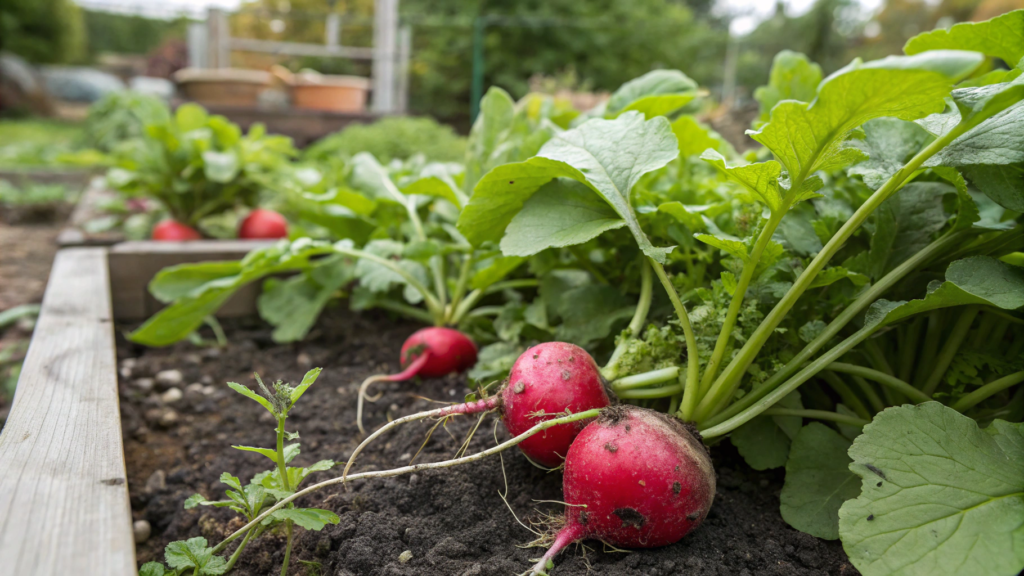
I’ve noticed that radishes are one of those vegetables that do not like being forgotten for even a couple of days. You get excited about the fast sprouts, then get distracted for a couple of days, and instead of juicy roots, you get something tough, a little dry, and hollow inside. The best radishes to harvest are firm, round, bright, and not overgrown.
1. Check the size
Radishes are easy to check by looking at the top part of the root. The shoulders are usually a little visible above the soil, and they can already tell you whether it is time to harvest or not.
For most round varieties, a good size is about 0.75–1 inch in diameter (2–2.5 cm). Some varieties can be larger, but regular spring radishes are better not left to get huge. The longer they stay in the ground after the right stage, the higher the chance of getting tough skin, sharp flavor, and a pithy center.
I usually watch them like this:
- if the top is still very thin, I let the radishes grow a little more;
- if the root is about 1 inch (2.5 cm), I pull one to check;
- if the inside is firm and juicy, I start harvesting the rest;
- if the radish is already cracking or getting too sharp, I do not wait any longer.
2. Harvest timing
Radishes have a very short period when they are at their best. Especially in spring and early summer, when the weather can suddenly get warmer. In heat, radishes get coarse faster, bolt, and can become hollow.
So I do not wait until the whole row looks exactly the same. With radishes, it is better to harvest selectively: the bigger ones today, a few more in a day or two. This way, you get the roots at the best moment, instead of waiting until half the radishes overgrow.
3. Heat and moisture
Radishes grow better in cool weather and with even soil moisture. If the bed dries out and then gets a lot of water, the roots can crack. If the weather is hot, radishes become coarse and too sharp faster.
I try to keep the soil lightly moist, especially once the roots have started to round out. Mulch is not always necessary here, but a thin layer of compost or light soil cover helps if the weather keeps shifting back and forth.
If you often forget to check moisture, you can use a simple soil moisture meter.
4. Harvesting
Radishes usually pull out easily by hand, especially if the soil is loose. Hold the tops at the base and pull straight up, without a sharp yank. If the soil is dry and compact, loosen it a little first with your fingers or a small trowel.
After harvesting, I remove the tops right away if the radishes are not going to the table the same day. The leaves quickly pull moisture from the root, and the radish turns limp. For storage, it is better to keep the roots dry, without extra soil, and put them in the fridge.
As you can already tell, the main advantage of radishes is their short growing time. They give a harvest quickly, but they also overgrow quickly, so it is better not to put off picking.
Young, firm roots go into salads, on toast, with eggs, or simply with salt and butter. And if a radish has already started getting coarse, I do not save it “for later” — it is better to use it right away while it still has some crunch.
9. Lettuce: Cut and Come Again Harvesting Without Bolting
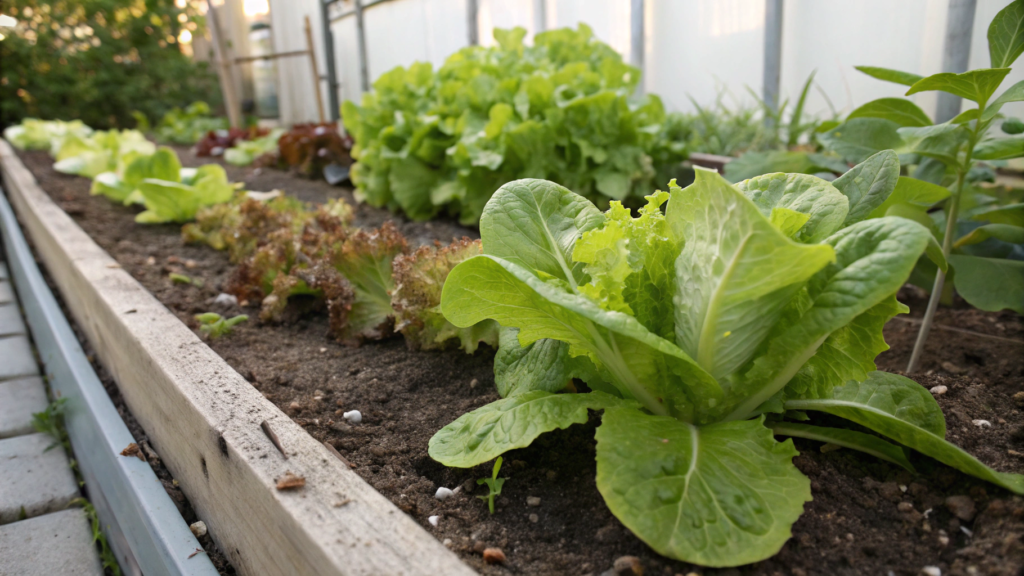
Leaf lettuce can be harvested not as a whole head, but gradually: cut the outer leaves and leave the center of the plant to keep growing. This method helps you get fresh greens from one bed for longer. The main thing is to harvest lettuce young, not let it overgrow, and watch the heat, because in warm weather it bolts faster.
1. Outer leaves
When harvesting leaf lettuce, we cut the outer leaves and leave the middle of the plant whole. This gives the lettuce a chance to keep producing new greens.
The leaves can be cut with scissors or gently pinched off by hand at the base. I usually take only a few leaves from each plant so I do not weaken it too much.
I would recommend not taking more than one third of the leaves at once and removing damaged or yellowing leaves right away.
2. The advantage of young leaves
Young leaves are usually more tender and milder in flavor. If you wait until the lettuce gets very large, the leaves can become tougher, and the flavor sharper. This happens especially fast in heat.
I harvest lettuce in small portions. It is much more convenient than waiting for one big harvest and then trying to use a whole basket of greens quickly.
3. Temperature
Lettuce likes cool weather. When the days get longer and hotter, the plant can start bolting: it sends up a tall stem, gets ready to flower, and the leaves often become tougher and bitter.
So in warm weather, I harvest the leaves more often and do not wait until the plant overgrows.
If you have a hot summer, light afternoon shade helps lettuce. You can use garden fabric for this. It does not make the weather cool, of course, but it reduces stress from direct sun.
4. Cut with garden scissors
Lettuce is easy to damage if you pull the leaves upward or tear them too roughly. It is better to cut the leaf at the base with regular garden scissors, especially if you want the plant to keep growing back.
After cutting, I quickly check the plant. If the center is dense and green, the lettuce will keep growing. If the middle is stretching upward and the leaves are getting tougher, the plant is getting ready to flower.
5. Storage
Lettuce wilts quickly, so after harvesting it is better to cool it as soon as possible. I rinse the leaves in cold water, dry them, and put them in a container with a towel. Extra water on the leaves speeds up spoilage, and a dry towel helps keep the greens fresh longer.
If the leaves have wilted a little, sometimes you can revive them in a bowl of cold water for 10–15 minutes. But if the lettuce is already bitter because of bolting, water will not fix that.
10. Spinach: Baby Leaf Timing and Heat Avoidance
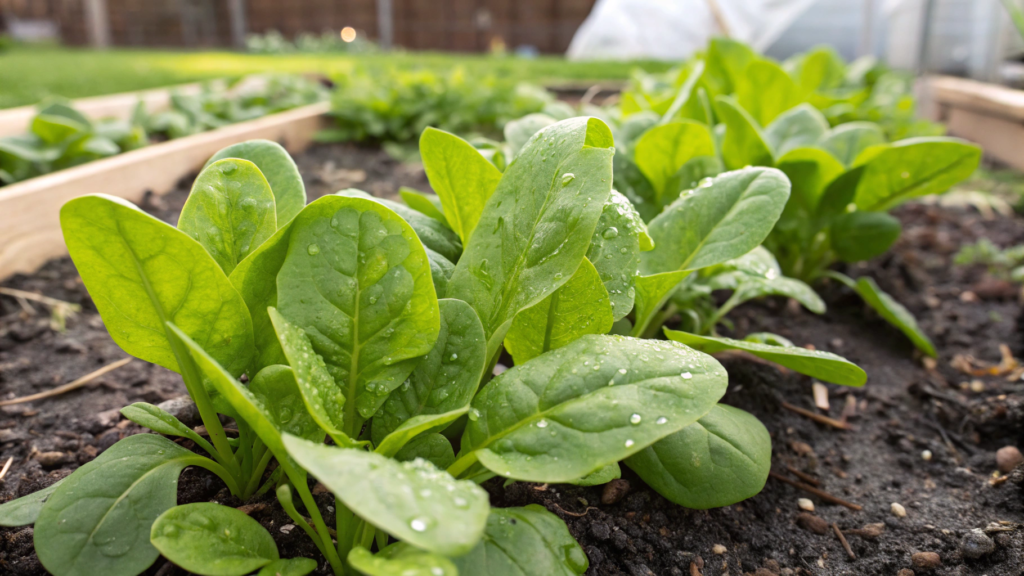
Spinach grows well in cool weather, but as soon as it gets hot, the plant quickly changes its behavior: the leaves get tougher, the flavor becomes sharper, and a flower stalk can start coming up from the center. So it is better to harvest spinach while the leaves are still young, tender, and not too large.
1. Harvest young leaves
For tender greens, it is better to pick leaves when they are about 2–4 inches long (5–10 cm). These leaves are good in salads and soften quickly if you add them to a warm dish.
If the leaves have become very large, dense, and dark, they are still edible, but the texture will be rougher. I use those leaves more often in cooking, not in a fresh salad.
I pick small leaves for fresh salads, and medium ones for omelets, pasta, soups, and sautéing.
2. Cut gradually
Spinach can be harvested gradually: remove the outer leaves and leave the center of the plant to keep growing. This way, the bed gives a harvest longer than with one full cut.
I do not remove all the leaves at once if the plant is still young. I usually take a few outer leaves from each plant. I leave the center whole — that is where the new greens will come from.
If you need to harvest more, you can cut the plant above the growing point, but not too low. Otherwise, the spinach will not recover.
3. Watch the temperature
Spinach likes cool weather. In heat, it quickly bolts: a tall stem appears from the center, the leaves become tougher, and the flavor gets sharper.
During warm weeks, I do not wait for the spinach to get big. It is better to harvest the leaves a little earlier than end up with tough greens with a sharp flavor. If the sun is already strong in the afternoon, I put hoops with light fabric over the bed.
4. Even watering
Spinach gets tough faster if the soil dries out. It needs moderately moist soil, especially when the leaves are actively growing. Not a swamp, of course, but not a dry crust on top either.
If the weather suddenly gets warmer, I would rather check the bed one extra time. When the plant does not have enough moisture, it gets stressed faster, and stress can lead to bolting.
5. Storage after harvesting
Spinach wilts quickly, so I never leave it lying in the sun. After harvesting, it is better to take the leaves straight into the shade or the kitchen, rinse them in cold water, dry them, and put them in a container with a towel.
If the leaves have wilted a little, you can revive them in cold water for 10–15 minutes. But if the spinach has already become tough and sharp-tasting after heat, water will not fix that.
Personally, I love spinach because it gives early greens when many crops are still just getting started. Young leaves can be eaten fresh, and larger ones can be added to soup, an omelet, or a skillet with vegetables. The main thing is to harvest on time — that is when spinach tastes best.
Before Harvesting
Harvesting becomes more enjoyable when you understand which signs show that vegetables are ready. You look not only at size, but also at color, firmness, skin, root shoulders, and weather. Sometimes it is better to pick a tomato before rain, a zucchini while it is still small, a radish before it turns pithy, and lettuce and spinach before heat and bolting.
Start small: walk through your beds more often, harvest a little at a time, and remember which vegetables overgrow fastest in your garden. After a couple of seasons, you will read these signs almost automatically.
Write in the comments which vegetables you most often leave in the bed too long — zucchini, cucumbers, radishes, or something else?